Of mice and fairytales

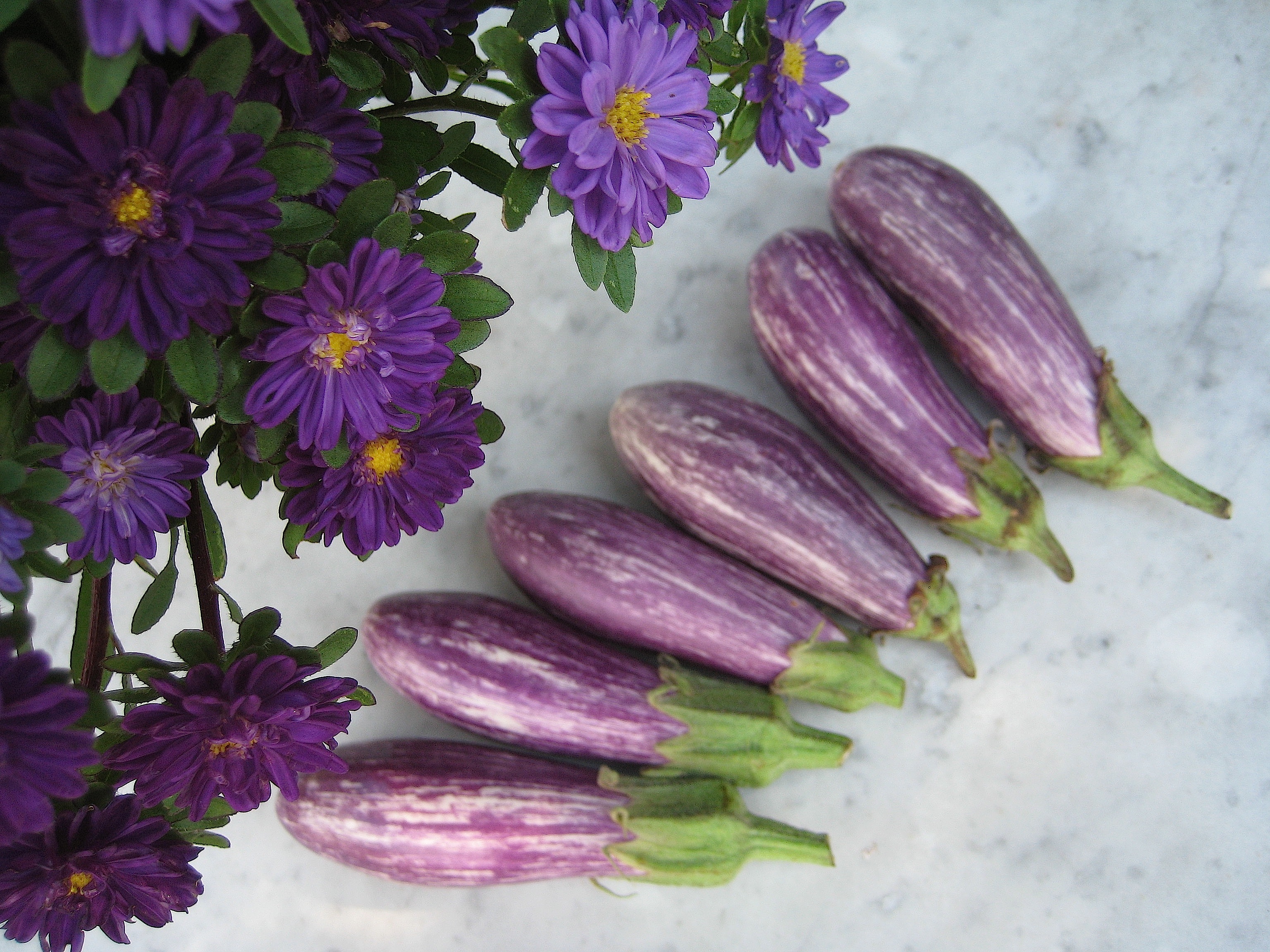
Fairytale eggplant and asters

On Sunday I barely missed what would have been my most traumatic gardening experience. The pole beans on the first two teepees needed picking, and since the vines had started to form such a thicket I asked my husband to come along to lift the vines while I cut off the beans.

When I had quickly harvested some beans for dinner the week before I had noticed a nest made of newspaper scraps almost at the top of one of the tepees. Smart birds, I thought, taking the newspaper mulch from around the tomato plants, and I simply picked around it.

The nest soon started to get in our way when we were picking on Sunday so I suggested we check if it still had anything inside. My husband took it down and instantly threw it over the garden fence down the hill.

“What was it?” I asked.

Pause.

“Tell me.”

“You would have screamed so loud all our neighbors would have called 911. It was a mice nest. One of them was looking straight at me.”

He was not exaggerating. Mice and other rodents, dead or alive, small or large, freak me out in capital letters. Living in the country for more than a decade has not diminished my phobia, on the contrary.

I know there are always mice around outdoors, but as long as I don’t see them or their traces, I can manage. But sticking my face into a nest and having a mouse stare at me would have been too much. If I had taken down that nest, I am sure I would have had such a shock that I most likely would have had a hard time setting foot in the garden for a good long time.

Upon my insistence we stripped the teepee of all the vines and cut off all harvestable beans. Now when I go to the garden, I clap my hands several times before opening the gate. I know it sounds ridiculous but it makes me feel better.

To end this post on a more positive note, the China asters that I planted as cutting flowers are blooming. I gave them a sheltered home inside the garden to protect them from voracious rabbits.

And, I have started to harvest Fairytale eggplants! I fell in love with those beauties at Field to Fork, an event I organized last year in August with the Master Gardeners. Designed to inspire more people to garden, we grew different fruits and vegetables in containers. One member of the group had Fairytale eggplants and I couldn’t wait to try them myself.

Fairytale eggplants are hybrids, meaning a cross breed between two parent plants. Unlike heirlooms, you cannot collect the seeds for next year. Frankly I do not understand the hype about heirlooms, and the demonization of hybrids that often goes hand in hand with it. Mankind has been breeding plants for thousands of years. If plant hybridization gives you crops that are resistant to a disease or a pest, and/or yield a result as delicious and beautiful as Fairytale, what’s the big deal? I think one of the reasons why hybrids are often shunned is that some people confuse them with genetically modified organisms (GMO’s). They are not. Seed companies that have signed the Safe Seed Pledge, thus reassuring their customers that they not knowingly buy or sell genetically engineered seeds or plants, do sell hybrids.

Fairytale eggplants do not require much preparation. Even without salting they are not the slightest bit bitter. I cut them in half, brush them with a mix of garlic and olive oil, and sprinkle them with salt and pepper. Then I put them under the broiler and turn them once until they are slightly browned from both sides. Fairytales truly deserve their name.

Pepper plenty

It is as if the peppers are trying to make up for the poor zucchini and cucumber harvest this year. As always, I start cutting off all bell pepper blossoms in early August so the plants put their energy into the peppers that are already there, and I don’t end up with oodles of tiny green peppers at the onset of frost in October.

A bumper crop of bell peppers is not a problem – I freeze them and use them all winter long for various dishes and my Red Pepper Spread. But what to do with all those jalapeños from one single plant? After I used them for salsa, and froze and dried some (they are not turning red as expected), I was running out of ideas, especially since my husband does not like hot foods. Then I found a fabulous recipe for Bread and Butter Jalapeños. After I tried the first bite I instantly regretted that I had only made half the recipe. They were gone in a few days. I even ate some straight out of the jar, something I usually never do. Now I am collecting all the jalapeños for canning a large batch.

Yesterday I felt a slight disappointment rising when there was only a handful of jalapeños, and was reassured seeing plenty of more growing. Interesting how one great recipe can make you change your perspective.

Cooking in bed

This is not what you might think. It is a simple and ingenious trick to cook the creamiest rice pudding. I learned it from my aunt on my last trip to Germany.

Rice pudding was one of my staple dishes as a student. It was cheap and filling, and I usually ate it the way it is often eaten in Germany: warm, sprinkled with cinnamon and sugar, and with peaches from the can. Getting it right is not so easy though. Like risotto, cooking rice pudding needs close attention so it does not scorch, and it often ends up too dry so you have to stir in additional milk after cooking, and more milk after the rice pudding cools and stiffens.

Not so in my aunt’s rice pudding. Actually it is not her invention but the way farmers’ wives did it. The rice is added to the boiling milk, cooked only briefly and then the pot is tucked in under a duvet or comforter and left for at least one hour. When you open the pot, all the milk is on top and you initially think it is a complete failure. But then you stir it and all the milk gets absorbed. The rice pudding stays nicely creamy even after chilling – no need to add any milk later.

Last week our daughter was home with a toothache. That and the delicious and juicy peaches from the local orchard (no more canned peaches for me) just called for rice pudding!

I fetched a duvet from its summer storage and made sure that the bedroom door was closed so the dog would not break into the makeshift cooker and for sure singe his nose – the pot was piping hot when I took it out. The rice pudding was so yummy that we gobbled up a large batch of it, and I made some more today. Nowadays I prefer rice pudding chilled, especially in the summer.

I think it’s not worth putting the duvet back in storage.

The recipe can be found in my cookbook Spoonfuls of Germany.

Round and lonely survivors

Calamities are part of gardening reality but I still cannot get used to it, and probably never will. Last year there were no eggplants due to flea beetles. This year, several dozen cucumber, summer squash and melon seedlings died on me, either chewed into oblivion by the striped cucumber beetle, or killed later by the bacterial wilt that the beetles transmit. The latest victim to the disease were the Hubbard squashes, which had grown as tall as the fence and just started to set fruit. I pulled the entire patch last week. Don’t mention it. Two cucumber plants are just hanging in there. I am trying not to get my hopes up too high for cucumber salad.

None of the gardeners I spoke to around here seems to have the same troubles. Driving by a pumpkin patch yesterday and seeing that field of healthy verdure made me jealous. Yet I should not forget that unlike many other parts of the country, we had plenty of rain here in northeast Pennsylvania. We are very fortunate; there could be many more failed crops.

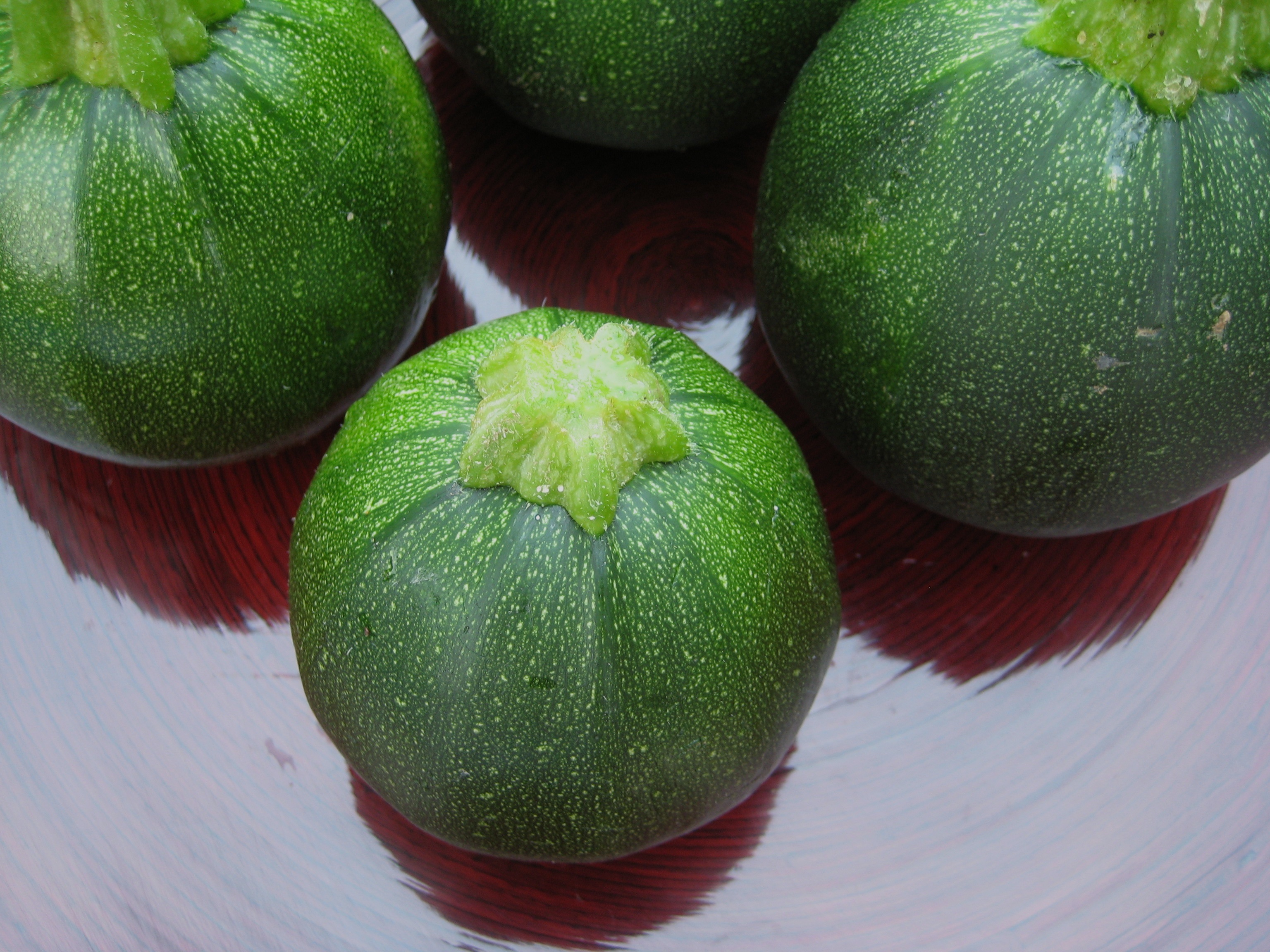
And, there is a consolation prize in my garden! A friend of a friend had given me two plants of Tondo di Piacenza, an Italian heirloom zucchini. Although the beetles are populating them as well, the plants seem to be resistant (so far) and I am picking one or two beautiful round zucchini every other day. They are great for stuffing but now that I have more than just a couple, I can finally make my Zucchini Quiche with Goat Feta that I have been craving all summer.

Maybe I will switch to growing Tondo di Piacenza next year. But next year there might be no trouble with striped cucumber beetles, and some other calamity will hit a different crop. You never know.