Stocking up on herbs

My herb garden is a dangerous place these days for people who are allergic to bee stings like me. Usually I cut down the different mints in mid-summer but this year I wanted to be kind to the much-needed pollinators so I left everything untouched. As a result the area is swarming with bees and other insects. Even a hasty pulling of the largest weeds the other day felt like zigzagging through enemy lines.

Unfortunately I am not equally successful with all of the herbs. The production of thyme, one of my favorite herbs for cooking, can never meet the demand. Cilantro is another finicky grower. And, I seem to always forget that I have it, and when I do remember and want to use it in a dish, it’s already past its prime and has started to go into seed.

For the ones that do grow, here’s how I stock up on herbs for the winter:

Basil Air-dry in bunches, then strip off papery leaves and crumble finely using a colander. This retains small pieces of stem and other woodsy parts. Or chop up leaves by hand or in a food processor. Do not spin dry the leaves so some water still clings to them, which makes them easier to chop  in a food processor. Put basil puree in an ice-cube tray, fill up with water and freeze. Store basil cubes in a freezer container or a freezer bag and use for soups or pasta dishes.

Dill – Air dry or freeze. I usually let one or two plants go into seed and collect the seeds for next year. Dill seeds are also great for pickling.

Marjoram Air dry and crumble.

Mint – Air dry and crumble like basil. Powdered mint mixed with granulated sugar makes a great addition to fresh fruit salad (I always squeeze some lime on it too).

Oregano – Air dry and crumble.

Parsley – Freeze leaves or whole stems and use in soups and other cooked dishes.

Rosemary – The winters on our Pennsylvania mountaintop are too cold for rosemary so I grow it in a large pot and bring it inside before the first strong frost. I have had the same plant for several years now. In the winter I keep it in a barely heated room and water it very moderately. This way I can cut fresh rosemary year round although the shoots get a bit leggy in late winter. It just takes bigger amount the get the same flavor.

Sage – Air dry and crumble or freeze whole leaves for dishes such as Saltimbocca. Or, use for sage butter, which is delicious on baked winter squash and baked potatoes, or to rub under the skin of a chicken or turkey.

To make sage butter, mix 1 stick soft butter, 2-3 tablespoons finely chopped fresh sage, finely grated peel of ½ organic lemon, and salt (amounts are to taste). If the sage leaves are large, cut out the thick mid-rib with a sharp knife. Refrigerate or freeze in small containers or in an ice-cube tray.

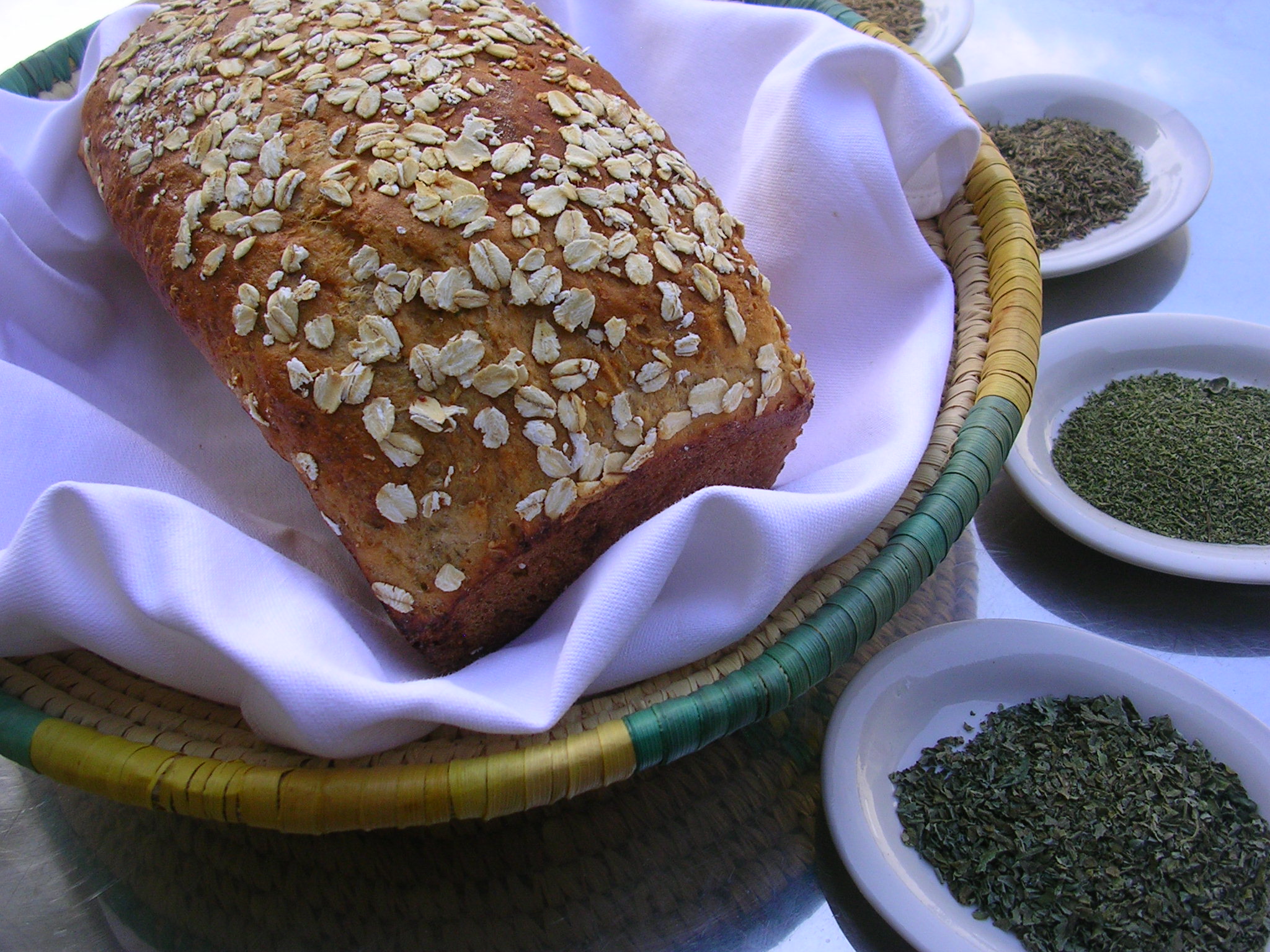
Savory – Air dry, crumble and use for Whole Wheat Herb Bread

Dressing up for harvest

Since I started freelancing and working from a home office ten years ago I can count the times I have bought pantyhose on two hands. But now pantyhose is on my shopping list – not for myself but for the Charentais melons in my garden.

After a short bout of panic the other day when I thought that the cucumbers, melons, zucchini and winter squash were affected by pests and disease, things are looking great now. I can almost watch the melons grow on the trellis. When they reach the size a bit smaller than a baseball, I place them in pieces of pantyhose (recyclable year after year) tied at the bottom and attach the top to the wire of the trellis with string. This way the weight is taken off the vines and the precious fruit is off the ground and off guard for groundhogs and other predators.

I cannot wait to pick the first melon, especially since there was basically no harvest in the rainy summer of 2009. The sure indicator that the melons are ripe is the fantastic sweet scent all over the garden.

I would write down my recipe for melon sorbet but I am going to wait on that. I don’t want to jinx things with too much optimism. Meanwhile I’ll go out and buy some inexpensive flesh-colored pantyhose.

Time for tomato sauce

Yesterday I went on a tour of the Rodale Institute and came home fully charged with new ideas. But today is a dreary, rainy Sunday – a perfect day to take care of what’s already there: the first big batch of tomatoes for sauce.
Unlike the grape and cherry tomatoes from my garden, the big tomatoes often look rugged. But in organic produce looks don’t matter. I use the prettiest tomatoes for eating raw and the majority goes into sauce for freezing.

My recipe for tomato sauce is based on 16 pounds of tomatoes (making approx. 12 pounds skinned and seeded) so even if you are a mathematical dummy like me, it’s easy to adapt the recipe for a smaller amount, especially because the amount of herbs and brown sugar is up to taste.

The crucial thing is to start with good, ripe tomatoes, and simmer the sauce uncovered for several hours.

I freeze the sauce in 1-quart freezer bags that I place flat on a baking sheet or tray until frozen (this way they can be stacked and take minimum space in the freezer). A way of getting the sauce even thicker later is to place the frozen bag in a bowl to thaw it slowly, pouring off the clear liquid that drains from the frozen sauce.

Thick Tomato Sauce

16 pounds ripe tomatoes

6 medium onions, chopped

1 cup olive oil

2½ teaspoons salt

2 tablespoons dried oregano or basil (or 1/3 cup finely chopped fresh basil)

2 tablespoons light brown sugar, more to taste

Freshly milled black pepper

You also need:

A large pot

A food mill

1. Bring water to a boil in a large pot. With a sharp knife cut a small X in the bottom of each tomato. Place the tomatoes in batches into the boiling water. When the skins start to curl after a few minutes, remove the tomatoes with a slotted spoon and place in a bowl of cold water. When they are cool enough to handle, remove the skins and cut out the core. Do this over a bowl in order to catch all the juices.

2. Coarsely cut the tomatoes (again over the bowl) and pass them through a food mill. This is a bit of a messy job but please resist the temptation to use a blender or a food processor to puree everything because the seeds have a slightly bitter taste and will affect the taste of the sauce.

3. Heat the oil the pot and cook the onions for 10 to 15 minutes until translucent yet not browned, stirring often. Add the skinned and seeded tomatoes and the salt and cook uncovered for 3 to 4 hours, stirring occasionally. If using dried oregano or basil, add it during the last hour. The sauce is ready when it is visibly reduced and thick and the olive oil separates on the top. Add brown sugar and pepper to taste.

4. Remove from the heat and let cool slightly. Puree the sauce with an immersion blender or in batches in a food processor. If you use fresh basil, add it now. Let cool completely before freezing.

Makes 18 cups

Savory bread

Once my daughter brought a friend home for the weekend, who saw me baking bread. A few days later her friend sent us a lovely thank-you note with a watercolor view from our kitchen window and her grandfather’s recipe for oatmeal herb bread (typed on an antique manual typewriter). Almost every time when I try out a new bread recipe and ask my husband whether he likes it, he says, “It was good,” or “It was great,” only to add, “but I still like Claire’s bread the best.”

Claire’s bread is the reason why I started to grow summer savory, an herb I rarely use in cooking. I grow savory from seed until it’s strong and bushy and about to bloom, then I cut it down all at once and dry it. By late winter, the savory supply is gone, so my husband has to wait until mid-summer for more of his favorite bread. Even my son, until now a member of the Wonder Bread lobby, said it was good.

I made a few changes to the original recipe, including honey instead of molasses, whose flavor I don’t like; whole-wheat flour plus gluten for a lighter texture; more savory and no dried parsley. Like all bread, it should cool completely before cutting. This is not easy to enforce if you have a bread lover lurking in the kitchen, just waiting for you to turn your back.

Whole-Wheat Herb Bread I

2 scant tablespoons active dry yeast

1/3 cup lukewarm water

2 tablespoons soft butter

½ cup dark honey

3 cups whole-wheat flour (preferably King Arthur white whole wheat flour)

3 cups bread flour

2½ teaspoons salt

4½ teaspoons gluten

2 cups hot water

1 cup rolled oats

1 teaspoon finely crumbed dried crumbled basil

½ teaspoon anise seed

2½ teaspoons powdered summer savory

½ teaspoon finely crumbled dried thyme

1 egg

1. Dissolve the yeast in the lukewarm water and let stand 10 minutes until foamy.

2. In the meantime mix the butter with the honey in a small bowl. Mix the flours with the salt and gluten in a large mixing bowl, or the bowl of a stand mixer. Add the hot water and mix briefly.

3. Add the yeast mixture and the butter-honey. With the kneading attachment of the electric hand mixer, or with the stand mixer with kneading hook set on low, knead until a smooth dough forms. If the dough is too dry, add a little warm water; if it’s a little tacky, don’t worry and please don’t add more flour, otherwise the bread will be too dry.

4. Lightly oil a large bowl and place the dough in it. Turn the dough over once so it is evenly coated and cover with a kitchen towel. Let rise in a warm place for 1 hour.

5. Reserve 2-3 tablespoons of the oats and work the rest into the dough together with the dried herbs until well incorporated.

6. On a floured surface divide the dough into two equal pieces. Place them in greased loaf pans and cover with a kitchen towel. Let rise in a warm, non-drafty place for 45 minutes.

7. Preheat the oven to 350 degrees F.

8. Mix the egg with 2 tablespoons cold water and brush onto the tops. Sprinkle with the reserved oats.

9. Place a jelly roll pan the lower rack of the oven. Fill it two-thirds with boiling water from a water kettle.

10. Bake 40 to 50 minutes until browned on top. If the bread makes a hollow sound when you knock on the bottom, it’s ready. Remove from the pan and let cool on a cake rack.

Makes two loaves

Whole-Wheat Herb Bread II (Sourdough Version)

Starter:

¼ cup fed starter

1 cup bread flour

½ cup lukewarm water, more as needed

Dough:

2 tablespoons unsalted butter, softened

2 tablespoons honey

3 cups whole-wheat flour

2 cups bread flour

2½ teaspoons salt

2 cups hot water

1 teaspoon finely crumbed dried crumbled basil or rosemary

½ teaspoon anise or fennel seed, crushed

2½ teaspoons powdered summer savory

½ teaspoon finely crumbled dried thyme

Everything but the Bagel Seasoning, for sprinkling

1. Mix starter ingredients in a container with a tight-fittig lid. Cover and let sit at room temperature for 12 to 14 hours.

2. Mix the butter with the honey in a small bowl. Mix the flours with the salt in a large mixing bowl, or the bowl of a stand mixer. Add the hot water and mix briefly.

3. Add the starter mixture, butter, and honey. With the kneading attachment of the electric hand mixer, or with the stand mixer with kneading hook set on low, knead 3 min on low, then 2 minutes on medium speed.

4. Lightly oil a large container with a tight-fitting lid and place the dough in it. Turn the dough over once so it is evenly coated and cover with a large plate and a damp kitchen towel. Let rise in a warm place for 2 hours, folding and stretching after 1 hour.

5. Divide the dough into two equal pieces. Place them in greased loaf pans press them down gently with wet hands to fill the pan. Cover with a kitchen towel and let rise in a warm, non-drafty place for 1.5 hours, or until the dough has reached the sides of the pan.

6. Preheat the oven to 400 degrees F.

7. Make 3 to 4 diagonal cuts in each loaf in opposite directions to create a diamond pattern. Lightly brush the surface with water and sprinkle with seasoning mix. Place breads in center rack of oven at once.

8. Bake for 40 minutes at 400 degrees F, then remove bread from pans. Place the loaves directly on the oven rack and bake for another 15 minutes to brown all around.

9. Remove from the oven and let cool for several hours on a wire rack before cutting.

Makes two loaves