Butter bypass


It’s not that I don’t like butter, on the contrary. I just don’t want to clog my arteries or those of the people for whom I care and cook by using butter when it is not absolutely necessary.

Butter is quintessential to many basic recipes, such as béchamel sauce, and my view is that if you don’t want to or cannot make them with butter it’s better to stay away and make something else than coming up with a weird concoction that is neither fish nor fowl.

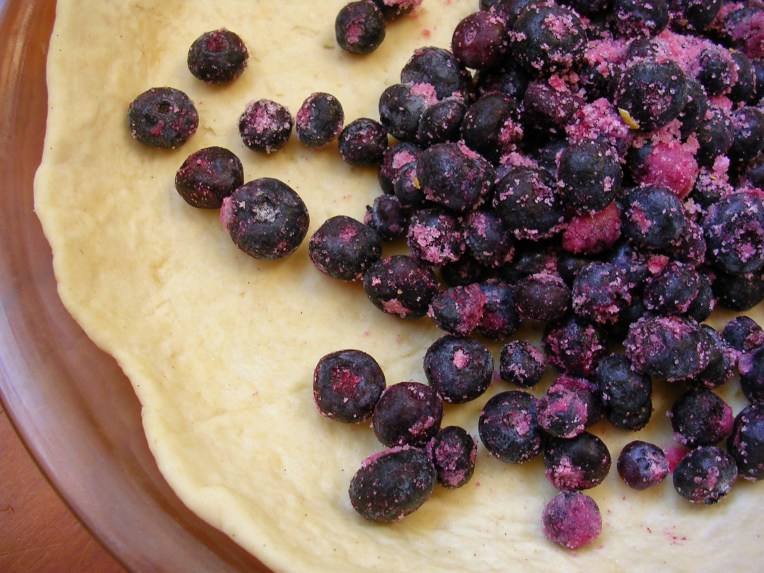
That brings me to my long quest for a low-fat pie crust. I cringe when I see recipes that call for 1 stick, or even 1½ sticks butter – for nothing but the crust! Sure, pie crust needs to have the right consistency, flaky at best, but oftentimes it is a mere receptacle for the filling. So why would I dump 56 grams of saturated fat into that shell?

I have been trying out all types of alternatives for pie crust with butter, from using organic shortening, which has a certain aftertaste and is still high in fat, to yeasted pie crust, which only works for savory pies and should be eaten very fresh.

In German cuisine there is a crust made with Quark and vegetable oil (called Quark-Öl-Teig). It is low fat, very pliable and tastes still good after a day or two. Quark is unfortunately rarely available in the United States but I have found that Greek yogurt can be a very suitable substitute.

When I made this pie crust today, I marveled again about how easy it is to roll out (rolling out pie crust is definitely not one of my strengths). Another advantage: this crust can be rolled out right away, no chilling required like for piecrust with butter or shortening.

Unless I flip-flop about butter one day, from now on I will make pie crust this way.

Low-Fat Pie Crust with Greek Yogurt and Oil

For a 9-inch to 10-inch piecrust

1/3 cup (3 ounces / 80 g) 0% Greek yogurt), more as needed

2 tablespoons 2% milk

2 tablespoons oil (canola, sunflower, or any other oil with neutral flavor)

2 tablespoons sugar (omit in savory pies)

1 teaspoon vanilla extract (omit in savory pies)

Pinch of salt

1 cup + 3 tablespoons (6 ounces / 165 g) flour (all-purpose, whole wheat flour, or whole grain spelt flour, or a 50:50 mix of whole grain and all-purpose flour)

1 teaspoon baking powder

1. Mix all ingredients in a bowl with a spoon until they form a ball. If the mixture is dry and crumbly, add more Greek yogurt, 1 tablespoon at a time.

2. Transfer to the countertop and knead with your hands until smooth.

3. Roll out on a lightly floured countertop, or between two sheets of wax paper. Grease pie pan and line with the piecrust. Fill and bake according to recipe.
One lonely head of cauliflower

My first try with cauliflower yielded one (!) tiny head of cauliflower. I don’t know whether I planted the seedlings too late, did not fertilize or water them enough, or whether the extreme ups and downs of the weather this fall stunted their growth. Should I plant cauliflower again I will certainly have to educate myself better, which is perfectly all right, because gardening is lifelong learning.

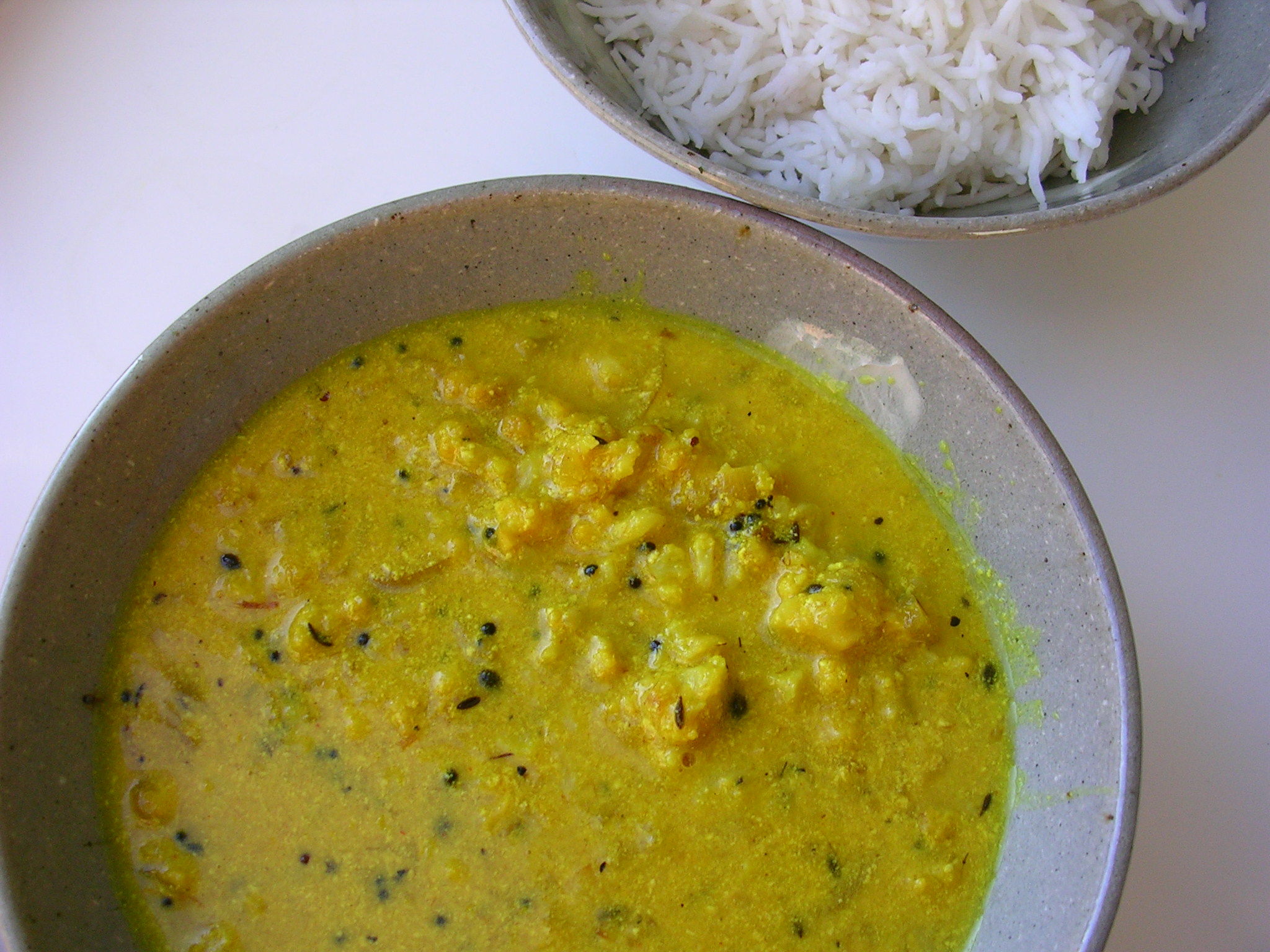
Of course I had to do something special with that cauliflower. My favorite dish with cauliflower is a yogurt curry that I have often eaten at Curry in a Hurry, my favorite Indian eatery in New York City. I did not have a recipe so I experimented with the ingredients. The result came close to the original although the sauce curdled a bit (things to learn here, too…)

That lonely head of cauliflower was not the only harvest. I also picked the last radicchio and dug the last beets. My other trial crop this year, kale, is still standing. It is less finicky than cauliflower and thrives in cold weather, when the starch gets converted to glucose. That’s the only aspect of winter I look forward to right now – harvesting kale in the snow.

Yogurt Curry with Cauliflower

1 tablespoon corn oil

1 teaspoon black mustard seeds

1/2 teaspoon cumin seeds

1/2 teaspoon coriander seeds

1/2 stick cinnamon

Pinch of asefoetida

1 large onion, finely sliced

1 large garlic clove, finely chopped

1 1/2 teaspoons turmeric

1 teaspoon salt

Pinch of cayenne

1 bay leaf

8 ounces cauliflower flowerets

1/2 cup low-fat plain yogurt

1/2 cup buttermilk

Freshly ground black pepper

1. Heat the oil in a heavy medium-size pot to the point of almost smoking. Add the mustard seeds, cumin seeds, coriander seeds, asefoetida and cinnamon stick and fry until the mustard seeds pop, 1 to 2 minutes.

2. Add the onion, garlic, turmeric and bay leaf. Reduce the heat to medium and cook until the onions starts to soften. Add the cauliflower and 1 cup water. Mix well, cover, and cook for 15 to 20 minutes, or until the cauliflower is very tender and falling apart.

3. Remove the pot from the heat and stir in the buttermilk and yogurt. Heat throughly but do not cook, stirring. Season with salt and pepper. Remove the cinnamon stick and the bay leaf. Season with salt and pepper. Serve hot with basmati rice.

Makes 2 main course servings

Brining olives, bringing back memories

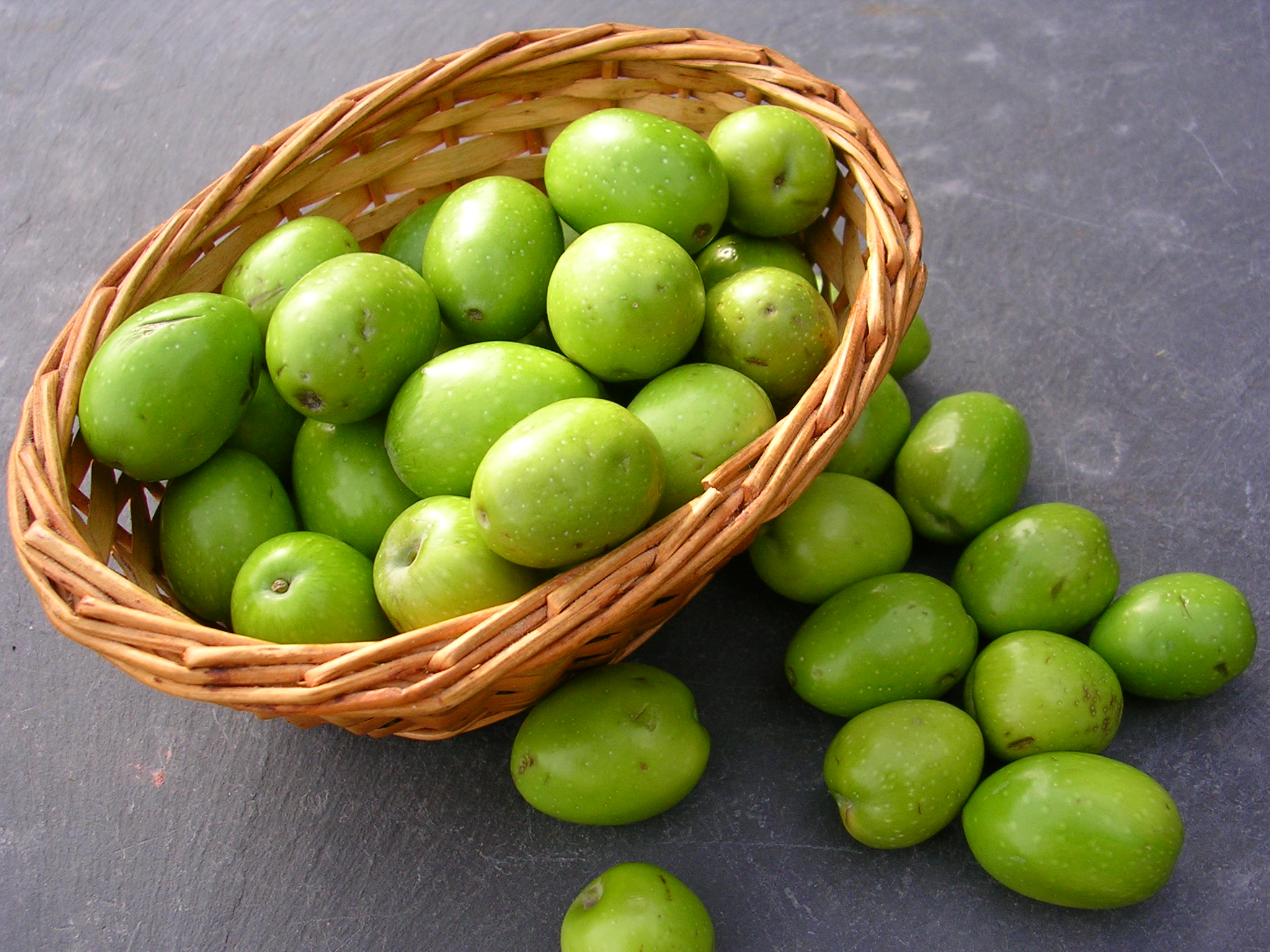
Pomegranates and olives are the two things that I associate the most with my Tunisian grandmother. Of course I cannot grow either in my Pennsylvania garden so when I saw fresh olives for sale the other day I could not resist buying some to try my hand on brining them.

Those olives brought back vivid memories of my grandmother. Most of them have to do with food, as I did not speak a word of Arabic as a child, and my grandmother did not know French. And, like most women of her generation, she was illiterate. She basically communicated with me through food. I remember her putting things on my plate, and when she realized I liked it, she nodded or chuckled, or both, and put more on my plate.

My grandmother’s cooking was as Mediterranean as they come – no dairy whatsoever. Before trips to Tunisia, I remember my mother buying gingersnaps for her at a spice store in downtown Frankfurt, a place where she usually never shopped. In the 1970s, gingersnaps were something very exotic for Germany, and certainly not cheap. I tried one and found it awful (today I love gingersnaps) but my mother told me that these were the only cookies my grandmother liked and was able to eat. It only occurred to me now that she had a milk allergy.

At my grandmother’s house in Ksar Hellal, a town in the Tunisian coastal area called the Sahel, the meals were taken in the large courtyard. We sat on straw mats, with the starry night sky as the ceiling. You could faintly hear voices and music from neighboring houses, and cooking smells wafting over, yet it felt ultimately private.

The middle of her courtyard had a small, rosette-shaped elevated garden with an orange tree, a pomegranate tree, and some turtles roaming around. My grandmother knew how much I loved pomegranates, so each time she came to visit us in Germany, usually in the winter, she brought me pomegranates from that tree.Storage roomOlives, especially olive oil, was omnipresent in her cooking. The greenish oil was so thick that a spoon could stand in it. Like all her other provisions, she kept the olive oil in earthenware amphora, neatly lined up in the long narrow storage room. The olive oil came from the family’s olive groves and she used it for everything, from frying thick wedges of potatoes to her delicious hot pepper sauce, which was much milder than harissa, and which I never managed to fully recreate. She did not distinguish between light olive oil for cooking and the thick cold-pressed grade.  I never use extra-virgin olive oil for cooking, I find its flavor too strong, but back then I did not mind. Then, of course, there is the price issue. Good extra-virgin olive oil is expensive. Early this summer I finally found a mail order source for Tunisian extra-virgin olive oil. I bought three liters thinking it would last us a whole year. We were out after a few months and I recently had to reorder.
My grandmother also made her own olive soap. I still have one of those irregularly shaped chunky bars, and I never thought of using it because it is one of the few objects that connect me to her. When I went to her house ten years after she died, I took as many photos as I could. The house was deserted and clearly falling apart. For a short while I hoped I would be able to save that gem, with its beautiful Moorish tiles, its wrought-iron windowpanes, and its sleeping alcoves with elaborate multi-colored woodwork frames. But renovating it was too big of a task for me at a time when I was just starting my career. Then, life took me elsewhere and, eventually, to the United States.

Brining olives takes time. Mine are still at the stage where I need to soak them in water and change it daily to remove the extreme bitterness. I hope it will work out and I will end up with tasty olives in a couple of months so I can post the recipe. (Update, January 2012: The cured olives failed, they were awfully bitter. I will rely on the pros for olives but it was fun to try).

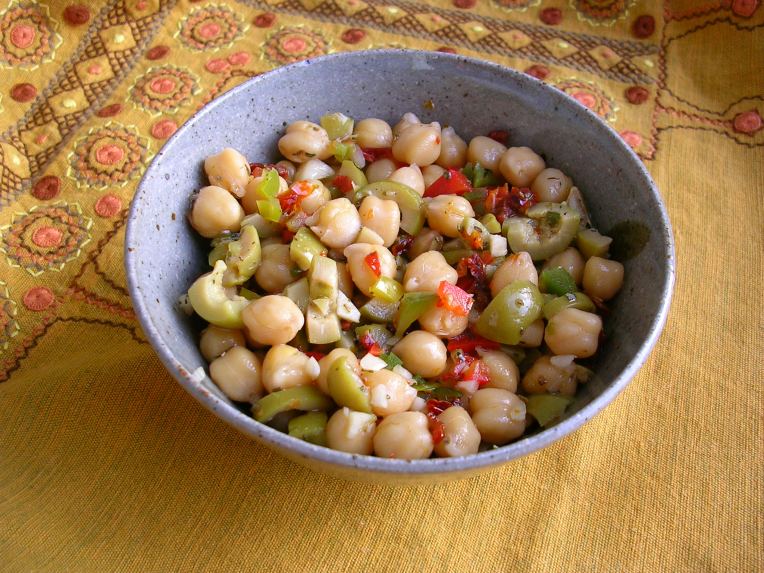
In the meantime, all this thinking and reading about olives put me in such an olive mood that I concocted a quick salad with olives, using leftover chickpeas and sun-dried tomatoes from the garden. This is, like most salads in Arab and Middle Eastern cuisines, a compact affair, small and filling, like Tabouleh.Chickpea Salad with Green Olives

Chickpea Salad with Green Olives

2 cups cooked chickpeas, rinsed and drained

1/2 cup pitted green olives, coarsely chopped

2-3 cloves garlic, finely chopped

2 tablespoons finely chopped sun-dried tomatoes (packed in oil)

Finely chopped fresh chili to taste

1 teaspoon dried oregano

Salt

Freshly ground black pepper

Lime juice to taste

Extra-virgin olive oil to taste

Mix all ingredients. Let sit a few hours before serving. Refrigerate if not serving the same day. Serve at room temperature.

Makes 6 servings

Jerusalem artichokes, a Trojan horse?

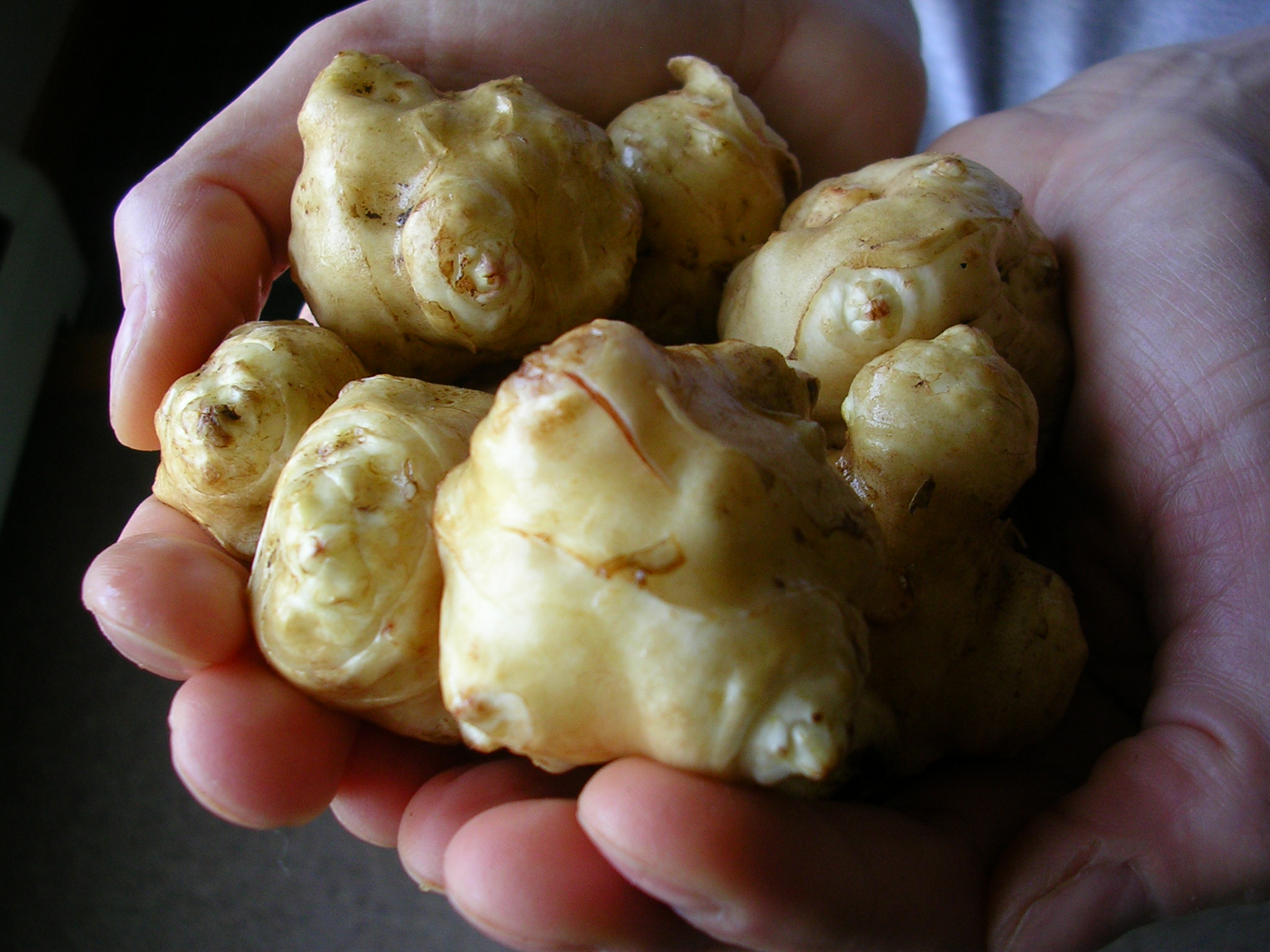
It might be that next summer, after Jerusalem artichokes have taken over the herb garden, I will curse the moment I planted them, disregarding all warnings against this supposedly highly invasive crop. For now, I am quite happy with my very first harvest of those crunchy little tubers. Boldly I am thinking that if I can can keep various mint plants under control, why shouldn’t I be able to do the same with Jerusalem artichokes? We’ll see next summer if they are manageable, and not a Trojan horse.

Jerusalem artichokes, aka sunchokes, are a native American crop. If that’s half a good enough reason to plant them, their wonderful taste and texture make up the other half.

I love artichokes, yet my two attempts to grow real artichokes in the garden, in the rainy summer two years ago, and again this summer, failed miserably. Jerusalem artichokes taste like artichoke hearts, but without the hassle of removing the leaves to get to the meaty portion.

The plants usually grow about six feet tall. Because of abundant rain, mine were so high that I needed a ladder to spot the small, sunflower-like heads. The tubers should be dug after the first frost, which came in the form of a major snowstorm in late October. Lacking a cool basement or a root cellar, I store the Jerusalem artichokes on the basement steps leading to an outdoor Bilco door. That’s fine for now but in sub-zero weather I will need to find another place, as the tubers should be stored close to 32 degrees F. To keep the moisture at the required 95 percent I spray the sunchokes with water every now and then. Properly stored they should keep through the winter.

After much scrubbing, the tubers are spick and span and don’t need to be peeled. But for this salad, I wanted uniform pieces so I trimmed and peeled them. The peeled Jerusalem artichokes must be immersed in acidulated water (lemon juice or vinegar) immediately to prevent them from browning.

Salad of Jerusalem Artichokes, Apples and Walnuts

1/4 cup walnuts

12 ounces Jerusalem artichokes (about 8 ounces peeled)

White winegar

1 tablespoon olive oil

1 large crisp tart apple (I used Honeycrisp)

1 tablespoon lemon juice

1 stalk celery

2 tablespoons extra-virgin olive oil or walnut oil

1 tablespoon apple cider vinegar

Salt

Freshly milled black pepper

1. Lightly toast the walnuts in a pan without oil. Remove them from the pan and set aside to cool.

2, Thinly peel the Jerusalem artichokes with a vegetable peeler. If they are very gnarly, trim them a bit to make peeling easier. Halve or quarter depending on size. Drop them immediately into a bowl with water and a few tablespoons of white vinegar.

3. Heat 1 tablespoon olive oil in a pan. Drain and dry the Jerusalem artichokes with paper towels and fry them in the hot olive oil for about 5 minutes, just long enough to brown them a bit from all sides. turning them often. Remove with a slotted spoon and set them apart on a plate lined with a paper towel. It is important to give them space when they cool, otherwise they will turn soggy.

4. Peel and quarter the apple, remove the core, and dice. Put them in an salad bowl and mix with the lemon juice immediately. Slice the celery and add.

5. Whisk the extra-virgin olive oil with the apple cider vinegar. Add salt and pepper to taste. Coarsely chop the walnuts and add them to the bowl with the cooled Jerusalem artichokes. Toss and serve, or refrigerate.

Makes 2 generous servings