
In my early gardening days, like many other novice gardeners, I wanted to grow just about everything I saw in seed catalogs and nurseries. Over time, realism kicked in and I learned to respect the limits set by time, space, climate, and money. In other words, I managed my gardener’s greed.
Or so I thought.
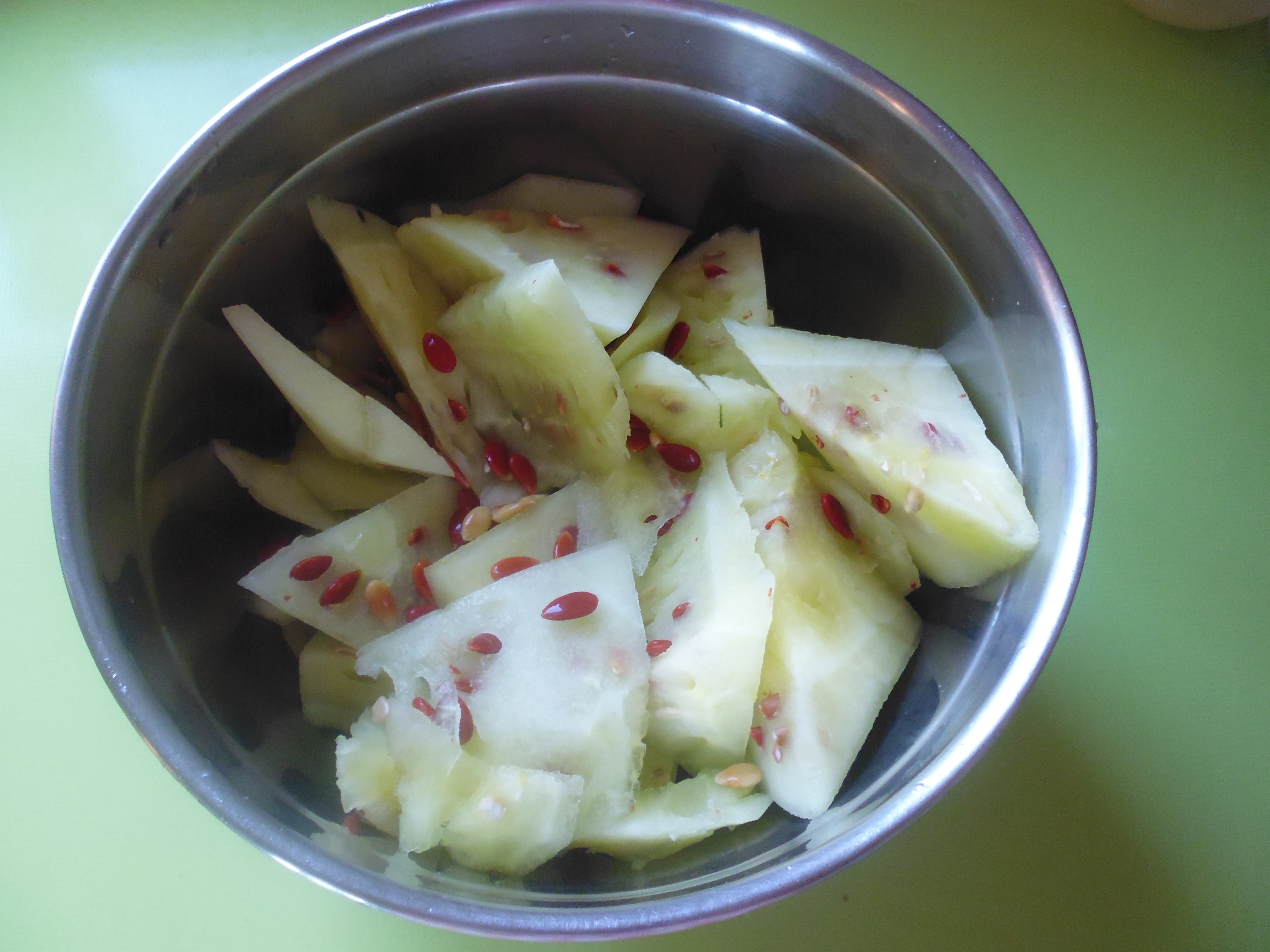
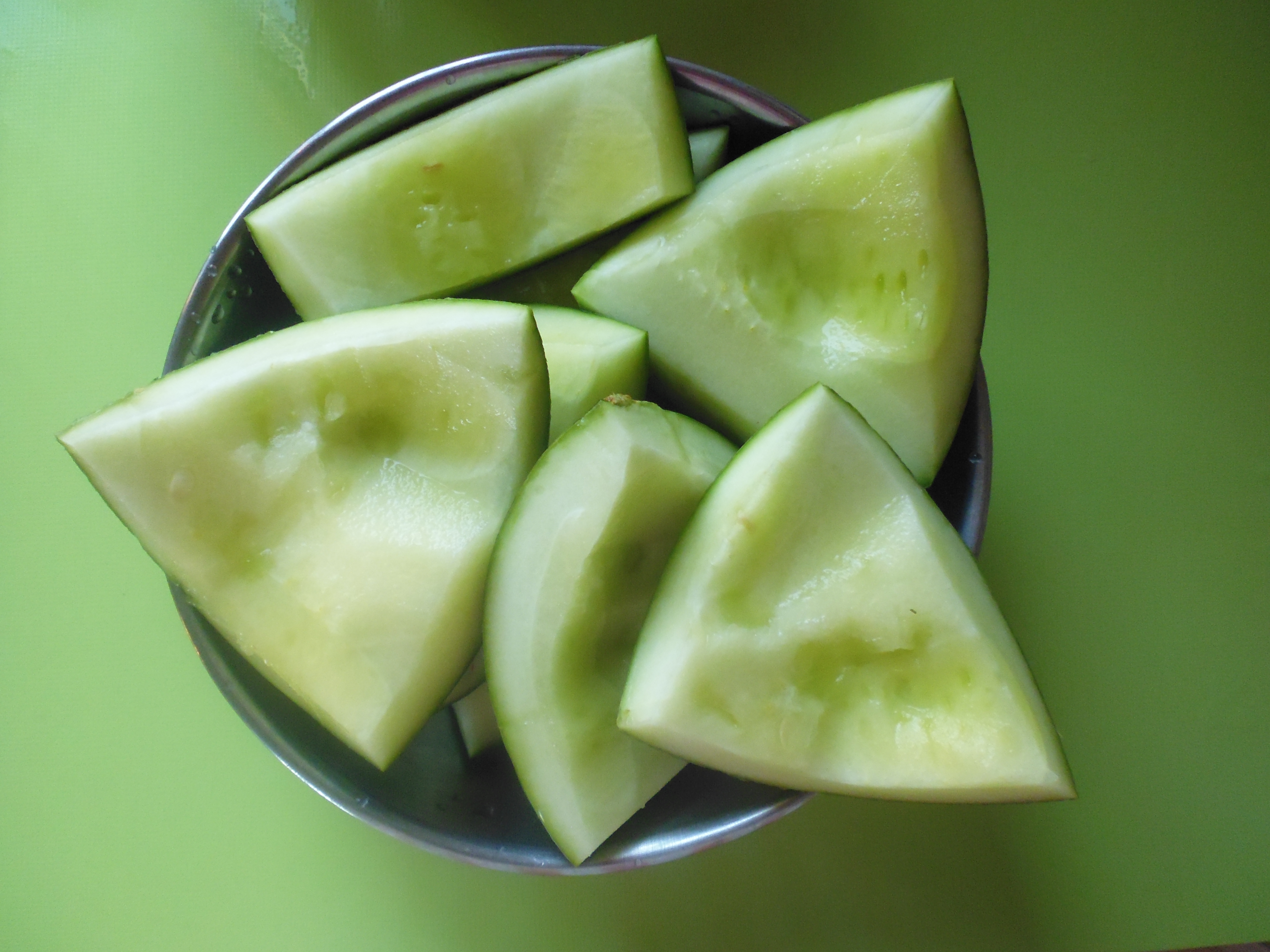
Then, last November, I read about citron melon jam in Mimi Thorisson’s blog Manger, and I knew I wanted those melons in my garden. It intrigued me that the melons are harvested in the fall, long after the other melons are gone, and that they are not palatable raw. I’ve been to Médoc near Bordeaux, France, where, as Mimi writes “at this time of the year, local Médocains are all preparing the melon d’Espagne [citron melon] jam” however, I had neither heard of the melon nor the jam before.
I could not find the seeds in the United States but came across A Gardener’s Table (funny coincidence!), a blog by food writer Linda Ziedrich. She had written about growing citron melon so I sent her an email asking where she got the seeds. The seeds are not commercially available but she offered to mail me some of the ones she had saved. I wanted to reciprocate but did not have any unusual seeds for her. Instead I asked if she would like some of my yearly allotment of dark chocolate that my mother in Germany had just sent me. Seeds then traveled from the West Coast to the East Coast, and chocolate in the other direction.
My exchange with Linda did not stop after I received the beautiful dark red citron melon seeds in the mail. We’ve had a lively and most interesting email dialog since, about a variety of gardening and food preservation topics, and last summer Linda and I conducted experiments with different pectin products for jam and both blogged about it (see my blog Spoonfuls of Germany). Linda’s two books, The Joy of Jams, Jellies, and other Preserves, and The Joy of Pickling have become my first references to read up on the subject and look for recipe inspirations when I get swamped with produce from the garden.
2012 had been a terrible year in my garden for all members of the cucumber family. I had almost none or no cucumbers, zucchini (yes, that is possible), melons, and winter squash. This year I decided to overplant everything, including the citron melons. My goal was to have one melon so at least I would know how it tastes.
Almost all the citron melon seeds germinated. I planted five seedlings and gave the rest away. Citron melons must love the soil and climate on our Pennsylvania hilltop. They grew and grew and grew. After they had set fruit and I spotted about a dozen tiny melons I started pruning the vines so that the plants would put all their energy in the fruit that was already there. I had to prune them many more times but they just kept growing, over the fence and down the slope if I had let them.
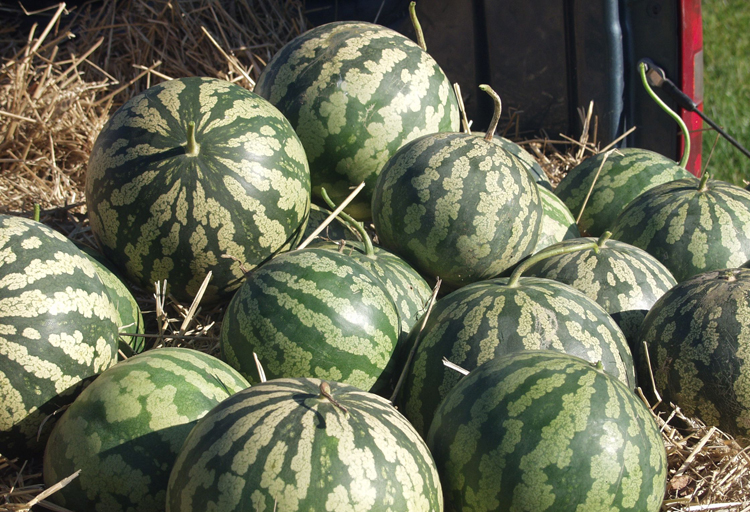
From the photos the citron melons looked about the same size as the Charentais French breakfast melons that I like to grow. To keep those off the ground, I put each melon in a piece of pantyhose and suspend it from a trellis or the garden fence. Well, the citron melons grew so large that the pantyhose burst. And I had to take the melons off the fence, otherwise it would have collapsed.
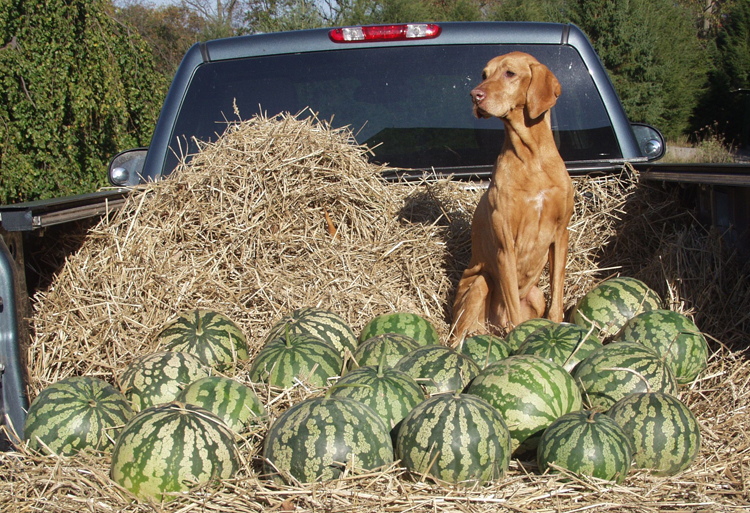
Today was harvest day. I had to recruit my husband’s help to bring the 22 heavy melons up from the garden. Several weeks ago, when I realized I would have many more melons than I could possibly handle, I started lining up a group of testers, all experienced cooks and/or passionate canners, unafraid and with a healthy dose of curiosity to try something new.
Among the testers is Pat Taylor whom I met at an event of my Master Gardener group in August. She mentioned being into colonial cooking and I remembered reading somewhere that citron melons were used in those days. Pat did research about citron melons, which are also called “jam melons” or “pie melons”, and found recipes like Citron Cream in The Virginia Housewife Or, Methodical Cook by Mary Randolph, whose brother, she explained to me, was married to Jefferson’s daughter. Little did I know that I was in for a history lesson, too!
Of course I hope that the jam or whatever the citron melons will become in the end, is going to be tasty. And if they don’t taste that great, I won’t be upset. Just explaining to everyone who came to my garden this summer, “No, these are not watermelons,” and telling the story, and connecting with people I would have never met otherwise, makes it a fun experience already.
To be continued.

Photos by Ted Rosen






 Green Card Gardener