Brining olives, bringing back memories

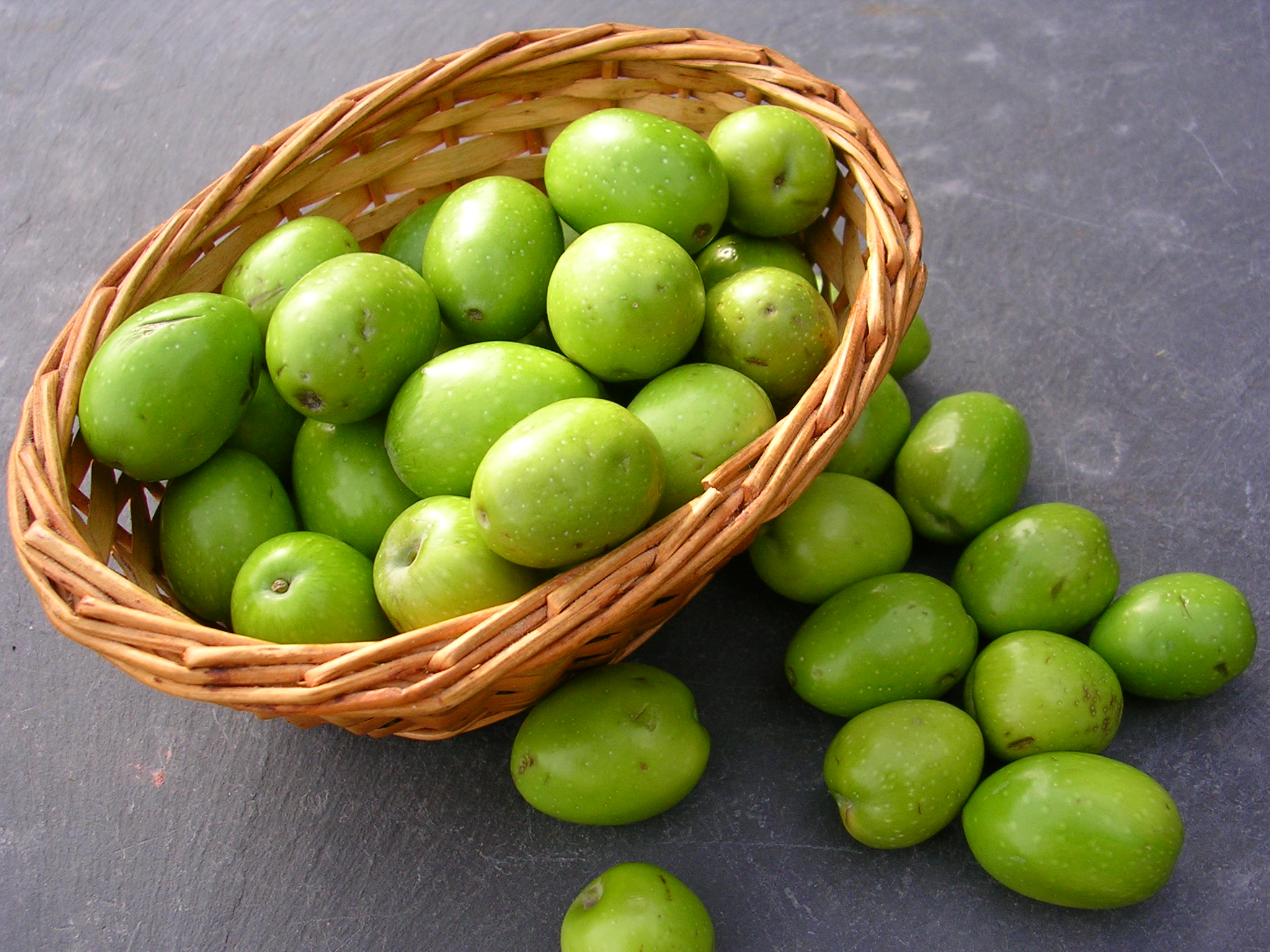
Pomegranates and olives are the two things that I associate the most with my Tunisian grandmother. Of course I cannot grow either in my Pennsylvania garden so when I saw fresh olives for sale the other day I could not resist buying some to try my hand on brining them.

Those olives brought back vivid memories of my grandmother. Most of them have to do with food, as I did not speak a word of Arabic as a child, and my grandmother did not know French. And, like most women of her generation, she was illiterate. She basically communicated with me through food. I remember her putting things on my plate, and when she realized I liked it, she nodded or chuckled, or both, and put more on my plate.

My grandmother’s cooking was as Mediterranean as they come – no dairy whatsoever. Before trips to Tunisia, I remember my mother buying gingersnaps for her at a spice store in downtown Frankfurt, a place where she usually never shopped. In the 1970s, gingersnaps were something very exotic for Germany, and certainly not cheap. I tried one and found it awful (today I love gingersnaps) but my mother told me that these were the only cookies my grandmother liked and was able to eat. It only occurred to me now that she had a milk allergy.

At my grandmother’s house in Ksar Hellal, a town in the Tunisian coastal area called the Sahel, the meals were taken in the large courtyard. We sat on straw mats, with the starry night sky as the ceiling. You could faintly hear voices and music from neighboring houses, and cooking smells wafting over, yet it felt ultimately private.

The middle of her courtyard had a small, rosette-shaped elevated garden with an orange tree, a pomegranate tree, and some turtles roaming around. My grandmother knew how much I loved pomegranates, so each time she came to visit us in Germany, usually in the winter, she brought me pomegranates from that tree.Storage roomOlives, especially olive oil, was omnipresent in her cooking. The greenish oil was so thick that a spoon could stand in it. Like all her other provisions, she kept the olive oil in earthenware amphora, neatly lined up in the long narrow storage room. The olive oil came from the family’s olive groves and she used it for everything, from frying thick wedges of potatoes to her delicious hot pepper sauce, which was much milder than harissa, and which I never managed to fully recreate. She did not distinguish between light olive oil for cooking and the thick cold-pressed grade.  I never use extra-virgin olive oil for cooking, I find its flavor too strong, but back then I did not mind. Then, of course, there is the price issue. Good extra-virgin olive oil is expensive. Early this summer I finally found a mail order source for Tunisian extra-virgin olive oil. I bought three liters thinking it would last us a whole year. We were out after a few months and I recently had to reorder.

My grandmother also made her own olive soap. I still have one of those irregularly shaped chunky bars, and I never thought of using it because it is one of the few objects that connect me to her. When I went to her house ten years after she died, I took as many photos as I could. The house was deserted and clearly falling apart. For a short while I hoped I would be able to save that gem, with its beautiful Moorish tiles, its wrought-iron windowpanes, and its sleeping alcoves with elaborate multi-colored woodwork frames. But renovating it was too big of a task for me at a time when I was just starting my career. Then, life took me elsewhere and, eventually, to the United States.

Brining olives takes time. Mine are still at the stage where I need to soak them in water and change it daily to remove the extreme bitterness. I hope it will work out and I will end up with tasty olives in a couple of months so I can post the recipe. (Update, January 2012: The cured olives failed, they were awfully bitter. I will rely on the pros for olives but it was fun to try).

In the meantime, all this thinking and reading about olives put me in such an olive mood that I concocted a quick salad with olives, using leftover chickpeas and sun-dried tomatoes from the garden. This is, like most salads in Arab and Middle Eastern cuisines, a compact affair, small and filling, like Tabouleh.Chickpea Salad with Green Olives
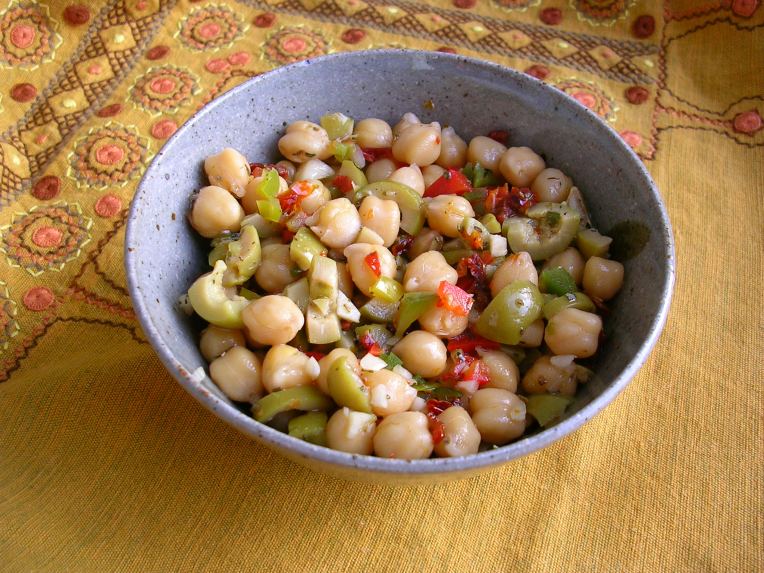
Chickpea Salad with Green Olives

2 cups cooked chickpeas, rinsed and drained

1/2 cup pitted green olives, coarsely chopped

2-3 cloves garlic, finely chopped

2 tablespoons finely chopped sun-dried tomatoes (packed in oil)

Finely chopped fresh chili to taste

1 teaspoon dried oregano

Salt

Freshly ground black pepper

Lime juice to taste

Extra-virgin olive oil to taste

Mix all ingredients. Let sit a few hours before serving. Refrigerate if not serving the same day. Serve at room temperature.

Makes 6 servings
Jerusalem artichokes, a Trojan horse?

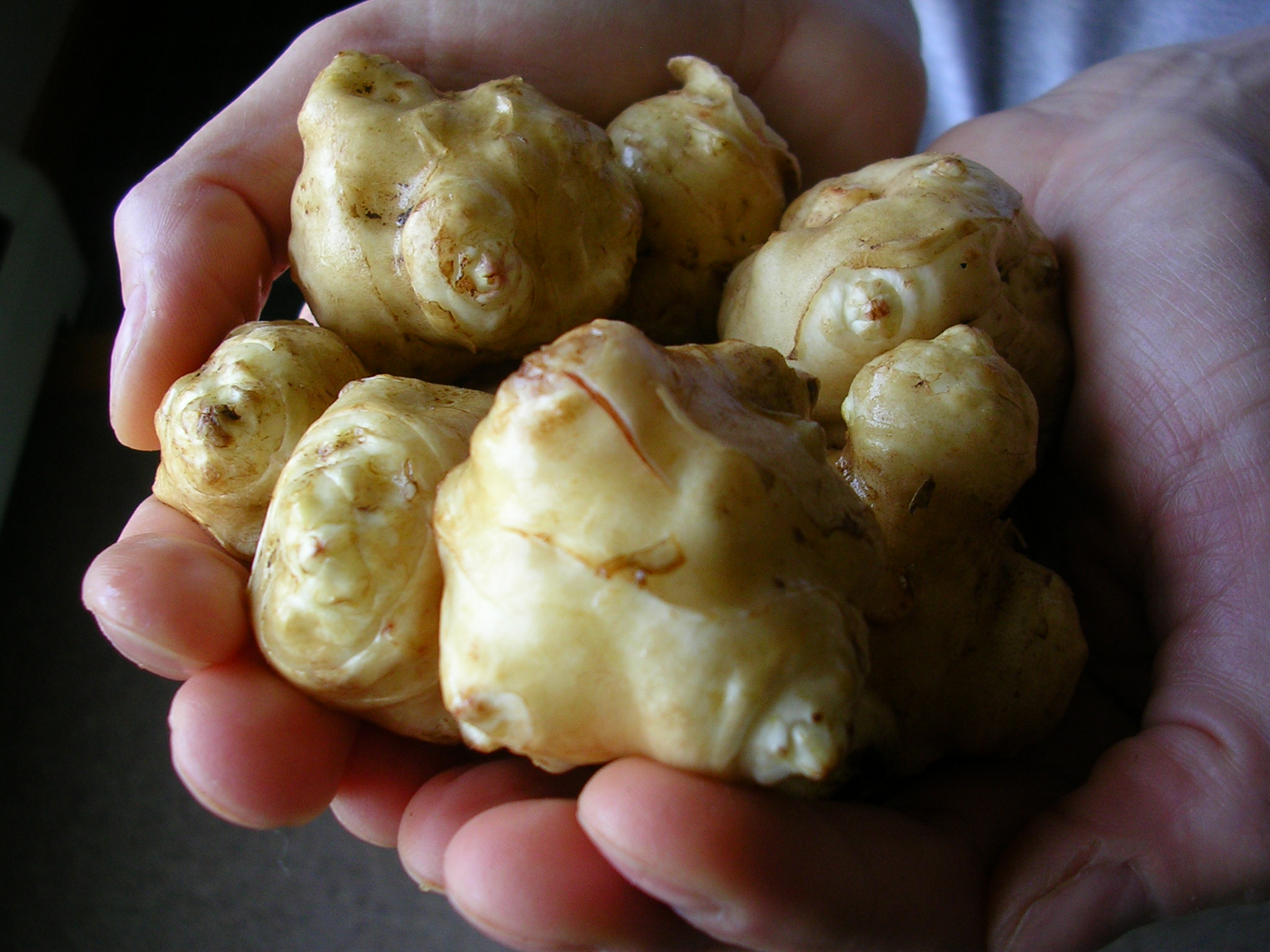
It might be that next summer, after Jerusalem artichokes have taken over the herb garden, I will curse the moment I planted them, disregarding all warnings against this supposedly highly invasive crop. For now, I am quite happy with my very first harvest of those crunchy little tubers. Boldly I am thinking that if I can can keep various mint plants under control, why shouldn’t I be able to do the same with Jerusalem artichokes? We’ll see next summer if they are manageable, and not a Trojan horse.

Jerusalem artichokes, aka sunchokes, are a native American crop. If that’s half a good enough reason to plant them, their wonderful taste and texture make up the other half.

I love artichokes, yet my two attempts to grow real artichokes in the garden, in the rainy summer two years ago, and again this summer, failed miserably. Jerusalem artichokes taste like artichoke hearts, but without the hassle of removing the leaves to get to the meaty portion.

The plants usually grow about six feet tall. Because of abundant rain, mine were so high that I needed a ladder to spot the small, sunflower-like heads. The tubers should be dug after the first frost, which came in the form of a major snowstorm in late October. Lacking a cool basement or a root cellar, I store the Jerusalem artichokes on the basement steps leading to an outdoor Bilco door. That’s fine for now but in sub-zero weather I will need to find another place, as the tubers should be stored close to 32 degrees F. To keep the moisture at the required 95 percent I spray the sunchokes with water every now and then. Properly stored they should keep through the winter.

After much scrubbing, the tubers are spick and span and don’t need to be peeled. But for this salad, I wanted uniform pieces so I trimmed and peeled them. The peeled Jerusalem artichokes must be immersed in acidulated water (lemon juice or vinegar) immediately to prevent them from browning.

Salad of Jerusalem Artichokes, Apples and Walnuts

1/4 cup walnuts

12 ounces Jerusalem artichokes (about 8 ounces peeled)

White winegar

1 tablespoon olive oil

1 large crisp tart apple (I used Honeycrisp)

1 tablespoon lemon juice

1 stalk celery

2 tablespoons extra-virgin olive oil or walnut oil

1 tablespoon apple cider vinegar

Salt

Freshly milled black pepper

1. Lightly toast the walnuts in a pan without oil. Remove them from the pan and set aside to cool.

2, Thinly peel the Jerusalem artichokes with a vegetable peeler. If they are very gnarly, trim them a bit to make peeling easier. Halve or quarter depending on size. Drop them immediately into a bowl with water and a few tablespoons of white vinegar.

3. Heat 1 tablespoon olive oil in a pan. Drain and dry the Jerusalem artichokes with paper towels and fry them in the hot olive oil for about 5 minutes, just long enough to brown them a bit from all sides. turning them often. Remove with a slotted spoon and set them apart on a plate lined with a paper towel. It is important to give them space when they cool, otherwise they will turn soggy.

4. Peel and quarter the apple, remove the core, and dice. Put them in an salad bowl and mix with the lemon juice immediately. Slice the celery and add.

5. Whisk the extra-virgin olive oil with the apple cider vinegar. Add salt and pepper to taste. Coarsely chop the walnuts and add them to the bowl with the cooled Jerusalem artichokes. Toss and serve, or refrigerate.

Makes 2 generous servings

Discovery in pink

When an old friend of mine from Germany recently visited, he raved about the beet dumplings he and his family had on a vacation in Tyrol and started to prepare at home. Of course I wanted the recipe!

First I thought the dumplings were more of a side dish, and I should wait to serve them with some type of roast in the fall or winter. But then I realized they make a very satisfying vegetarian main course, similar to pasta.

The original recipe uses chopped parsley but I thought chives would give the dumplings more flavor. For the sauce, I concocted a cream sauce with wine and shallots.

I am thrilled with this discovery in pink and cannot wait to make the dumplings again when the fall crop of beets comes in.

Beet Dumplings with Shallot Cream Sauce

Dumplings:

1 tablespoon unsalted butter

1 small onion, finely chopped

3½ ounces cooked or steamed beets

2 eggs

1¾ ounces Gorgonzola

4½ ounces dried crustless white bread

3 tablespoons flour, more as needed

2 tablespoons snipped fresh chives

1 teaspoon salt

Sauce:

1 tablespoon butter

3 shallot lobes, finely chopped

¼ cup dry white wine

¾ cup heavy cream

Salt

Freshly ground black pepper

1. For the dumplings, melt the butter in a small skillet and cook the onion until translucent and soft, stirring often. Set aside to cool.

2. Process the beets with the eggs and the Gorgonzola in the food processor or blender until smooth.

3. Cut the bread in small cubes and place them in a large bowl. Pour the beet mix over them. Add the cooled onion and mix everything until well combined. Add 3 tablespoons flour and mix well. Add the chives and salt to taste. Cover and let stand for 15 to 30 minutes.

4. Bring salted water to a boil in a large pot. Reduce the heat to a mere simmer. Place a thumbnail-size test dumpling in the simmering water. If it holds, the consistency is fine; if it falls apart, add more flour to the mix, one tablespoon at a time.

5. With wet hands shape dumplings of about 1.5 inches in diameter and place them in the simmering water. Do not overcrowd the pot; the dumplings should not touch each other. Simmer until the dumplings float on the surface, about 10 to 15 minutes. When they are done, remove them with a slotted spoon to a warmed serving bowl. Cover with a lid to keep them warm.

6. While the dumplings are simmering, prepare the sauce. Melt the butter in a small saucepan. Add the shallots and cook until soft and translucent, stirring often. Add the wine and increase the heat. Cook until the wine has evaporated almost entirely.

7. Add the cream and reduce the heat. Simmer uncovered until the sauce has thickened, about 10 minutes. Season with salt and pepper. Pour the sauce over the dumplings and serve.

Makes 4 servings

The eternally dirty knees of a gardener

No matter how hard I try to stay clean, I always get dirty in the garden. I mean really dirty, to the point where need to take off my gardening clothes in the garage. The worst are my knees. Even after thorough scrubbing in the shower, rubbing them with alcohol or hydrogen peroxide, my knees still look dirty. This is a mystery to me because I always wear trousers in the garden – hand-me-downs from my mother who is trying to rid her house of decades of accumulated clothing, including old jeans of mine when I was in my twenties (surprisingly, they still fit me, gardening must indeed do something for the waistline).

My best guess is that my knees are not actually dirty but it’s more pressure points from being on my knees a lot, just like our dog has calluses on his elbows from frequent floor contact.

How could I possibly not be on my knees? Seeding minuscule seeds, thinning out tiny seedlings, and harvesting, especially digging out root vegetables, is practically impossible without crouching on the ground, unless you do raised-bed gardening. Today I dug out some lonely beets that I had overlooked all summer, and seeded another fall crop. The arugula needed thinning so I took some for this salad tonight. Of course, I did all of this… on my knees.

When the time comes where I cannot be on my knees any more, I shall move to raised beds. Until then, I will just have to accept dirty knees as the signs of a true gardener.

Beet Salad with Arugula and Feta

1.5 pounds beets

¼ cup extra-virgin olive oil

2 tablespoons balsamic vinegar

Salt

Freshly ground black pepper

1 small bunch baby arugula

5 ounces crumbled feta

3 tablespoons chopped fresh mint

1. Preheat the oven to 375 degrees F.

2. Wash the beets and put them unpeeled in a Dutch oven or cast-iron casserole with a tight-fitting lid. Pour in about ¼ inch water. Cook the beets in the preheated oven for about 40 minutes, depending on size, until they are easily pierced with a knife. If the beets are different in size, check them individually and take them out as they become tender.

3. Slip the skins off the beets and cut into 1-inch cubes. Set aside to cool.

4. Whisk the oil with the vinegar, salt and pepper.

5. Wash and dry the arugula and tear into bite-size pieces.

6. In a large bowl, mix the cooled beets with the arugula, feta, mint and dressing. Serve as soon as possible, as the arugula wilts quickly.

Makes 4-6 servings