Round and lonely survivors

Calamities are part of gardening reality but I still cannot get used to it, and probably never will. Last year there were no eggplants due to flea beetles. This year, several dozen cucumber, summer squash and melon seedlings died on me, either chewed into oblivion by the striped cucumber beetle, or killed later by the bacterial wilt that the beetles transmit. The latest victim to the disease were the Hubbard squashes, which had grown as tall as the fence and just started to set fruit. I pulled the entire patch last week. Don’t mention it. Two cucumber plants are just hanging in there. I am trying not to get my hopes up too high for cucumber salad.

None of the gardeners I spoke to around here seems to have the same troubles. Driving by a pumpkin patch yesterday and seeing that field of healthy verdure made me jealous. Yet I should not forget that unlike many other parts of the country, we had plenty of rain here in northeast Pennsylvania. We are very fortunate; there could be many more failed crops.

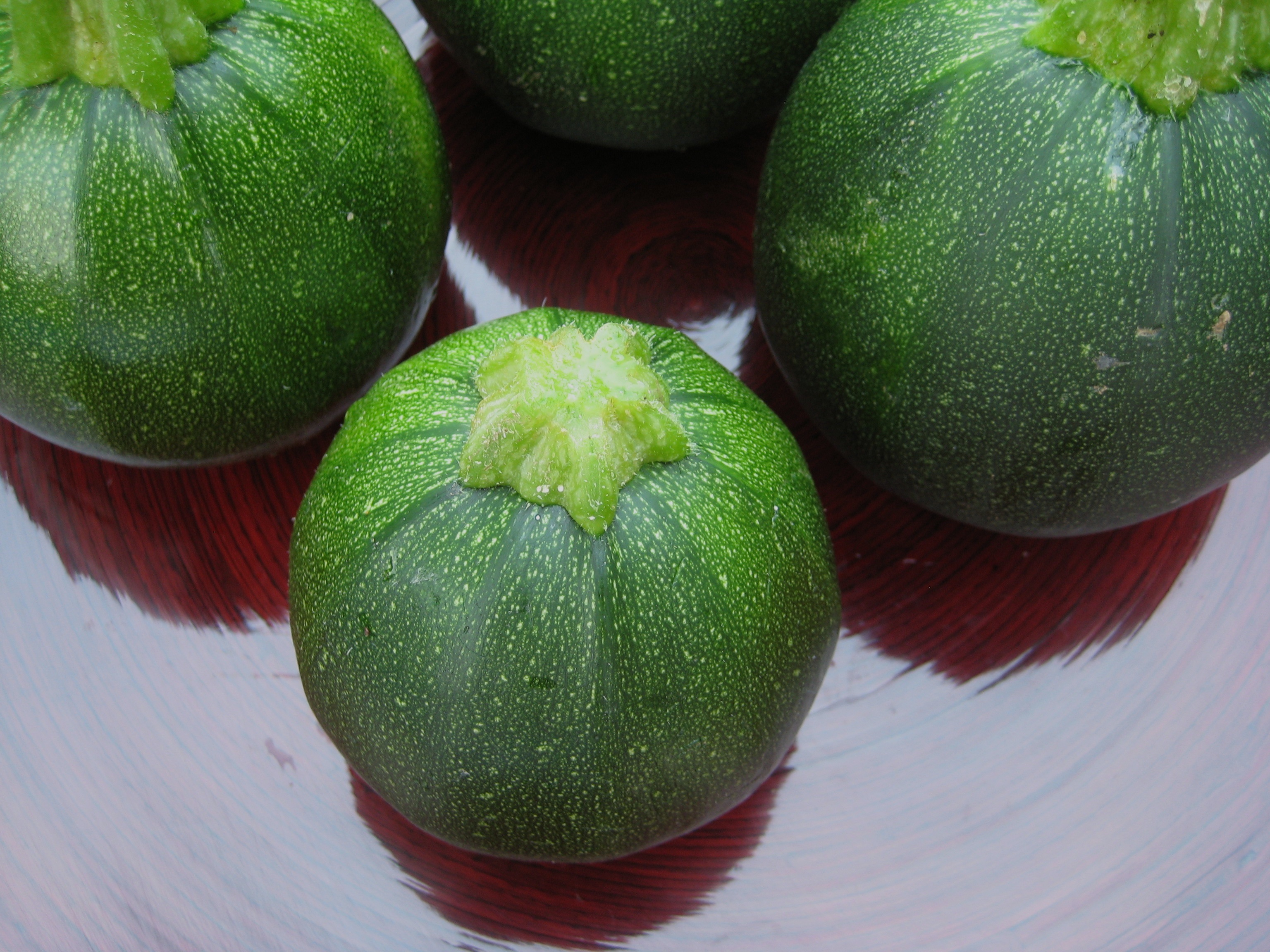
And, there is a consolation prize in my garden! A friend of a friend had given me two plants of Tondo di Piacenza, an Italian heirloom zucchini. Although the beetles are populating them as well, the plants seem to be resistant (so far) and I am picking one or two beautiful round zucchini every other day. They are great for stuffing but now that I have more than just a couple, I can finally make my Zucchini Quiche with Goat Feta that I have been craving all summer.

Maybe I will switch to growing Tondo di Piacenza next year. But next year there might be no trouble with striped cucumber beetles, and some other calamity will hit a different crop. You never know.

Garden foes, garden woes, and a broken toe

Whenever I grab the sledgehammer to drive a bamboo stick into the ground in order to secure something in the garden, like I did this morning, I must think of the time when I paid my attempt to protect the tomatoes from predators with a broken toe.

It was a few years ago in August. The tomatoes were heavy with fruit and just starting to ripen. One morning, I found the first fully red tomato on the ground, a big bite taken out of it. The next morning, the same thing. And the day after that, two tomatoes.

As my husband and I were having coffee that morning, I must have given him the “if-you-want-tomato-sauce-this year-you-better-do-something” look before heading out the door. When I pulled up the driveway at midday, I found him in the garden, sweating in the hot sun, putting the finishing touches on a 2-foot wall he had built around the entire tomato patch, using every single piece of plywood and scrap wood he could find in the shed. I gave him a big hug and called him my tomato hero.

The next day I found… another chewed tomato. My husband had gone with our son to his baseball game so they could not hear me scream and curse. By afternoon, and after some frantic research, I finally had a plan. Since the damage most likely occurred at night, I was going to nail a blinking bike light to the inside of the wall, which would deter whatever munched on the tomatoes.

I hastily kicked off my garden shoes at the door and rushed into the garage in socks to fetch the bike light, a nail and a hammer. Not waiting for the light over the workbench to turn on completely, I reached into the shelf for the hammer… and pulled out the sledgehammer sitting on top, which crashed on my foot.

When my husband and son came back a couple of hours later, they found me in the kitchen, my foot in a bucket with ice, wailing. I prefer not to repeat their comments, and neither the comments and looks I got in the following weeks when all I could wear was sandals and someone saw my bruised foot and I had to tell my story.

After I was somewhat able to move around again, I hobbled down to the garden and angrily tossed the bike light into the tomato patch. I left it switched on even during the day and gave a damn about the battery.

The chewing stopped. We had a bountiful tomato harvest. A few more years of critter warfare followed before we turned the main garden into a real fortress that only humans with two free hands to lift the gate, winged insects, and an occasional chipmunk can access. Now I grow everything that has a remote chance of being eaten (including tomatoes) in that fenced-in area, and all the perennial plants that critters usually leave alone (raspberries, blackberries, red and black currants, gooseberries and rhubarb) are outside. This year I boldly snuck a watermelon into the outside garden too. So far so good but maybe it has just not been discovered yet.

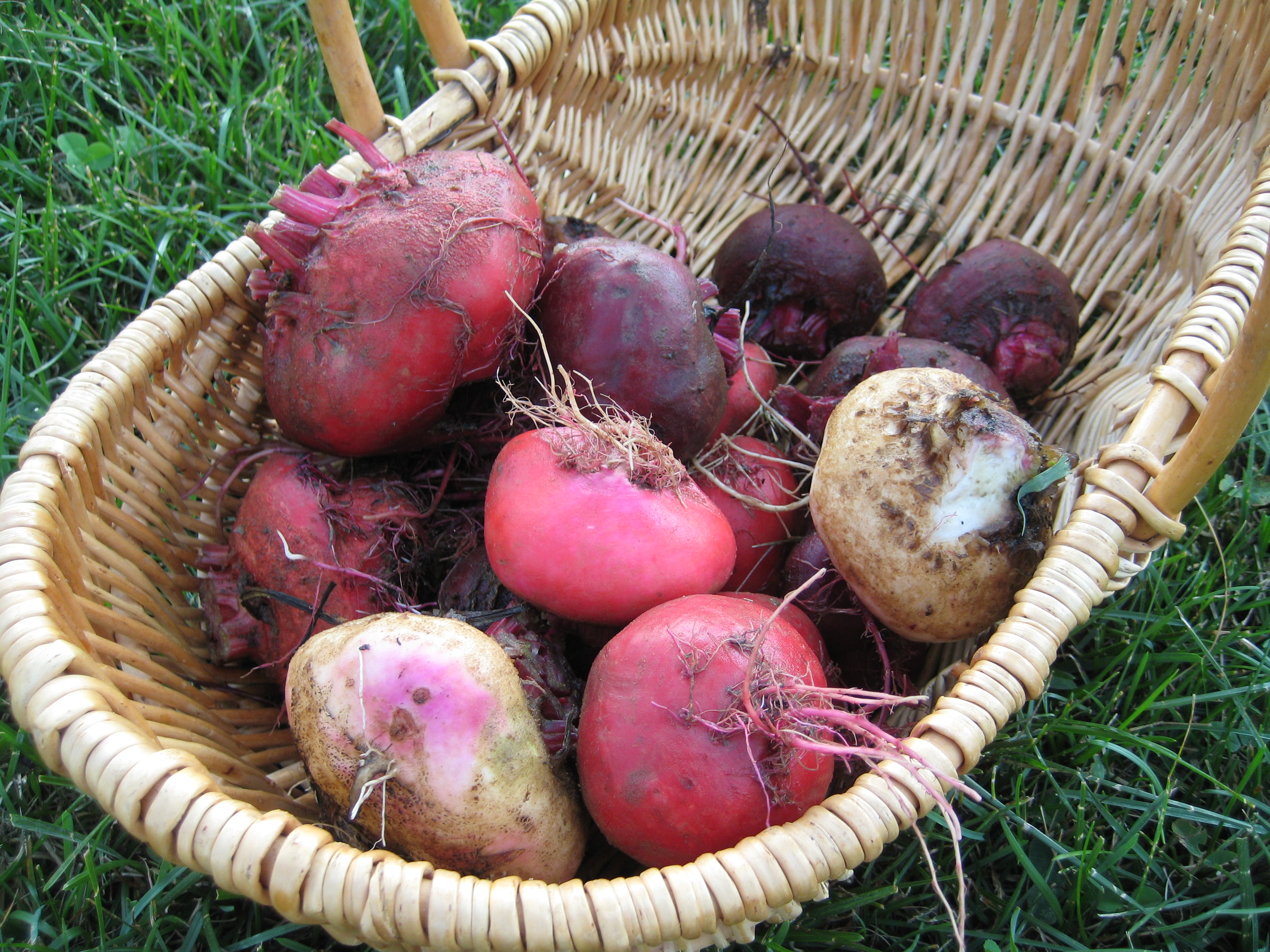
After I drove the bamboo stick in the ground this morning, I pulled the last spring beets – beautiful striped Chioggia and Crosby’s Egyptian. It is amazing how happy an arm full of beets can make me. This would have been unthinkable in the days of bunny warfare – the tender beet leaves were one of the first things to be chewed down to the ground by rabbits.

I made Amanda Hesser’s fabulous Gingered Beet Pickles but used my own Elderflower Vinegar instead of white vinegar. Any other fruity vinegar will do as a substitute.

Zucchini glut? I wish

Usually in July I try to find new zucchini recipes. Not this year. The cucumber family in my garden has taken a terrible beating. Between zucchini, cucumbers and my beloved Charentais melons (no sorbet this year, alas), I lost more than 25 seedlings to the striped cucumber beetle. Not only does it eat the plants, it also transmits bacterial wilt, a disease that makes plants collapse overnight and against which there is no cure.

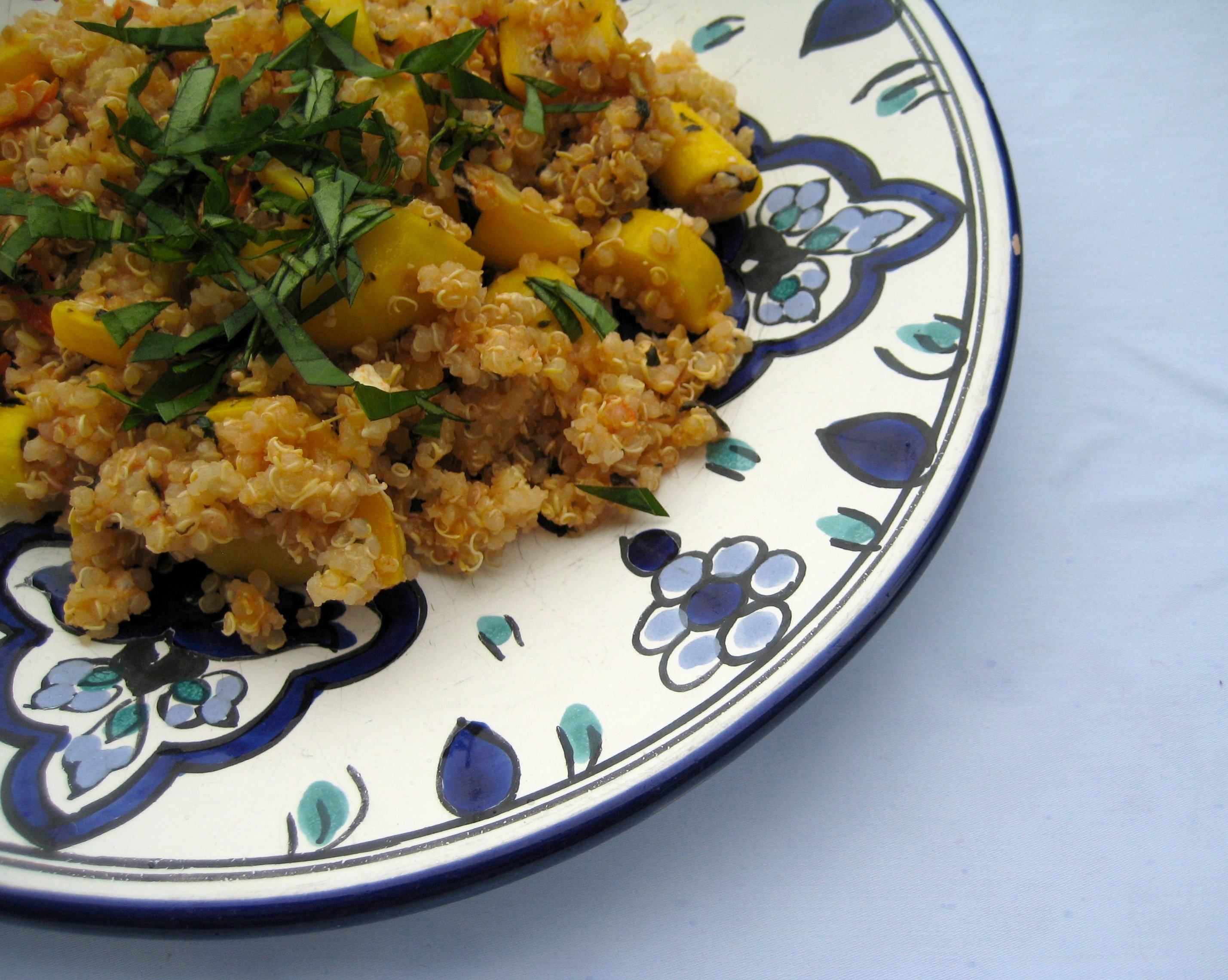
I thought the worst was over but yesterday I found my only surviving zucchini plant spread out in a sad wilted mass, full of blossoms and baby zucchini. The zucchini are perfectly fine to eat, and since we won’t have zucchini for a while, the pilaf I made with them tasted quite special. The next set of seedlings is just ready for transplanting, and who knows whether they will even make it that far.

I made a promise to myself: never to complain about too many zucchini ever again!

Quinoa Zucchini Pilaf

This can also be made with regular zucchini, in which case the seeds should be removed.

1 cup quinoa

Salt

6 to 8 baby zucchini, or 1 medium zucchini

1 cup cherry tomatoes

2 tablespoons olive oil

3 garlic cloves, finely chopped

Freshly ground black pepper

4 ounces crumbled feta

1/2 preserved lemon, rind only, finely chopped

3 to 4 tablespoons chopped fresh basil

1. Wash the quinoa thoroughly in cold water at least twice. Drain in a fine sieve.

2. Put the quinoa in a small saucepan with 1.5 cups water. Salt lightly and bring to a boil. Reduce heat to a simmer, cover and cook until the water has been completely absorbed, about 15 minutes. Fluff with a fork.

3. Dice the zucchini and halve the tomatoes. Heat the olive oil in a wide medium pot or a skillet and cook the garlic for 1 minute, do not let it brown. Add the zucchini and cook until it just starts to brown at the edges, stirring often.

4. Add the to tomatoes and cook for about 7 minutes, until most of their juice has evaporated.
Transfer to a large bowl.  Add the quinoa, feta, lemon rind and basil. Toss and season with salt and pepper. Serve warm or at room temperature.

Makes 4 servings

Rainy day summer soup

Although I love garlic, I have never eaten or made a garlic soup that I really liked. It always seemed to lack body and be a bit on the watery side, even the Garlic Soup from Mastering the Art of French Cooking.

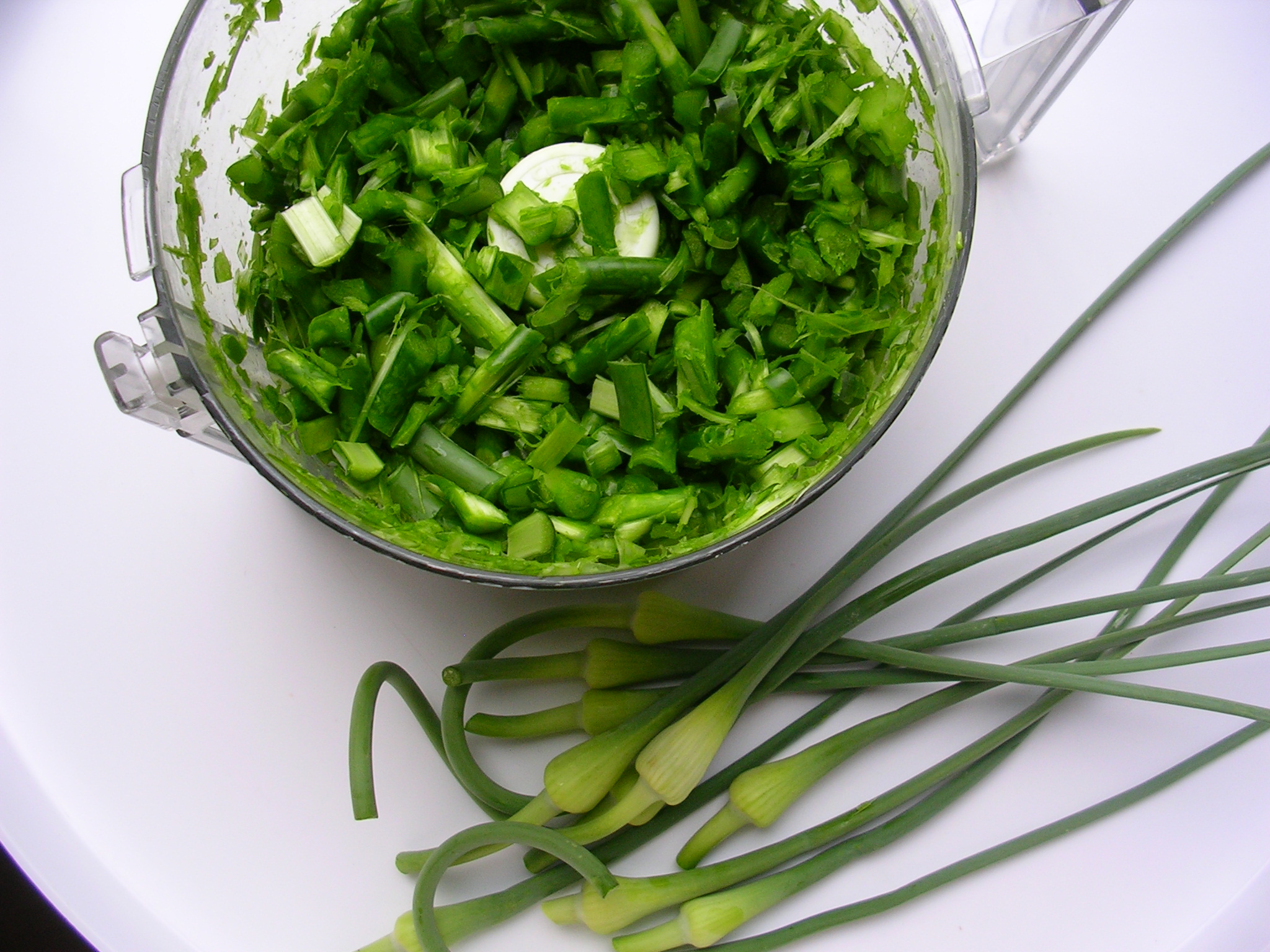
The garlic scapes are in urgent need of cutting so I decided to tinker with a simple and easy formula that uses lots of scapes and thickens the soup by adding a potato. For this recipe it does not matter that some of the scapes are already turning fibrous, as they are only used to infuse the broth and discarded afterwards.

I must admit I was too deliberate with the cayenne pepper so the soup was slightly hot but otherwise I will make it again just like  this – as long as there are still scapes to be cut in the garden.

Cream of Scape Soup

12 scapes, blossom ends removed

3 cups good-quality chicken broth

1 small bunch fresh thyme sprigs

1 medium to large potato, peeled and cubed

1 cup half and half

Salt

Pepper

Pinch cayenne

White wine vinegar

Croutons to serve

1. Cut the scapes into 2-inch chunks and chop coarsely in the food processor.

2. Put chopped scapes in a large saucepan with 2 cups of the chicken broth and the thyme. Bring to a boil, then cover and simmer for 10 minutes.

3. Strain through a fine sieve, reserving the broth. Discard the solids.

4. Pour the broth back in the pan and add the potato and the remaining stock. Bring to a boil, cover, and cook until the potato is soft, 10 to 12 minutes.

5. Puree to a very smooth consistency. Add the cream and reheat. Season with salt, pepper, cayenne, and a dash of white wine vinegar. Serve with croutons.

Makes 4 servings