Time for tomato sauce

Yesterday I went on a tour of the Rodale Institute and came home fully charged with new ideas. But today is a dreary, rainy Sunday – a perfect day to take care of what’s already there: the first big batch of tomatoes for sauce.

Unlike the grape and cherry tomatoes from my garden, the big tomatoes often look rugged. But in organic produce looks don’t matter. I use the prettiest tomatoes for eating raw and the majority goes into sauce for freezing.

My recipe for tomato sauce is based on 16 pounds of tomatoes (making approx. 12 pounds skinned and seeded) so even if you are a mathematical dummy like me, it’s easy to adapt the recipe for a smaller amount, especially because the amount of herbs and brown sugar is up to taste.

The crucial thing is to start with good, ripe tomatoes, and simmer the sauce uncovered for several hours.

I freeze the sauce in 1-quart freezer bags that I place flat on a baking sheet or tray until frozen (this way they can be stacked and take minimum space in the freezer). A way of getting the sauce even thicker later is to place the frozen bag in a bowl to thaw it slowly, pouring off the clear liquid that drains from the frozen sauce.

Thick Tomato Sauce

16 pounds ripe tomatoes

6 medium onions, chopped

1 cup olive oil

2½ teaspoons salt

2 tablespoons dried oregano or basil (or 1/3 cup finely chopped fresh basil)

2 tablespoons light brown sugar, more to taste

Freshly milled black pepper

You also need:

A large pot

A food mill

1. Bring water to a boil in a large pot. With a sharp knife cut a small X in the bottom of each tomato. Place the tomatoes in batches into the boiling water. When the skins start to curl after a few minutes, remove the tomatoes with a slotted spoon and place in a bowl of cold water. When they are cool enough to handle, remove the skins and cut out the core. Do this over a bowl in order to catch all the juices.

2. Coarsely cut the tomatoes (again over the bowl) and pass them through a food mill. This is a bit of a messy job but please resist the temptation to use a blender or a food processor to puree everything because the seeds have a slightly bitter taste and will affect the taste of the sauce.

3. Heat the oil the pot and cook the onions for 10 to 15 minutes until translucent yet not browned, stirring often. Add the skinned and seeded tomatoes and the salt and cook uncovered for 3 to 4 hours, stirring occasionally. If using dried oregano or basil, add it during the last hour. The sauce is ready when it is visibly reduced and thick and the olive oil separates on the top. Add brown sugar and pepper to taste.

4. Remove from the heat and let cool slightly. Puree the sauce with an immersion blender or in batches in a food processor. If you use fresh basil, add it now. Let cool completely before freezing.

Makes 18 cups

Whipping up dinner

A frantic Monday at work. Honestly, if I did not have veggies in the garden that need to be picked and that took so much time getting to this stage, I would have fetched takeout (don’t get me wrong, we do have takeout pizza every now and then), or I would have made something else, definitely something with much less veggies.

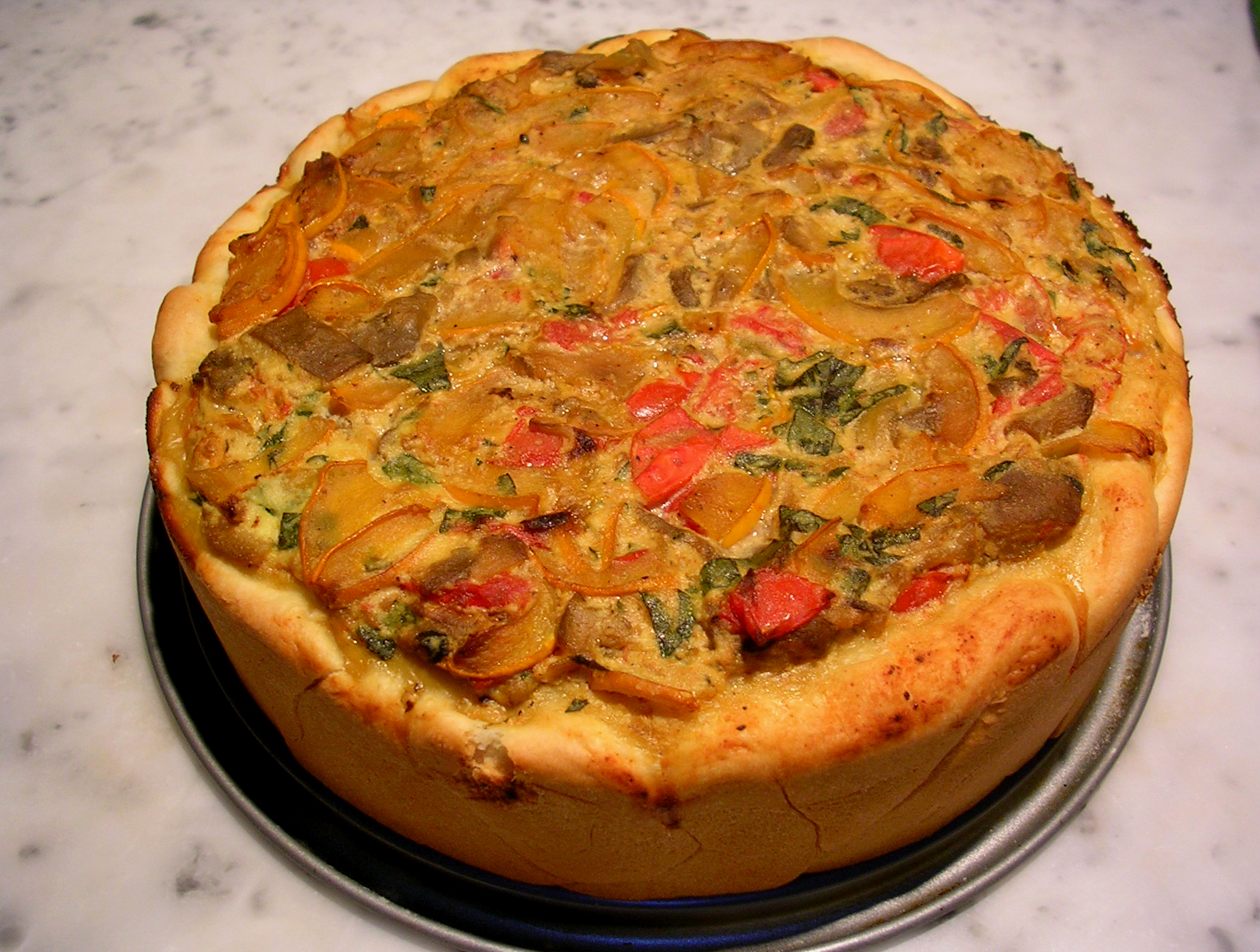
While the dough was rising, I picked and prepared the vegetables for the filling. It took me a while to switch gears, but then I thoroughly enjoyed being in the kitchen and improvising this vegetable torta. I also found use for an almost full container of ricotta that was nearing expiration. The recipe for the yeast dough is from my favorite cookbook, or I should better say: my cooking bible, Deborah Madison’s Vegetarian Cooking for Everyone.

Tonight was another proof, cooking can be great relaxation. And what I like about this blog is that before, I rarely wrote things down when improvising, so that very often I could not remember how much I used. Now I can because I am taking notes!

Summer Vegetable Torta with Zucchini, Eggplant and Tomatoes

Dough:

2 teaspoons active dry yeast

½ teaspoon sugar

½ cup warm water

1 egg

3 tablespoons olive oil

Pinch of salt

1¾ cups flour

Filling:

1 medium zucchini

1 medium eggplant

20 cherry tomatoes

2 garlic cloves

2 tablespoons olive oil

2 eggs

12 ounces ricotta

½ packed cup fresh basil leaves

Salt

Pepper

1. Mix yeast with sugar and water and let stand for 5-10 minutes until it foams. Lightly beat the egg and mix with the olive oil in a bowl (I use the KitchenAid for this). Add the yeast mixture and the flour and knead on low until the dough is smooth and elastic. Shape the dough into a ball.

2. Spray the bowl with olive oil and turn the dough over so the upper side is coated. Cover with a kitchen towel and let rise 45 minutes.

3. Halve the zucchini and remove the seeds with a small spoon. Cut into thin slices. Peel the eggplant and quarter. Cut into thin slices (I use a mandoline for slicing). Quarter the tomatoes. Chop the garlic.

4. Preheat the oven to 375 degrees F.

5. Heat the olive oil in a large skillet and cook the garlic until translucent but not browned. Add the zucchini and the eggplant and cook for 15 minutes until soft and browned in a few spots, stirring often. Add the tomatoes and cook for 5 minutes more. Remove from the stove and let cool for a few minutes.

6. Lightly beat the eggs and whisk in the ricotta until smooth. Chop the basil leaves and add to the cheese.

7. Roll out the dough on a floured surface to fit a 9-inch springform pan plus a good 2 inches coming up the sides. Line the pan with the dough and smoothen out the sides so the crust is evenly high all around.

8. Mix the veggies with the cheese and season with salt and a generous amount of black pepper. Spread the filling evenly onto the dough.

9. Bake in the preheated oven for 30 minutes, or until the torta is lightly browned on top and the crust is golden brown. Remove the springform rim and let the torta cool off completely.

Garlic: Tell me where the flowers are

If I had listened to the lady from customer service at Burpee, the garlic I planted last October would still be sitting in the ground shriveling up in the summer heat. I’ve grown garlic successfully for the past years but something strange happened this year. The garlic did not develop any flower tops, aka scapes. So I called Burpee where I bought the planting garlic last fall to find out whether this variety, Early Italian Garlic, might be a non-blooming kind (just like the rhubarb I have in the garden). The lady at Burpee first didn’t know what scapes are, and when I told her “The garlic doesn’t bloom,” she said “Don’t worry, just wait until next year.” – as if garlic was a perennial, which usually starts to bloom only in its second year. That much for help from the pros. It was hilarious.

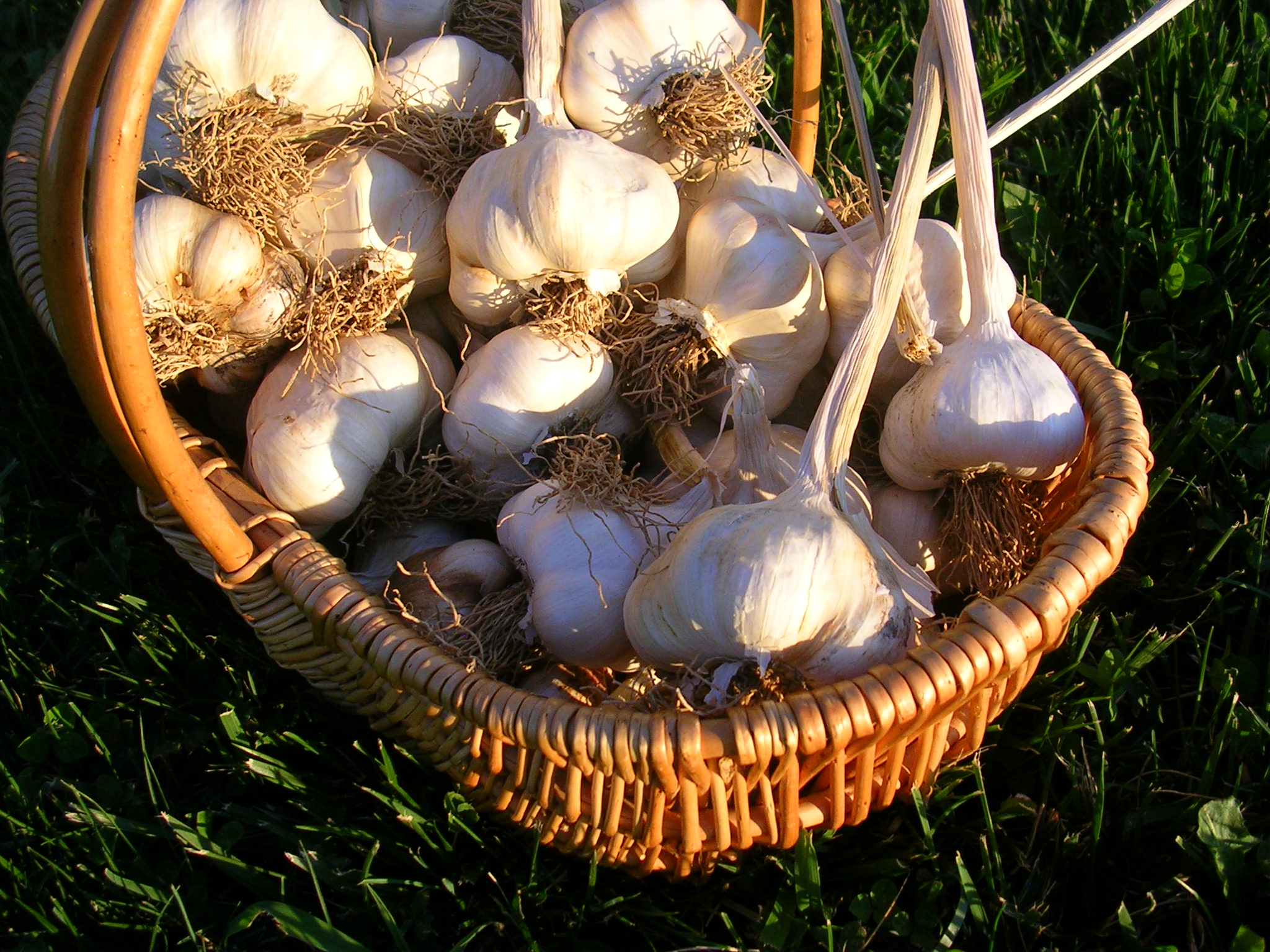
But the garlic was fine. We harvested about 50 nice, plump heads. Now that they have cured for a few weeks in the shed, I need to think about storage. I am debating with myself whether I should keep a small supply for a couple of months and freeze the rest as unpeeled cloves, like I’ve done in previous years. Frozen garlic is not good to use raw, but that’s not a problem for me because I use most of it for cooking anyway.

Hardneck garlic, the type that is the best to grow in this area, does not store very well. By Thanksgiving, it is light as air. Storing garlic in oil is not an option because it can produce botulism, a serious food poisoning that can paralyze or kill.

I think I will compromise. Half of the garlic will go in the freezer right away, and the other half I will hang up in bundles in the basement until I find that the garlic does dry out too quickly – or until someone complains about the strong garlic smell in the basement.

Beets? Sweet!

I was a beet-avoider – until I found the best way to prepare them: roasted in the oven. What a difference in flavor and texture from the boiled, rubbery slices in jars and cans! Now I am growing beets in the garden, and for the first time I have a real harvest (thanks to Berlin Wall No. 2).

Tonight we’ll have a beet salad that I’ve made a few times already this year. But I will add a new, also homemade ingredient: raspberry vinegar. I found the vinegar recipe in the superb recently published River Cottage Preserves Handbook by Pam Corbin (though I used less sugar than the recipe calls for).

Roasted Beet Salad with Walnuts and Goat Cheese

8 medium-size beets

3-4 tablespoons raspberry vinegar

½ cup coarsely chopped walnuts

4 ounces crumbly soft goat cheese

3 tablespoons olive oil or walnut oil

1 tablespoon red wine vinegar

Salt

Freshly ground black pepper

Preheat oven to 375 F.

1. Peel beets and cut them into ½-inch dice. Toss with the raspberry vinegar and spread in one layer on a greased jelly roll pan. Roast in the preheated oven, turning once in a while and adding a bit of water if they seem dry. Roast for 25-30 minutes, or until you can pierce them with a sharp knife. dry. Cool completely.

2. Lightly roast the walnuts in a pan. Cool.

3. Whisk oil and red wine vinegar. Season with salt and pepper.

4. Toss dressing with the beets, walnuts and crumbled goat cheese.