After I turned the citron melons I harvested a few weeks ago into two types of jam (the first with orange, vanilla and star anise; the second with ginger and lime), vegan mincemeat, and candied citron melon for Christmas baking, I think I got a pretty good handle on prepping them.
Citron melons are not unlike quince: you have to work hard to coax them into something delicious. But then, what a reward! All my worries that citron melons weren’t worth growing in the garden have been dissipated; they are a wondrous fruit, and I will certainly grow them again next year, though in much less quantity.
When I was cutting another citron melon this morning I took some impromptu photos of the process.

First and foremost, the knives must be very sharp. Citron melons have a tough skin and very dense flesh.
To get a better handle on the slippery melon, cut a thick slice off one side so you can place the melon flat on the cutting board. Because there was no second pair of hands around, I could not take a photo of this step.
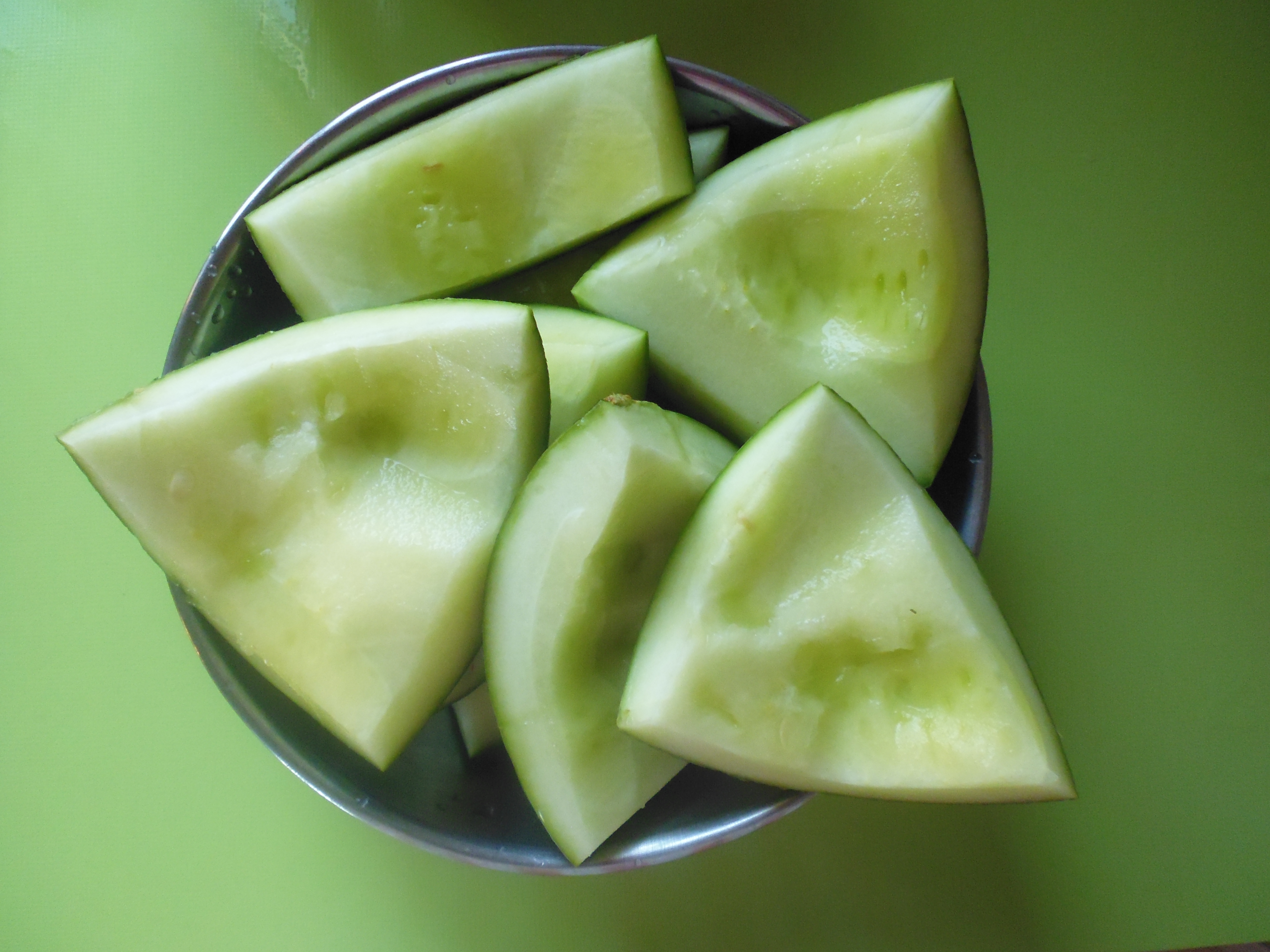
Quarter the melon, then cut it into smaller wedges. Cut each wedge in half.
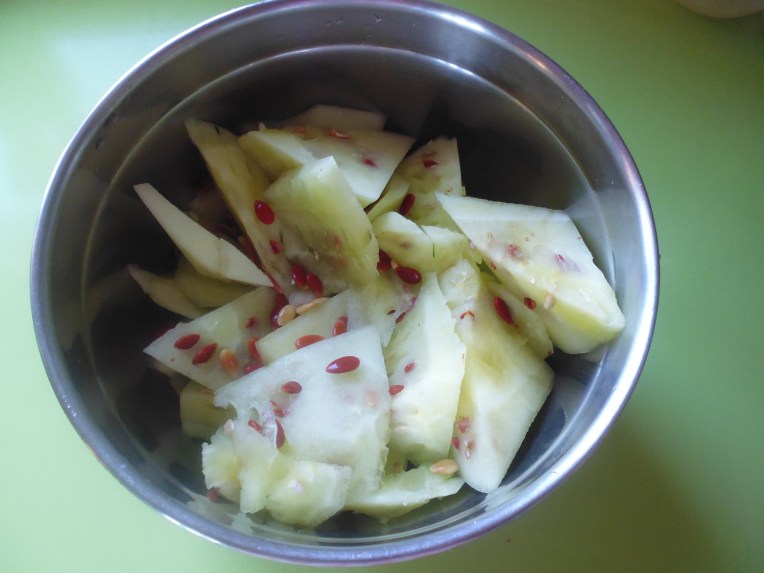
Generously remove the soft pulp around the seeds and discard it. This part is gooey and not used.
Save the unblemished seeds (quite a few get nicked when you cut the melon) for yourself or your gardener friends.

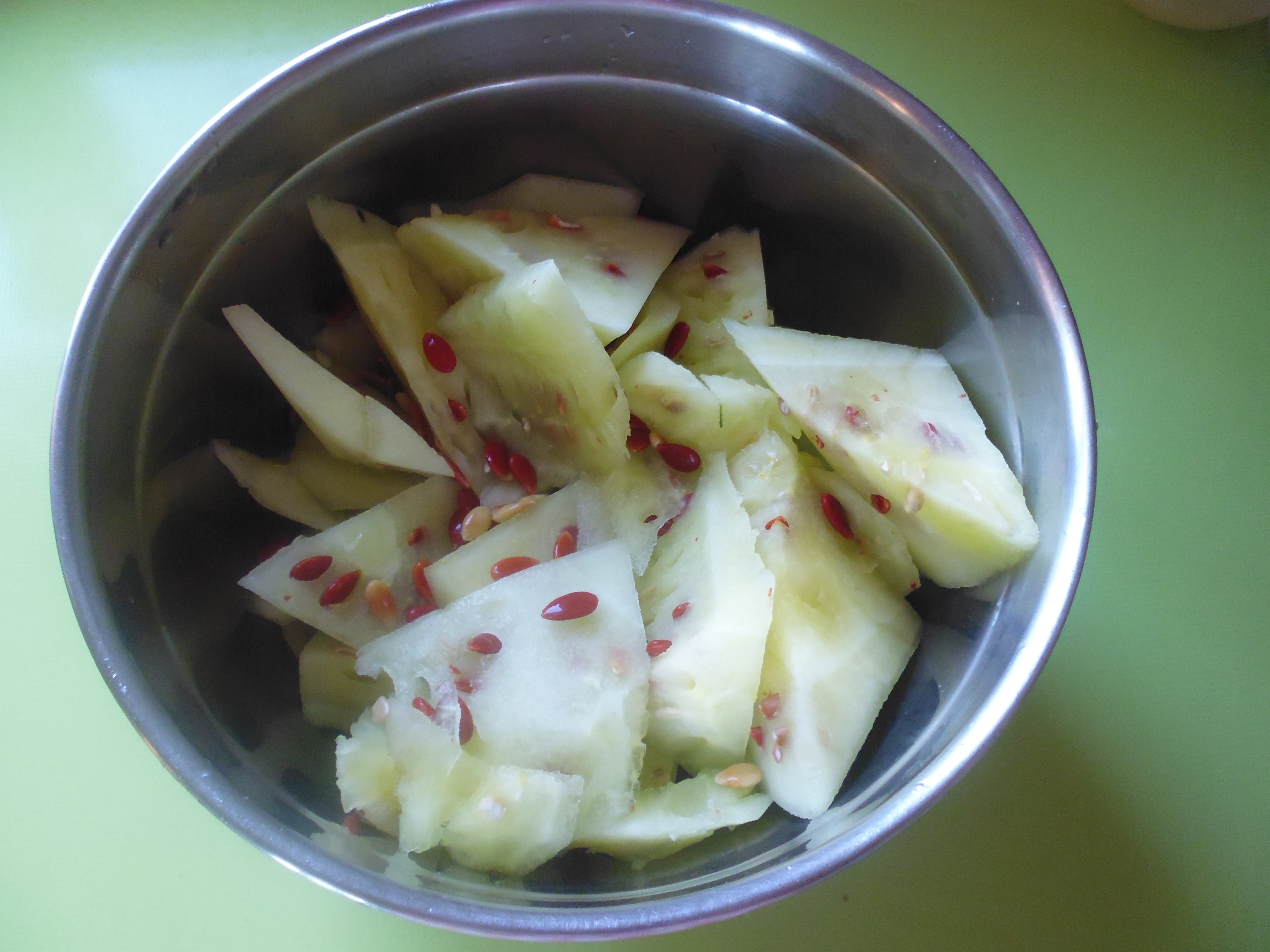
Once you have thoroughly removed all the seeds and soft pulp…

…peel each chunk with a vegetable peeler, preferably one with a wide blade.
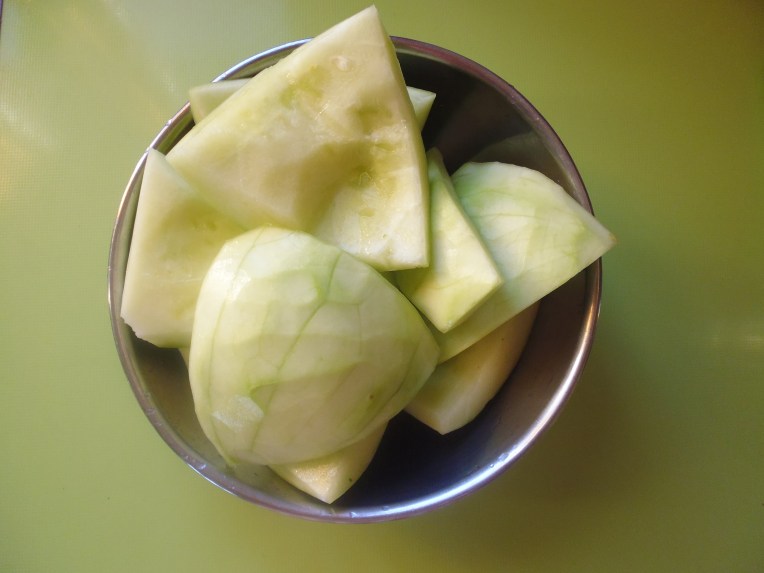
After neatly peeling all the pieces…

…cut them into the desired size. Here I used a mandoline for slicing.
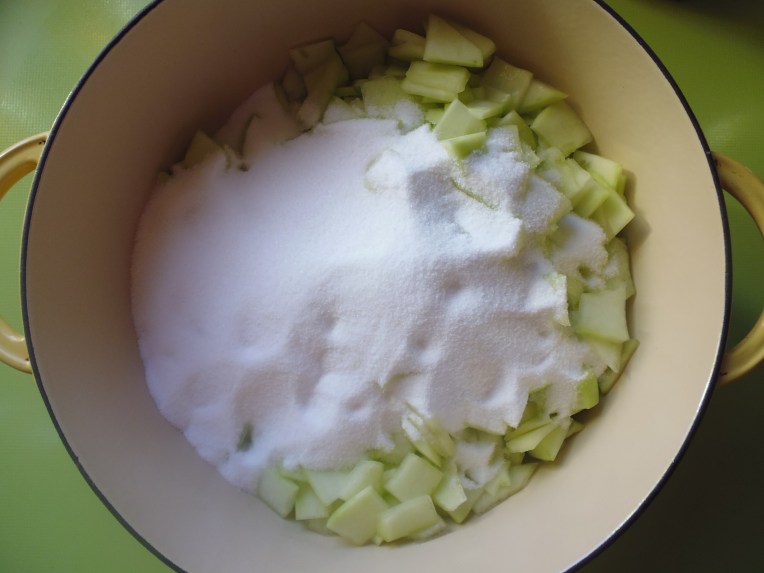
Proceed with your recipe. The melon is usually mixed with sugar and left to sit at least overnight.
More about that, and some recipes, next time.





 Green Card Gardener