Spring cleanup’s sweet side effects

This weekend, I did a big spring cleaning of the kitchen. There were two surprises. I was not aware how much I have accumulated since I moved to the Pennsylvania mountaintop ten years ago (if I had not been into cooking already, I would have certainly started here, as the local restaurant scene is dire, especially if you come straight from New York City). Not that I don’t use all those tools and equipment. Everything is put to use some time, even if only once a year, like the cherry pitter. Yet I promised myself that I will try to stick mainly to replacements.

The other surprise was a jar of canned pears from 2009, the last year we were able to enjoy the pears from our own two pear trees. Usually the other stakeholders to the pears, most likely raccoons or groundhogs, eat the pears before we can. One year when I went out with two large baskets for picking, all the pears were gone. Not a single pear on the tree. It had been loaded with fruit just a couple of days before.

Since I don’t know if and when we will have our own pears again, I wanted to use this last jar for something special. I made my favorite pear cake that my husband says must be eaten with vanilla ice-cream (he had two helpings sitting next to me on the sofa as as I write this, saying that the second was only a test to see if it still tasted as good as the first).

Spiced Chocolate Pear Cake

2 cups all-purpose flour

½ teaspoon baking powder

½ teaspoon baking soda

½ teaspoon salt

1 teaspoon ground cinnamon

½ teaspoon ground allspice

½ teaspoon ground cloves

¼ teaspoon cardamom

¼ teaspoon ground nutmeg

½ cup (1 stick) unsalted butter, room temperature

1 packed cup (10 ounces) light brown sugar

3 large eggs

1 teaspoon vanilla extract

1 cup pear nectar (from the canned pears)

¼ cup finely minced crystallized ginger

2 ounces finely grated bittersweet chocolate

2 cups canned pear chunks, drained

1. Preheat oven to 350 degrees F.

2. Butter and flour a 9-inch-diameter springform pan.

3. Mix flour with baking powder, baking soda, salt and all the spices.

4. Beat butter and sugar with an electric mixer until creamy. Add eggs, vanilla extract and pear nectar.

5. Gradually work in the flour mix until dough is smooth. Add ginger and chocolate. Fold in the pear chunks.

6. Pour mix into the prepared pan and even out with a spatula. Bake 45 to 60 minutes, until toothpick comes out somewhat clean (because of the pears, there will always be some moisture clinging to the tester, but it should not be liquid).

7. Cool cake 10 minutes. Release cake from pan sides with a plastic knife. Cool completely on rack.

If life gives you beet greens…

Risotto with beet greens

Growing beets has always been difficult for me in my garden. Before I put up a Berlin Wall-like fence, the tender greens were chewed to the ground by rabbits as soon as they emerged. But even now, and despite painstaking soil sifting and amendment with sand, most of the beets in the rocky Pennsylvania soil are small, woodsy and gnarly. Their greens, however, is a totally different story! It is as if the plants put all their energy into the lush, shiny, large foliage. So every year I end up with several bags of frozen beet greens.

Before I became a gardener, I did not even know that beet greens are edible. That’s no surprise, because unless you buy the beets super-fresh from a farmers market, they reach the store leafless. And that’s a shame, because the leaves have more nutritional value than beet roots.

I have tried different recipes with beet greens but I always return to the same two recipes: Trouchia, a French vegetable omelet, and this risotto. The recipe is adapted from Amanda Hesser’s terrific book The Cook and the Gardener. But since I have such an abundance of beet greens, I maximized their amount and left out the chard used in the original recipe.

Frozen beet greens are easy to break into small bits while still in the bag so no chopping needed.

Risotto with Beet Greens

8-10 ounces cleaned and trimmed beet greens, fresh or frozen

4 tablespoons olive oil

1 large garlic clove, finely chopped

4 cups low-fat chicken broth

1 shallot, finely chopped

1 bay leaf

1 cup Arborio rice

1/3 cup dry white wine

1 tablespoon butter

½ cup freshly grated Parmesan

Salt

Freshly ground white pepper

1. Chop the beet greens if using fresh, or break frozen leaves into small pieces.

2. Heat 2 tablespoons olive oil in a large skillet and add the garlic. Cook for 2 minutes until soft. Don’t let the garlic brown.

3. Stir und cook until leaves are wilted. Remove from the heat and set aside.

4. Heat the chicken broth in a saucepan.

5. Heat the remaining 2 tablespoons olive oil in a medium-size pot with a heavy bottom. Add the shallot and cook 2 minutes until translucent.

6. Add the bay leaf and the rice and stir to coat evenly. Cook over medium heat until the rice releases a nutty smell and looks glassy.

7. Add the wine and ¼ cup hot broth. Cook while stirring constantly until all the liquid has been absorbed.

8. Continue adding chicken broth in ½ cup increments and stirring constantly, only adding more broth when the previous addition has been absorbed, until all the broth has been used and the rice is tender but not mushy, about 20 to 25 minutes.

9. Add the beet greens and stir until reheated. Then stir in the Parmesan and butter and season with salt and pepper. Cover with a lid and let stand for 1 to 2 minutes before serving.

Makes 2 servings as a main course, or 4 servings as side dish

Rolls in the snow

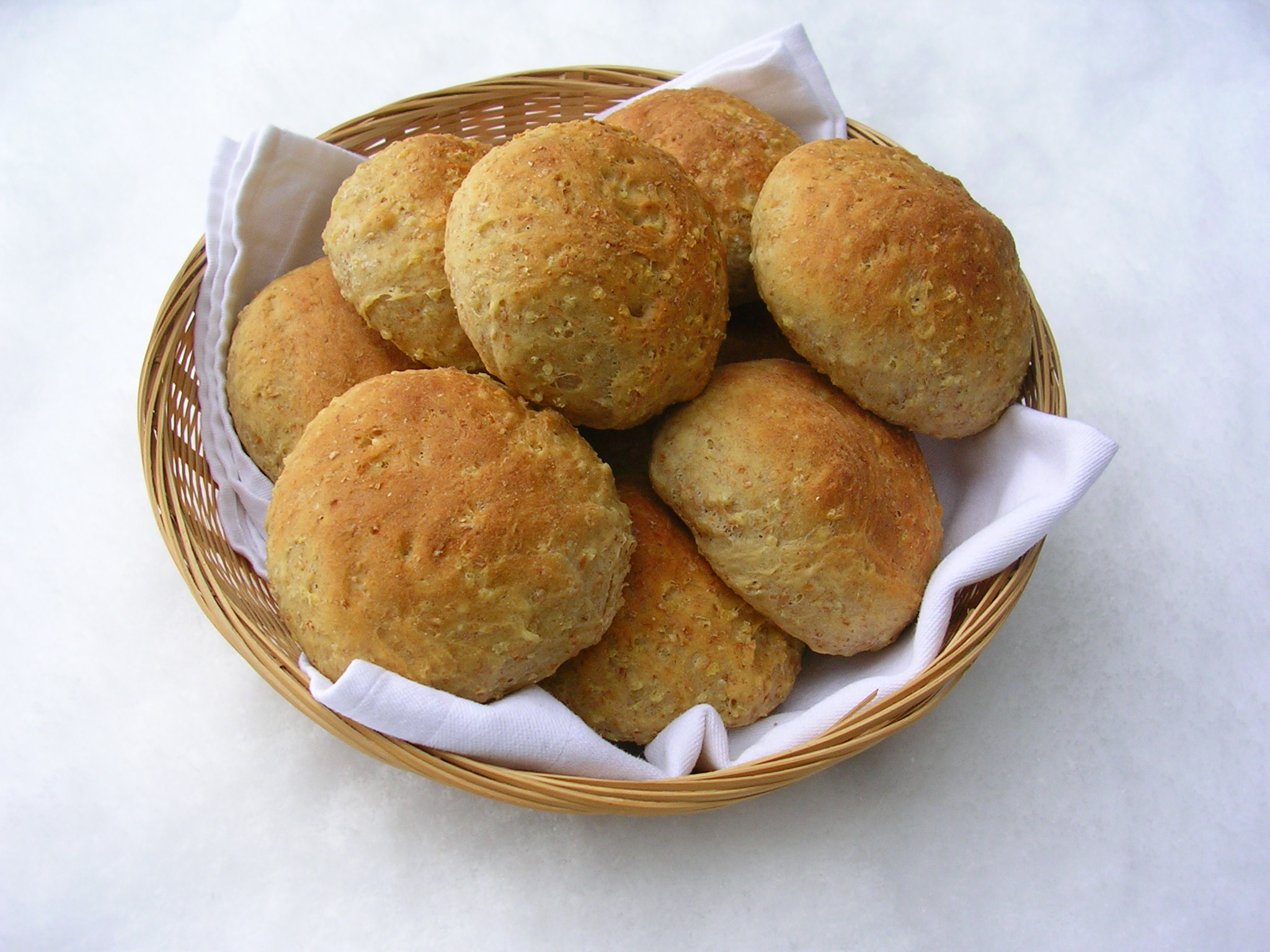
It is not only the snow falling since this morning that makes me feel like in a fairytale. Baking rolls earlier today was also an experience reminding me of Sweet Porridge, a German fairytale by the Brothers Grimm where the pot with porridge does not stop cooking and rises over the edge filling the kitchen, the street and the village… until the girl who knows the magic words makes it stop, and everyone who wants to return has to eat their way back.

I was trying out a recipe for millet bread from The Tassajara Bread Book, a usually very reliable source. The recipe calls for 3 cups whole millet, soaked in hot water. Even though I love rustic wholesome bread I was afraid this was rather bird feed than human fare. So I decided to give the millet a quick boil. I have cooked millet before but never that much at once. The millet swelled and swelled and I ended up with 10 cups. There was no way I could work this amount into the dough for what was supposed to be two loaves of bread so I used 4 cups and froze the rest for some other time.

The recipe makes two dozens rolls. Unlike the porridge in the fairytale, it won’t be hard to finish those off!

Whole Wheat Rolls with Millet

1¼ cup whole uncooked millet

2 scant tablespoons active dry yeast

3 cups lukewarm water

¼ cup honey

1 cup non-fat dry milk

2 cups bread flour

5 cups whole wheat flour

1 tablespoon salt

¼ cup canola oil

2 tablespoons + 1½ teaspoons gluten

Cornmeal for the baking sheet

1. Bring the millet and 3 cups water to a boil in a saucepan. Let simmer for 10 to 15 minutes until the water is absorbed. Fluff the millet with a fork and set aside to cool.

2. Dissolve the yeast in 3 cups lukewarm water. Add the honey and the dry milk and stir to dissolve.

3. Add 2 cups bread flour and 3 cups whole wheat flour add mix with the dough attachment of the kitchen machine until well combined.

4. Let rest in a warm place (I do this in the switched off, cool oven and place a jelly roll underneath to catch any spills) for 45 minutes.

5. Add the remaining whole wheat flour, salt, oil and gluten. Knead with the machine to a smooth dough.

6. Drain the millet if there is water left in the pot. Work the millet to the dough. With floured hands, assemble the dough to form a ball and transfer the dough to a large oiled bowl. I It is OK if the dough it slightly sticky.

7. Turn the dough over once to coat. Let rise in a warm place for 50 minutes.

8. Punch the dough down with both fists and turn it over. Let rise for 40 minutes.

9. Knead the dough on a floured surface for 3 to 4 minutes. Divide in half and shape each half into a long, baguette-like loaf. Cut each loaf into 12 equal pieces. Shape each piece into a ball. Sprinkle two baking sheets with cornmeal, or line them with a pastry mat.

10. Place the unbaked rolls at generous distance on the baking sheet. Cover with a damp clean kitchen towel and let rise 20 minutes.

11. Preheat the oven to 375 degrees F. Place a jelly roll on the lower oven rack.

12. Place the baking sheet with the rolls in the preheated oven and immediately pour 2 to 3 cups cold water on the jelly roll. Close the oven door at once to keep the steam in the oven. Bake the rolls for 25 minutes, until lightly browned on top.

13. Remove rolls from the baking sheet and cool on a wire rack. Bake the second batch the same way.

Makes 24 rolls

Lists and leftovers

First I felt a little silly putting up a detailed list with the freezer content to keep track of each bag I take out. But this is not my personal listmania. It saves me from digging around and getting frostbite on my hands. This list, and whatever else needs to be used up, often dictates what I cook.
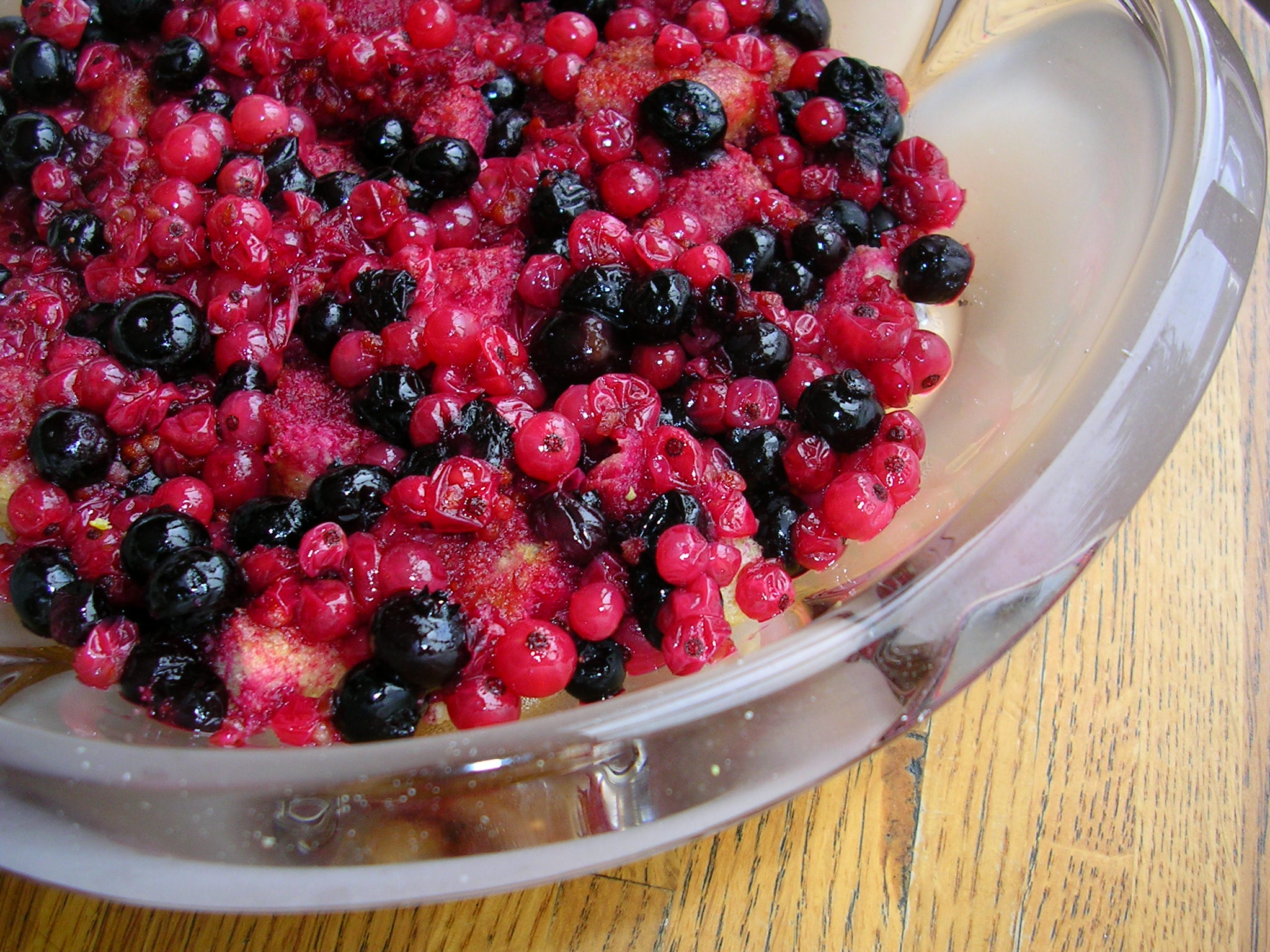
A quart of milk with a passed “sell by” date (even after living in the US for 13 years I still don’t understand how this date tells you the actual expiration date…), and several bags of frozen red currants inspired me to make this lemon trifle. I used a mix of blueberries and currants, but only blueberries, or a mix of blueberries and raspberries, will taste good as well. Instead of drizzling the ladyfingers with the usual sherry I used homemade black currant liqueur (cassis) but of course store-bought cassis will be just fine.

Berry Trifle with Lemon Custard

12 ladyfingers

3-4 tablespoons cassis

14 ounces fresh or frozen blueberries and/or red currants

3-4 tablespoons sugar, or to taste

Lemon custard:

2 organic lemons

4 cups milk (2% or whole milk)

4 egg yolks

¾ cup + 1 tablespoon sugar

3 tablespoons cornstarch

1. Cut the ladyfingers into 1-inch pieces and spread them in a decorative glass serving dish with a wide bottom. Drizzle with cassis.

2. Put the berries in a small saucepan and briefly cook so they pop and release their juices. Sugar to taste and cool slightly, then spread over the ladyfingers.

3. For the lemon custard, zest and juice the lemons. Slowly bring the milk and the lemon zest to a boil.

4. Mix the egg yolks with the sugar and the cornstarch to a smooth consistency without any lumps.

5. Strain the hot milk through a fine sieve. Discard the lemon zest.

6. Add a small amount of the hot milk to the egg yolks and whisk to incorporate. Add some more milk and whisk again. The mixing of the hot milk and egg yolks must be done very slowly and gradually so the eggs won’t curd.

7. After all the egg yolks and milk have been mixed, pour it in a saucepan and slowly bring to a gentle boil, whisking constantly.  Cook and whisk until the custard thickens.

8. Remove from the heat. Add the lemon juice and whisk until cooled slightly. Slowly pour the custard over the berries so that the layer won’t be disturbed and the berries won’t rise to the top. Cool.

9. Cover with plastic foil and chill several hours.

Makes 8 servings