Jerusalem artichokes, a Trojan horse?

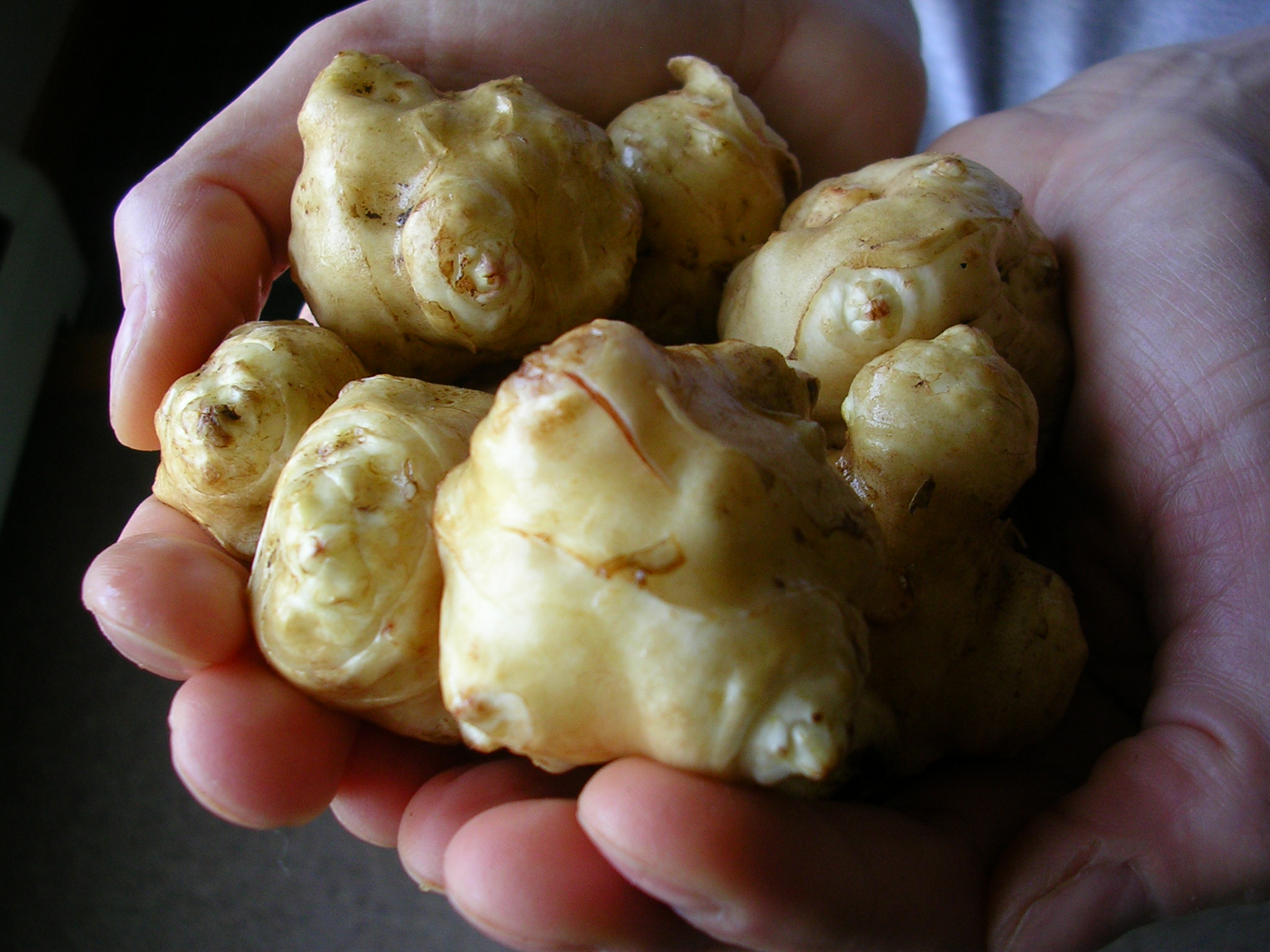
It might be that next summer, after Jerusalem artichokes have taken over the herb garden, I will curse the moment I planted them, disregarding all warnings against this supposedly highly invasive crop. For now, I am quite happy with my very first harvest of those crunchy little tubers. Boldly I am thinking that if I can can keep various mint plants under control, why shouldn’t I be able to do the same with Jerusalem artichokes? We’ll see next summer if they are manageable, and not a Trojan horse.

Jerusalem artichokes, aka sunchokes, are a native American crop. If that’s half a good enough reason to plant them, their wonderful taste and texture make up the other half.

I love artichokes, yet my two attempts to grow real artichokes in the garden, in the rainy summer two years ago, and again this summer, failed miserably. Jerusalem artichokes taste like artichoke hearts, but without the hassle of removing the leaves to get to the meaty portion.

The plants usually grow about six feet tall. Because of abundant rain, mine were so high that I needed a ladder to spot the small, sunflower-like heads. The tubers should be dug after the first frost, which came in the form of a major snowstorm in late October. Lacking a cool basement or a root cellar, I store the Jerusalem artichokes on the basement steps leading to an outdoor Bilco door. That’s fine for now but in sub-zero weather I will need to find another place, as the tubers should be stored close to 32 degrees F. To keep the moisture at the required 95 percent I spray the sunchokes with water every now and then. Properly stored they should keep through the winter.

After much scrubbing, the tubers are spick and span and don’t need to be peeled. But for this salad, I wanted uniform pieces so I trimmed and peeled them. The peeled Jerusalem artichokes must be immersed in acidulated water (lemon juice or vinegar) immediately to prevent them from browning.

Salad of Jerusalem Artichokes, Apples and Walnuts

1/4 cup walnuts

12 ounces Jerusalem artichokes (about 8 ounces peeled)

White winegar

1 tablespoon olive oil

1 large crisp tart apple (I used Honeycrisp)

1 tablespoon lemon juice

1 stalk celery

2 tablespoons extra-virgin olive oil or walnut oil

1 tablespoon apple cider vinegar

Salt

Freshly milled black pepper

1. Lightly toast the walnuts in a pan without oil. Remove them from the pan and set aside to cool.

2, Thinly peel the Jerusalem artichokes with a vegetable peeler. If they are very gnarly, trim them a bit to make peeling easier. Halve or quarter depending on size. Drop them immediately into a bowl with water and a few tablespoons of white vinegar.

3. Heat 1 tablespoon olive oil in a pan. Drain and dry the Jerusalem artichokes with paper towels and fry them in the hot olive oil for about 5 minutes, just long enough to brown them a bit from all sides. turning them often. Remove with a slotted spoon and set them apart on a plate lined with a paper towel. It is important to give them space when they cool, otherwise they will turn soggy.

4. Peel and quarter the apple, remove the core, and dice. Put them in an salad bowl and mix with the lemon juice immediately. Slice the celery and add.

5. Whisk the extra-virgin olive oil with the apple cider vinegar. Add salt and pepper to taste. Coarsely chop the walnuts and add them to the bowl with the cooled Jerusalem artichokes. Toss and serve, or refrigerate.

Makes 2 generous servings
Pleading for recipes, and playing with persimmons

Some people pride themselves that they don’t ever cook from recipes. Not me. I rely on recipes, daily and heavily. And that is not only because being a cookbook author and food editor, I feel that the shunning of recipes – viewing them as the crutches of mediocre cooks while real, natural talents cook without – undermines the very foundation of the trade.

Why should I burden my already overcrowded memory with things that others (and mostly pros, or cooks far better than me) have figured out and conveniently written down, such as the amount of baking powder in a cake? Julia Child failed her exam at the Cordon Bleu the first time around because she had not memorized the recipes from the school’s cookbook. There is no need to say anything more about the connection between memory and cooking talent.

Rather than piecing a recipe together from memory, I like to spend my time exploring. The few vegetables still growing in the garden in mid-November – beets, radicchio, kale, and cauliflower – do not require any more work, so one of my Sunday morning luxuries is to explore new recipes and ingredients. Today I tinkered with the persimmons I found at a local farm stand yesterday. Call me a culinary greenie but I have never eaten nor prepared persimmons!

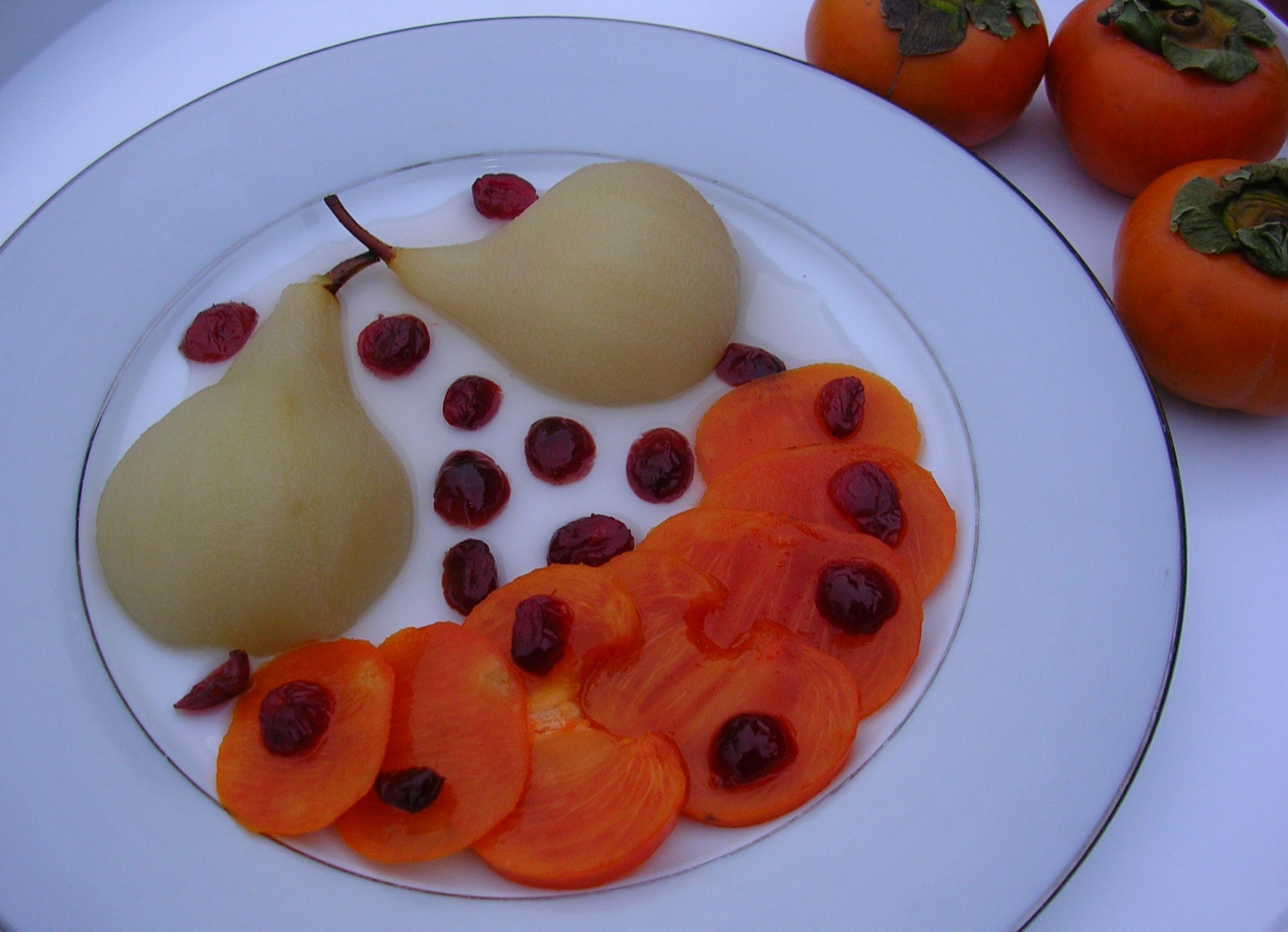
I wanted to leave the persimmons as unaltered as possible. After leafing through cookbooks and surfing the web, I settled on poached pears with persimmons, inspired by a recipe I found in Deborah Madison’s Vegetarian Cooking for Everyone. It is best served chilled.

Poached Pears with Persimmons

1 cup sugar

1-inch piece fresh ginger, peeled and finely sliced

Grated zest of 1 organic lemon

4 firm, slightly underripe Bosc pears

¼ cup dried cranberries

2 ripe Fuji persimmons

1. Bring 1 quart of water to the boil in a wide pot. Add the sugar and stir to dissolve. Add the ginger and lemon zest.

2. Peel, halve, and core the pears. Place them in the simmering water and put a small heatproof plate on top so they are fully immersed in the poaching liquid. Simmer for 20 minutes, or until the pears can be easily pierced with a knife.

3. Transfer the pears to a bowl. Strain the poaching liquid and pour it back in the pot. Bring to a rolling boil and cook for 10 minutes, stirring and scraping the sides often so the syrup does not burn.

4. Stir the cranberries into the hot syrup. Pour over the pears. Cool, then refrigerate.

5. Remove the blossoms ends from the persimmons. Using a serrated knife, cut the persimmons into thin slices. Serve with the sliced pears and cranberries, drizzled with syrup.

Makes 4 servings

Empowering pear pie

After a major power outage, just grinding coffee in the morning feels fantastic. The freak snowstorm left us without power for a little under three days, about the same amount as after Hurricane Irene but the loads of heavy snow caused quite a bit of damage on our trees. On my way to the orchard to buy pears yesterday I had to make a detour, as some roads are still closed.

When the power is back, and the mess of candles, dirty dishes, laundry, candle wax, water buckets and other remnants of living without electricity is cleaned up, I usually tackle the fridge and the freezer, throwing out soggy frozen herbs (wondering each time why I even bother freezing them, those are the first to spoil), and cooking with whatever can be saved.

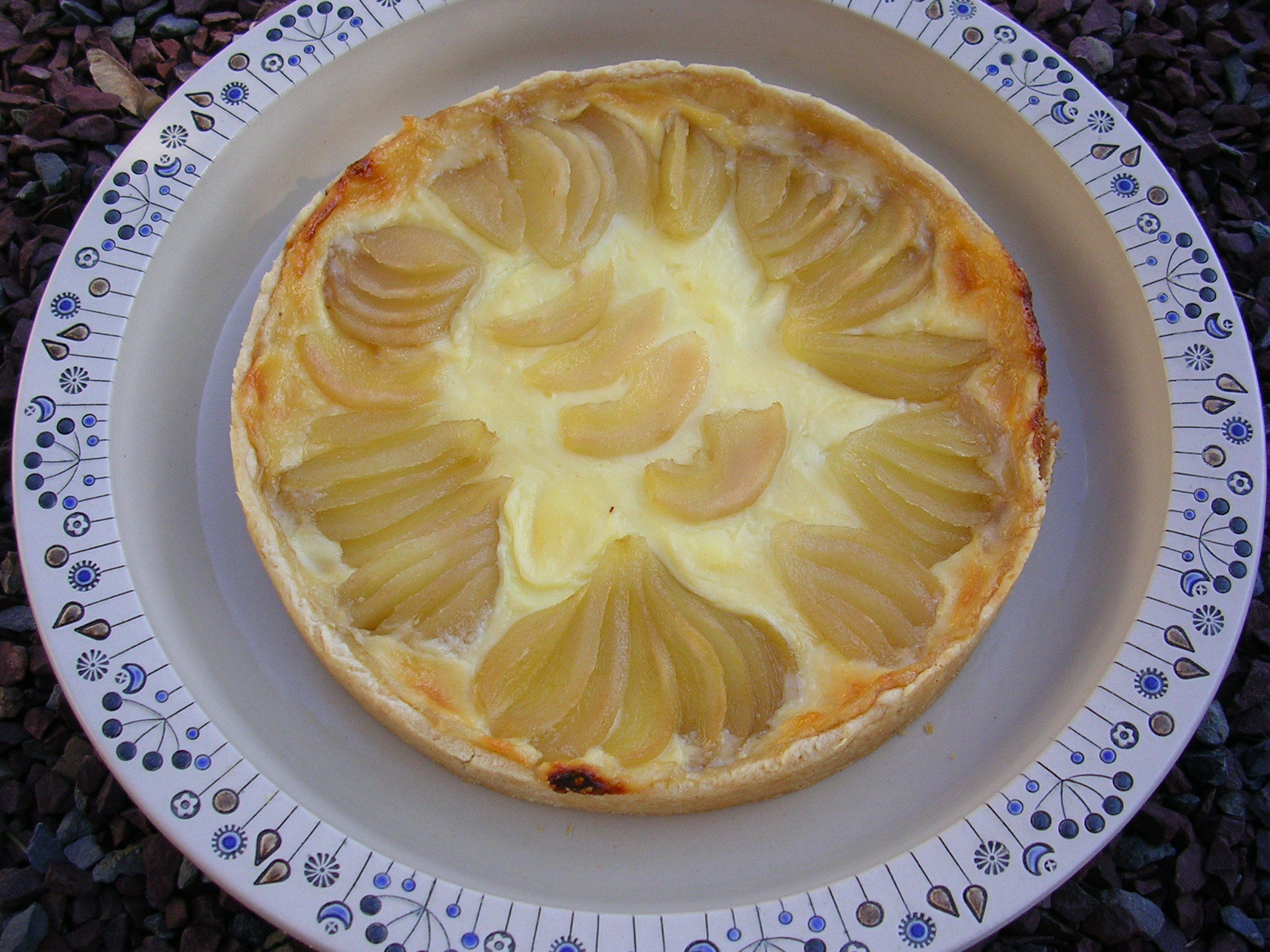
It always takes me a few days to switch from the rescue cooking mode to the fun cooking mode. Today was the day. The gorgeous fall weather simply called for a pear pie. It is hard to believe that a week ago I walked around in snow boots knocking off a foot of snow from trees and shrubs.

For the pear pie filling I used pre-cooked custard, which is common in German recipes. It makes the pie wonderfully moist without being too sweet. I used Dr. Oetker Cream Pudding, which is available in the United States. The brand’s Vanilla Pudding can be used instead, which is even more widely available.

Pear Pie with Custard

Crust:

2½ ounces shortening

1 cup flour

¼ teaspoon salt

Ice water as needed

Filling:

1 package Dr. Oetker Cream Pudding (or Vanilla Pudding)

2 cups low-fat milk

¼ cup sugar

Topping:

3 slightly underripe Bosc pears

½ cup dry white wine

½ cup + ¼ cup sugar

1 teaspoon grated organic lemon zest

2 tablespoons Amaretto

1. For the crust, put the shortening, flour and salt in a food processor. Pulse to a crumbly consistency. Add just enough ice water, one tablespoon at a time, to the dough so that it forms a ball.

2. Roll out the dough between to sheets of wax paper to fit a 9-inch greased springform pan plus a 1-inch edge all around. Remove the upper layer of the wax paper and flip the crust over into the pan. Even out the edge and place in the freezer.

3. For the filling, mix the custard powder with a few tablespoons of the cold milk and the sugar. Stir until smooth.

4. Bring the rest of the milk to a boil. Remove from the heat and whisk in the custard mix. Put it back on the burner and cook for about 1 minute, stirring vigorously, until the custard thickens. Remove from the heat and let cool, whisking every so often.

5. For poaching the pears, bring 2 cups of water, the wine, ½ cup sugar and lemon zest to a boil in a wide pot or a deep skillet. Stir to dissolve all the sugar.

6. Peel the pears and cut them in half. Remove the cores and place the pears in the poaching liquid. Reduce the heat and simmer for about 15 minutes, until the pears are easily pierced with a knife. Turn them once or twice during poaching.

7. Drain the pears (you can refrigerate and re-use the poaching liquid). Place the pears cut side down on a cutting board and cut them into even slices but do not cut them all the way through so that you can place them on the pie like a fan.

8. Preheat the oven to 350 degrees F.

9. Whisk the cooled custard. If it is lumpy, you can smoothen it by blending it with a stick blender for a few seconds. Pour the custard into the pan with the crust.

10. Place the cut pears on the custard in a circle, tips to the center. Fan them out as much as possible.

11. Mix the amaretto with ¼ cup sugar and drizzle over the pears.

12. Bake in the preheated oven for 35 minutes, then increase the heat to 375 degrees F and bake for another 30 to 35 minutes, until the crust and the top are golden. Let cool for 5 minutes, then pass a knife around the edge and carefully remove the rim. Let cool completely on a wire rack. Refrigerate until serving but take out of the fridge 30 minutes before serving.

The last word on quinces

All the jars from last week’s quince marathon have been labeled and put away, and the sticky kitchen floor and stovetop have been cleaned. And, except for the quince chutney, which needs to mature for two months, everything quince tasted good so far.

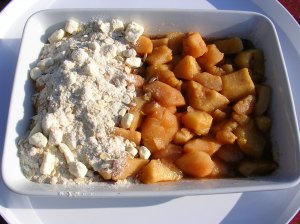
The last poached quinces went into two quince crisps today, one for us and one for my parents-in-law in Connecticut. Crisp travels well in a cooler, it can be reheated and even frozen. Nobody around me can escape quince these days!

Quince Crisp

I made the crisp with 1¾ pounds poached quince chunks. If unlike me you have quinces with little waste, 2 to 2½ pounds raw quinces should yield about that amount. There is no need to be precise – a little more or less won’t matter. The quinces can be prepared in advance and refrigerated for a few days. The crisp topping is based on the all-purpose crisp topping from Deborah Madison’s Vegetarian Cooking for Everyone but I reduced the brown sugar in the topping and added a generous amount to the quinces, as these tart fruits really need it.

3 organic lemons

2 to 2½ pounds quinces

1 stick cinnamon

½ cup sugar

1 teaspoon ground cinnamon

Crisp topping:

6 tablespoons cold butter

2/3 cup flour

½ cup light brown sugar

½ cup rolled oats

Pinch of salt

¼ teaspoon nutmeg

1. Wash the lemons under cold running water and rub them dry with a paper towel.

2. Peel two of the lemons with a vegetable peeler and juice them. Put the lemon peel and the lemon juice in a large pot with water.

3. Peel and core the quinces. Cut into bite-size chunks and immerse them immediately in the prepared lemon water. Add the cinnamon stick and bring to a boil, then reduce the heat and simmer, covered, for 30 to 40 minutes, or until the quinces can be pierced with a knife. Cool in the cooking liquid.

4. Preheat the oven to 375 degrees F.

5. Drain the quinces and remove the lemon peel and cinnamon stick.

6. Zest and juice the remaining lemon. Chop the zest very finely. Mix the zest, lemon juice, quinces, sugar and cinnamon with the drained quince chunks. Place the mix in an ovenproof dish and distribute evenly with a spatula.

7. For the topping, cut the butter into small dice. Add all other ingredients and quickly crumble with your fingertips to a pebbly consistency. Distribute evenly over the quinces. Bake in the preheated oven for 1 hour until bubbly and lightly browned on top.

Makes 6 servings

Quince Chutney

This recipe is based on the Pumpkin and Quince Chutney from the fabulous River Cottage Preserves Handbook by Pam Corbin, but I made a couple of changes.

I could not warm up to adding horseradish, so I substituted freshly grated gingerroot, as it goes well with pumpkin, quince, apples, and raisins.

Also, after I was done with all the chopping it was so late that I had to postpone the cooking to the next morning. I mixed all of the ingredients and let it sit in the refrigerator overnight, which I have done with other chutneys. It usually intensifies the flavor.

2 teaspoons black peppercorns

12 whole cloves

2 cinnamon sticks, broken in half

2½ pounds peeled and deseeded pumpkin

2½ pounds peeled and cored quince

1½ pounds peeled and cored tart apples

1½ pounds peeled and trimmed red onions

3 cups raisins

2½ cups light brown sugar

2½ cups apple cider vinegar

½ teaspoon salt

1 teaspoon chili flakes, more to taste

2 ounces freshly grated gingerroot

1. Bundle the peppercorns, cloves and cinnamon in a piece of cheesecloth and tie securely with a butcher twine.

2. Evenly chop the pumpkin, quince, apples and onions. Place the raisins in a heatproof bowl and pour hot water over them. Drain well.

3. Mix all of the ingredients in a large non-corrosive container (plastic or glass, no metal) with a lid and refrigerate overnight.

4. The next day, slowly bring the mix to a boil. Reduced the heat to a simmer and cook uncovered for 3 hours, until the liquid is thick and syrupy.

5. Remove the spice bag. Fill the chutney in sterilized jars through a canning funnel. Wipe the rims with a damp piece of paper towel to remove any drips and wipe dry with paper towel. Place the lids and the bands on the jars and process in a boiling water bath for 10 minutes.

6. Let cool and set for 24 hours without moving the jars.

Makes six to seven 1-pint jars