Black is beautiful

Lentil Bell Pepper Salad

One of the things I strongly dislike in cooking is removing the skins from roasted peppers. I always end up with chunks of peppers to which the skin sticks stubbornly. I tried roasting them over an open flame on the gas stovetop once; it was messy and rather unsuccessful so I went back to broiling them in the oven. Also, I do not like the idea of letting the peppers sweat in a zip plastic bag, like some recipes tell you. I try to avoid generating non-biodegradable waste whenever I can.

As I was browsing through the freezer last night thinking what I could bring to Phoebe’s Pure Food vegan/raw food potluck tonight, I knew I had to make something with bell peppers: the freezer is filled with them. So I made a veganized version of a lentil salad recipe a relative gave me many years ago.

After letting the peppers thaw slightly and pressing them flat, I broiled them until their skins were really charred.  I stood in front of the oven and fought against my instinct of rescuing the peppers, to which I had tended to all summer in the garden, from cremation. Then I stacked them in a plastic food storage container, which works great as a sweat box.

As for removing the skins, it was a cinch, they all came off beautifully. Now I can only hope the salad tastes as good as I feel about my newly overcome kitchen pet peeve.

Lentil Salad with Red Bell Peppers

1 cup brown or green lentils

1 teaspoon vegetable soup base

3 red bell peppers, halved, stems and seeds removed

3 tablespoons lemon-infused extra-virgin olive oil

2 tablespoons lemon juice

1 garlic clove, passed through the garlic press

1 teaspoon ground cumin

¼ teaspoon chili powder

¼ teaspoon ground mustard

1 teaspoon salt, more to taste

Freshly milled black pepper

1. Rinse lentils and put them in a small saucepan. Dilute vegetable soup base in 3 cups water, add it to the lentils. Bring to a boil, then, reduce the heat and cook, covered, for 15 to 20 minutes. Towards the end, check for water and add a bit more if necessary. Do not overcook the lentils; they should still have some bite. Drain the lentils and rinse under cold water, drain again.

2. Place the peppers on a cutting board and press them down with your hands to flatten, trying not to break their skins. Place them on a jellyroll pan under the broiler and broil until the skin is charred and forms blisters. Turn the pan around if necessary to ensure even broiling. Place the peppers in a food storage container with a lid and let them sweat for 10 to 15 minutes. When they are cool enough to handle, remove the skins. Chop the peppers coarsely.

3. In a small bowl, whisk the olive oil with the lemon juice, garlic, spices, 1 teaspoon salt, and pepper.  Toss the lentils with the peppers, then, add the dressing and toss again. Season with salt and pepper and refrigerate until serving.

Makes 6 servings 
Basil jungle

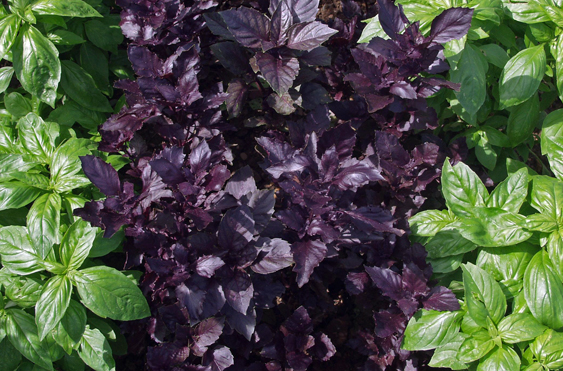
This year I overplanted the basil. I gave away lavish bouquets of Genovese and purple basil, made large batches of pesto, and froze basil leaves using Margaret Roach’s ingenious “log technique”, (which of course works great for other leafy herbs as well) yet it just kept growing and my basil patch still looked almost untouched.

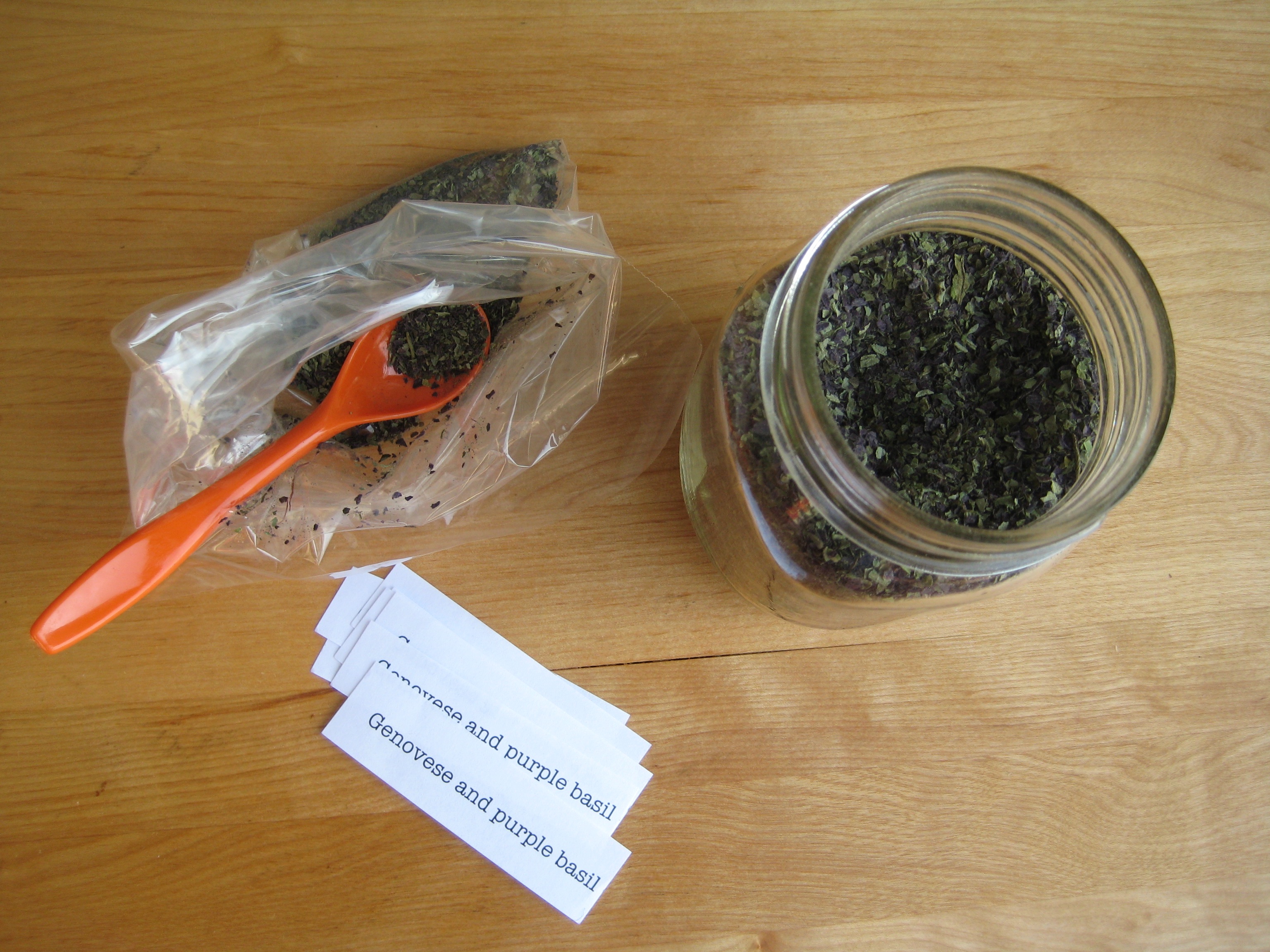
I eventually cut down all the basil before the onset of cold weather. After stripping the leaves off the stems, I washed and spun them dry in the salad spinner, and spread them out on trays lined with kitchen towels. After the leaves were completely dried and brittle I crumbled them finely. The mix of green and purple looks especially nice. However the crumbling process created quite a bit of “basil dust” that made me gasp for air so I am seriously thinking of wearing one of those disposable air filter masks next time.

A basil jungle is not such as bad thing after all. Now I have a jar of dried basil that I am portioning into pouches to send as little favors to friends and family who did not get to taste fresh basil from my garden this summer.

A big bread for a big storm


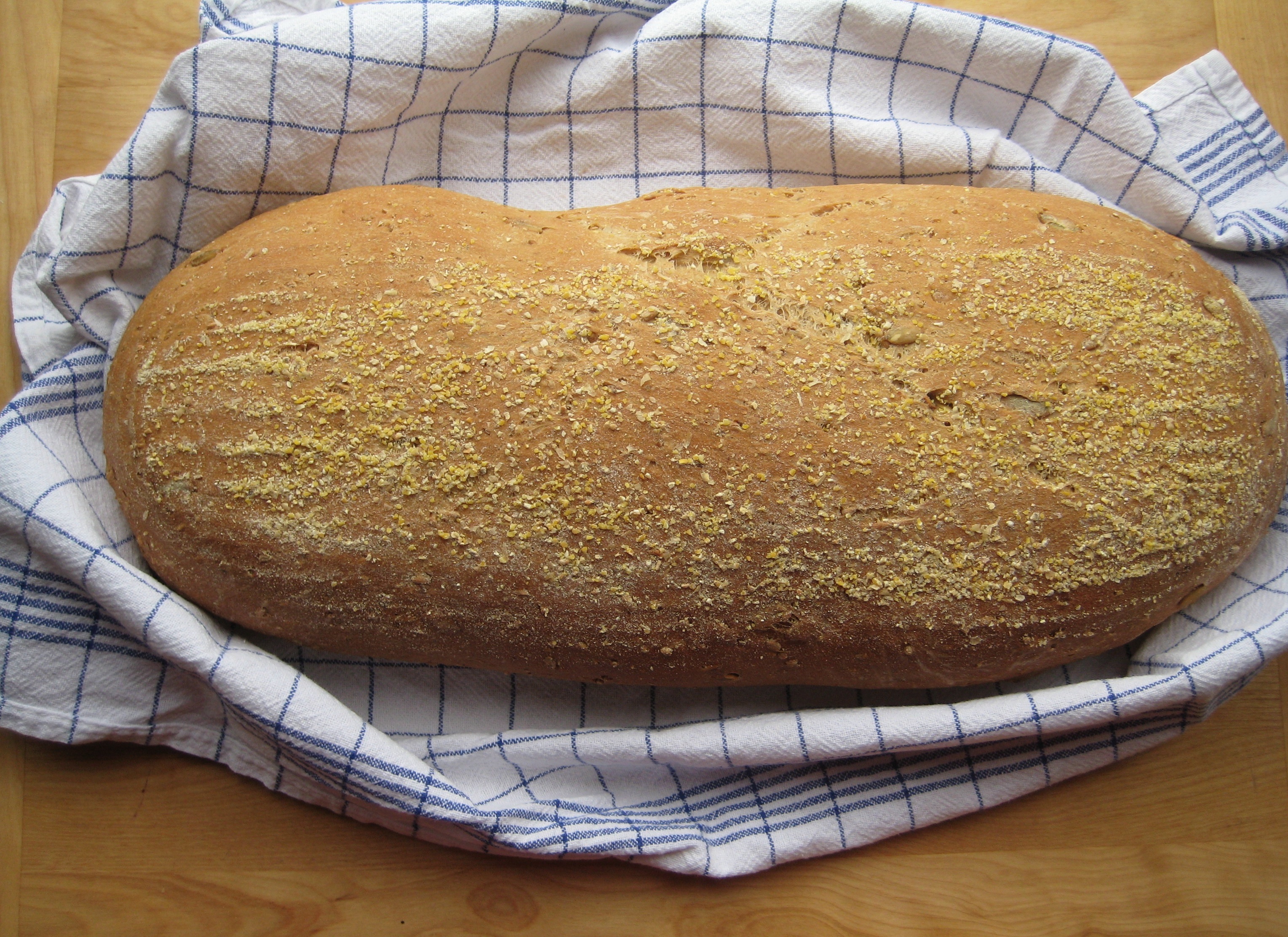
Baking bread is always a comforting thing do to, especially in the wake of an upcoming monster storm like the one that will hit the East Coast of the United States tonight.

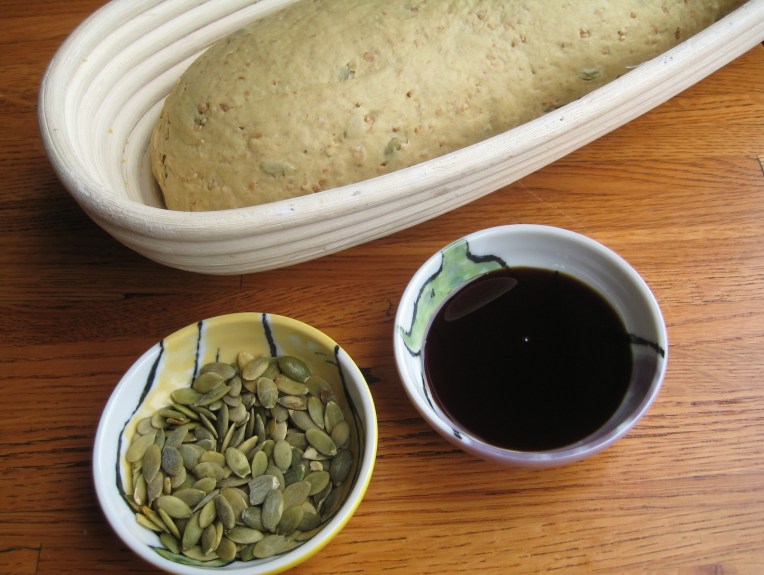
I just pulled a large loaf of bread from the oven. This is a new variation with pumpkin seeds and pumpkin seed oil, my latest culinary discovery and a specialty from Austria. I was lucky enough to find the real thing at our local supermarket for a decent price.

A small bottle of the intensely flavored dark, nutty oil goes a long way. Pumpkin seed oil is only drizzled onto salads, soups and desserts. I have also added it to a homemade pumpkin frozen yogurt and will post that recipe soon though that will have to wait. Now I better bring in the potted plants and help with the other storm preparations…

Whole-Wheat Pumpkin Seed Bread with Pumpkin Seed Oil

I let the dough rise in a bread rising basket sprinkled with cornmeal. You can also shape it into a large round loaf, or divide the dough in two and bake it in two greased loaf pans.

Sponge:

2¼ teaspoons active dry yeast

1 cup lukewarm beer (leftover beer is fine) or water

1 cup cracked wheat

2 tablespoons honey

1 cup whole-wheat flour

Dough:

2 cups whole-wheat flour

2 cups bread flour

2 teaspoons salt

2 teaspoons gluten

1¼ cups water

2 tablespoons pumpkin seed oil

¾ cup hulled pumpkin seeds

Cornmeal (optional)

1. Mix the yeast and the beer in a large bowl. Add all the other ingredients and mix well with a spoon. Cover and let rise for 1 hour.

2. Mix the flours, salt and gluten and add to the sponge. Gradually add the water and the pumpkin seed oil. With the kneading attachment of the electric hand mixer, or with the stand mixer with kneading hook set on low, knead until an elastic dough forms. At the end, incorporate the pumpkin seeds until well distributed. If the dough is too dry, add a little warm water; if it’s a little tacky, don’t worry and please don’t add more flour, otherwise the bread will be too dry.

3. Lightly oil a large bowl and place the dough in it. Turn the dough over once so it is evenly coated and cover with a kitchen towel. Let rise in a warm place for 1.5 hours.

4. Sprinkle a rising basket or a baking sheet with cornmeal. Knead the dough briefly but vigorously to remove any air pockets. Shape into a long log and place it in the rising basket.

5. Let rise for 45 minutes. Preheat the oven to 375 degrees F.

6. Flip the bread from the rising basket onto a baking sheet lined with parchment or a baking mat. Place it in the preheated oven and spray the bread with water. Bake for 35 to 40 minutes. If the bread makes a hollow sound when you knock on the bottom, it’s ready. Remove from the pan and let cool on a cake rack.

Dumping ground for green peppers

The weather forecast of the first patchy frost tonight drove me out of bed early to bring in the last of the tender crops, peppers and basil.

There are not too many peppers left on the plants but they are big this year. I weighed an especially large one they other day: almost 14.5 ounces (405 grams).

To ripen green peppers it is usually recommended to place them in a paper bag with an apple, which gives off ethylene and should help turning the peppers red. Yet I have found that the apple does not do much to speed up the process. Most of the peppers turn soft before turning red.

Green bell peppers are my least favorite of all peppers but there is one recipe for which I need them, that’s why I always freeze some. My husband and I once ate a black bean soup with cilantro at a local restaurant and both liked it so much that I tried to recreate it at home. It has become my standard recipe for black bean soup.

Black Bean Soup with Cilantro

This soup is made with dried black beans that need to be soaked beforehand. I do not recommend using canned beans, not only because I am a make-from-scratch proponent – the beans need to absorb the flavors as they cook.

2 tablespoons olive oil

1 large onion

½ celery stalk, diced

½ carrot, diced

1 large green bell pepper, seeded and diced

2 bay leaves

2 teaspoons chopped fresh rosemary, or 1 teaspoon dried

1 teaspoon dried thyme

1½ cups black beans, soaked for 8 hours or overnight

1 tablespoon tomato paste

1 small bunch fresh cilantro, leaves only

Salt

½ cup dry sherry

Heavy cream or milk (optional)

1. Heat the olive oil in a large pot. Add the onion and cook until translucent, then add all the vegetables and the herbs. Cook about 8 minutes until the vegetables soften, stirring. Add the tomato paste and stirring until mixed in well. Drain the beans and add them with 5 cups water.

2. Bring to a boil, then reduce the heat and cover. Simmer covered for 1 hour, stirring once in a while. Add salt and cook for another 30 minutes.

3. Remove the bay leaves. Coarsely chop the cilantro leaves and add them to the soup. Puree the soup with a stick blender, or in small batches in a blender. Bring back to a simmer and add the sherry. If the soup is too thick, add water. Salt to taste and stir in few tablespoons heavy cream if desired.

Makes 6 servings