In pursuit of black raspberry vinegar

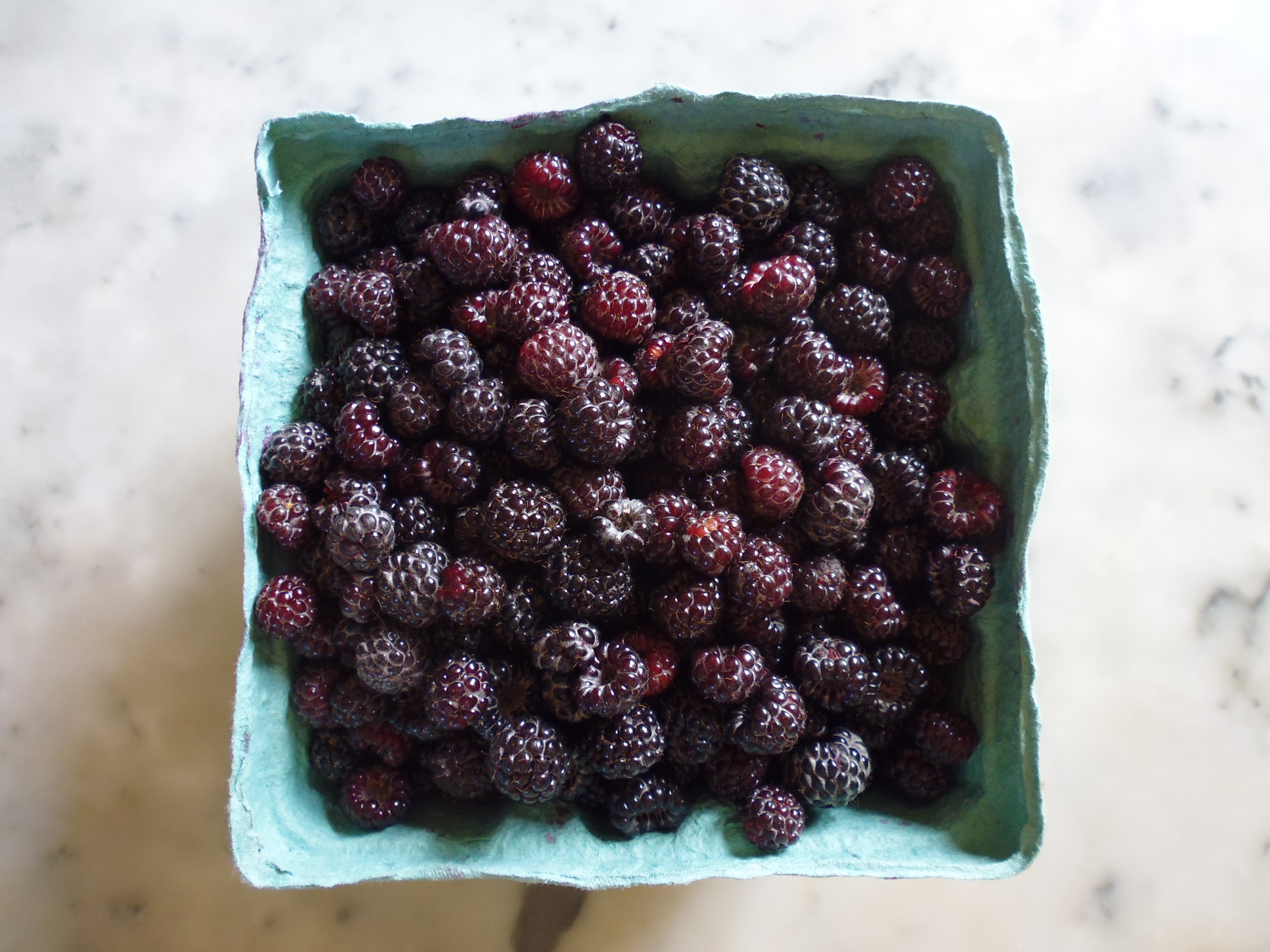
Wild black raspberries

A few years ago I bought a bottle of black raspberry vinegar from Montgomery Place Orchards in the Hudson Valley, as a gift for my cousin and his girlfriend in Germany. They liked it so much that I bought a second bottle for my next visit, but then had to tell them this would be the last one, because after our daughter graduated, we would no longer make frequent trips to Annandale-on-Hudson. I suspect one of the motives of my cousin and his now wife for spending their summer vacation in the US this year is to load up on black raspberry vinegar… There are no black raspberries in Germany, they are a North American specialty.

We have a few black raspberries on our grounds, usually not enough to get excited about. This year however seemed different. I spotted brambles full of berries and picked a handful for fruit tart the other day, making a note to myself to get more. It took me a few days to work up the energy to leave my cool office and actually do it – in 90 degrees Fahrenheit and 55 percent humidity, covered up head to toe with boots, long sleeves, hat, protective glasses, and gloves. Even the dog, usually following me everywhere and inching forward with me sphinx-style when I pick strawberries, preferred to stay in the house.

For a good hour or so, I disappeared into the thicket. It was work but I picked more berries than I had hoped for. And I even found a large patch of blackberries, to return to in August. I don’t think I have had this explorer/discoverer feeling since I was a kid. When I came back to the house I was filthy and slightly scratched yet exhilarated and happy.

Of course the black raspberries had to go into black raspberry vinegar. For all that effort, I want something lasting. For instant gratification, there were enough berries left for a quick dessert for two.

I had made raspberry vinegar before, according to a recipe from the River Cottage Preserves Handbook, and found it a bit too sweet. This time I followed the recipe recently posted by Phoebe’s Pure Food.

It remains to be seen if the black raspberry vinegar will be as good as the one I gave away as a gift. Maybe knowing that it was made with the berries I foraged will make up for the difference in taste.

Raspberry vinegar & dessert

Pesto outlet

Pesto knotsOnce in a while even resolved home cooks like me agree to take-out pizza. With it we usually order a serving of garlic knots sitting in a puddle of very garlicky garlic oil. Seeing the ample, almost untouched amount of pesto in the freezer a few weeks ago made me feel almost guilty about eating garlic knots from somewhere else so I thought of ways to combine the two: pesto knots.

When it comes to pesto, I am a minimalist. I only use homegrown basil and garlic, salt, a good extra-virgin olive oil, and roasted walnuts. No pine nuts because the real, good kind from Lebanon is very expensive, and I find the Chinese pine nuts inedible. And no Pecorino or other cheese because I prefer to add it to the dish right at the table.

Immediately after processing the pesto, I fill it in small disposable paper cups and place them in the freezer until they are solidly frozen. I then remove the cups and tightly pack those pesto lollipops (lollipops without sticks, that is) in a large zippered freezer bag.

The yeasted knots are fun to make, and both times I made them we did not have trouble finishing them within a day or two (they can also be reheated in the oven).

Now that I have averted the danger of having to spread pesto on our breakfast toast in June to use up last year’s supply, I am starting to wonder whether this year my basil plants might get hit by basil downy mildew, a new highly destructive and quickly spreading disease. In gardening, everything is possible. Meanwhile, I will eat another pesto knot and enjoy it.

Pesto Knots

1¼ cups warm water

2¼ teaspoons active dry yeast

2 tablespoons olive oil

1 teaspoon salt

3½ cups flour (whole wheat or half whole wheat and half bread flour)

½ cup pesto

Extra-virgin olive oil for drizzling

1. Mix the water with the yeast and let stand for a few minutes until it starts to foam.

2. In a large bowl mix the olive oil, salt, flour, and the yeast mixture. Knead to a smooth dough using your hands or the dough hook of an electric mixer. The dough should be slightly tacky; add more water a teaspoon at a time as needed.

3. Cover and let rise for 2 hours.

4. Preheat the oven to 425 degrees F. If you have a baking stone, place it on the medium rack of the oven.

5. Briefly knead dough for remove any air bubbles. Divide it into 24 equally sized pieces using a sharp knife or a dough cutter. Roll each piece into a 6-inch rope of even thickness and twist it into a knot. If the dough starts to feel a bit dry, moisten your hands before shaping each knot.

6. Place the knots directly on the hot baking stone, or on a baking sheet, about 2 inches apart. After placing them in the oven spray them immediately with cold water. Bake in the preheated oven for 20 to 25 minutes, or until the knots are golden brown.

7. In the meantime mix the pesto with a few tablespoons of extra-virgin olive oil. Immediately when they come out of the oven, toss the knots with the pesto to coat them evenly.

8. Place the coated knots on a large plate or baking sheet in one single layer. If you pile them up hot as they are they will sweat and get soggy. Eat warm, or reheat in a preheated oven for 350 degrees for a few minutes.

Makes 24 pieces

Fighting a cold, locavore style

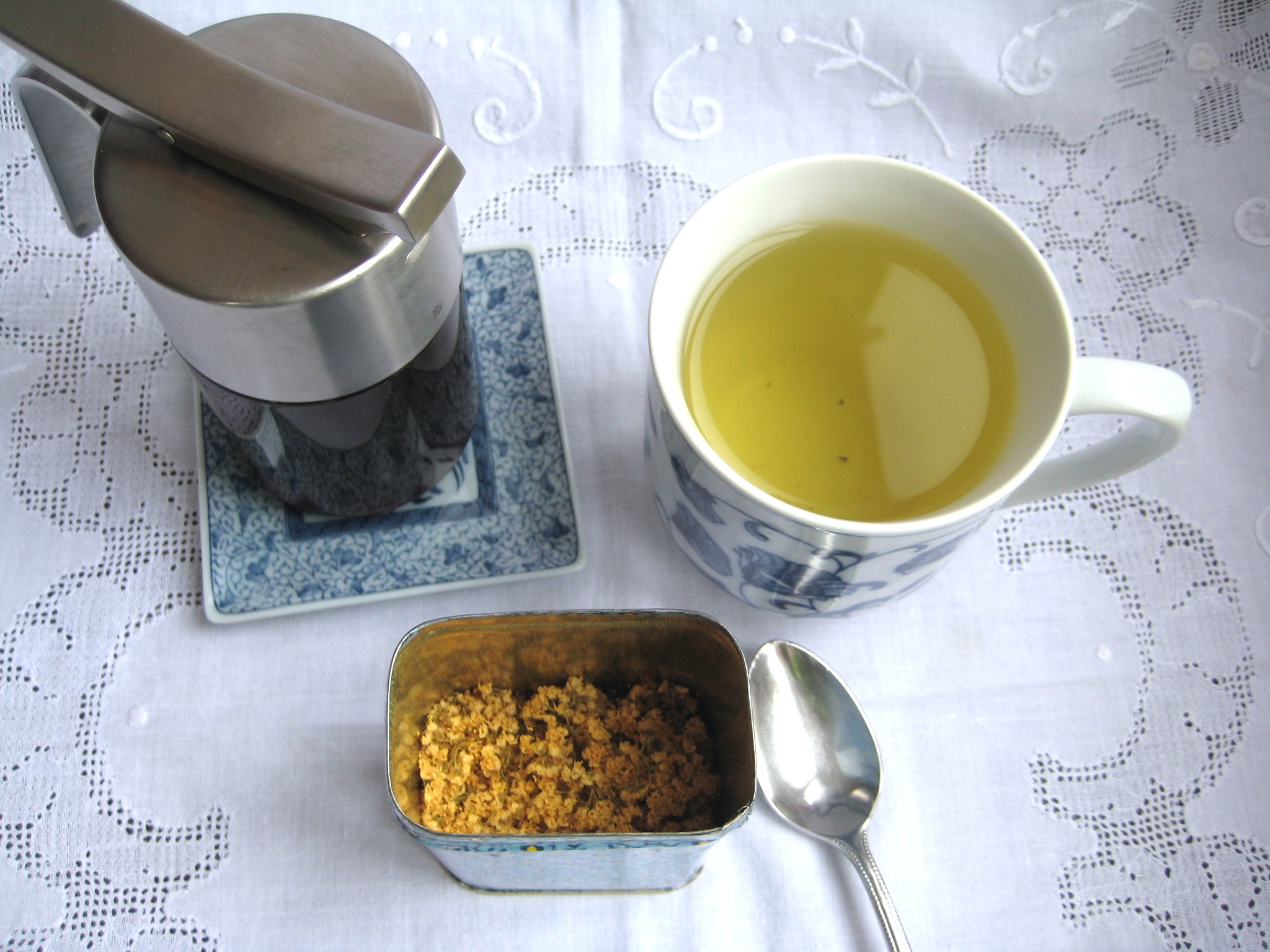
Elderflower tea

For the past three days I have been knocked out with a cold. Between feeling sorry for myself over cancelled weekend plans, and watching the entire first season of the US remake of the Danish crime drama The Killing (great program, by the way), I remembered that I had dried some elderberry blossoms for tea last May.

Elderflower tea is an old home remedy against common cold and fever. The formulas vary. I used 1 heaping teaspoon of dried elderberry flowers per cup boiling water, steeped it for 10 minutes, and sweetened with local honey from our neighbor. In grey chilly January weather, sipping the hot tea from blossoms collected on a beautiful sunny day already feels good.

Hot elderberry juice with lemon juice and honey is also an excellent cold remedy but I don’t have any elderberry juice this year, and can only hope that the elderberry bushes transplanted last fall will love their new, less wind-beaten location in moister soil and produce lots of berries in the future.

Read the label

Concord Grape Frozen Yogurt

Frozen yogurt is always a great dessert – it feels like a special treat yet with only four ingredients, it is easy to make. I keep the freezer bowl of the ice-cream maker in the freezer all the time so it is always ready to go.

Yesterday I wanted to make blueberry frozen yogurt from the blueberries I picked at a blueberry patch last summer. Only when I was about to strain the cooked fruit through a sieve did I realize those were not blueberries! Those were the precious Concord Grapes I had set aside for my Stuffed Flatbread.

I was too far along to change course, also short of time and lacking a better solution what to make with 1½ cups grape concentrate. So I went ahead with my standard frozen yogurt recipe. To give it a hint of Christmas flavor, I added ¼ teaspoon freshly ground cardamom. It turned out fine; in fact, it got a full approval rating at the dinner table from my family and a guest. Funny, I would have never thought of making Concord Grape Frozen Yogurt, and now I have a recipe that is worth keeping.

Against my usual habit, I had not labeled the bags with blueberries, thinking their content was far too obvious. Then I simply forgot that I had snuck in a bag of grapes in late summer. Lesson from this: always read the label – after you make sure there is one.