Beans in cheesecloth

Like beans in a brick, this is not an innovative recipe but a technique, the result of a 20-minute discussion last week between my husband and me about the most efficient way to blanch filet beans. If you have several pounds to process at once like we do, dumping the pot of water with the beans every time will turn the kitchen into a Turkish bath. Bringing one pot of water after another to the boil will take forever. If you leave the beans in the same water and remove them with tongs, half of them will be overcooked by the time you fish them all out.

Therefore, in previous years, I put the beans in a metal colander, which I placed in a pot with boiling water. But unless I did this in very small batches, the beans were too crowded and did not cook evenly.

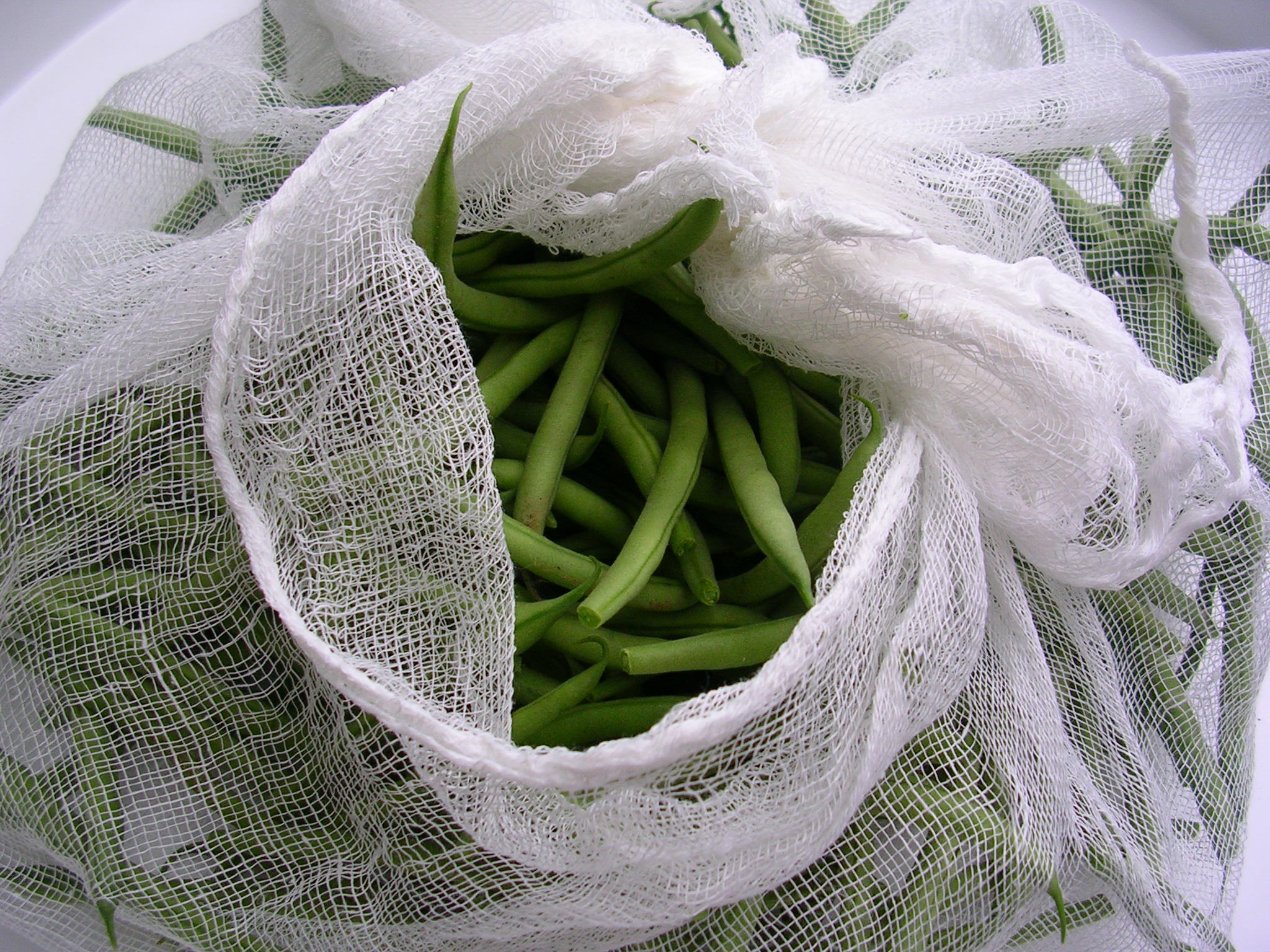
After we took out half of our pots and colanders of various sizes and staged the different options, it occurred to me that cheesecloth might be the way to go. I placed a pound of green beans on a large piece of cheesecloth, twisted it several times at the top so it formed a loose bag around the beans, and lowered it into a large pot of the boiling water. I firmly held onto the top with a pair of tongs. When I immersed the bag into the bowl with ice water, it cooled off almost instantly so I could open up the cloth and release all the beans.

Tonight it’s blanching time again. For now I am happy with the cheesecloth trick. I am only curious what my assistant, in charge of the ice water cooling and spreading the beans on dish towels to dry, will cook up on his end. He usually runs the ceiling fan at top speed to dry the beans. But there is always room for improvement…

Beans in a brick

Unlike chicken under a brick, beans in a brick is not a recipe but the way I grow green beans. Every year I had entire rows of French filet beans, aka haricots verts, getting knocked over, a paining sight. Whether it’s the wind on our hilltop, or the weight of the beans that does it, I don’t know.

I tried different things, from securing every plant individually with a small stake (tedious and useless) to stretching wire along each side of the row (equally useless). I even called the company where I bought the seeds to find out what they recommend but they did not seem to understand what I was talking about, since the beans are described as self-supporting in the catalog.

Then, one day, I was standing outside the car wash waiting when my eyes fell on a pile of bricks nearby. What if I buried the seeds into the holes of bricks and let the plants grow into them? That way the crucial first 1.5 inches of the stem, where the plants always break, would be protected. Lucky coincidence – our local hardware store was just discontinuing selling bricks, so I got a few dozen bricks for free.

It worked! I seed the beans very densely, one in every hole, so they also support each other. The most important thing is not to move the bricks the slightest bit after seeding because the small hole is the seed’s lifeline to air and light. Without it, no germination!

A few plants still get knocked over, but this is minimal compared to the previous damage. Now it’s almost time to harvest, and I am looking forward to my favorite salad with green beans. The original recipe is from Bon Appetit but because I don’t like raw onions of any kind, I omit the shallots in the dressing. Since with my growing method, I get a good crop of haricot verts, I use three times more green beans than the recipe calls for. Therefore this is not a Potato Salad with Haricots Verts, but a Haricot Verts Salad with Potatoes.

Haricot Verts Salad with Potatoes, Blue Cheese and Walnuts

1 tablespoon + 1 teaspoon Dijon mustard

1 tablespoon white wine vinegar

1/4 cup extra-virgin olive oil

2 teaspoons chopped fresh rosemary

3/4 teaspoon chopped fresh sage

1 pound small reds-skinned potatoes

Salt

1.5 pounds French filet beans

1/3 cup walnuts

2/3 cup crumbled  blue cheese (Gorgonzola or Roquefort)

Freshly ground black pepper

1. Preheat the oven to 450 degrees F.

2. Whisk the mustard with the vinegar and olive oil. Stir in the rosemary and sage.

3. Wash the potatoes and toss them whole with 3 tablespoons vinaigrette until they are evenly coated. Spread them in one layer in a baking dish. Bake in the preheated oven for 20 minutes. Reduce the heat to 375 degrees F and bake for another 40 to 50 minutes until they are soft, turning them once in a while. Cool.

4. Bring salted water to the boil in a large pot. Have a large bowl with ice water standing by. Cook the beans in the boiling water for 3 minutes. Drain and throw immerse the beans in the ice water immediately. Swirl them around so they cool evenly. Drain again.

5. Lightly toast the walnuts in an ungreased pan. Chop them coarsely.

6. In a large bowl, mix the potatoes, green beans, cheese, walnuts and the remaining vinaigrette.  Season with salt and pepper.

Makes 6 servings

Field to Fork

I started this blog a year ago. Every minute of writing, photographing (and eating) has been enjoyable. I think I am even a more passionate gardener today than I was a year ago. For me, growing your own food is one of the most fulfilling things you can do, and I wish more people with a backyard would do it. That’s why I am so enthusiastic about “Field to Fork”, the event that the Master Gardeners in Schuylkill County, of which I am a member, will hold on August 20th. It’s a show-and-tell-and- taste, where containers with a variety of homegrown fruits and vegetables will be on display, and samples of different dishes for the public to taste.

The whole thing began last summer after I bought of a copy of Jim Denevan’s cookbook Outstanding in the Field. Denevan is a chef and artist from California who tours the United States every year, holds dinners at places where organic food is grown: farms, vineyards, wineries, ranches etc.

I went online and saw that a dinner in our area was scheduled for September. Too bad it’s sold out, I told my husband, and started doing other things in the kitchen. He grabbed the laptop and asked, “Do you have any idea how much it costs?” I didn’t. 200 dollars per person plus tax plus service fee. Even if I could, I would never spend that amount of money for a meal. As beautiful as it is, the long tables in a rural setting – and from the recipes in the book I know the food must be delicious –  the socialist in me revolted. Events like this cater to a food elite that is already conscious of healthy eating.

Then I started thinking. We need something very low key, very affordable, very grass-root for this area. Although this is farm country, only a fraction of people, many of them with large properties, have their own food gardens. In the cities, on the other hand, the waiting lists for a plot in a community garden are long, and often even closed for new applicants.  Is there a better way to inspire someone to grow fruits and veggies than to show them the plants you grow, put some tasty homemade food in their mouth, and say “You can do this, too!”.

Before I joined the Master Gardeners, this absence of making use of the land on which we sit plainly angered and frustrated me. Now, by joining forces with other like-minded gardeners, I feel we can do something about it. If only a handful of people are inspired to grow their own food, “Field to Fork” will have fulfilled its purpose.

“Field to Fork” will be held at Frisbee Farm in Orwigsburg, PA, on August 20. For more information click here.

Are you jellin’?


When I first moved to the United States, I loaded up on all types of baking and cooking ingredients on each visit to my native Germany. Meanwhile I have found decent substitutes for most items, except one: jelling sugar.

In Germany, jelling sugar comes in three variations of fruit-to-sugar ratio, depending on the sweetness of the fruit and personal taste: 1:1, 2:1 and 3:1. It’s a natural product, made from pectin in apples and citrus fruit. And, it comes ready-mixed, or as a jelling powder concentrate to which you add sugar (lightweight and therefore perfect for airline travel). Some online stores specializing in German foods have it but when I inquired at Dr. Oetker USA, I was told they don’t carry it. Too bad, because there is really nothing like it in the US. Many American recipes call for twice as much sugar as fruit.

So don’t hesitate if you can get your hands on imported jelling sugar. Alternatively, you can use pectin products for less sugar or no sugar recipes, to obtain an jam or jelly that actually tastes like the fruit, not just sugary.

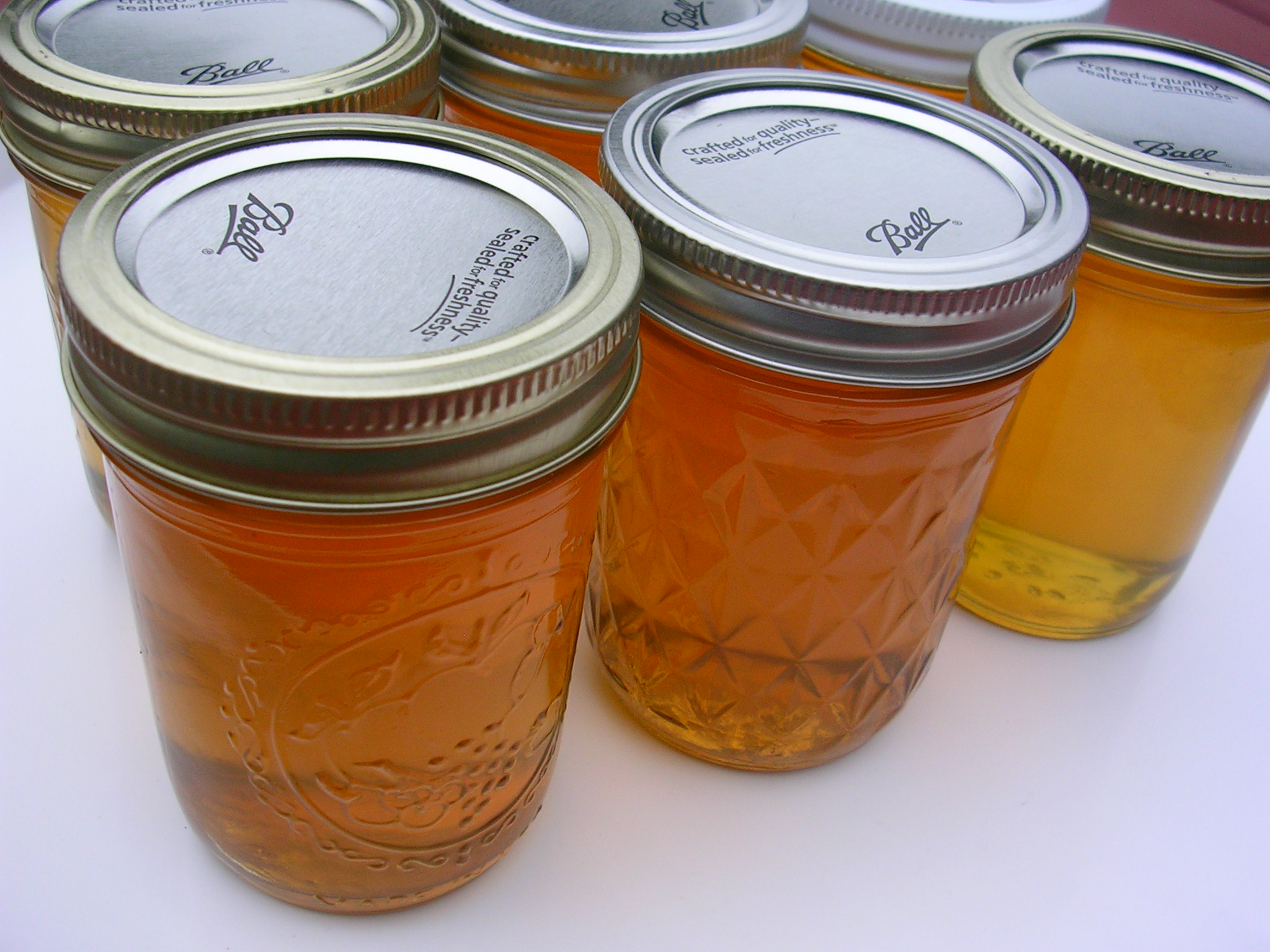
This was the first year I had enough blossoms on my elderberry bushes to dare snipping some off for elderflower jelly. The heavenly scent alone is worth making it. In the past few days I have spotted wild elderberry blooming along the roadside. As long as it’s not in a polluted area, and the plants have not been sprayed with any pesticides, you can use those. To make sure you are really harvesting elderflowers, check out some elderberry images, for example on the website of the Missouri Botanical Garden, which has an excellent plant database.

I might go forage elderflowers myself to try some other elderflower recipes.

Elderflower Jelly

8 cups clear apple juice without artificial coloring or additional sugar

15 to 20 elderberry flowerheads

1 package fruit pectin for less or no sugar recipes

4 cups sugar

You also need:

A canning pot, or a very large stockpot

10 half-pint canning jars

8 bands

8 new (unused) lids

1. Shake the elderflowers to remove any bugs. Remove all the stems.

2. Immerse the flowers in a large bowl filled with cold water. Swish around and place in a colander. Repeat this process once or twice. If there are still tiny insects on the flowers, don’t worry. The juice will be strained and cooked.

3. Place the flowers in a large plastic container with a lid. Pour the apple juice over it. Push down; the flowers should be fully immersed in juice. Cover and refrigerate for 48 hours.

4. Pour the liquid through a fine sieve. Repeat the process. You may also line the sieve with a piece of damp cheesecloth if you are really worried about bugs.

5. Follow the package directions for your pectin product. When the mixture boils, remove any foam with a ladle or a large spoon.

7. Pour the hot jelly in sterilized jars through a canning funnel. Wipe the rim with a damp piece of paper towel to remove any drips and wipe dry with paper towel. Place the lids and the bands on the jars and process in a boiling water bath for 10 minutes.

9. Let cool and set for 24 hours without moving the jars. If processed properly, the jelly will keep for 1 year or more.

Makes 10 half-pint jars