Pickle plate, palate teaser


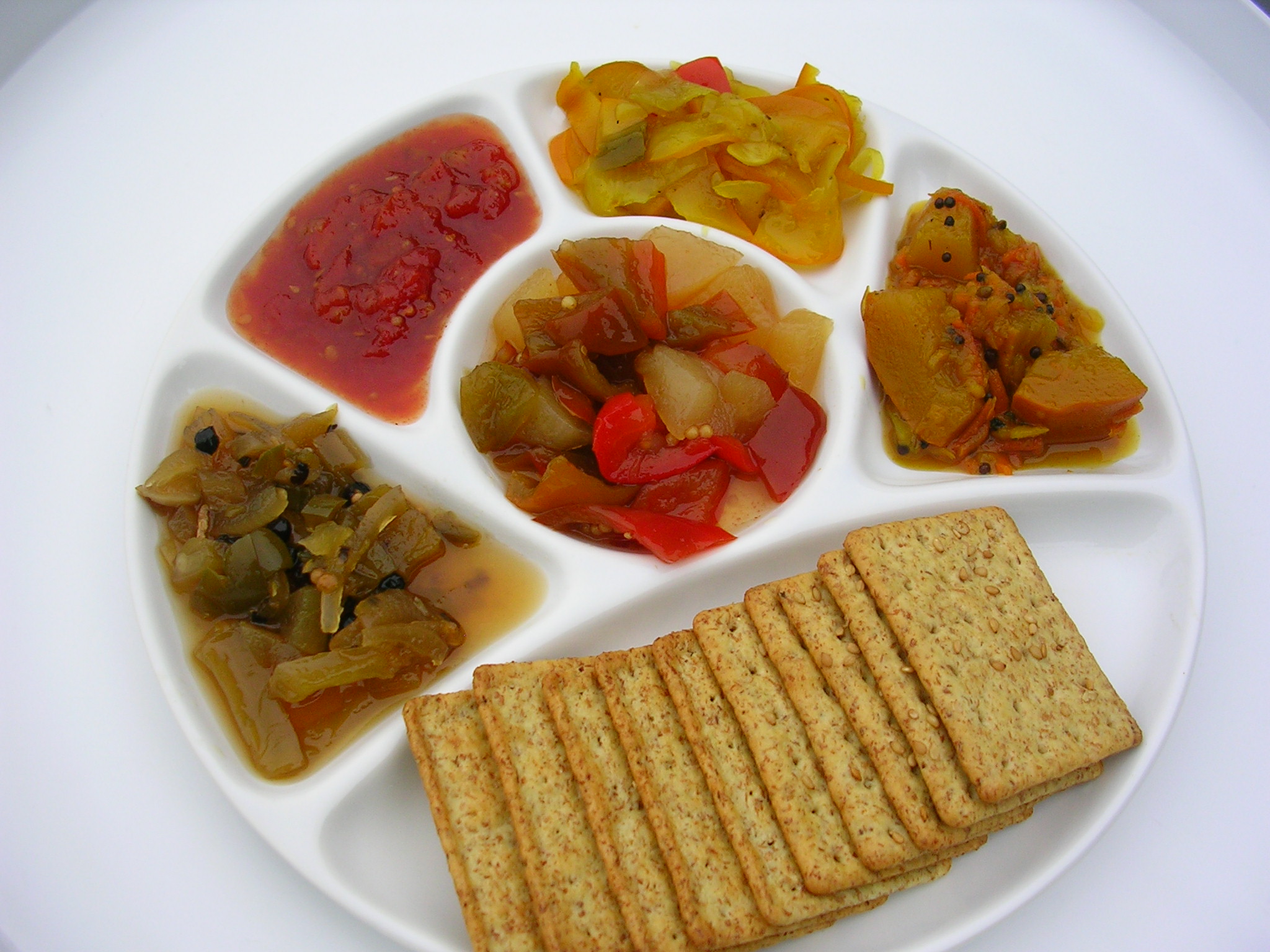
Kelly Geary, author of the preserving cookbook Tart and Sweet, was quoted in a recent issue of Organic Gardening saying that she orders a pickle plate whenever a restaurant has it on the menu. “A pickle plate,” I thought, “what a neat idea. I have canned enough stuff to make one of those at home!” And so I did.

My pickle/relish/chutney plate included my Zucchini RelishGreen Tomato ChutneyGolden Zucchini Chutney, and Red Pepper and Apple Relish (photo center; recipe below). Plus, Mark Bittman’s fabulous Tomato Jam, which I have made every year since the recipe appeared in The New York Times in 2008.

When tasting the different pickles and relishes all at once (not plain though, we had it with rustic whole-wheat bread, crackers, salami, a couple of hard cheeses, and a glass of chilled Vidal Blanc), I was relieved that I did like all of them. But the greatest surprise, given that I just overcame my green tomato apprehension this summer, was that the Green Tomato Chutney was probably my favorite.

Like all the other pickles, the Red Pepper Relish was the result of an overabundance. I had a bumper crop of red peppers this year.

In the past I often ended up with jars that contained mostly liquid. Therefore I now drain the cooked solids before filling the jars. Only then do I add as much liquid as is needed to fill the jars, and discard the rest.

Red Bell Pepper and Apple Relish

8 large red bell peppers

4 large tart apples

3 cups cider vinegar

2½ cups sugar

4 teaspoons yellow mustard seeds

½ teaspoon cayenne pepper

2 teaspoons salt

You also need:

A canning pot, or a very large stockpot

Canning jars, bands, and new (unused) lids

1. Cut the bell peppers in half and remove the seeds and dividing membranes. Cut into ½-inch pieces. Peel and quarter the apples and remove the core. Cut into 1-inch cubes.

2. Combine all ingredients in a large heavy pot and slowly bring to a boil. Stir until the sugar is dissolved. Cook uncovered for 25 minutes.

3. Carefully ladle the piping hot relish into a colander placed over a large heatproof bowl. Fill the solids in sterilized jars placed on a damp kitchen towel. Add enough of the hot liquid from the bowl to cover the solids, leaving about ¼ inch headspace. If the liquid has cooled off, quickly reheat it in the pot.

4. Wipe the rim of the jars with a clean damp paper towel. Close jars with brand new lids and bands immediately and process in boiling hot water bath for 15 minutes.

5. Remove from the water onto damp kitchen towels and let sit for 24 hours. Store in a dark and cool place.

Makes three 1-pint jars

The eternally dirty knees of a gardener

No matter how hard I try to stay clean, I always get dirty in the garden. I mean really dirty, to the point where need to take off my gardening clothes in the garage. The worst are my knees. Even after thorough scrubbing in the shower, rubbing them with alcohol or hydrogen peroxide, my knees still look dirty. This is a mystery to me because I always wear trousers in the garden – hand-me-downs from my mother who is trying to rid her house of decades of accumulated clothing, including old jeans of mine when I was in my twenties (surprisingly, they still fit me, gardening must indeed do something for the waistline).

My best guess is that my knees are not actually dirty but it’s more pressure points from being on my knees a lot, just like our dog has calluses on his elbows from frequent floor contact.

How could I possibly not be on my knees? Seeding minuscule seeds, thinning out tiny seedlings, and harvesting, especially digging out root vegetables, is practically impossible without crouching on the ground, unless you do raised-bed gardening. Today I dug out some lonely beets that I had overlooked all summer, and seeded another fall crop. The arugula needed thinning so I took some for this salad tonight. Of course, I did all of this… on my knees.

When the time comes where I cannot be on my knees any more, I shall move to raised beds. Until then, I will just have to accept dirty knees as the signs of a true gardener.

Beet Salad with Arugula and Feta

1.5 pounds beets

¼ cup extra-virgin olive oil

2 tablespoons balsamic vinegar

Salt

Freshly ground black pepper

1 small bunch baby arugula

5 ounces crumbled feta

3 tablespoons chopped fresh mint

1. Preheat the oven to 375 degrees F.

2. Wash the beets and put them unpeeled in a Dutch oven or cast-iron casserole with a tight-fitting lid. Pour in about ¼ inch water. Cook the beets in the preheated oven for about 40 minutes, depending on size, until they are easily pierced with a knife. If the beets are different in size, check them individually and take them out as they become tender.

3. Slip the skins off the beets and cut into 1-inch cubes. Set aside to cool.

4. Whisk the oil with the vinegar, salt and pepper.

5. Wash and dry the arugula and tear into bite-size pieces.

6. In a large bowl, mix the cooled beets with the arugula, feta, mint and dressing. Serve as soon as possible, as the arugula wilts quickly.

Makes 4-6 servings

The best thyme I ever had

After years of meager woodsy thyme plants, this summer a thyme plant from last year popped up again and supplied me with the largest amount of thyme I had since I started gardening.

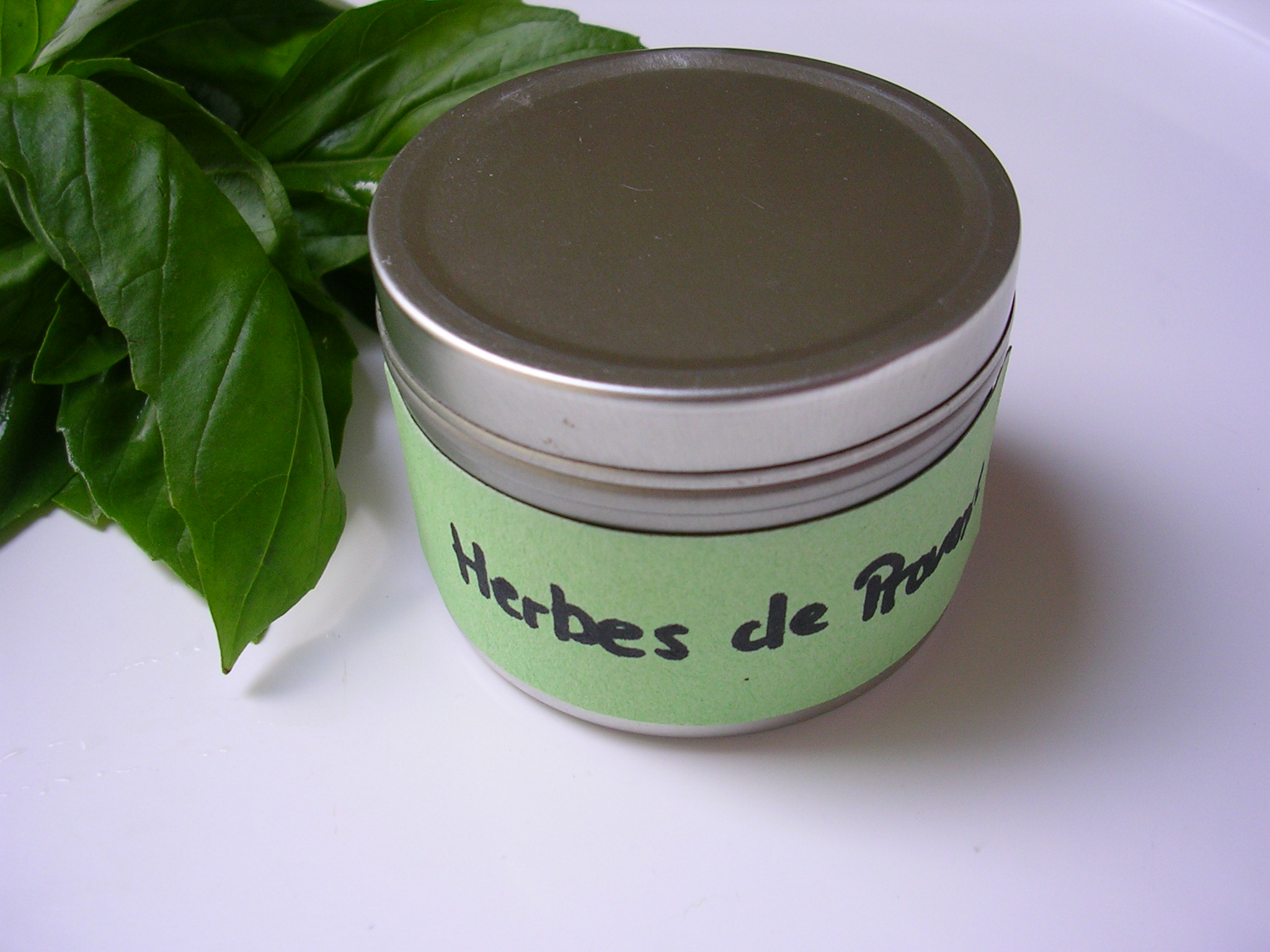
Now I finally have enough thyme from my garden to make my own herbes de Provence, a mix of dried herbs. I only use herbs I have in the garden but in addition to the herbs listed below, the mix can also contain equal amounts of fennel seeds, marjoram, oregano, and a small amount of crushed dried lavender blossoms. Herbes de Provence are wonderful with roasted meat, chicken, oven-roasted vegetables or potatoes, and even in tomato sauce for pasta.

Herbes de Provence

Dried rosemary, chopped finely

Dried basil leaves, crumbled

Dried sage leaves, crumbled

Dried summer savory, crumbled

Dried thyme, crumbled

Mix the herbs and store in a tin can or a glass jar away from the light. Herbes de Provence are best used within a few months; as all dried herbs, they loose their flavor over time.

Overcoming the green tomato prejudice

Until now I have been heavily prejudiced against green tomatoes. Not that I ever ate a green tomato. When I occasionally had green tomatoes in the garden because a branch broke off, or I ended up with green tomatoes at the end of the season, I would rather throw them on the compost pile than using them for cooking.

Maybe it’s the idea of eating something unripe that put me off. I know fried green tomatoes are a southern specialty but I was never tempted to try them. I am not a health fanatic but when I use artery-clogging ingredients, I prefer do to it when there is no alternative, such as butter in a piecrust. Also, I do not like the idea of buying additional produce in the height of the harvest to make something with green tomatoes.

When I collected a couple of pounds of green tomatoes from the garden this week, I reconsidered. I constantly try new things, so why not give green tomatoes a second chance and make chutney? I browsed recipes online and went through my cookbooks for inspiration. The only condition I set for myself was that I would minimize the purchase of extra ingredients. Since I have jalapeno peppers in the garden right now (also a premiere), and lots of fresh garlic, the only thing I had to buy for this Green Tomato Chutney were apples. All the other ingredients were staples I had in the house.

As the prospective main chutney eater besides me does not like it too spicy, I removed the seeds from the jalapenos. I am glad I did because the chutney is already quite hot as is. For a hotter version, simply include some or all of the seeds.

I don’t think I will ever actually pick green tomatoes but at least I have a simple recipe that I like in case green tomatoes come upon me. I look forward to opening the first jar of chutney and eat it with Indian food this fall or winter.

For now it’s back to fresh red tomatoes.

Green Tomato Chutney

2 to 2¼ pounds green tomatoes

10 garlic cloves

1 large onion

1 large or 2 small tart apples (I used green summer apples)

3 jalapeno peppers

1 1-inch piece fresh ginger

1 tablespoon black peppercorns

1 tablespoon whole allspice

6 cardamom pods

1 pound 6 ounces Turbinado sugar

1 tablespoon salt

1 cup white wine vinegar

3 bay leaves

1 tablespoon yellow mustard seeds

6 whole cloves

1 teaspoon dried orange peel

1 teaspoon finely grated zest from an organic lemon

You also need:

A canning pot, or a very large stockpot

5 half-pint canning jars

5 bands

5 new (unused) lids

1. Remove the core from the tomatoes and cut them into 1-inch dice. Slice the garlic cloves thinly. Chop the onion. Peel the apples and remove the core. Cut the apples into 1-inch dice. Cut the jalapenos in half and remove the seeds. Chop the jalapenos very finely. Wear disposable gloves to do this, or wash hands thoroughly afterwards to avoid skin and eye irritation. Peel and finely chop the ginger.

2. Crush the peppercorns, allspice and cardamom in a mortar.

3. Mix all ingredients in a non-corrosive pot (no aluminum) and mix well. Cover and refrigerate for 8 hours.

4. Slowly bring the mix to a boil. Cook uncovered for 20 minutes. Fill into sterilized canning jars using a slotted spoon, as you don’t want to fill the jars with too much liquid but make sure the chutney is fully immersed. You will have about 1 to 2 cups of cooking liquid left over; discard. Close jars with brand new lids and bands immediately and process in boiling water bath for 10 minutes.

5. Remove from the water onto damp kitchen towels. Let rest 24 hours before storing the jars in a cool place away from the light.

Makes 5 half-pint jars