Green legacy

Pepper spreadMy father-in-law, who passed away this month, used to tell me about his beginnings in gardening: two tomato plants and a cucumber in a Victory Garden at the end of World War I. Children, especially those of struggling immigrants, did surely not receive any pocket money in those days, so the dime he received as a prize for the tomatoes must have been quite special for a nine-year-old.

He also told me that two of the most difficult things he had to do in his life was closing his medical practice upon retiring, and taking down his garden when he was no longer able to physically do the work.

I never saw my father-in-law’s garden, as it had disappeared years before I first met him.  I only saw photos of it, yet I could tell that the area that is now just lawn must have once delivered a cornucopia of fruits and vegetables.

We talked gardening often, he sitting at his usual place at the end of the long kitchen table with a view of the back yard where his garden used to be. I remember him laughing out loud and shaking his head over and over again when I told him I had planted almost two dozens of tomato plants. “What the heck will you do with so many tomatoes?” he asked. My answer, “Soup, sauce, freeze them whole so I don’t have to ever buy canned tomatoes,” did not quite seem to convince him. However, after we brought along a few bags of homemade frozen cream of tomato soup in the midst of winter, he did not question the number of my tomato plants again.

These past few weeks have not been easy, and I have even wondered whether I would have the oomph to plant a garden this year. But then I remembered how my father-in-law told me that he always had some sort of a garden and was growing something, no matter where he lived, and no matter what difficult times he was going through. When we buried him, we buried his rusty shovel with him. Thinking about this, I feel that I simply must plant a garden this year to continue in his spirit.

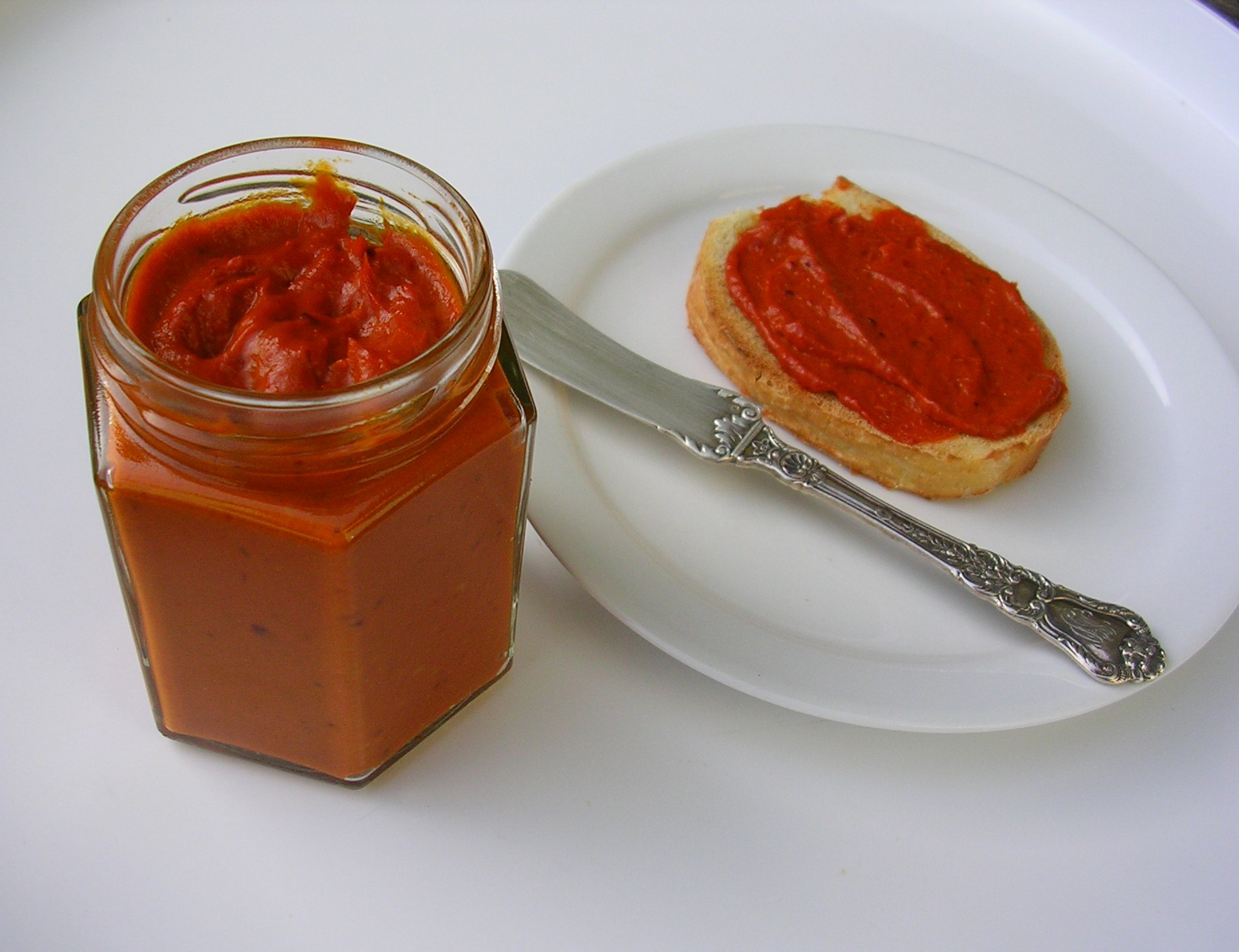
After several bags of frozen bell peppers and jalapeños have reproachfully looked at me every time I opened the freezer, I finally made a batch of red pepper spread today. I never bother to remove the skins, those are all healthy fibers. After cooking the peppers slowly in the oven and pureeing them, the spread is so smooth it is almost impossible to tell the peppers have not been skinned. The spread tastes a bit like Harissa but it is much milder. For a hotter version, just add more jalapeños. Starting with two pounds of seeded peppers sounds like a lot but they shrink considerably.

Pepper spread before pureeingRed Pepper Spread

6 to 7 large red bell peppers, seeded (about 2 pounds)

2 jalapeños

1/3 cup olive oil

6 small garlic cloves (3-4 fat ones)

Salt

Extra-virgin olive oil

1. Preheat the oven to 375 degrees F.

2. Coarsely chop the peppers. Seed the jalapeños and chop finely. Chop the garlic.

3. Mix all ingredients except for the salt and put in in a large ovenproof dish with a lid, ideally a cast-iron casserole or Dutch oven.

4. Cover and cook for 1 hour, then remove the lid and continue cooking until the peppers are very soft and look almost melted. Stir and scrape down the sides once in a while with a rubber spatula.

5. Remove from the oven and cool. Puree very finely and salt to taste.

6. Fill the spread in a glass jar and pour a little bit of extra-virgin olive oil on top to prevent the spread from drying out. Refrigerate and use within a month.

Makes 1 jar
One lonely head of cauliflower

My first try with cauliflower yielded one (!) tiny head of cauliflower. I don’t know whether I planted the seedlings too late, did not fertilize or water them enough, or whether the extreme ups and downs of the weather this fall stunted their growth. Should I plant cauliflower again I will certainly have to educate myself better, which is perfectly all right, because gardening is lifelong learning.

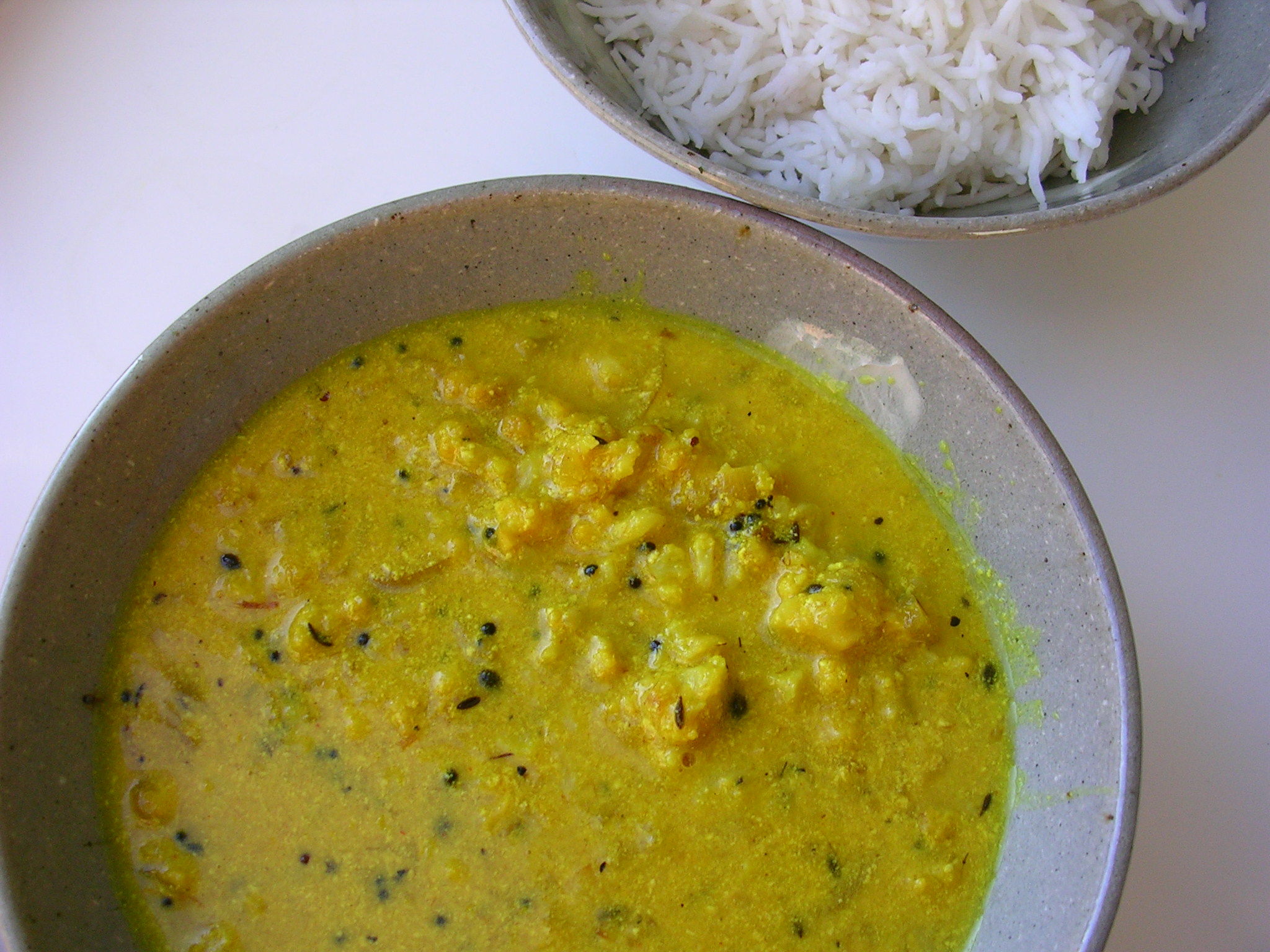
Of course I had to do something special with that cauliflower. My favorite dish with cauliflower is a yogurt curry that I have often eaten at Curry in a Hurry, my favorite Indian eatery in New York City. I did not have a recipe so I experimented with the ingredients. The result came close to the original although the sauce curdled a bit (things to learn here, too…)

That lonely head of cauliflower was not the only harvest. I also picked the last radicchio and dug the last beets. My other trial crop this year, kale, is still standing. It is less finicky than cauliflower and thrives in cold weather, when the starch gets converted to glucose. That’s the only aspect of winter I look forward to right now – harvesting kale in the snow.

Yogurt Curry with Cauliflower

1 tablespoon corn oil

1 teaspoon black mustard seeds

1/2 teaspoon cumin seeds

1/2 teaspoon coriander seeds

1/2 stick cinnamon

Pinch of asefoetida

1 large onion, finely sliced

1 large garlic clove, finely chopped

1 1/2 teaspoons turmeric

1 teaspoon salt

Pinch of cayenne

1 bay leaf

8 ounces cauliflower flowerets

1/2 cup low-fat plain yogurt

1/2 cup buttermilk

Freshly ground black pepper

1. Heat the oil in a heavy medium-size pot to the point of almost smoking. Add the mustard seeds, cumin seeds, coriander seeds, asefoetida and cinnamon stick and fry until the mustard seeds pop, 1 to 2 minutes.

2. Add the onion, garlic, turmeric and bay leaf. Reduce the heat to medium and cook until the onions starts to soften. Add the cauliflower and 1 cup water. Mix well, cover, and cook for 15 to 20 minutes, or until the cauliflower is very tender and falling apart.

3. Remove the pot from the heat and stir in the buttermilk and yogurt. Heat throughly but do not cook, stirring. Season with salt and pepper. Remove the cinnamon stick and the bay leaf. Season with salt and pepper. Serve hot with basmati rice.

Makes 2 main course servings

Jerusalem artichokes, a Trojan horse?

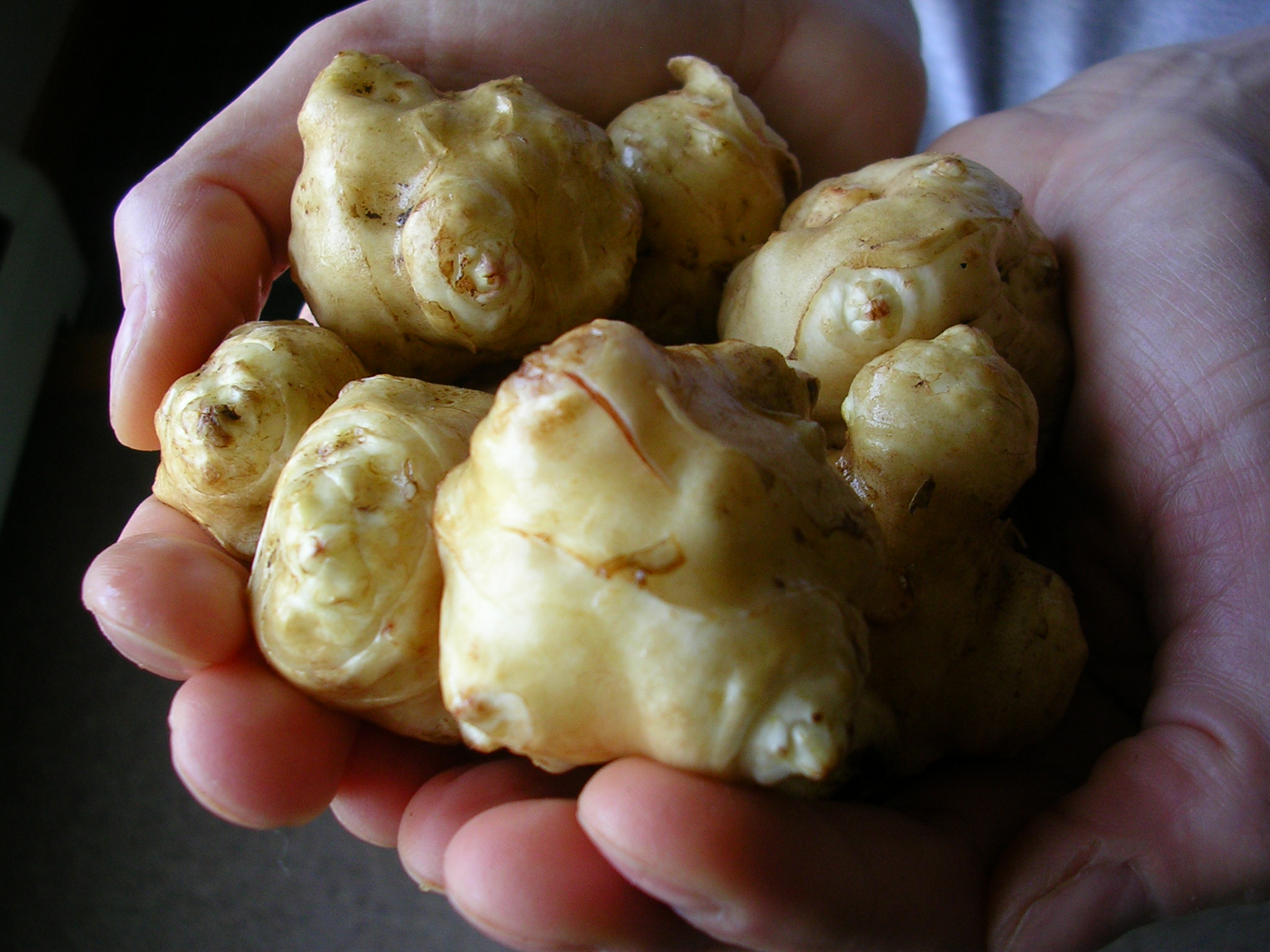
It might be that next summer, after Jerusalem artichokes have taken over the herb garden, I will curse the moment I planted them, disregarding all warnings against this supposedly highly invasive crop. For now, I am quite happy with my very first harvest of those crunchy little tubers. Boldly I am thinking that if I can can keep various mint plants under control, why shouldn’t I be able to do the same with Jerusalem artichokes? We’ll see next summer if they are manageable, and not a Trojan horse.

Jerusalem artichokes, aka sunchokes, are a native American crop. If that’s half a good enough reason to plant them, their wonderful taste and texture make up the other half.

I love artichokes, yet my two attempts to grow real artichokes in the garden, in the rainy summer two years ago, and again this summer, failed miserably. Jerusalem artichokes taste like artichoke hearts, but without the hassle of removing the leaves to get to the meaty portion.

The plants usually grow about six feet tall. Because of abundant rain, mine were so high that I needed a ladder to spot the small, sunflower-like heads. The tubers should be dug after the first frost, which came in the form of a major snowstorm in late October. Lacking a cool basement or a root cellar, I store the Jerusalem artichokes on the basement steps leading to an outdoor Bilco door. That’s fine for now but in sub-zero weather I will need to find another place, as the tubers should be stored close to 32 degrees F. To keep the moisture at the required 95 percent I spray the sunchokes with water every now and then. Properly stored they should keep through the winter.

After much scrubbing, the tubers are spick and span and don’t need to be peeled. But for this salad, I wanted uniform pieces so I trimmed and peeled them. The peeled Jerusalem artichokes must be immersed in acidulated water (lemon juice or vinegar) immediately to prevent them from browning.

Salad of Jerusalem Artichokes, Apples and Walnuts

1/4 cup walnuts

12 ounces Jerusalem artichokes (about 8 ounces peeled)

White winegar

1 tablespoon olive oil

1 large crisp tart apple (I used Honeycrisp)

1 tablespoon lemon juice

1 stalk celery

2 tablespoons extra-virgin olive oil or walnut oil

1 tablespoon apple cider vinegar

Salt

Freshly milled black pepper

1. Lightly toast the walnuts in a pan without oil. Remove them from the pan and set aside to cool.

2, Thinly peel the Jerusalem artichokes with a vegetable peeler. If they are very gnarly, trim them a bit to make peeling easier. Halve or quarter depending on size. Drop them immediately into a bowl with water and a few tablespoons of white vinegar.

3. Heat 1 tablespoon olive oil in a pan. Drain and dry the Jerusalem artichokes with paper towels and fry them in the hot olive oil for about 5 minutes, just long enough to brown them a bit from all sides. turning them often. Remove with a slotted spoon and set them apart on a plate lined with a paper towel. It is important to give them space when they cool, otherwise they will turn soggy.

4. Peel and quarter the apple, remove the core, and dice. Put them in an salad bowl and mix with the lemon juice immediately. Slice the celery and add.

5. Whisk the extra-virgin olive oil with the apple cider vinegar. Add salt and pepper to taste. Coarsely chop the walnuts and add them to the bowl with the cooled Jerusalem artichokes. Toss and serve, or refrigerate.

Makes 2 generous servings

Season finale for herbs

Come August, the days are over when I can just grab a pair of garden scissors and cut a bunch of picture-perfect flowers for a vase or a flower arrangement. Late-summer bloomers like zinnias are often covered with powdery mildew. Sunflowers, which bloom into October, don’t survive the voracity of the rabbits unless I protect every single stem with hardwire cloth. And, I am not too wild about dahlias, asters, and chrysanthemums.

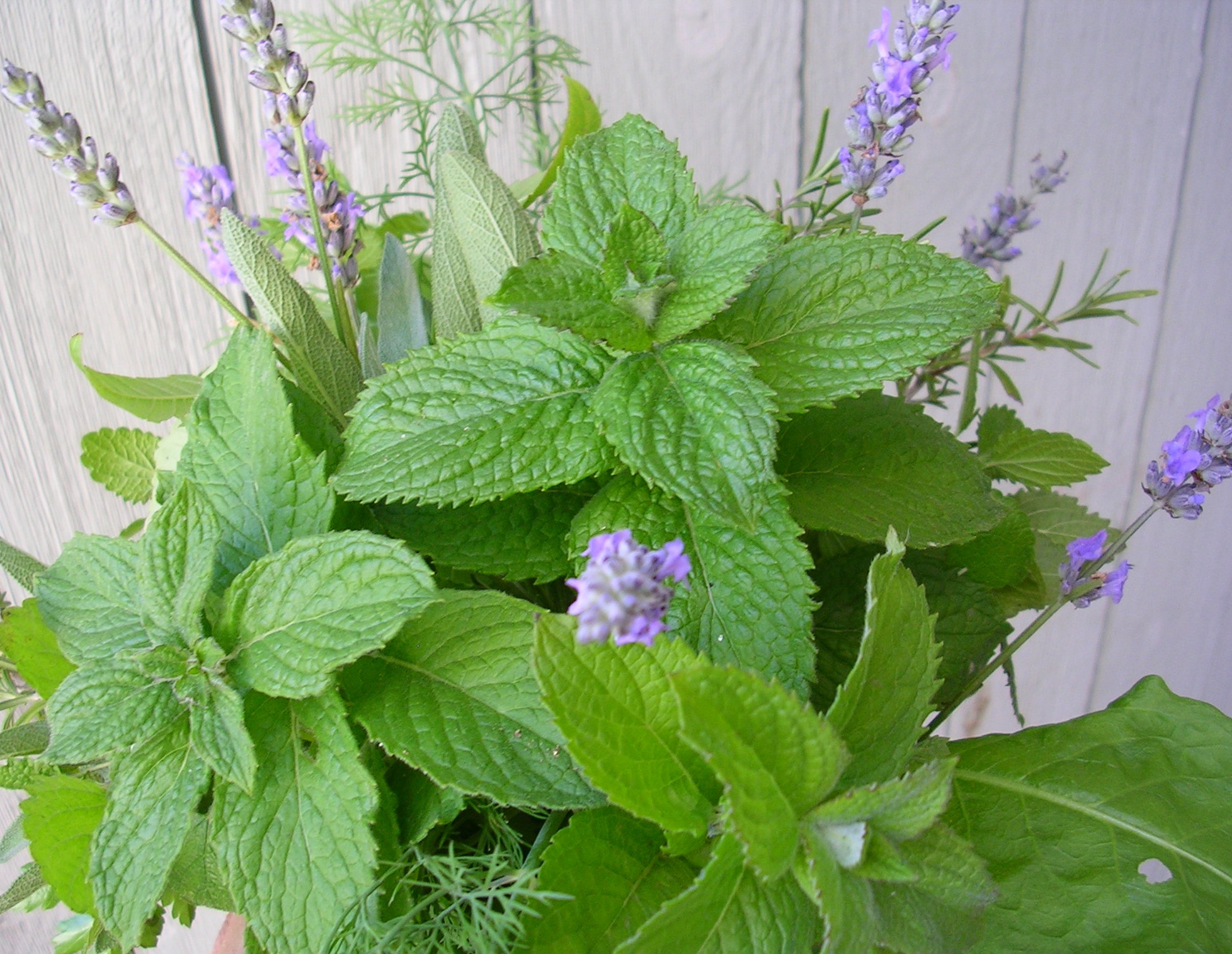
Roaming around I found that a bunch of herbs is the best I can do right now: mint, sorrel, lavender, lemon verbena, lemon balm, dill, rosemary, sage, and parsley.

The herbs are still a lush green, their last big outburst of energy before shutting down for the winter, or dying. Having supplied my kitchen with wonderful flavors and scents for the last six months, they indeed deserved to be the centerpiece on the dining table on this gorgeous fall day.