Asparagus, again?!?

I grew up eating asparagus, white asparagus that is. In Germany white asparagus is the most prized and sought-after spring vegetable. My father grew it in the garden plot we had outside the city and where he spent every free minute after work. In May, during asparagus season, we ate lots of asparagus to the point where I would say, “Asparagus, again?” My mother warned me that one day, I would think back to my spoiled complaints, yearning for this delicacy. As so often in life, mom was right in the end.

Living in the United States, I do get cravings for creamy white asparagus soup once in a while but I have also begun to like green asparagus a lot. Now I am not even sure which one I like better, green or white.

The asparagus I picked up yesterday from a local farm is as different as can be from the uniform picture-perfect white asparagus of my childhood: some spears thin as a pencil, others thick as a celery stalk, some as long as my underarm, others short and stubby, some purple, some green. Somehow this asparagus feels more genuine and much closer to the earth than blanched white asparagus. This is more than a feeling. Green asparagus does have higher nutritional value than white, and unlike white asparagus, it usually does not require peeling.

I must admit that the thought of growing my own asparagus crossed my mind again. But then I remembered what I just read in Eleanor Perényi’s Green Thoughts (a collection of lovely short gardening essays that makes a great bedtime reading for exhausted gardeners). On asparagus she wrote, “Two companionable people who have assembled their materials can prepare an asparagus bed in a long springtime afternoon, and enjoy it for years without much additional effort.” This is not true! Asparagus, like everything else in the garden, needs constant effort. Having homegrown fresh herbs to put into asparagus dishes, and taking care of the garden that’s already there, is quite enough for me.

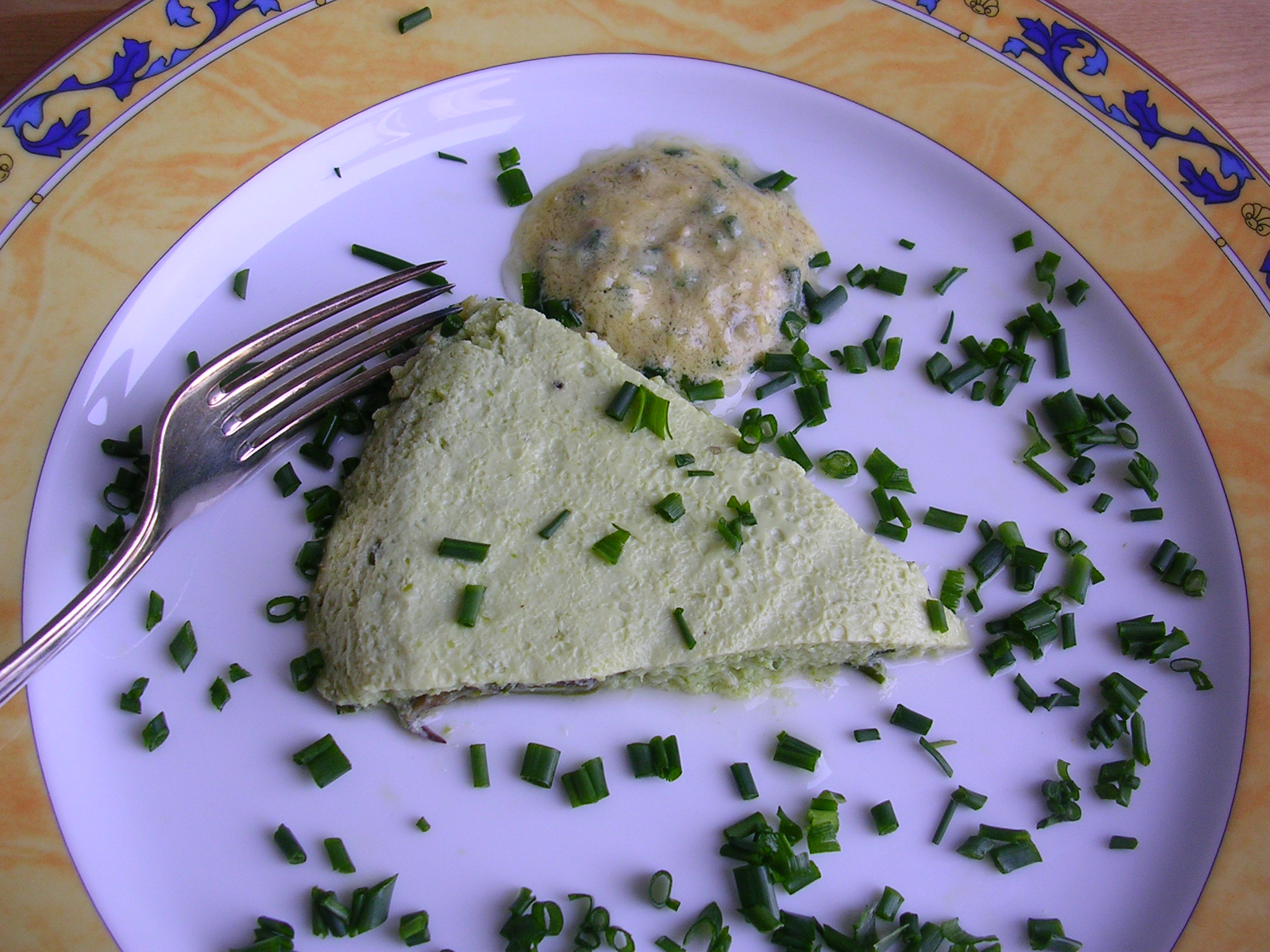
Asparagus Flan

I looked at different asparagus flan recipes and decided I was going to make one that uses all parts of the asparagus and has some texture. I also did not want to bother passing the asparagus puree through a fine sieve to remove stringy fibers, so I peeled the thickest stringy spears before cooking.

1 pound asparagus

1 tablespoon lemon juice

2 large eggs

1/3 cup plus 3 tablespoons 2% milk

1 teaspoon salt

Freshly ground black pepper

2 tablespoons freshly grated Parmesan

2-3 tablespoons snipped chives


1. Wash the asparagus thoroughly. Cut off the tips and set aside. Peel the spears that are thick and stringy. Cut the spears into 3-inch pieces.

2. Bring water to a boil in a large saucepan. Add the lemon juice and cook the spears for 2 minutes, uncovered. Remove them quickly with a slotted spoon and transfer to a bowl with cold water. Drain.

3. Cook the tips in the same water and drain. Cool in a bowl with cold water and drain again.

4. Preheat oven to 325 degrees F.

4. Puree the cooled asparagus chunks. Whisk eggs with milk. Add asparagus puree, salt, pepper, Parmesan and chives.

5. Spray bottom and sides of a 10-inch pie pan or cake pan with oil. Draw the outline of the bottom on wax paper and cut it out with scissors. Line the pan with it and spray the paper with oil.

6. Pour the egg-asparagus mix in the pan. Arrange the tips on top (if you do it in reverse order and put the tips into the pan first, they will float and move around).

7. Bring water to a boil. Place the filled pan in a larger ovenproof dish (I use the bottom part of my turkey roasting pan). Place in middle rack of the preheated oven and carefully pour boiling water into the outer dish to come halfway up the sides of the filled pan. Bake 50 to 60 minutes, until the flan is set but still slightly wobbly. Carefully remove from the water bath and let cool on a cake rack.

8. When cool, run a knife around the sides to loosen. Refrigerate. When ready to serve, cut into wedges right in the pan, or flip the flan over onto a large plate. Serve with a dollop of Sauce Tartare, or a good, preferably homemade mayonnaise.

Makes 6 servings

Late bloomer

The best I could do which chive blossoms in the past, was stick them in a vase. I am an admitted late bloomer when it comes to learning about edible flowers. This year I am at last discovering all the wonderful things you can do with them. I wish I had more chive blossoms right now.

The first bloom of the chives yielded just enough blossoms to make a tiny amount of chive vinegar. I absolutely do not like the taste, smell and especially aftertaste of raw onions. Letting a chopped shallot sit in vinaigrette for a mere hint of onion flavor, and strain it afterwards is my tolerance limit for raw onions. So I thought chive vinegar would be a good way to get the onion flavor without the onions.

Asparagus is one of the crops I do not grow in my garden because I can buy it super fresh from local farm stands. The asparagus was supposed to be for dinner tonight. Yet before I had even washed the dishes my husband and I had nibbled most of it for lunch before heading back to our offices.

No doubt, I will have to plant more chives for the blossoms alone, so I can make more of that vinegar.

Asparagus with Sauce Tartare

The formula for the vinegar is simple: Put freshly picked untreated chive blossoms, washed and drained, in a screw-top jar. Add apple cider vinegar, enough to immerse the blossoms. Cover and let sit at moderate room temperature, away from direct sunlight, for 5 to 7 days until the blossoms are completely discolored. Shake the jar once or twice a day. Strain and discard blossoms.

The Sauce Tartare is adapted from Julia Child’s Mastering the Art of French Cooking.

1 pound green asparagus

1 tablespoon lemon juice

Sauce Tartare:

3 large hard-boiled eggs

1 tablespoon Dijon mustard

¼ teaspoon salt, more to taste

2/3 cup olive oil

1 tablespoon chive vinegar

2 tablespoons capers, drained

3 tablespoons finely chopped chives

Freshly milled black pepper

1. Wash the asparagus and trim the ends.

2. Bring water to a boil in a large deep skillet. Add the lemon juice and cook the asparagus uncovered at low to medium heat until it can be pierced with a kitchen knife. Drain, rinse with cold water, and drain again. Set aside.

3. For the Sauce Tartare, separate the yolks from the eggs, leaving the whites as intact as possible. Finely chop the egg whites and set aside. Mash the yolks with the mustard and the salt until no lumps remain.

4. Gradually add the olive oil and whisk thoroughly by hand until you obtain a thick smooth emulsion. Add the vinegar and whisk until fully incorporated.

5. Finely chop the capers and add them to the sauce with the chives. Season with salt and pepper. Spoon some of the sauce over the asparagus, and sprinkle with chopped egg whites.

Makes 2 servings

Turning scent into flavor, or: lilac for dessert

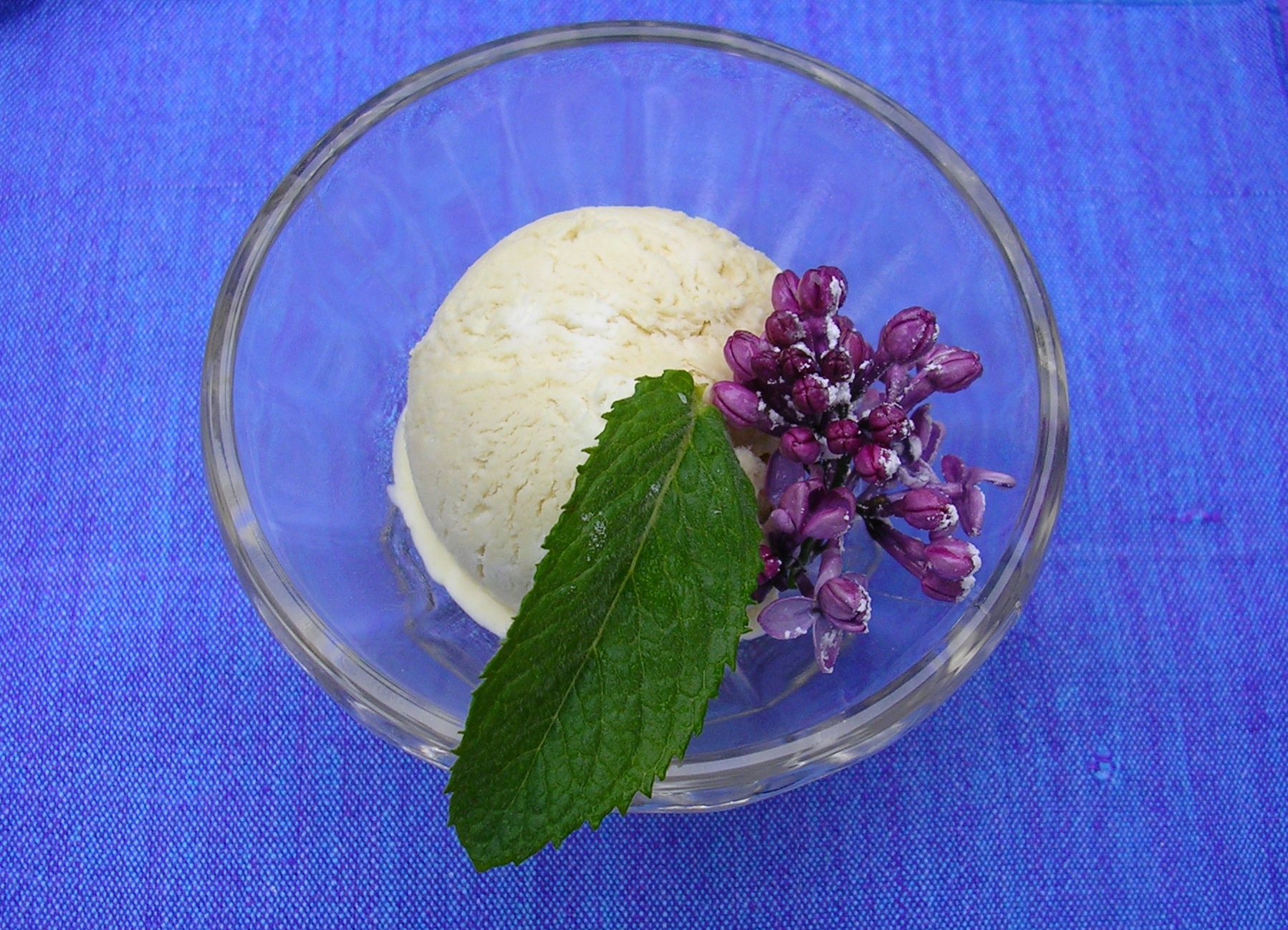
Lilac parfait
Lilacs, I was told a few years ago in gardening class, have so little wildlife value they might as well be made of plastic. Since I love lilacs, especially the Dwarf Korean lilac with its knockout scent, this was bad news. Ever since, I have eyed the lilacs around our house with a mix of doubt – whenever I spot bees swarming around a lilac bush, I am telling myself it cannot be that bad – and a bit of guilt, because every year I transplant lilac shoots and rejoice about them taking off so easily and growing fast with so little maintenance.

To put my scruples to rest, I am telling myself that we encourage a lot of wildlife on our property by providing shelter, food and a pesticide-free and insecticide-free environment. So the dozen or so lilac bushes really don’t matter.

Earlier this week, my favorite magazine arrived in the mail from Germany: Landlust, a stunningly beautiful yet very hands-on magazine about rural living, which The Economist described very aptly in a June 2011 article as the Germans’ “nostalgie de la boue”.

The latest issue had a recipe for lilac-infused ice-cream in it. I had no idea lilac blossoms were edible. After a bit of poking around on the Internet to make sure that lilac blossoms are indeed edible (not that I don’t trust the magazine editors) I decided to concoct my own recipe, a modification of the Honey Parfait from my cookbook Spoonfuls of Germany. I felt the airy consistency of parfait, which is made without an ice-cream maker, is a better match for the ethereal lilac aroma than a heavy, custard-based ice cream.

Now that I am on an edible flower roll, lilac syrup is next. The blossoms are steeping as I write this. It should be ready in about five days.


Lilac Honey Parfait

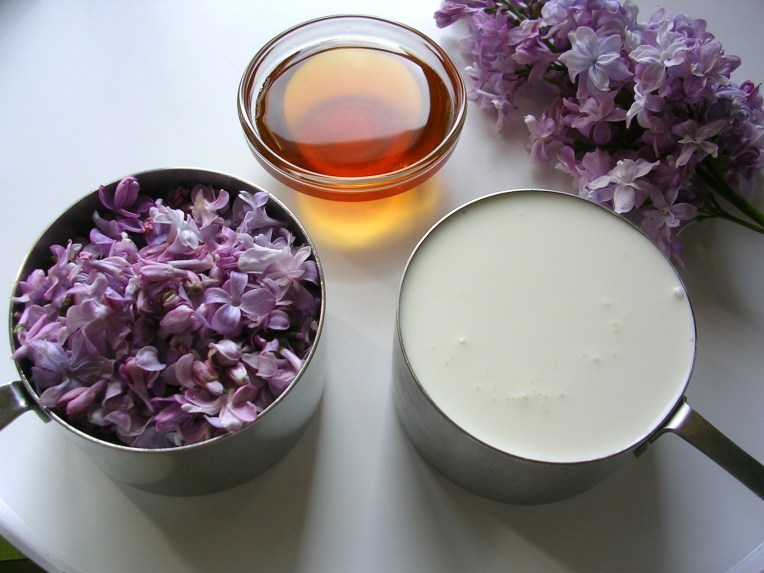
1 cup freshly picked lilac blossoms

1 cup heavy cream

3 large, very fresh eggs, separated

½ cup golden honey

Pinch of salt

Lilac parfait ingredients
1. Wash the lilac blossoms in cold water to remove any dust and insects. Drain in a colander and shake to remove excess water. Spread on a piece of paper towel, gather the edges and gently shake to dry even more. Place blossoms in a small bowl. Pour the heavy cream over the blossoms and push them down so they are fully immersed in the cream. Cover with plastic foil and refrigerate for 24 hours.

2. Strain the cream through a fine sieve. Push down the blossoms so extract as much cream from the blossoms as possible. Set the blossoms aside. Whip until if forms soft peaks. Refrigerate.

3. Beat the eggs whites with a pinch of salt until stiff. Refrigerate.

4. Put the egg yolks and the honey in a double boiler or a metal bowl place over a pot of gently boiling water. Whisk until the mix becomes thick and very foamy. At the end, add the blossoms and stir for another 1 to 2 minutes. Strain through the sieve and again squeeze down on the blossoms until no more liquid comes out.

5. Place the bowl over a bowl of ice water and continue stirring until cooled.

6. Fold the cream and the egg whites into the egg yolk mix. Pour the parfait in a pre-chilled container and freeze for at least 4 hours, or until firm.

Makes 6 servings

From snails to kale

It’s funny how dramatically food tastes can change between childhood and adulthood. When I was little, my favorite dish to order at restaurants were vineyard snails in a parsley-garlic sauce, turtle soup and frog legs. Now I must explain that in the late 1960s and early 1970s, those foods might have been a bit unusual for a child but they were not stigmatized as they are today. Turtle soup was President Taft’s favorite food and he even had a special chef dedicated to making it without ever being accused of animal cruelty.

Unless I were very hungry and had nothing else to eat, I would not touch any of those foods any longer. Today I love many of the foods I dreaded as a child: beets, kale, capers, white asparagus… It was definitely the way they were prepared that made all the difference. The only form of beets I remember were soft, soggy pickled beets in a can, the smell and look of which already appalled me. Those beets had nothing to do with a beet roasted in the oven and tossed into a crunchy wholesome salad. Kale was similarly off-putting. It only came in a heavy stew with fatty meat, sausages and overcooked potatoes.

I grew kale for the first time last fall and used it only for vegetarian dishes, the One Pot Kale and Quinoa Pilaf from food52 and these simple kale chips being my favorites. Yesterday I harvested the last kale to make room for the spring crops.

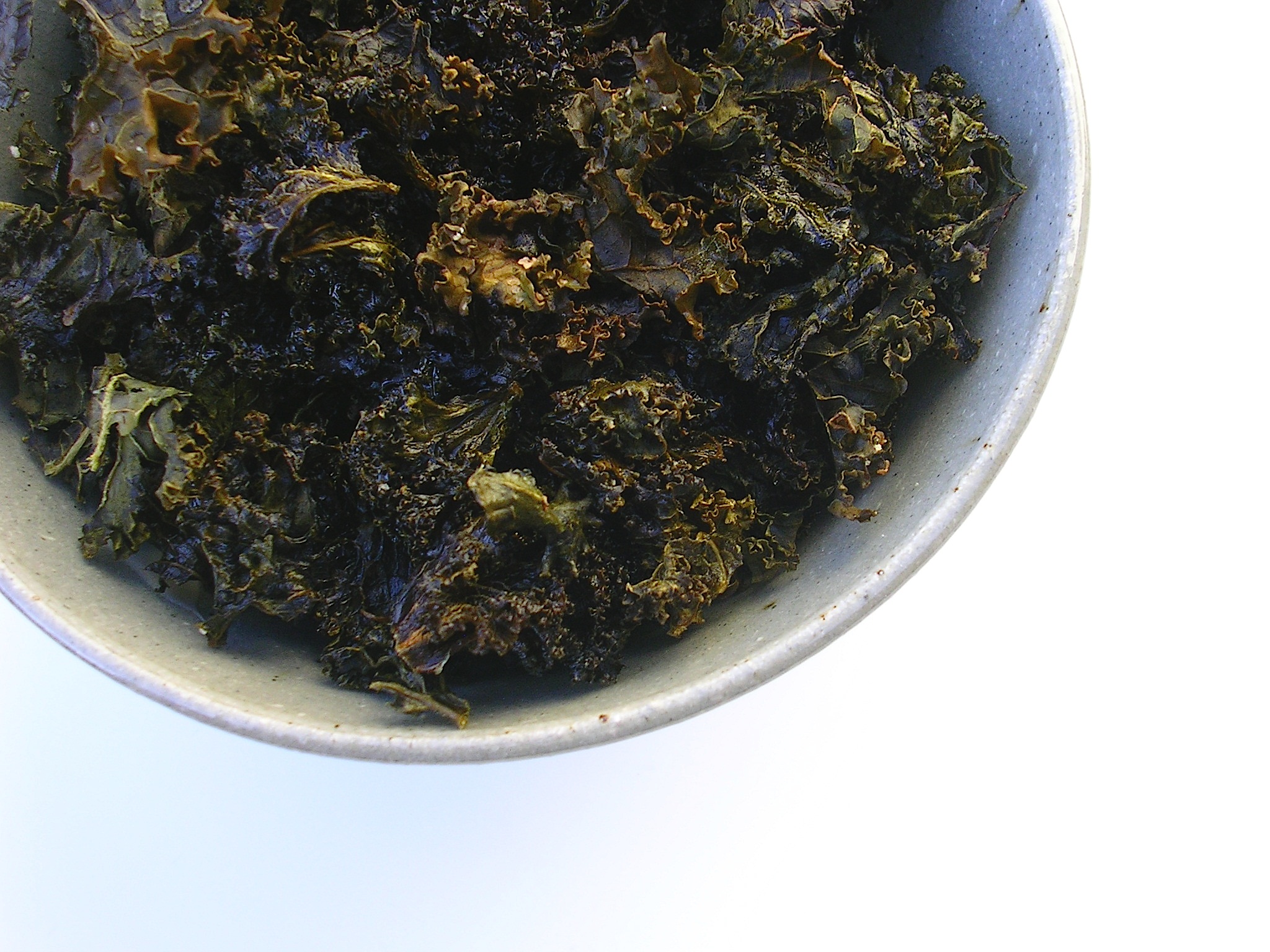
These kale chips are addictive. They are very easy to make but require a bit of time, as you need to stand by and make sure they don’t burn. After I charred one batch I decided to leave them in the switched-off oven for the night; this morning, they were perfect.

There is room for experimentation here. Most recipes for kale chips use herb salt and olive oil, but I find that garlic-infused or herb-infused oil tastes great as well. This time, I used the strained leftover oil from marinating feta cheese with herbs and garlic, which I found a pity to discard.

Lately I have been too tied up with other things to do anything about the garden but today I will finally order seeds. I cannot think of a better and more motivating nibble to accompany this than homemade kale chips. That is, if there are any left, as my husband loves them too.

Kale Chips

1 large bunch of kale

1-2 teaspoons olive oil or garlic oil

2 teaspoons mixed dried herbs, such as Herbes de Provence

2 teaspoons kosher salt

1. Preheat the oven to 350 degrees F. Line a baking sheet with parchment paper.

2. Remove the middle ribs from the kale leaves with a sharp knife or kitchen scissors and discard them. Tear the leaves into bite-size pieces. Toss with olive oil, herbs and salt to coat evenly.

3. Spread on the prepared baking sheet and bake in the preheated oven for 15 minutes, turning once or twice. Switch off the oven and leave for a few hours until the chips are completely dry.