How to cut a citron melon (without cutting yourself)

After I turned the citron melons I harvested a few weeks ago into two types of jam (the first with orange, vanilla and star anise; the second with ginger and lime), vegan mincemeat, and candied citron melon for Christmas baking, I think I got a pretty good handle on prepping them.

Citron melons are not unlike quince: you have to work hard to coax them into something delicious. But then, what a reward! All my worries that citron melons weren’t worth growing in the garden have been dissipated; they are a wondrous fruit, and I will certainly grow them again next year, though in much less quantity.

When I was cutting another citron melon this morning I took some impromptu photos of the process.

1

First and foremost, the knives must be very sharp. Citron melons have a tough skin and very dense flesh.

To get a better handle on the slippery melon, cut a thick slice off one side so you can place the melon flat on the cutting board. Because there was no second pair of hands around, I could not take a photo of this step.

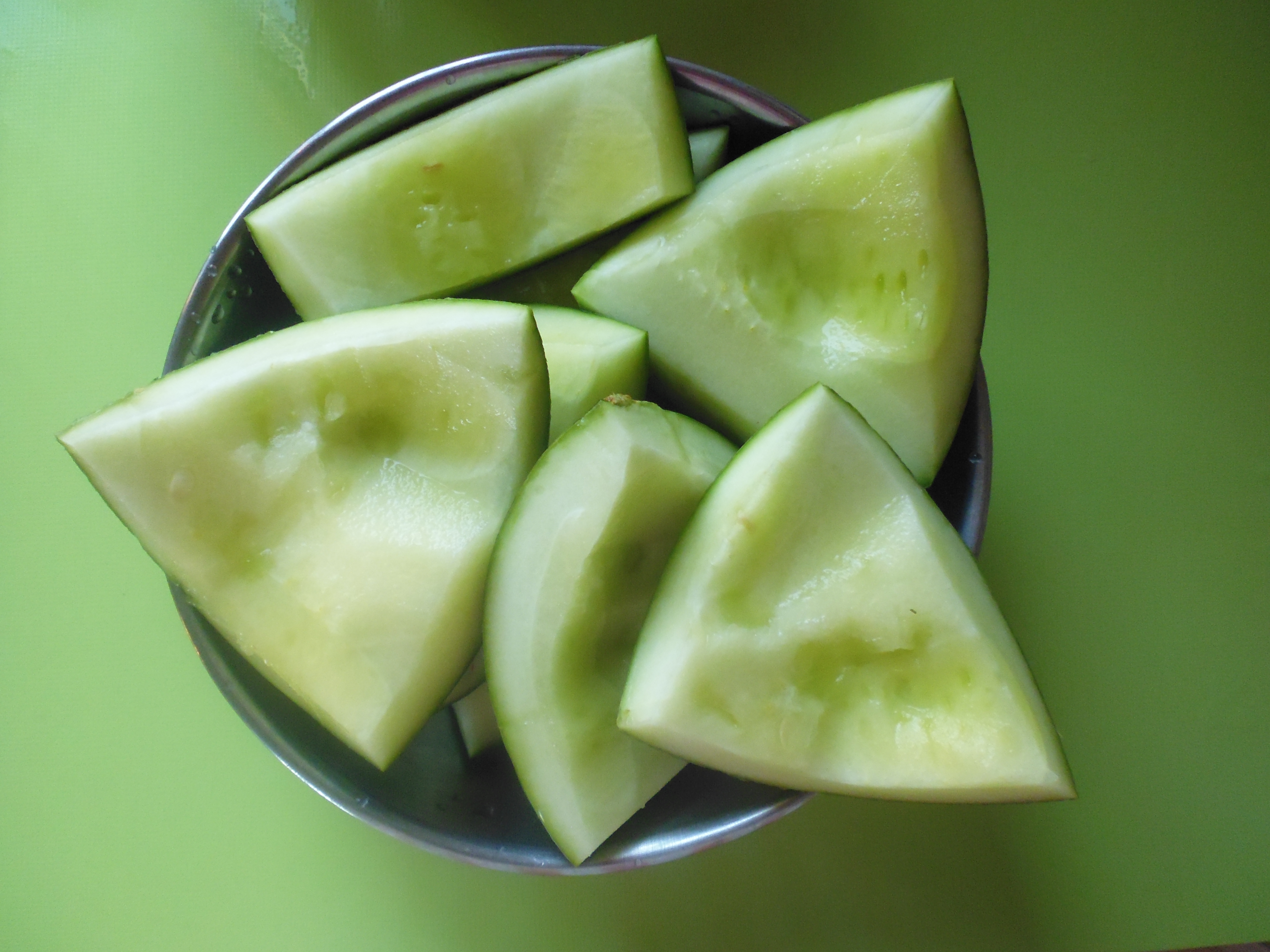
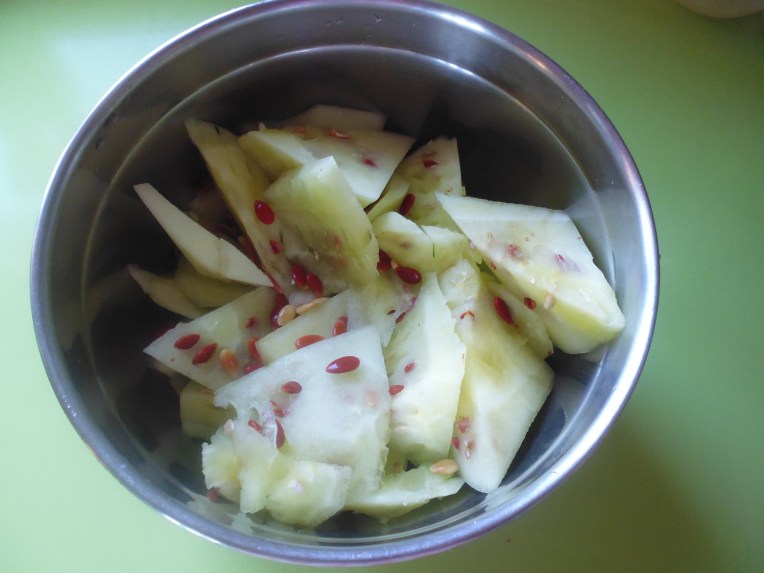
Quarter the melon, then cut it into smaller wedges. Cut each wedge in half.
2

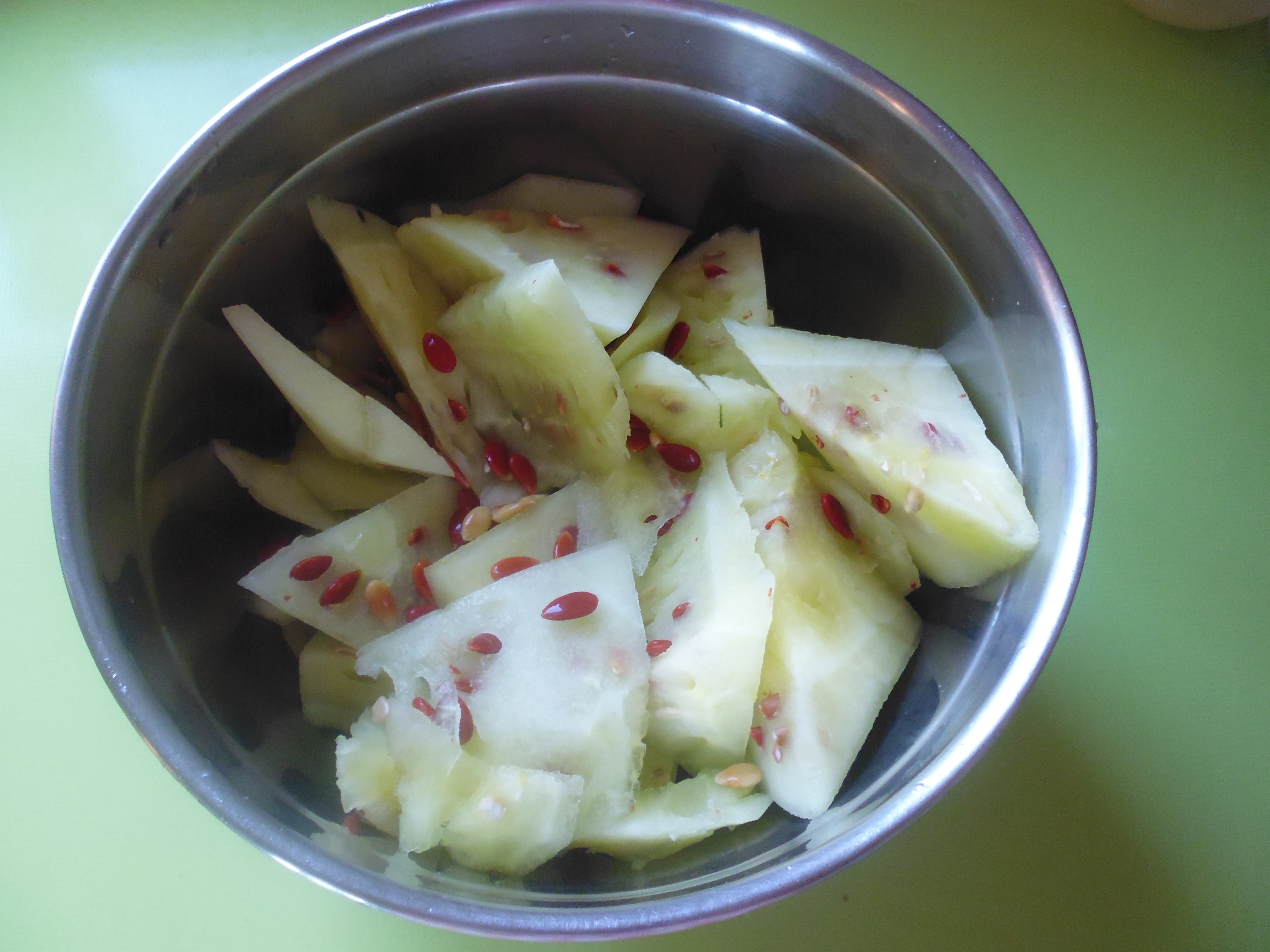
Generously remove the soft pulp around the seeds and discard it. This part is gooey and not used.

Save the unblemished seeds (quite a few get nicked when you cut the melon) for yourself or your gardener friends.

3

Once you have thoroughly removed all the seeds and soft pulp…

4

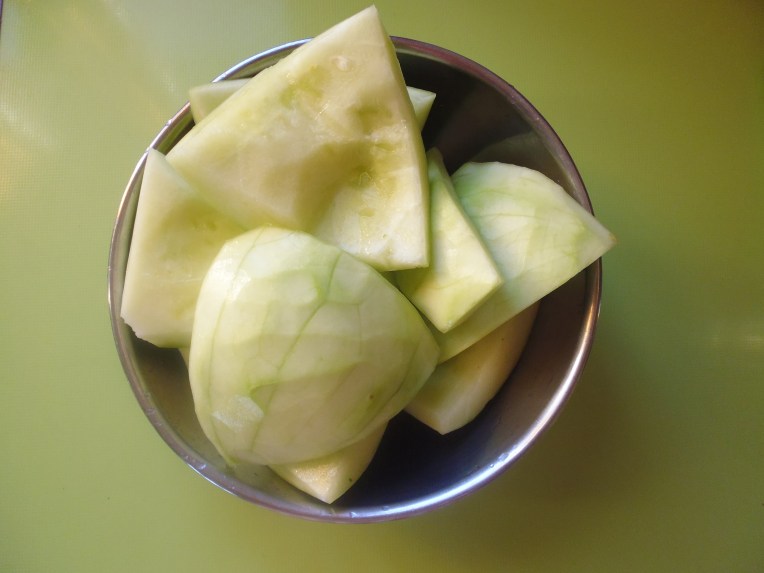
…peel each chunk with a vegetable peeler, preferably one with a wide blade.
5

After neatly peeling all the pieces…

6

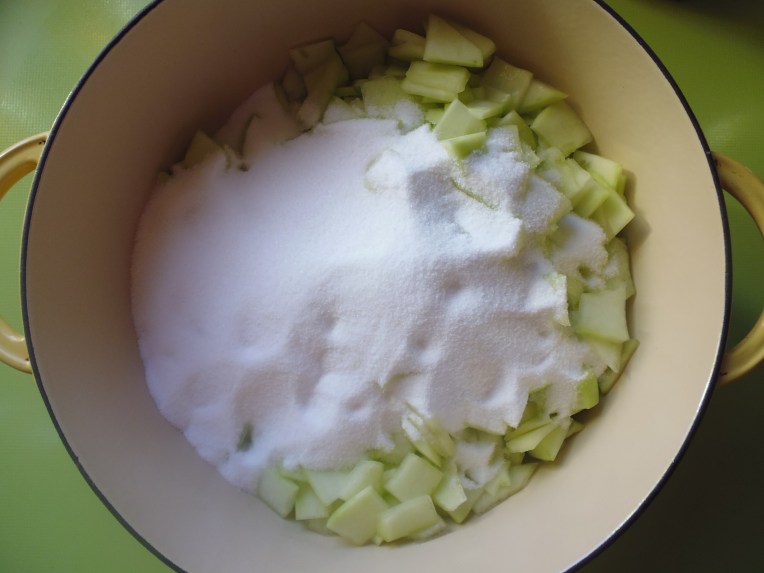
…cut them into the desired size. Here I used a mandoline for slicing.
7

Proceed with your recipe. The melon is usually mixed with sugar and left to sit at least overnight.

More about that, and some recipes, next time.

Me and my steam juicer

Concord grape soda

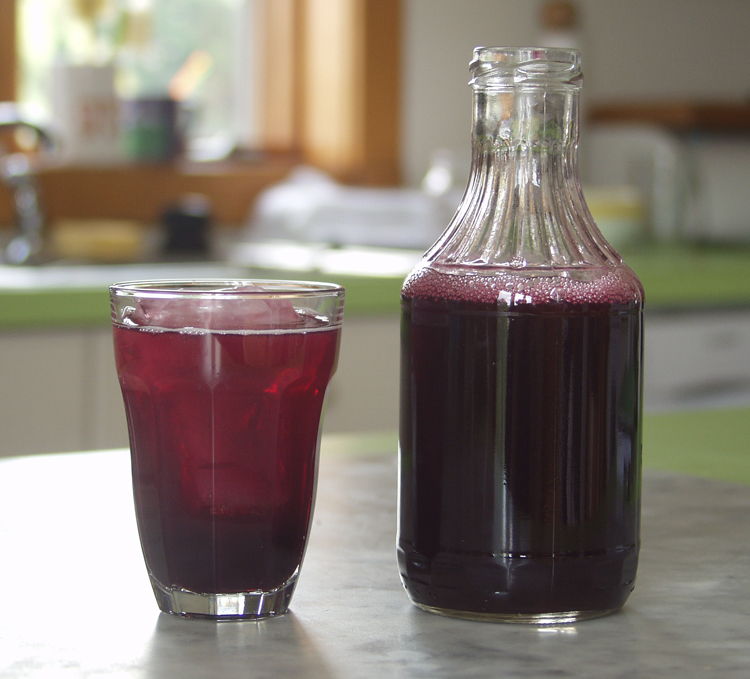
As I mixed one of the last jars of Concord grape juice  from last year with seltzer water it occurred to me that there would not be any of this homemade soda if it weren’t for the steam juicer that I brought back from Germany. Therefore I simply must rave about this wondrous invention.

Steam juicerA steam juicer is a large pot where the base is filled with water and the top colander holds the fruits or vegetables. As the water boils and softens the fruit, the juice drips down from the colander into the juice kettle, from where it is released through a drain tube. The drain tube has a clamp so for the first hour or so, depending how hard and juicy the fruit is, you let the juice accumulate in the kettle, then open the clamp and let the juice run into a bowl placed underneath.  I’ve had the steam juicer for several years yet I still relish the moment when I open the clamp – it feels a bit like digging for water or oil when a jet of the precious good eventually comes bursting out of the ground.

The yield is much bigger than with a jelly bag, it takes a fraction of the time, and it is no hassle at all to clean, just make sure you wash the steam juicer right after using; only the colander needs a bit of soaking sometimes. Except for grape juice, which I can as is with about ¼ cup sugar per quart of juice, I use most of the juice for making jelly.

The drawback: in the United States, steam juicers are expensive, especially the stainless steel models cost $100 and up. I do not recommend aluminum because it reacts with acid. A steam juicer is a small investment but for me it is an essential canning tool, just like a few good tools are essential in the garden. A rototiller for the garden? Never! A steam juicer for the kitchen? Absolutely. I cannot do without it.

Steam juicer elderberries

Photos by Ted Rosen

Gardening reality check

Chrysanthus Cream Beauty

As a first grader on my way to school, I walked by a mansion whose front lawn was filled with thousands of crocuses in early spring. You had to peak through openings in the wall to see them, which made it even more tantalizing.

When I started to garden, I knew what I wanted – a view just like that! I envisioned looking out on a sea of purple from the kitchen window, and splashes of color along the driveway that would greet us every time we came home. So in two consecutive falls, with the help of my mother who herself is not a gardener but always ready to help, I planted more than 700 crocuses in different colors.

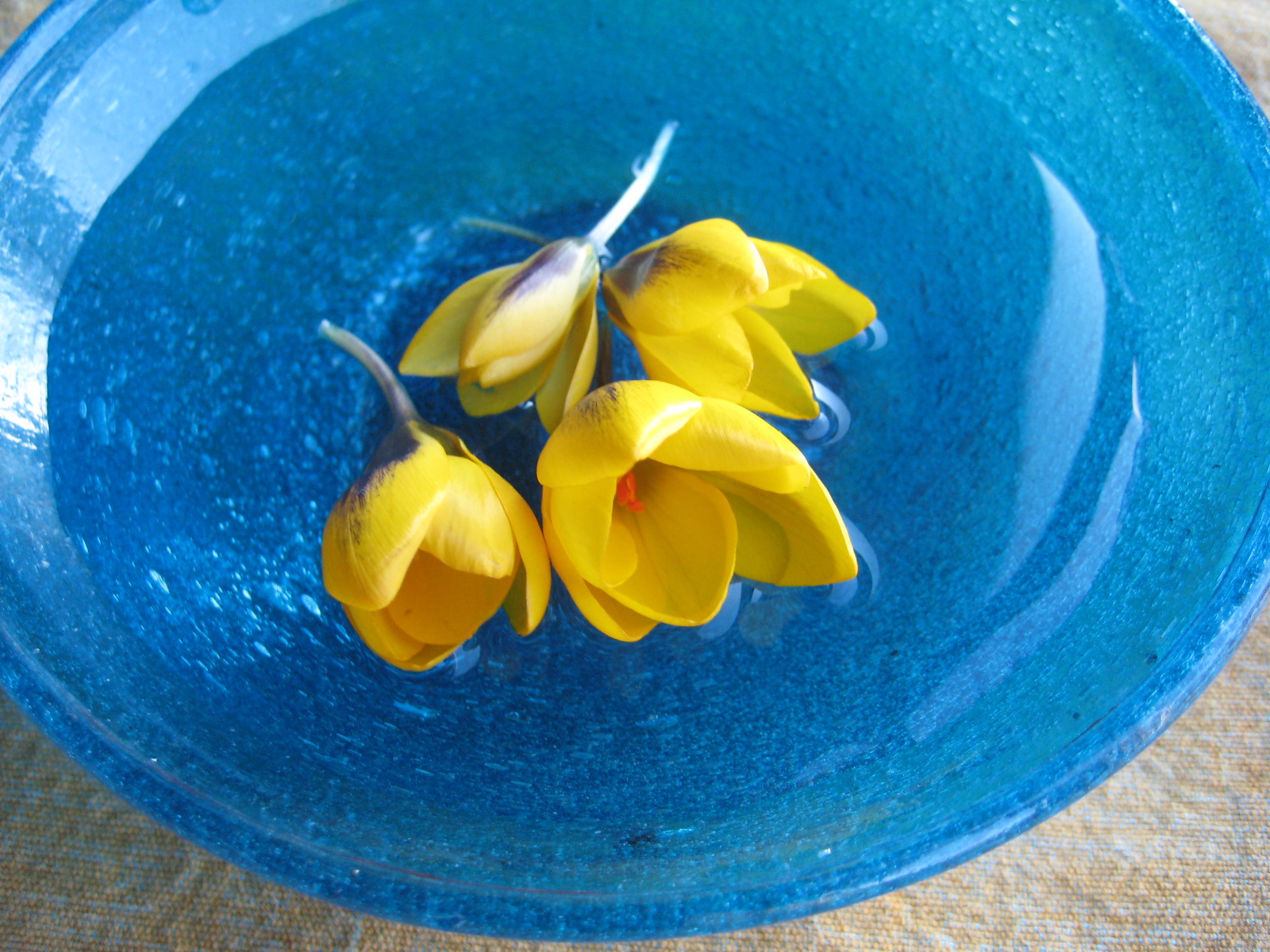
Almost a decade later, the crocuses are still there, doing well, slowly naturalizing. There is just one thing I did not consider. At the time when the crocuses bloom, the grass is still brown so you have to walk up close to see them. There is no sea of purple looking out the kitchen window, and I am afraid there never will be. To really enjoy the crocuses, you have to go outside and visit them, which I just did. A few had broken in the wind so I brought them in.

Half of me feels quite stupid about this, and the other half laughs. It seems to me those crocuses floating in water are smiling at me, too, saying, “Never mind, we still like it here.”