Potato gold

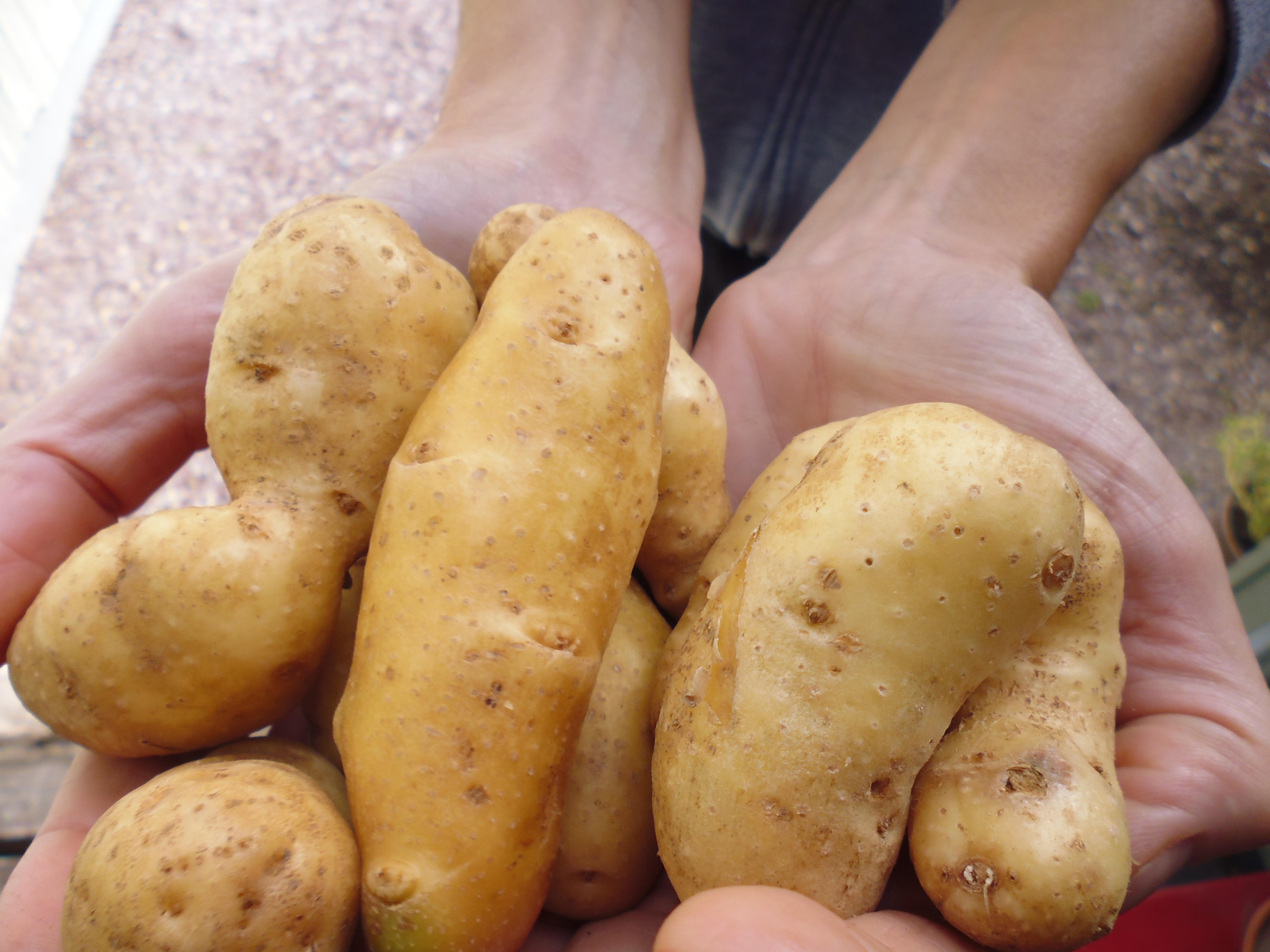
Fingerling potatoes

Digging potatoes from the garden feels like digging gold to me, especially because my first attempt at growing fingerling potatoes several years ago was a complete failure. At least we have a good laugh about it every time we talk about it, or tell the story.

The potato vines were starting to wilt, signaling the approach of harvest time, when I realized that we did not have a good place to store them, such as a root cellar, or a cold but frost-free basement or shed. So I asked friends, owners of the local winery, whether they let me store the potatoes in one of their cellars.

They showed me around and asked how many potatoes I expected to harvest. I had no clue but thought that a corner in one of the cellars would be sufficient to store a couple of crates.

One of the following afternoons, I thought I would start digging a few plants for a test. All I could find was a potato or two. I dug until I hit bedrock. Nothing. The same thing with the next potato plant. And the next. And the next… At the end, I had a tiny basket of potatoes, barely enough for a meal.

I left the basket outside by the garage door and went inside. Shortly afterwards my husband came home. “So you started digging the potatoes?” he asked. “No, that’s it, that is all the harvest.” He looked at me in disbelief, then at the basket, at me again, then stood by the garage laughing and laughing.

The next day I had to call the winery saying there was no need for storage.

I never wanted to try potatoes again but this year I gave it another shot. Again, I planted fingerling potatoes because I cannot buy them locally grown, and they are just delicious.

I don’t know whether it was the variety, or the meticulous hilling, or the weather, or the addition of a good amount of organic fertilizer, or the straw I put around the plants to fend off insects (thank you, Troy from Hope Hill Lavender Farm, for the tip), or all of the above. Fact is: it has been a real and rich harvest!

The potatoes are larger than fingerlings usually are because I leave them in the ground and dig them as I need them for cooking. I estimate that they will be all eaten by the time the frost comes. As the plants have totally wilted and shriveled I have placed a marker where each plant was so I can find it.

The potatoes are still so tender that you can eat them with their skins. Last night we had them with sage butter.

Guard owl and green harissa

Guard owl

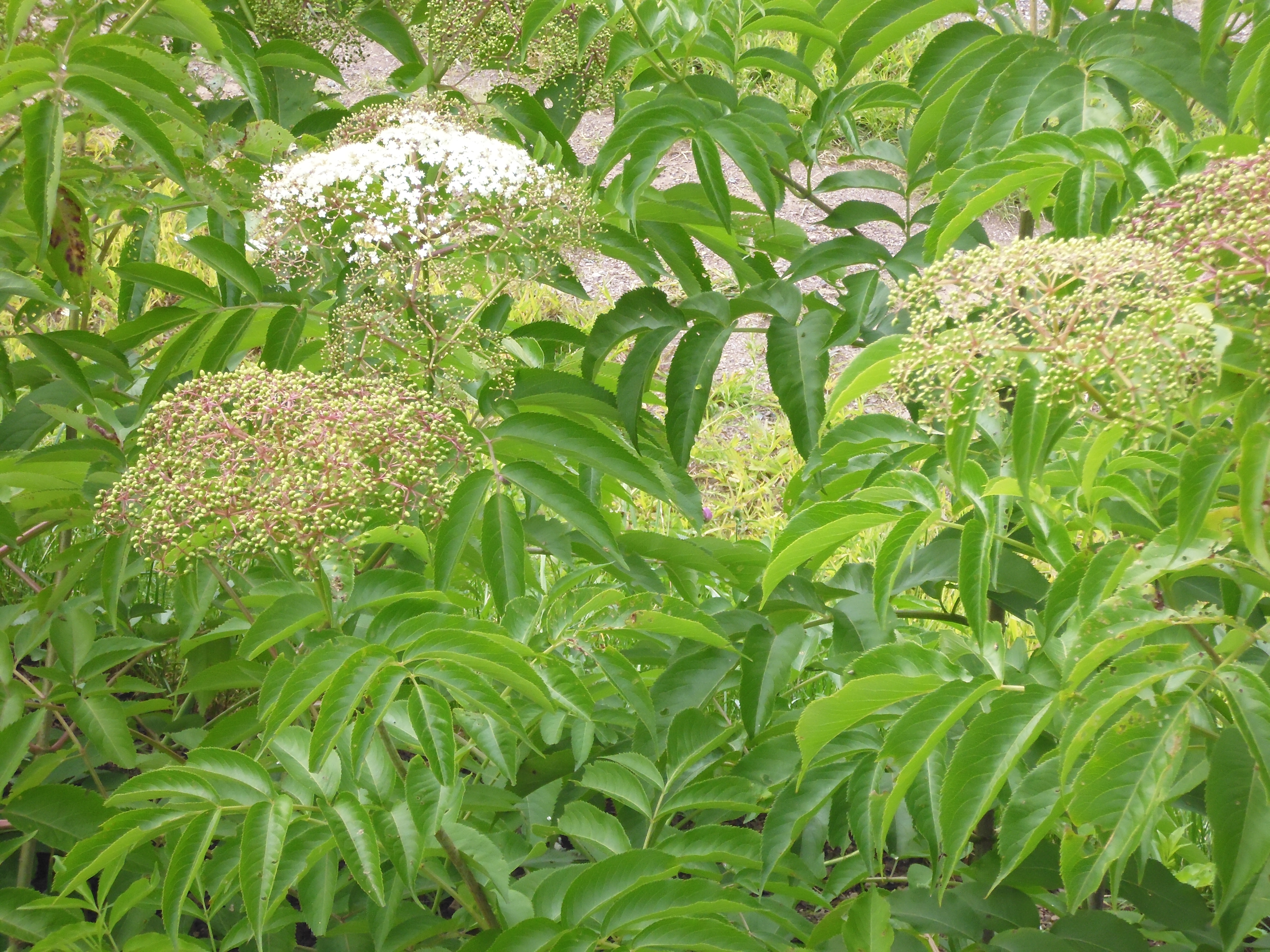
It is the nature of gardening that after you have solved one problem the next challenge already lurks around the corner. After we moved the elderberry patch to a new location with moister soil last fall, the bushes are thriving. They developed many blossoms, albeit unusually late in the season, and some of them are still flowering.

ElderberriesThe birds would be just as happy about the elderberries as I am so the next question was how to protect them. We looked into bird netting and quickly dismissed the idea as too involved and too expensive. Then I remembered the plastic owl we had not used in years. So up on a tall stick it went. To give it more weight and make it sway more in the wind, my husband filled it with insulation foam.

If the birds won’t get used to the sight of the owl by the time the elderberries ripen, I am slightly optimistic that we will have elderberries this year!

Green bell peppers are an unwanted by-product from my garden. I do not like them and they only land in my kitchen when a stem breaks off, or when I harvest all of them before the first frost, regardless of their color. I have not been very successful in ripening peppers in a brown paper bag or cardboard box; they always soften before turning orange or red.

Yes, I do not like green bell peppers but that does not mean I would ever dump them on the compost. I usually freeze them, hoping that I will eventually find a recipe that uses lots of green peppers. The only recipe I make on a regular basis is Black Bean Soup with Cilantro, however that is only one green pepper down. I have looked for recipes using lots of green peppers but they always ask for so many other ingredients I do not have at hand that making those recipes would defeat the purpose.

Cleaning out the freezer the other day left me with two large bags of green peppers from last year. They had to go, with minimum effort and other ingredients. I decided to try my hands on some sort of mild harissa, hoping for a miraculous green pepper metamorphosis. Worst thing that could happen would be to throw them out after all.

A few hours later I had three jars of a smooth tasty olive-green spread for sandwiches or crackers. A generous amount of ground coriander and caraway gives it a distinct “Tunisian” flavor. And I was able to use up some leftover jalapeños in the process, too!

Green harissa

I am not sure my late Tunisian grandmother would call this a harissa but she was a recycler herself so she would understand.

Green Harissa

2.5 pounds cored and seeded green bell peppers

12 garlic cloves, chopped

2 teaspoons ground coriander

2 teaspoons ground cumin

5 cored and seeded jalapeños, to taste

1 teaspoon chili powder

2 teaspoons salt

½ cup olive oil, more for covering

1. Preheat the oven to 350 degrees Fahrenheit.

2. Place all ingredients in a large cast-iron Dutch oven. Cook in the preheated oven for 2 to 3 hours until the liquid has been absorbed and the peppers are mushy, turning once in a while at the beginning, and more often towards the end.

3. Puree in the food processor or with a stick blender. Fill into sterilized jars with screw-top lids and pour a bit of olive oil on top. Keep refrigerated and use within 2 to 3 weeks.

Makes 2 to 3 medium jars

In pursuit of black raspberry vinegar

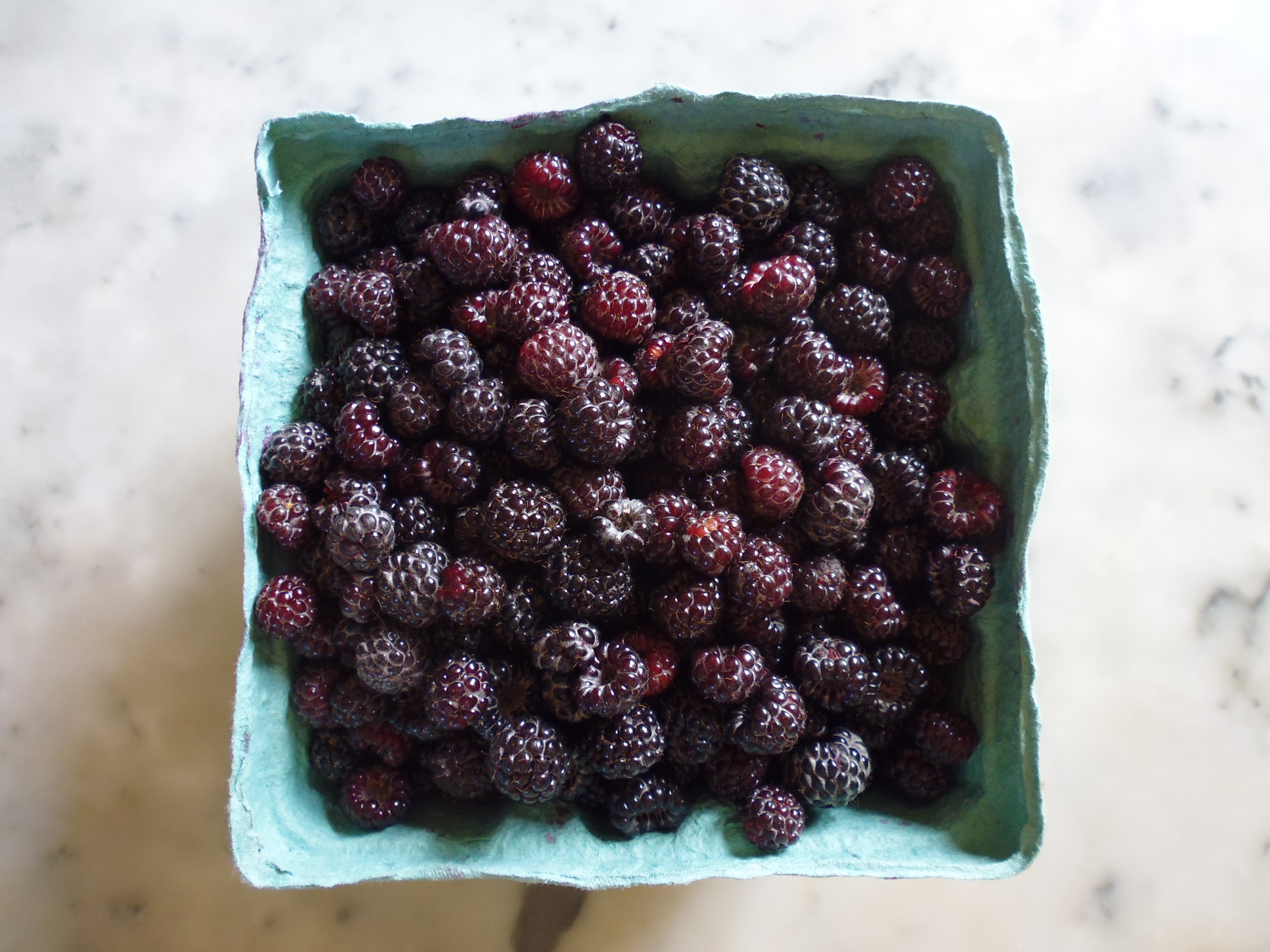
Wild black raspberries

A few years ago I bought a bottle of black raspberry vinegar from Montgomery Place Orchards in the Hudson Valley, as a gift for my cousin and his girlfriend in Germany. They liked it so much that I bought a second bottle for my next visit, but then had to tell them this would be the last one, because after our daughter graduated, we would no longer make frequent trips to Annandale-on-Hudson. I suspect one of the motives of my cousin and his now wife for spending their summer vacation in the US this year is to load up on black raspberry vinegar… There are no black raspberries in Germany, they are a North American specialty.

We have a few black raspberries on our grounds, usually not enough to get excited about. This year however seemed different. I spotted brambles full of berries and picked a handful for fruit tart the other day, making a note to myself to get more. It took me a few days to work up the energy to leave my cool office and actually do it – in 90 degrees Fahrenheit and 55 percent humidity, covered up head to toe with boots, long sleeves, hat, protective glasses, and gloves. Even the dog, usually following me everywhere and inching forward with me sphinx-style when I pick strawberries, preferred to stay in the house.

For a good hour or so, I disappeared into the thicket. It was work but I picked more berries than I had hoped for. And I even found a large patch of blackberries, to return to in August. I don’t think I have had this explorer/discoverer feeling since I was a kid. When I came back to the house I was filthy and slightly scratched yet exhilarated and happy.

Of course the black raspberries had to go into black raspberry vinegar. For all that effort, I want something lasting. For instant gratification, there were enough berries left for a quick dessert for two.

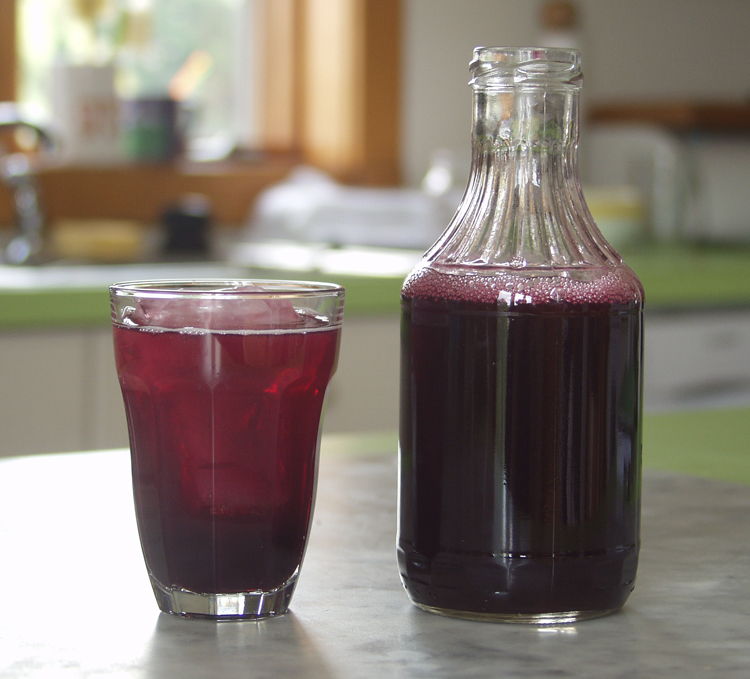
I had made raspberry vinegar before, according to a recipe from the River Cottage Preserves Handbook, and found it a bit too sweet. This time I followed the recipe recently posted by Phoebe’s Pure Food.

It remains to be seen if the black raspberry vinegar will be as good as the one I gave away as a gift. Maybe knowing that it was made with the berries I foraged will make up for the difference in taste.

Raspberry vinegar & dessert

Me and my steam juicer

Concord grape soda

As I mixed one of the last jars of Concord grape juice  from last year with seltzer water it occurred to me that there would not be any of this homemade soda if it weren’t for the steam juicer that I brought back from Germany. Therefore I simply must rave about this wondrous invention.

Steam juicerA steam juicer is a large pot where the base is filled with water and the top colander holds the fruits or vegetables. As the water boils and softens the fruit, the juice drips down from the colander into the juice kettle, from where it is released through a drain tube. The drain tube has a clamp so for the first hour or so, depending how hard and juicy the fruit is, you let the juice accumulate in the kettle, then open the clamp and let the juice run into a bowl placed underneath.  I’ve had the steam juicer for several years yet I still relish the moment when I open the clamp – it feels a bit like digging for water or oil when a jet of the precious good eventually comes bursting out of the ground.

The yield is much bigger than with a jelly bag, it takes a fraction of the time, and it is no hassle at all to clean, just make sure you wash the steam juicer right after using; only the colander needs a bit of soaking sometimes. Except for grape juice, which I can as is with about ¼ cup sugar per quart of juice, I use most of the juice for making jelly.

The drawback: in the United States, steam juicers are expensive, especially the stainless steel models cost $100 and up. I do not recommend aluminum because it reacts with acid. A steam juicer is a small investment but for me it is an essential canning tool, just like a few good tools are essential in the garden. A rototiller for the garden? Never! A steam juicer for the kitchen? Absolutely. I cannot do without it.

Steam juicer elderberries

Photos by Ted Rosen