Count your blessings

Things are not going too well in the garden. The cucumbers, zucchini, and possibly also the Charantais melons have been struck by the striped cucumber beetle, the squash vine borer, and who knows what else. Last year my entire harvest of winter squash was wiped out and I had to dump 80 beautiful, perfectly shaped little Delicata squashes that did not ripen because the plants suddenly wilted and died.

While I am anxiously awaiting the arrival of the organic pesticide I mail-ordered, the line-up of canning jars from this summer reassures me that it already has been a successful gardening season no matter what lies ahead.
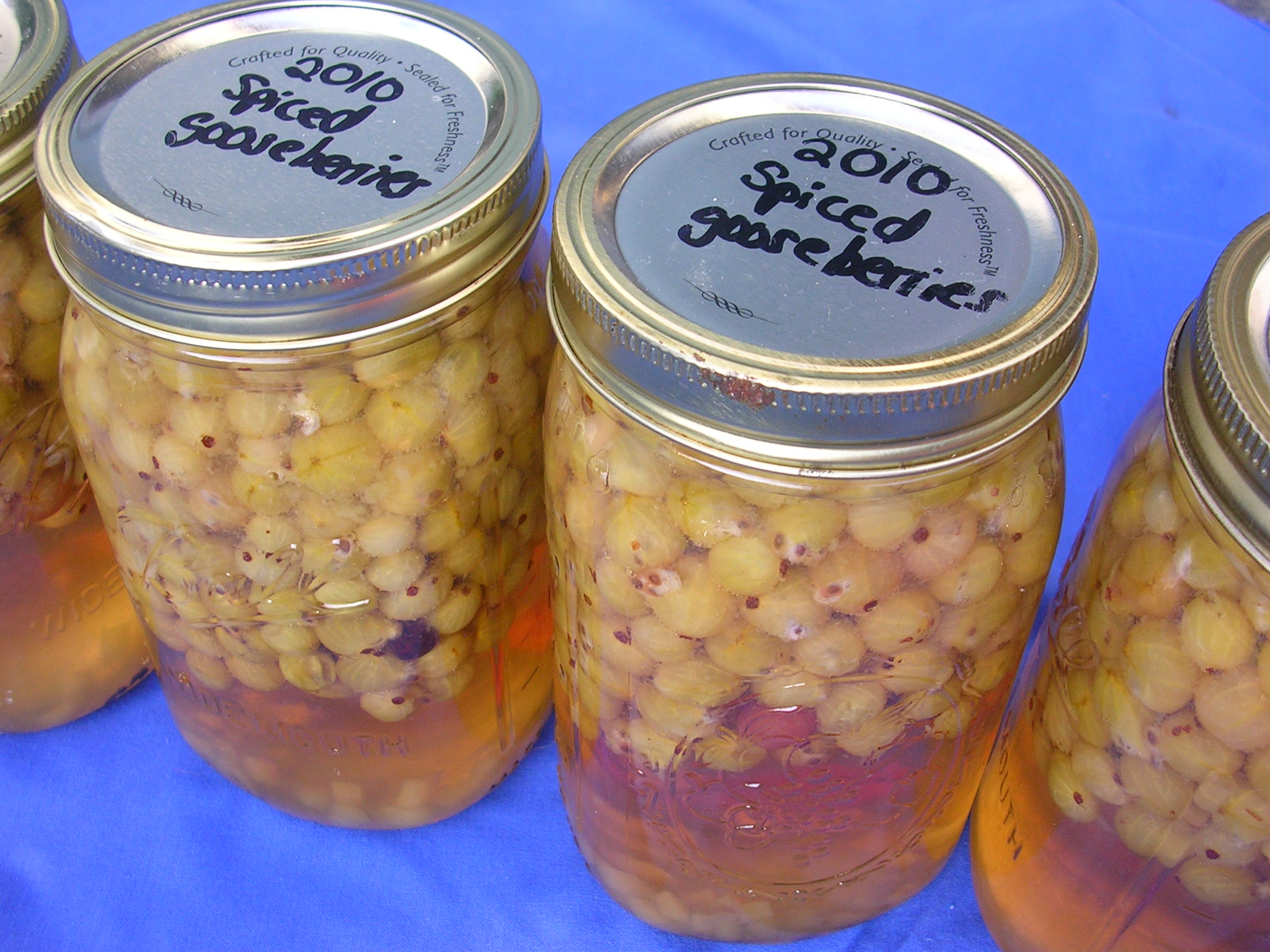
When I first made the spiced gooseberries a few years ago, it initially looked like a complete failure. The kitchen smelled like a pharmaceutical lab, and the concoction tasted like the worst kind of cough syrup. I was mad at myself for wasting a large basket of gooseberries, several bottles of rum, whole vanilla beans, and quite a chunk of time on this. But the original recipe said to let the jars sit for two months.

When I opened the first jar in September, I was stunned. This was absolutely delicious! A very subtle spice flavor, and just a hint of rum. It is a treat on vanilla ice-cream, which is the way I have served it to numerous guests (I have tweaked the recipe a bit over the years). Everyone loved it although I always make sure that whoever comes for dinner likes gooseberries, or is at least eager to try new things. Because while gooseberries do well in this climate and I always get a good harvest from my three bushes, I am not willing to waste my treasures on culinary ignoramuses…

Spiced Gooseberries in Rum

4 to 4½ pounds (1.8 to 2 kg) slightly underripe gooseberries

4 cups (800 g) sugar

2 cups (500 ml) water

2 handfuls fresh, organic bee balm leaves, washed and picked over

2 handfuls fresh, organic lemon balm leaves, washed and picked over

1 bottle (750 ml) white rum

2 whole vanilla beans

You also need:

A canning pot, or a very large stockpot

4 1-quart (1 l) canning jars

4 bands

4 new (unused) lids

1. Remove the blossom ends from the gooseberries with small scissors (cuticle scissors work best), or a small knife. Wash the gooseberries.

2. Bring the sugar with 2 cups water to the boil in a large saucepan. Add the bee balm and lemon balm leaves. Turn off the heat and let steep for while you prepare the jars.

3. Fill a canning pot with enough water to the cover the jars with about 1 inch and bring the water to a boil. If you do not have a canning pot, place a couple of kitchen towels on the bottom and between the jars so they don’t bang together and crack. When the water starts boiling, place the jars, bands, and lids into the water to sterilize them. Remove the jars, bands and lids and dry the bands and lids thoroughly with a clean kitchen towel.

4. Fill the gooseberries into the canning jars. Slit the vanilla beans open with a sharp knife and place ½ bean into each jar in the middle of the gooseberries.

5. Strain the syrup and return it to the pan. Bring to a boil, then reduce the heat and simmer for 10 to 15 minutes until reduced to a light syrup. Add the rum and bring the liquid back a boil.

6. Pour the boiling syrup over the gooseberries, leaving about ½ inch headspace. Wipe the rims of the jars with a damp paper towel, then wipe them dry (this is to assure a good seal). Place the lids on the jars and screw the bands on tightly.

7. Process the jars in a boiling water bath for 20 minutes. Carefully lift the jars out of the water and place them on a damp kitchen towel.

8. Let sit undisturbed for 24 hours, then store the jars in a dark cool place. Let the gooseberries sit for two months before opening. If the jars are properly sealed (the lids should not give when you press them down), the gooseberries will keep for more than a year.

Makes four 1-quart (1 l) jars

Whipping up dinner

A frantic Monday at work. Honestly, if I did not have veggies in the garden that need to be picked and that took so much time getting to this stage, I would have fetched takeout (don’t get me wrong, we do have takeout pizza every now and then), or I would have made something else, definitely something with much less veggies.

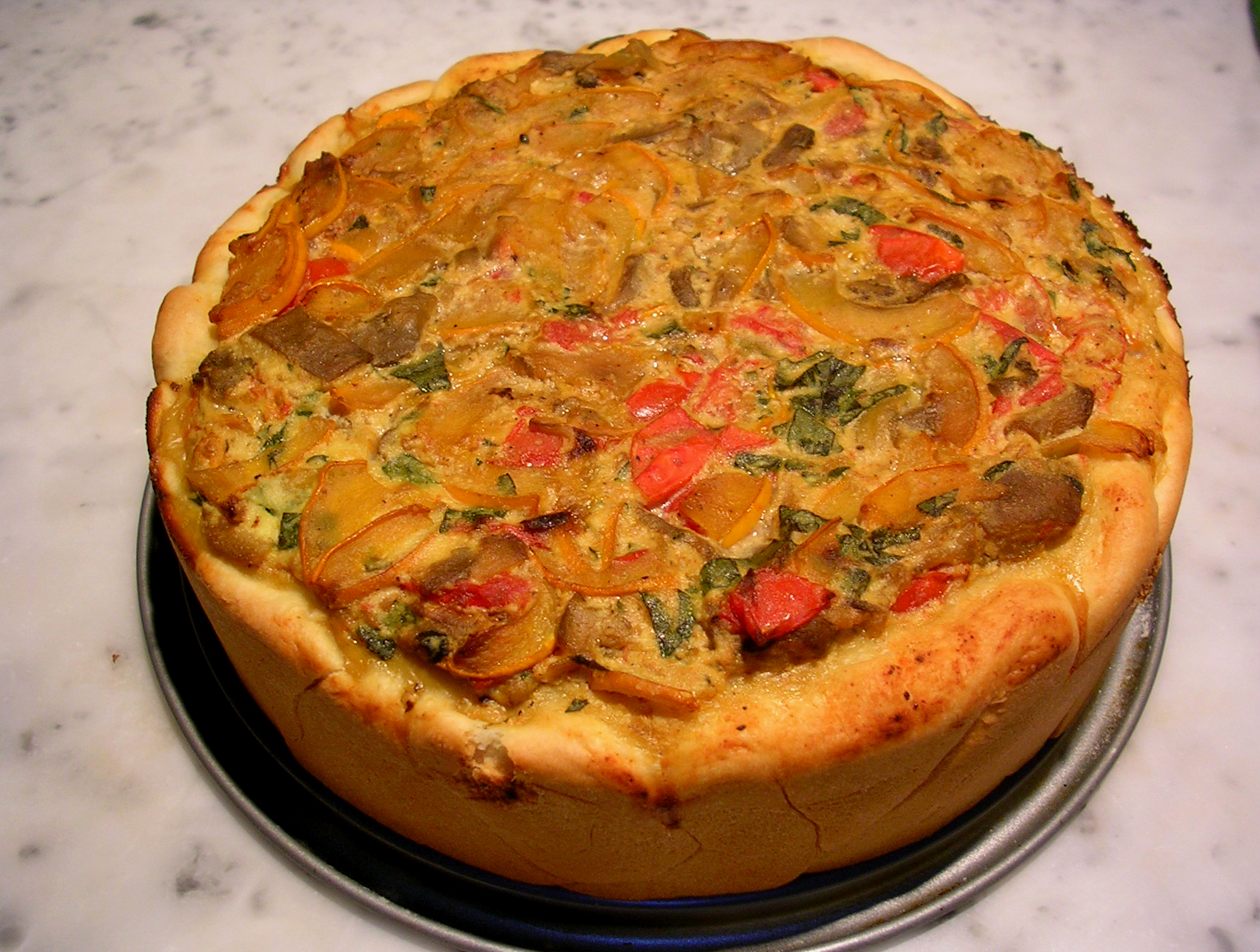
While the dough was rising, I picked and prepared the vegetables for the filling. It took me a while to switch gears, but then I thoroughly enjoyed being in the kitchen and improvising this vegetable torta. I also found use for an almost full container of ricotta that was nearing expiration. The recipe for the yeast dough is from my favorite cookbook, or I should better say: my cooking bible, Deborah Madison’s Vegetarian Cooking for Everyone.

Tonight was another proof, cooking can be great relaxation. And what I like about this blog is that before, I rarely wrote things down when improvising, so that very often I could not remember how much I used. Now I can because I am taking notes!

Summer Vegetable Torta with Zucchini, Eggplant and Tomatoes

Dough:

2 teaspoons active dry yeast

½ teaspoon sugar

½ cup warm water

1 egg

3 tablespoons olive oil

Pinch of salt

1¾ cups flour

Filling:

1 medium zucchini

1 medium eggplant

20 cherry tomatoes

2 garlic cloves

2 tablespoons olive oil

2 eggs

12 ounces ricotta

½ packed cup fresh basil leaves

Salt

Pepper

1. Mix yeast with sugar and water and let stand for 5-10 minutes until it foams. Lightly beat the egg and mix with the olive oil in a bowl (I use the KitchenAid for this). Add the yeast mixture and the flour and knead on low until the dough is smooth and elastic. Shape the dough into a ball.

2. Spray the bowl with olive oil and turn the dough over so the upper side is coated. Cover with a kitchen towel and let rise 45 minutes.

3. Halve the zucchini and remove the seeds with a small spoon. Cut into thin slices. Peel the eggplant and quarter. Cut into thin slices (I use a mandoline for slicing). Quarter the tomatoes. Chop the garlic.

4. Preheat the oven to 375 degrees F.

5. Heat the olive oil in a large skillet and cook the garlic until translucent but not browned. Add the zucchini and the eggplant and cook for 15 minutes until soft and browned in a few spots, stirring often. Add the tomatoes and cook for 5 minutes more. Remove from the stove and let cool for a few minutes.

6. Lightly beat the eggs and whisk in the ricotta until smooth. Chop the basil leaves and add to the cheese.

7. Roll out the dough on a floured surface to fit a 9-inch springform pan plus a good 2 inches coming up the sides. Line the pan with the dough and smoothen out the sides so the crust is evenly high all around.

8. Mix the veggies with the cheese and season with salt and a generous amount of black pepper. Spread the filling evenly onto the dough.

9. Bake in the preheated oven for 30 minutes, or until the torta is lightly browned on top and the crust is golden brown. Remove the springform rim and let the torta cool off completely.

Beets? Sweet!

I was a beet-avoider – until I found the best way to prepare them: roasted in the oven. What a difference in flavor and texture from the boiled, rubbery slices in jars and cans! Now I am growing beets in the garden, and for the first time I have a real harvest (thanks to Berlin Wall No. 2).

Tonight we’ll have a beet salad that I’ve made a few times already this year. But I will add a new, also homemade ingredient: raspberry vinegar. I found the vinegar recipe in the superb recently published River Cottage Preserves Handbook by Pam Corbin (though I used less sugar than the recipe calls for).

Roasted Beet Salad with Walnuts and Goat Cheese

8 medium-size beets

3-4 tablespoons raspberry vinegar

½ cup coarsely chopped walnuts

4 ounces crumbly soft goat cheese

3 tablespoons olive oil or walnut oil

1 tablespoon red wine vinegar

Salt

Freshly ground black pepper

Preheat oven to 375 F.

1. Peel beets and cut them into ½-inch dice. Toss with the raspberry vinegar and spread in one layer on a greased jelly roll pan. Roast in the preheated oven, turning once in a while and adding a bit of water if they seem dry. Roast for 25-30 minutes, or until you can pierce them with a sharp knife. dry. Cool completely.

2. Lightly roast the walnuts in a pan. Cool.

3. Whisk oil and red wine vinegar. Season with salt and pepper.

4. Toss dressing with the beets, walnuts and crumbled goat cheese.

Zucchini glut


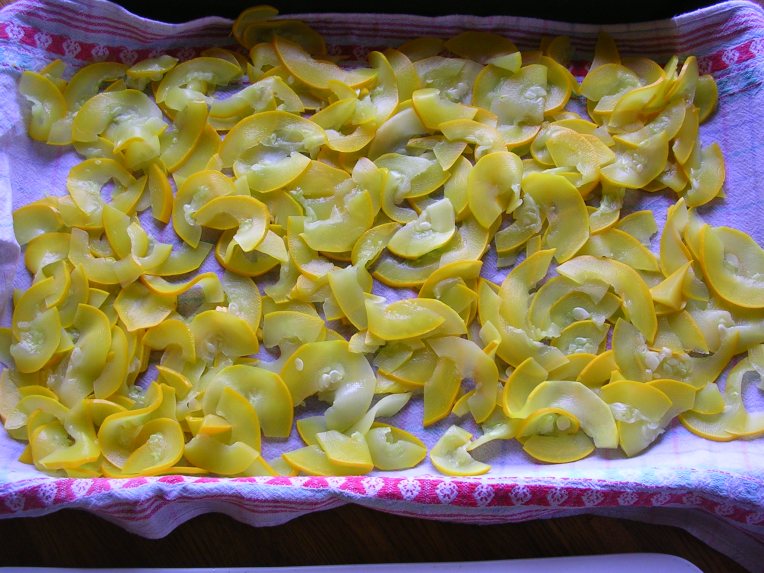
Blanched zucchini for quiche

One of my creations to use up the bright yellow, buttery zucchini from the garden is zucchini quiche with goat feta. In previous years I baked and froze several quiches with zucchini straight from the garden. But this year I want to make it easier for myself (after all, it’s summer, and who wants to spend an entire Saturday afternoon toiling in a hot kitchen) so I decided to blanch the zucchini and freeze them in batches big enough for one quiche.

Zucchini Quiche with Goat Feta

Crust:

1 cup all-purpose flour

¼ teaspoon salt

5 tablespoons cold butter

2 to 3 tablespoons ice water, as needed

Filling:

1 large (or two small) yellow zucchini

2 tablespoons olive oil

1 tablespoon herbes de provence (mix of dried rosemary, basil, marjoram, and thyme)

3 eggs

8 ounces goat feta, crumbled

Freshly ground black pepper

Salt

1. Mix the flour and salt in the bowl of a food processor. Cut in the butter and process until mixture resembles a coarse meal.

2. Add water, a tablespoon at a time, until you bring the dough together in a ball. Wrap the dough in plastic foil and refrigerate for 15 minutes, or until slightly hardened.

3. If you are not sure the zucchini haven’t been treated, peel them. Cut in half lengthwise and remove the seeds using a tomato shark or a grapefruit spoon. Slice very thinly.

4. Heat the olive oil in a large skillet and add the zucchini and the herbes de provence. Toss well and cook over medium heat until the zucchini are tender and most of the liquid has evaporated. Stir frequently especially towards the end to prevent them from sticking to the bottom of the skillet.

5. Preheat the oven to 400 degrees F.

6. Roll out the dough to a circle to fit a 9-inch pie dish (not a deep dish), preferable one with a removable bottom, and trim the edges. Bake for 10 minutes.

7. Beat the eggs and add the feta and the cooled zucchini and mix thoroughly. Season with pepper. Go easy on the salt, as the feta usually adds enough saltiness to the dish.

8. Reduce the oven heat to 375 degrees F. Bake the quiche until set and lightly browned on top, 35 to 40 minutes. Serve warm.

9. The quiche can be frozen and reheated in the oven at 300 degrees, or in the microwave.