Tomato resort

“You know,“ I said to my husband when he helped me fill tomato soup into freezer bags at 11 o’clock at night, and my eyes fell on a basket of cherry tomatoes, “I am getting a little sick of all this processing.” “You say this every year,” he responded, “and I give you the same answer every year.”

When I started planning a garden, the first book I bought was The Food Lover’s Garden by Angelo M. Pellegrini. M.F.K. Fisher called it a classic when it was published 40 years ago so I thought it had to be good. Indeed, the book is packed with excellent, no-nonsense garden advice about growing organic vegetables.

I remember that when I first read The Food Lover’s Garden, I smiled about sentences like the one that wraps up the chapter on tomatoes: “When your first tomato is ripe (…) pop it, a quarter at a time, into your mouth. I shall be listening for your sighs of sweet contentment!”

I also remember sighing over the fact that the author, located in the Pacific Northwest, could grow vegetables year round and I couldn’t. Six years later, I admit that I am grateful for the break that the Pennsylvania winter forces me to take between November and March. Which, of course, doesn’t mean that I don’t get antsy by mid-January, making planting lists and crop-rotation blueprints when the first seed catalogs arrive in the mail.

So back to tomatoes… Cherry tomatoes are plentiful this year and I needed to find a way of turning them into something that a) did not require buying additional ingredients, b) was quick and easy to make, and c) keeps for several days or longer. So I cooked up this tomato spread. It tastes good with crackers or wholesome fresh bread, or as part of a sandwich.

This recipe was a selected as a Food52 Community Pick.

Cherry Tomato Spread

1¾ pounds ripe cherry tomatoes

6 garlic cloves

¼ cup olive oil

1 teaspoon salt

Freshly ground pepper

1 pinch cayenne pepper

You also need:

A small cast-iron Dutch oven

1. Preheat oven to 400 degrees F.

2. Coarsely chop tomatoes in half, saving all of the the juice. Chop garlic. In a bowl mix tomatoes and juice, garlic, olive oil, pepper and cayenne pepper.

3. Put mixture in a small cast-iron pot and cook covered in the preheated oven for 1 hour.

4. Remove the lid and cook for 1 more hour, or until the juice has thickened. Stir occasionally and scrape down the tomatoes from the edges to prevent burning.

5. Cool and transfer to a tall bowl if using a stick blender for pureeing, or a food processor bowl. Puree finely. Fill in an airtight container, pour a little bit of olive oil on top to seal, and refrigerate.

Makes about 2 cups
Finally here but not for long

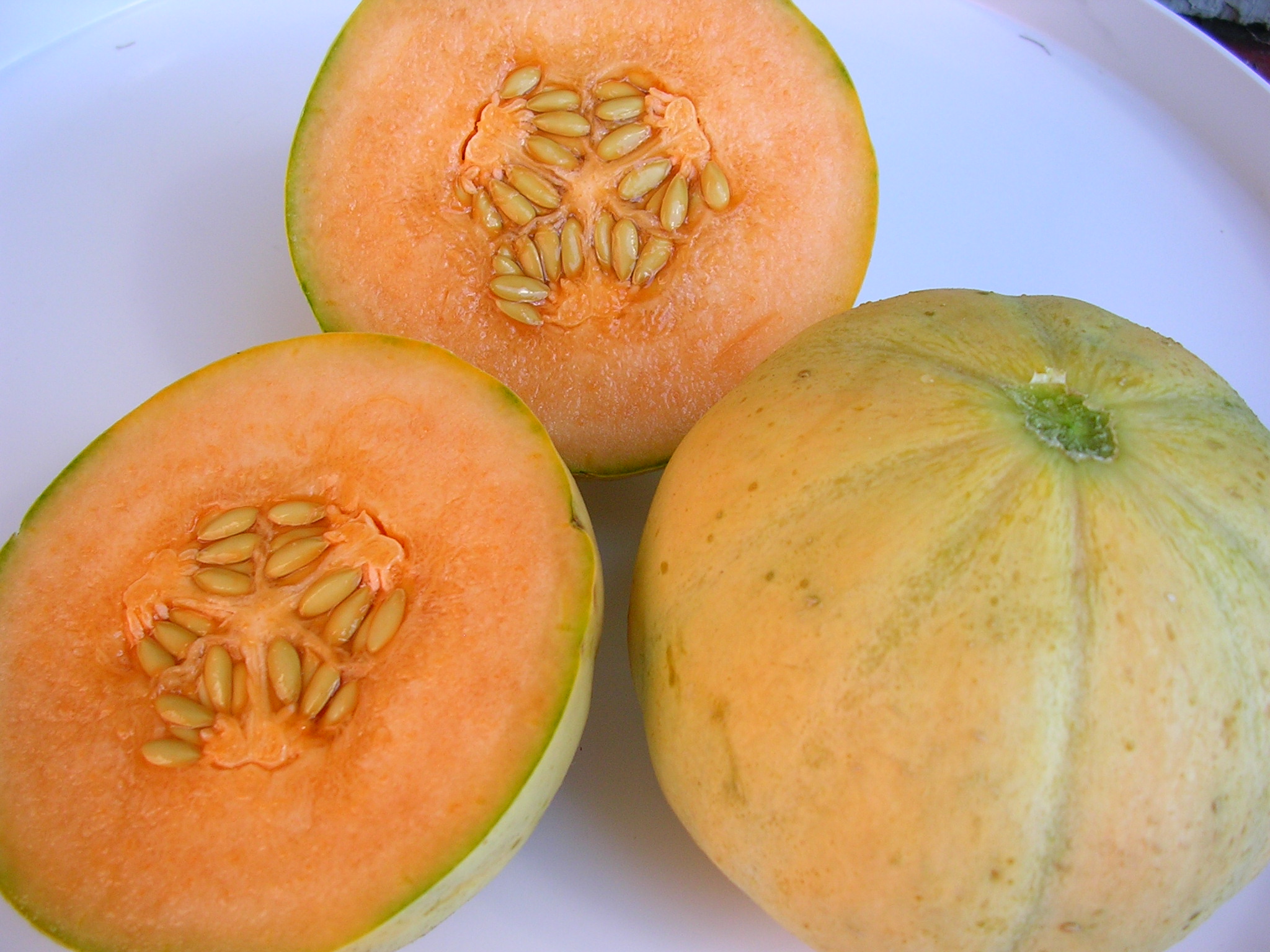
Within a few days, the Charentais French breakfast melons that I started indoors in the spring have become super ripe. They are so juicy that I have to cut them over a bowl. It was worth the long wait and effort, which included turning part of my office into a greenhouse.

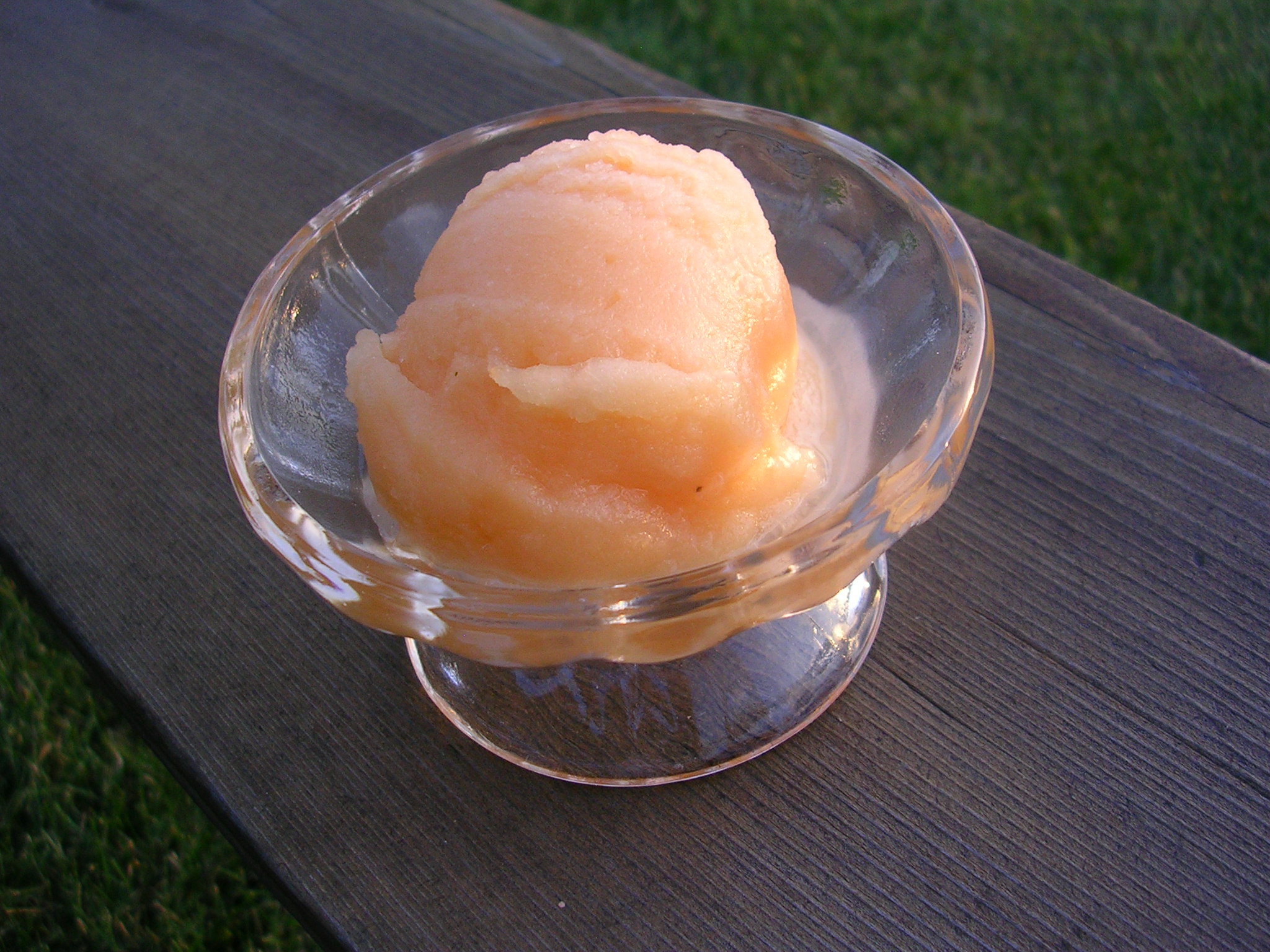
The melons are fairly small so just eating the daily harvest of two to three melons is tempting and easy to do. But I love to capture the wonderful flavor and bright color for grey winter days so I use the ripest melons, even the ones that are a tad overripe, to make sorbet.

There is not much to this recipe other than using only very ripe melons and chilling all the ingredients very well before processing. If you have an ice-cream maker with an open freezing bowl, try to find the coolest spot in your house, even if it’s the hallway or the bathroom, because in a warm or hot environment the end result will be rather crystalline and less smooth.

Cantaloupe Sorbet with Lemon Balm

4 ounces water

5 ounces sugar

14 ounces pulp from very ripe fresh cantaloupe

6 sprigs fresh untreated lemon balm

1/3 cup fresh lime juice

1. Bring water and sugar to a boil in a small saucepan. Stir until the sugar is completely dissolved, scraping down the sides as it boils. Remove syrup from the heat and let cool. Put in an airtight container and refrigerate for 24 hours.

2. Puree the pulp to a smooth consistency. Mix with the lime juice.

3. Strip the leaves off the lemon balm and chop them finely. Mix with the pulp. Refrigerate for 24 hours.

4. Strain the pulp through a fine sieve. Use a silicone spatula to squeeze out as much liquid as possible.

5. Measure 8 ounces of syrup and 12 ounces of melon liquid. Mix well. Process in an ice-cream maker according to manufacturer’s instructions.

6. Fill sorbet in airtight freezer containers and freeze for 12 hours, or until solidly frozen.  Take sorbet out of the freezer 15 to 20 minutes before serving to soften, but not much longer because it melts quickly.

Makes 6 servings

Vitamin booster

In the past few days, each time I walked down to the garden, the sight of the elderberry bushes bending under the weight of the dark, shiny fruit has jumped at me. Elderberries are usually one of the latest berries to ripen but this year everything is a few weeks early. I hope the elderberries are as ripe as they look because I want them now! I have a cold and elderberries are packed with vitamin C.

Elderberries are rarely grown in the US (despite American elderberries being native shrubs) and hard to find, that’s why I planted several bushes, mainly to satisfy my cravings for my grandmother’s elderberry soup (the recipe can be found in my cookbook Spoonfuls of Germany).

If I could do it all over again, I would plant the elderberries in a different location, not on the wind-battered hillside where the soil gets extremely dry. Elderberries prefer moist soil and thrive near a brook or a pond. At this point the bushes are too big to move so in dry weather they need a good soaking every now and then.

Extracting the juice from the elderberries was cumbersome until I bought a steam juicer last year. It is the #1 equipment I would recommend to everyone who processes larger amounts of berries of all types, not only elderberries. I am so happy with my acquisition, and have shown the steam juicer to so many visitors, that my husband starts rolling his eyes when I head to the pantry to make yet another demonstration.

I can the elderberry juice with sugar (¼ cup sugar for 4 cups juice) in 1-quart canning jars and process them 20 minutes in a hot water bath.

No more shortcuts

Although I’ve been cooking for many years, I have only recently learned one important lesson – don’t take any shortcuts, at least not with recipes from a highly knowledgeable source. When I made Julia Child’s Boeuf bourguignon for the first time a few months ago I put too much meat in the pot at once, with the result that it did not brown but foamed and bubbled like baking soda. The next time I made the dish, I stuck to the recipe and the meat was perfectly browned. If there was a shortcut, wouldn’t someone like Julia Child go for it? Only then did it dawn on me that it’s not a good idea trying to outsmart cooks who obviously know better than you.

Another example for the no-shortcut rule is eggplant, which is growing abundantly in the garden right now. I have always wondered why the eggplant dishes I made had a bitter aftertaste, even when the eggplant was freshly picked. I am usually too rushed or too lazy to salt it and let it sit for 30 minutes or even 1 hour. It is surprising how much brownish liquid the eggplant releases, no wonder it’s bitter. And, the taste is indefinitely better, no matter what the eggplants are used for afterwards.

Getting 3 pounds of eggplant ready for lasagna was quite a bit of work but I have promised myself that from now on if I don’t have the time to prepare the eggplant comme il faut, I rather cook something else.

I started off with Deborah Madison’s eggplant lasagna with garlic béchamel from Vegetarian Cooking for Everyone. I had made it before and found it somehow lacked something. But instead of serving it with a tomato sauce as she suggests, I incorporated cherry tomatoes right into the lasagna, which I pre-cooked in olive oil and garlic. I also used a good amount of basil and increased the amount of béchamel because I find lasagna often too dry, especially if you prepare it in advance and reheat it.

I was very happy with the result. My son, who would usually not eat eggplant, pointed to his empty plate saying that it “tasted and looked like meat, not like eggplant at all.” Amazing what salting and a little patience can do.

Eggplant Lasagna

3 pounds eggplant

Olive oil

Salt

12 ounces cherry tomatoes, halved

3 garlic cloves, chopped

Béchamel:

2½ cups milk

3 garlic cloves

4 tablespoons butter

¼ cup flour

1 bay leaf

¼ teaspoon freshly grated nutmeg

½ cup heavy cream

½ cup milk

Freshly milled white pepper

12 sheets no-boil lasagna

¼ cup packed chopped fresh basil

8 ounces mozzarella, diced

2 ounces freshly grated Parmesan

1. Peel the eggplant and cut into 1/3-inch slices. Spread the slices on two large baking sheets in a single layer and sprinkle with salt. Let stand for 30 minutes.

2. Heat 3 tablespoons olive oil in a small heavy pot. Add the garlic and cook until translucent. Add the tomatoes and stir. Cook uncovered over medium heat for about 15 minutes, or until the tomatoes are shriveled up a bit. Set aside to cool.

3. For the béchamel, smash the peeled garlic cloves. Put in a saucepan with the milk. Bring to a boil, then turn off the heat and let steep for 15 minutes.

4. When the garlic milk is ready, melt the butter in a saucepan. Add the flour and cook stirring for 2 minutes. Pour the garlic milk through a sieve into the saucepan. Stir well with a metal whisk until the sauce thickens. Add the bay leaf and the nutmeg and cook over very low heat for 20 minutes, stirring often and scraping over the bottom of the pan.

5. Preheat the oven to 425 degrees F.

6. Blot the eggplant slices dry with paper towels. Rinse and dry the baking sheets to remove any excess salt.

7. Brush each slice with olive oil from both sides and place slices in a single layer on the baking sheets. The eggplant should be baked one sheet at a time so if you have two ovens use them, or bake one batch after another in the preheated oven for 15 minutes. Turn the slices over and cook for 15 minutes from the other side.

8. Reduce the oven temperature to 400 degrees F.

9. Spray a lasagna dish (one that fits three sheets snugly without overlapping) with olive oil.

10. Remove the bay leaf from the béchamel sauce and whisk in the cream and the milk. Season with salt and pepper. If the béchamel seems lumpy, strain it through a sieve.

11. Spread ½ cup béchamel sauce over the bottom of the dish. Add 3 lasagna sheets. Cover with one-third of eggplant, tomatoes, basil, mozzarella, parmesan, and one-quarter of the remaining béchamel sauce. Repeat this with two more layers but omit the Parmesan in the last layer. Place the last lasagna sheets on top and add the remaining béchamel sauce. Sprinkle with the remaining parmesan. Press down a bit to immerse the lasagna sheets as much as possible but try not to break them.

12. Cover with aluminum foil and bake in the preheated oven for 25 minutes. Remove the foil and press down a bit to immerse top layer, especially if it’s a bit dry and curled up.

13. Bake for another 10 minutes. Remove from the oven and let stand for 10 minutes before serving.

Makes 4-6 servings