If life gives you beet greens…

Risotto with beet greens

Growing beets has always been difficult for me in my garden. Before I put up a Berlin Wall-like fence, the tender greens were chewed to the ground by rabbits as soon as they emerged. But even now, and despite painstaking soil sifting and amendment with sand, most of the beets in the rocky Pennsylvania soil are small, woodsy and gnarly. Their greens, however, is a totally different story! It is as if the plants put all their energy into the lush, shiny, large foliage. So every year I end up with several bags of frozen beet greens.

Before I became a gardener, I did not even know that beet greens are edible. That’s no surprise, because unless you buy the beets super-fresh from a farmers market, they reach the store leafless. And that’s a shame, because the leaves have more nutritional value than beet roots.

I have tried different recipes with beet greens but I always return to the same two recipes: Trouchia, a French vegetable omelet, and this risotto. The recipe is adapted from Amanda Hesser’s terrific book The Cook and the Gardener. But since I have such an abundance of beet greens, I maximized their amount and left out the chard used in the original recipe.

Frozen beet greens are easy to break into small bits while still in the bag so no chopping needed.

Risotto with Beet Greens

8-10 ounces cleaned and trimmed beet greens, fresh or frozen

4 tablespoons olive oil

1 large garlic clove, finely chopped

4 cups low-fat chicken broth

1 shallot, finely chopped

1 bay leaf

1 cup Arborio rice

1/3 cup dry white wine

1 tablespoon butter

½ cup freshly grated Parmesan

Salt

Freshly ground white pepper

1. Chop the beet greens if using fresh, or break frozen leaves into small pieces.

2. Heat 2 tablespoons olive oil in a large skillet and add the garlic. Cook for 2 minutes until soft. Don’t let the garlic brown.

3. Stir und cook until leaves are wilted. Remove from the heat and set aside.

4. Heat the chicken broth in a saucepan.

5. Heat the remaining 2 tablespoons olive oil in a medium-size pot with a heavy bottom. Add the shallot and cook 2 minutes until translucent.

6. Add the bay leaf and the rice and stir to coat evenly. Cook over medium heat until the rice releases a nutty smell and looks glassy.

7. Add the wine and ¼ cup hot broth. Cook while stirring constantly until all the liquid has been absorbed.

8. Continue adding chicken broth in ½ cup increments and stirring constantly, only adding more broth when the previous addition has been absorbed, until all the broth has been used and the rice is tender but not mushy, about 20 to 25 minutes.

9. Add the beet greens and stir until reheated. Then stir in the Parmesan and butter and season with salt and pepper. Cover with a lid and let stand for 1 to 2 minutes before serving.

Makes 2 servings as a main course, or 4 servings as side dish

Lists and leftovers

First I felt a little silly putting up a detailed list with the freezer content to keep track of each bag I take out. But this is not my personal listmania. It saves me from digging around and getting frostbite on my hands. This list, and whatever else needs to be used up, often dictates what I cook.
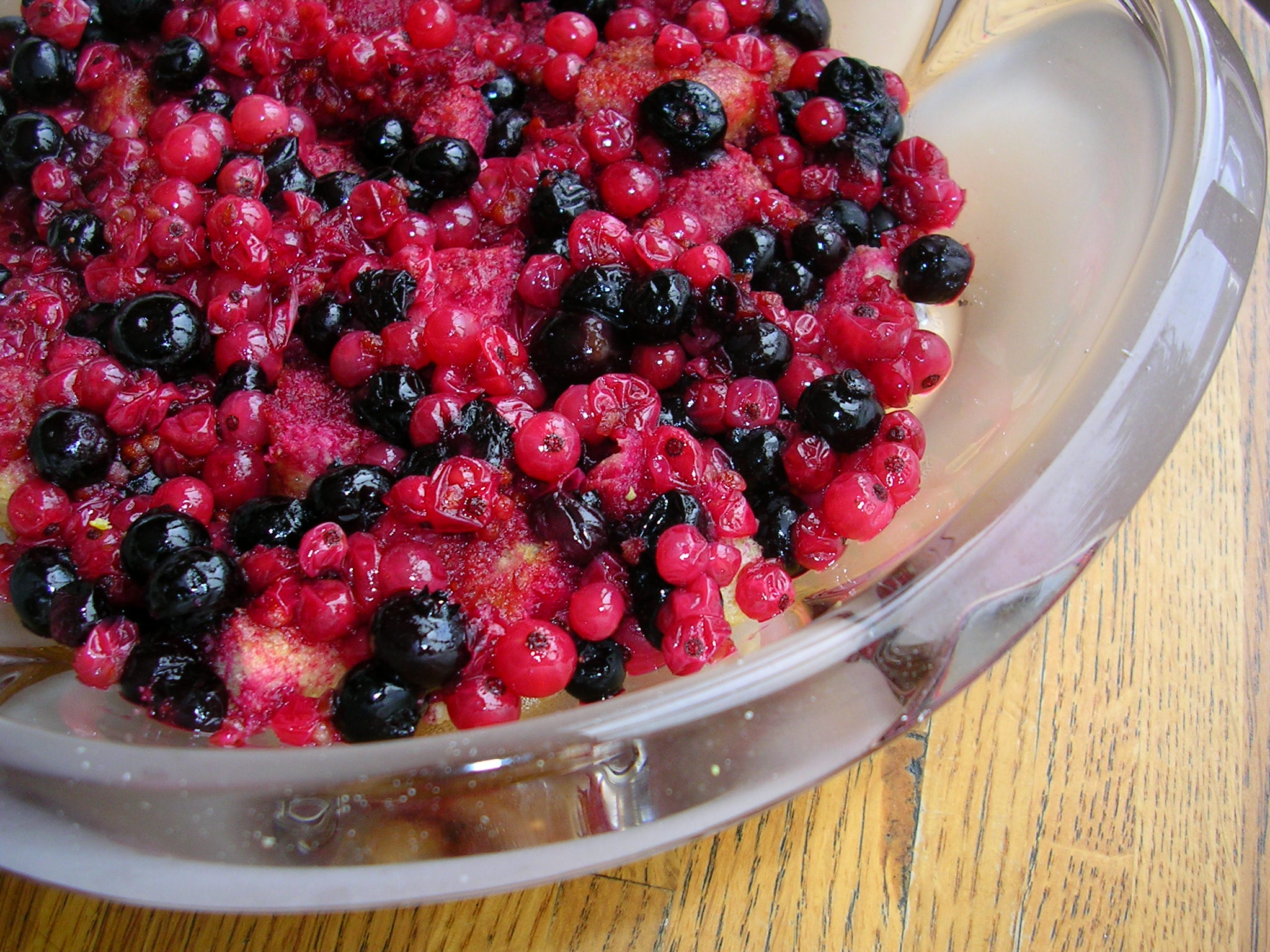
A quart of milk with a passed “sell by” date (even after living in the US for 13 years I still don’t understand how this date tells you the actual expiration date…), and several bags of frozen red currants inspired me to make this lemon trifle. I used a mix of blueberries and currants, but only blueberries, or a mix of blueberries and raspberries, will taste good as well. Instead of drizzling the ladyfingers with the usual sherry I used homemade black currant liqueur (cassis) but of course store-bought cassis will be just fine.

Berry Trifle with Lemon Custard

12 ladyfingers

3-4 tablespoons cassis

14 ounces fresh or frozen blueberries and/or red currants

3-4 tablespoons sugar, or to taste

Lemon custard:

2 organic lemons

4 cups milk (2% or whole milk)

4 egg yolks

¾ cup + 1 tablespoon sugar

3 tablespoons cornstarch

1. Cut the ladyfingers into 1-inch pieces and spread them in a decorative glass serving dish with a wide bottom. Drizzle with cassis.

2. Put the berries in a small saucepan and briefly cook so they pop and release their juices. Sugar to taste and cool slightly, then spread over the ladyfingers.

3. For the lemon custard, zest and juice the lemons. Slowly bring the milk and the lemon zest to a boil.

4. Mix the egg yolks with the sugar and the cornstarch to a smooth consistency without any lumps.

5. Strain the hot milk through a fine sieve. Discard the lemon zest.

6. Add a small amount of the hot milk to the egg yolks and whisk to incorporate. Add some more milk and whisk again. The mixing of the hot milk and egg yolks must be done very slowly and gradually so the eggs won’t curd.

7. After all the egg yolks and milk have been mixed, pour it in a saucepan and slowly bring to a gentle boil, whisking constantly.  Cook and whisk until the custard thickens.

8. Remove from the heat. Add the lemon juice and whisk until cooled slightly. Slowly pour the custard over the berries so that the layer won’t be disturbed and the berries won’t rise to the top. Cool.

9. Cover with plastic foil and chill several hours.

Makes 8 servings

Delicious Delicata

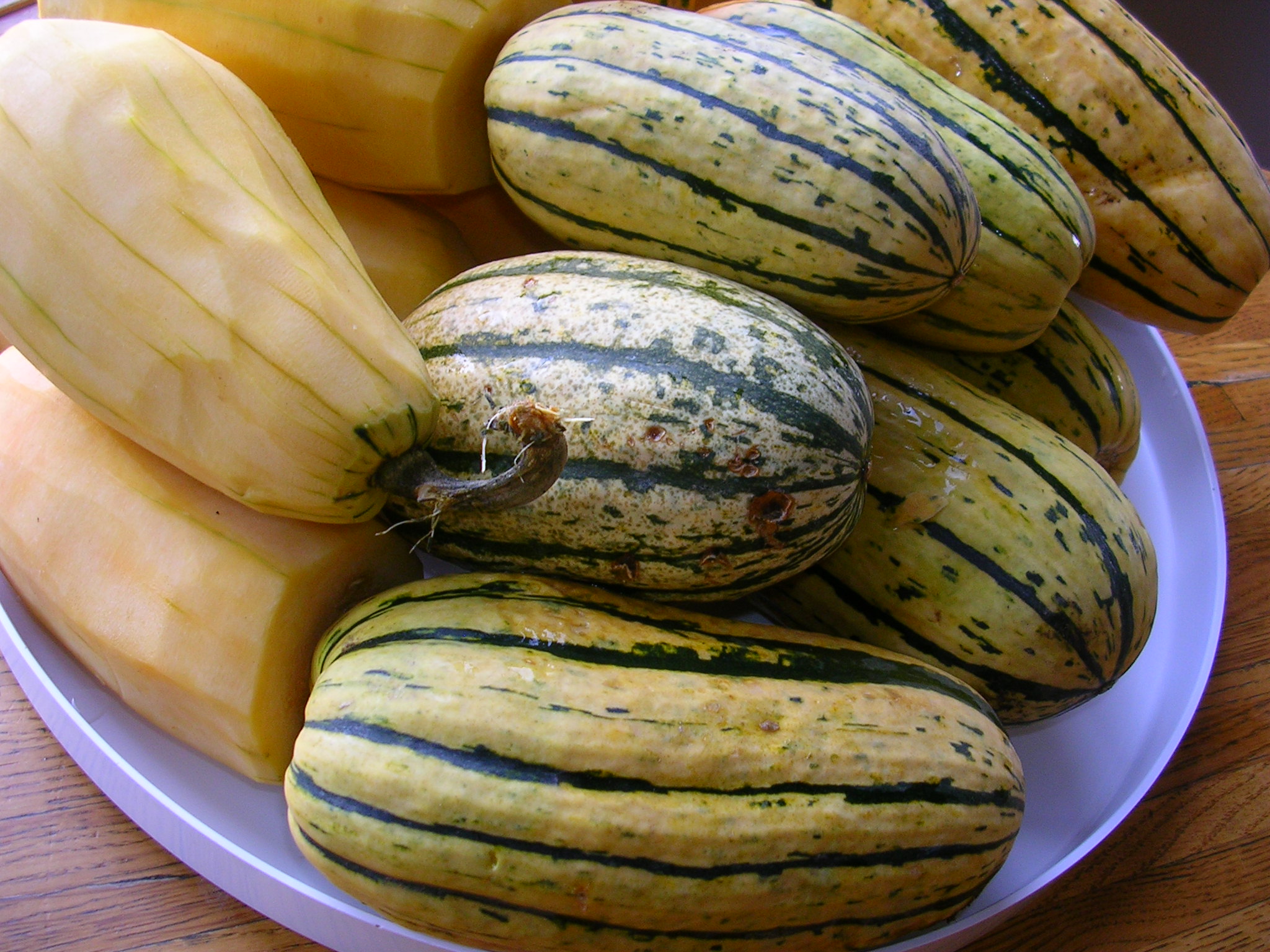
After I lost my entire crop of Delicata squash last year to bacterial wilt (one bite by the striped cucumber beetle is enough to spread the disease), I almost lost this year’s crop to frost. The squashes were stored in the shed, the nights were getting very cold, and I was not paying attention. Luckily I rescued them with only a couple of them turning into mush.

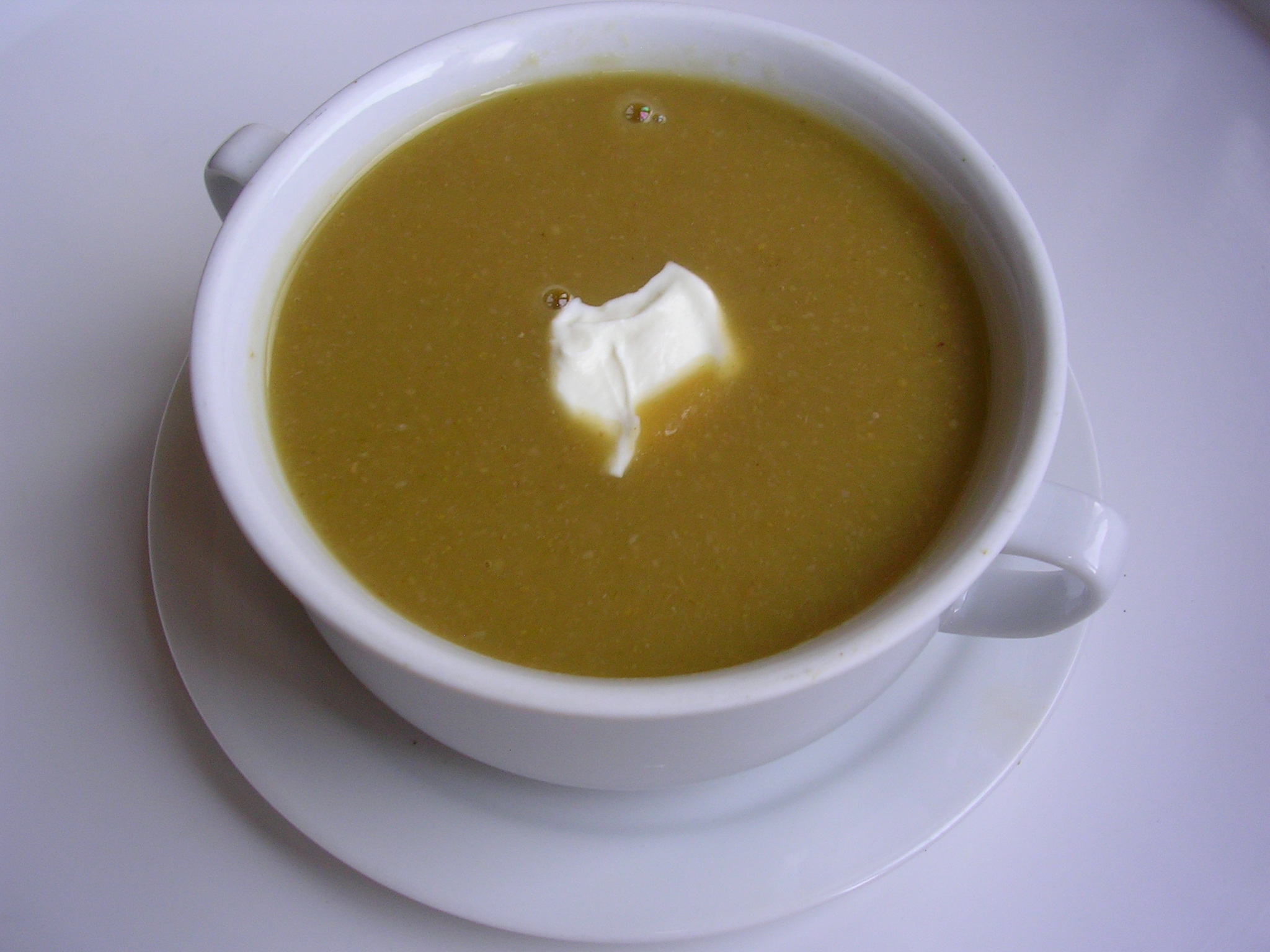
Two 1-gallon bags of Delicata went into the freezer. What I could not fit into the second bag went into this soup. In this recipe I followed my winter squash credo that only roasting in the oven really brings out the flavor of winter squash, that’s why soup often tastes bland.Delicata Squash Soup with Chestnuts and Apple

20 fresh unpeeled chestnuts

2 tablespoons olive oil

20 ounces peeled, cubed and seeded Delicata squash

3 stalks leek, finely chopped

1 large Macintosh apple, peeled, cored and chopped

2 tablespoons chopped candied ginger

¼ teaspoon ground mace

5 cups low-sodium chicken broth

¼ cup dry sherry

Salt

Freshly ground white pepper

1. Check the chestnuts for worms (pests are lurking not only in Delicata!). Soak them in cold water for 1 hour.

2. Preheat the oven to 390 degrees F and place a large ungreased heavy baking sheet on the middle rack.

3. Drain the chestnuts. Cut an x in the rounded side of each chestnut using a serrated knife.

4. Spread the chestnuts onto the hot baking sheet and roast until they pop open, about 10 to 15 minutes. Cool slightly.

5.  Mix the squash with 1 tablespoon olive oil and place in one layer in a large baking dish in the preheated oven. Roast until the squash is soft and slightly brown in some spots, about 25 to 30 minutes, turning once or twice.

6. Peel the chestnuts while still warm. Also completely remove the fibrous inner skin. Cut chestnuts in half.

7. When the squash is done, heat the remaining tablespoon olive oil in a large pot. Cook the leek over low-medium heat until soft, about 10 minutes.

8. Add the squash, chestnuts, apple, ginger, mace, and chicken broth. Bring to a boil, then reduce the temperature and cook covered, 15 to 20 minutes, until the chestnuts can be easily squished.

9. Puree the soup and pass it through a food mill. Return it to the pot and reheat. Add the sherry and season with salt and pepper. If the soup is too thick, add more chicken broth or water. Serve hot.

Makes 8 servings


Stock clarity (and a happy dog)

SwissChardWhile I consider myself a somewhat educated consumer and critical food buyer, for vegetable stock I succumbed to the delusion that because it’s organic it must be good. Until Cooks Illustrated found that the brand I usually bought tasted “like dirt” or “like musky socks in a patch of mushrooms”. Yikes. How could I have been so taste-blind? That was in 2008. Since then I either resorted to chicken broth for soup, or, on some rare occasions, made vegetable stock from scratch.

This past summer I finally got into the habit of making vegetable stock more often, usually a large amount, most of which went into the freezer. Maybe the trigger was that the new shiny stockpot I had bought last winter kept looking at me reproachfully for not being used. Or it was the mounds of fresh vegetable leftovers, scraps and peels that went into the compost bin all summer.

Depending on what’s available in the garden, I make vegetable stock in different combinations. For example, today I used, in addition to the staple ingredients onion, carrots, and parsley: Swiss chard stalks, the final eggplants of the season whose skins have toughened because of the cold nights but otherwise are perfectly fine, and a container of frozen tomato skins that accumulated when I made tomato soup a few weeks ago. I did not have any celery, scallions, and leeks but otherwise I would have added them too. Many different vegetables work well as long as they are not spoilt, don’t impart a strong flavor and color (no cabbage, turnips, beets etc.), and don’t fall apart so the stock remains clear. For a more intense flavor, I brown the vegetables and onion in olive oil first, then add the water and proceed as described.

The stockpot gets used, and someone else is happy, too. After straining the stock (salt-free until I add it to the soup I am making) I puree the vegetables. They make several days of veggie add-ons to Woody’s dinner – and he is crazy about it.Woody

Vegetable Stock

4 pounds (1.8 kg) mixed vegetables

2 large carrots

2 large onions

¼ cup (60 ml) olive oil (optional)

3 large bay leaves

1 big bunch of fresh parsley

6 large garlic cloves, peeled and smashed

1 teaspoon dried thyme

Salt (optional)

1. If you use organic vegetables no need to peel them, except for the onions. Cut the vegetables into chunks. Peel and quarter the onion. Heat the olive oil and brown all the vegetables and onion for 10 to 15 minutes, stirring often so they don’t burn. For the fat-free version, put all the vegetables in a large stockpot right away. Add the bay leaves, parsley, peeled and smashed garlic cloves, and thyme.

2. Add 7½ quarts of water and bring to a boil. Cover and reduce the heat. Simmer for 1 hour. Strain the stock through a fine sieve. Add salt if desired. Cool and refrigerate, or freeze.

Makes about 7 quarts (7 liters)