Short-order pickles

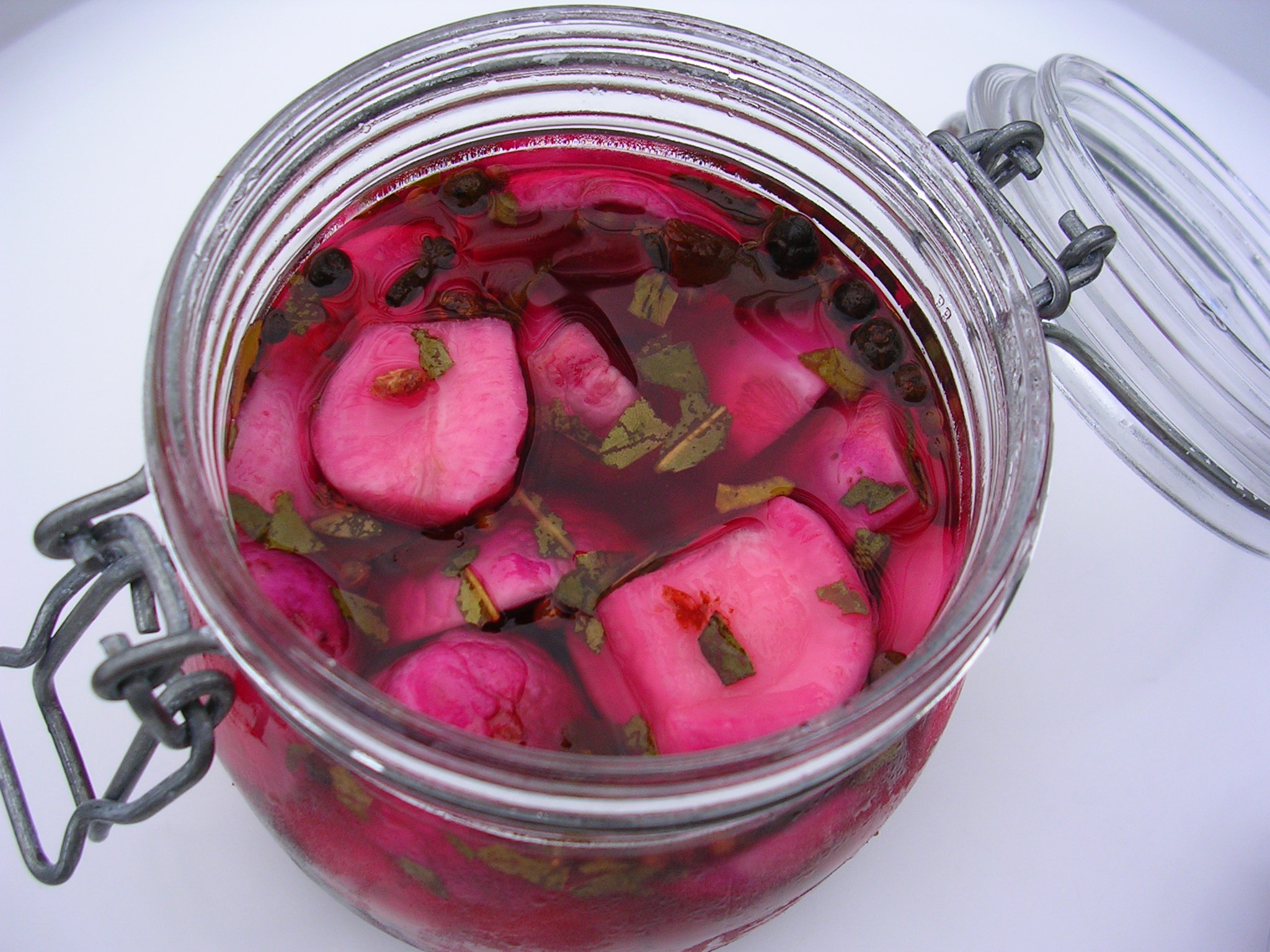
All of the radishes in the garden had to go because I needed the space. It was a large bunch, more than we could eat right away, yet just enough for a small jar of pickled radishes. My initial idea was to make something like Egyptian torshi, bright pink turnips and beets in brine, but then I settled for a sweat-and-sour pickling liquid.

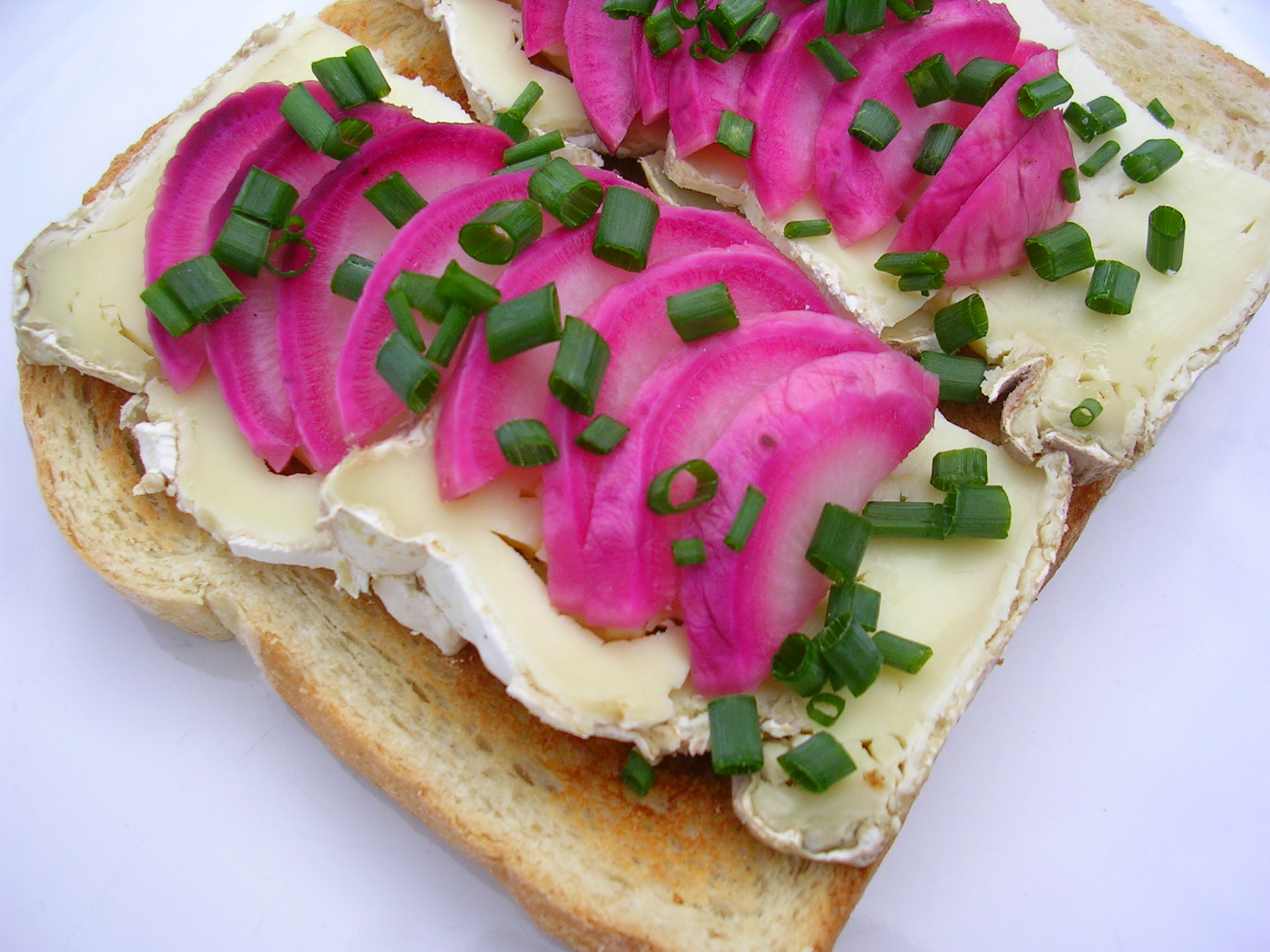
This is a „short-order pickle“ – one that should be eaten within a couple of days. The radishes do get wrinkly but that’s just looks. A word of caution: the smell is quite strong, although not much stronger than a good ripe cheese. The two of them taste good together, too.

Pickled Sweet-and-Sour Radishes

1 large bunch radishes (12 if big, 20 if small)

½ cup white wine vinegar

¾ cup sugar

1½ teaspoons salt

3 teaspoons pickling spice

1. Remove the leaves, root end and root hairs from the radishes. Brush under cold water and dry.

2. Leave the radishes whole if very small, or half/quarter them depending on size. I prefer cutting them to make sure they don’t contain any worms.

3. Pack in a jar with a tight-fitting lid. Place the jar on a folded damp kitchen towel (that prevents it from cracking when you add the hot liquid).

4. In a small pot, bring vinegar, sugar, salt and pickling spice to a boil, scraping down the sides and stirring, until the sugar is fully dissolved. Pour the hot liquid with the spices over the radishes. They should be fully immersed; add more vinegar and sugar in the same ratio if needed. Let cool, then close the jar tightly. Refrigerate for a day before eating.

Know no shame, or: Anything for strawberries

Even after ten years in the country, I am squeamish as can be about anything furry – dead, alive, or in-between. Once our dog killed a groundhog in front of the garage door and it remained there until my husband returned from a trip to his parents a couple of days later. My mother-in-law, on one of my hysterical phone calls, recommended to cover it with an old towel, then load it onto a shovel, but just approaching the thing sent me screaming.

When it comes to protecting the new strawberry patch, however, I seem to be turning into a fearless, indelicate roughneck. The new commercial repellent I spread around the patch about a week ago seems to be working. But when I was weeding down there the other day and saw our dog lift his leg a few times around the patch, I had an idea. I had read somewhere that fermented human urine works as a critter repellent. Since we won’t be eating strawberries from the patch until next summer, and urine is sterile anyway, why not collect our own organic repellent? I sprinkled an old lemonade bottle full of donations around the perimeter of the patch twice this week. No rabbit damage so far!

But the next worry is already lurking around the corner. When I bought strawberries from our neighbor yesterday, he complained about half of his patch being affected by fungus because he had sprayed only once this season. Of course, now I am wondering what else will I have to battle after the rabbit plague, especially because I want to grow the strawberries organically, like the rest of the garden.

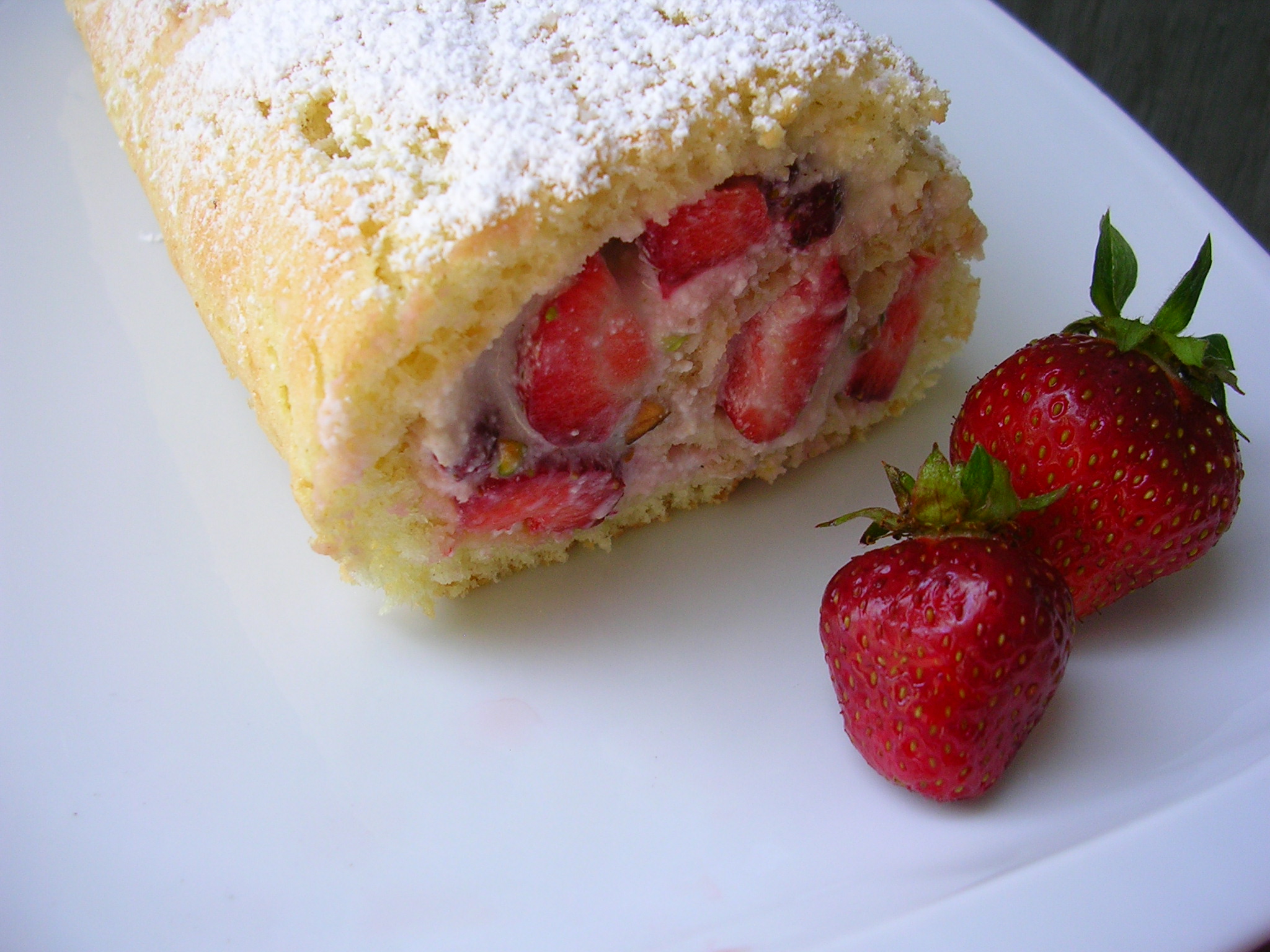
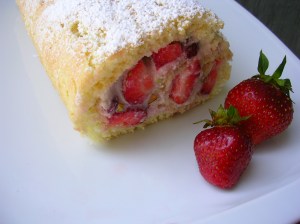
Enough kvetching, let’s get to the bright side of strawberries. Thanks to the healthy half of our neighbor’s strawberry patch, I was able to make another strawberry cake. It had to be something really easy and quick with the ingredients I had in the house, which was low-fat ricotta, but certainly whole-milk ricotta will make an even better, creamier filling.

Strawberry-Ricotta Roulade with Pistachios

Sponge cake:

2 eggs + 1 egg white

½ cup sugar

¾ cup flour

1 teaspoon baking powder

1/8 teaspoon salt

Filling:

¼ cup shelled pistachios

12 ounces strawberries

10 ounces ricotta

2 teaspoons vanilla extract

½ cup confectioner’s sugar, more for dusting

1. Preheat the oven to 400 degrees F. Line the bottom of a 16 x 11-inch jellyroll pan with parchment. Grease the parchment and the sides of the pan.

2. Beat the eggs and the egg white until light and fluffy.

3. Mix the flour with the baking powder and the salt and sift into the eggs. Fold it into the eggs lightly but thoroughly until no more flour pockets remain.

4. Pour the dough into the jellyroll pan and smoothen it with a spatula.

5. Bake in the preheated oven for 10 minutes, or until golden and springy to the touch.

6. Lift the parchment with the sponge cake onto the kitchen counter or a baking sheet and cover immediately with a clean dry kitchen towel. Let cool.

7. Lightly toast the pistachios. Cool, then chop and set aside.

8. Beat the ricotta with the vanilla extract and the confectioner’s sugar until smooth and creamy.

9. Wash, hull and slice the strawberries.

10. Flip the parchment with the sponge cake over and place it on a large baking sheet lined with the kitchen towel or with parchment. Carefully remove the parchment from the baking of the sponge cake.

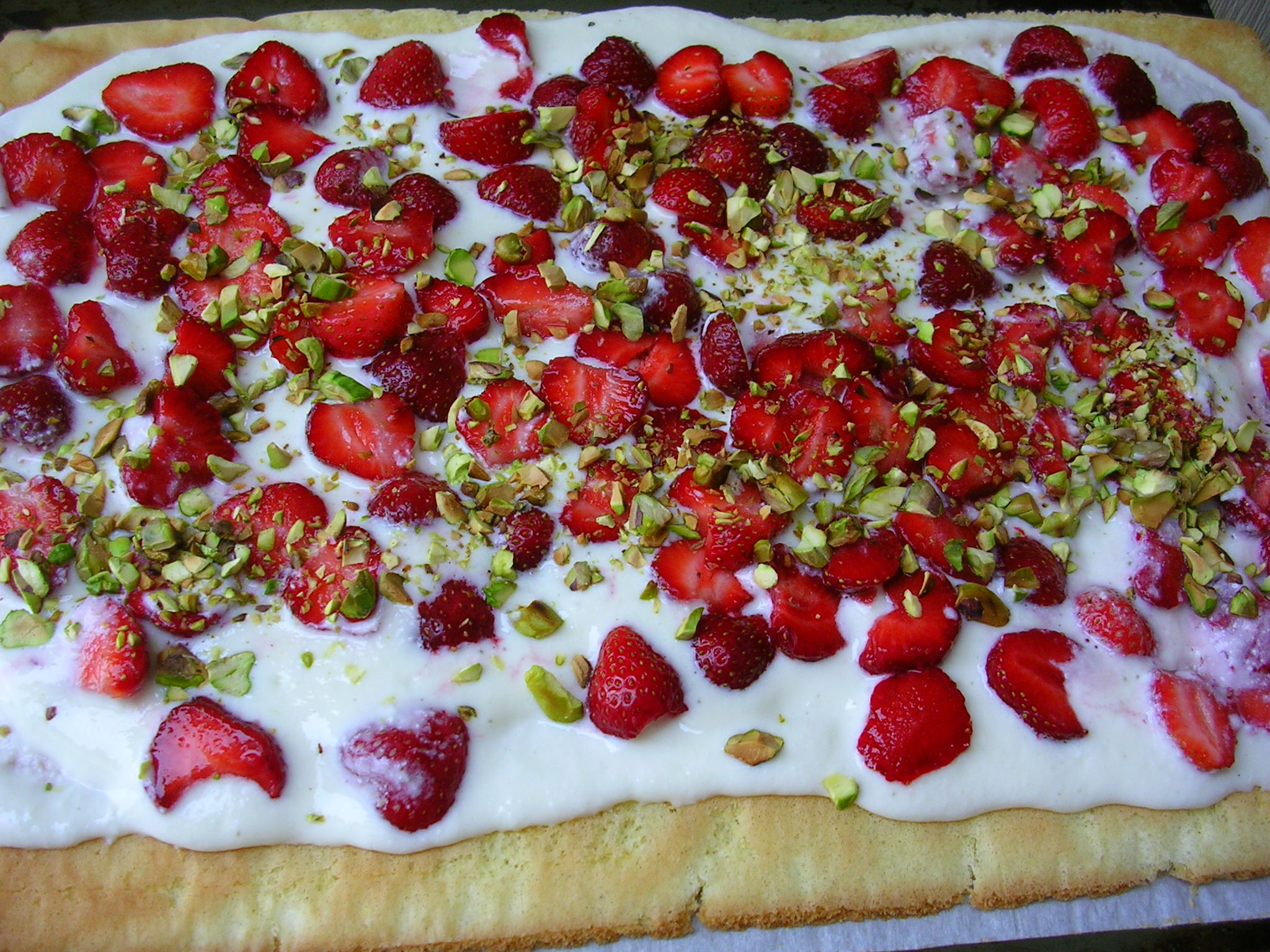
11. Spread the ricotta evenly over the sponge cake, leaving about ½ inch uncovered on the long sides. Spread the sliced strawberries on top and sprinkle with the pistachios.

12. Using the towel as a lifter, roll up the cake from the long side. Place the roulade with the seam-side down on a serving platter. If you are making this just en famille, and not for fancy presentation, or if you don’t. have a platter long enough, cut it in half to fit, (that’s what I did). Chill for 1 hour. Dust with confectioner’s sugar before serving.

Gooseberries: old ones out, new ones (almost) in

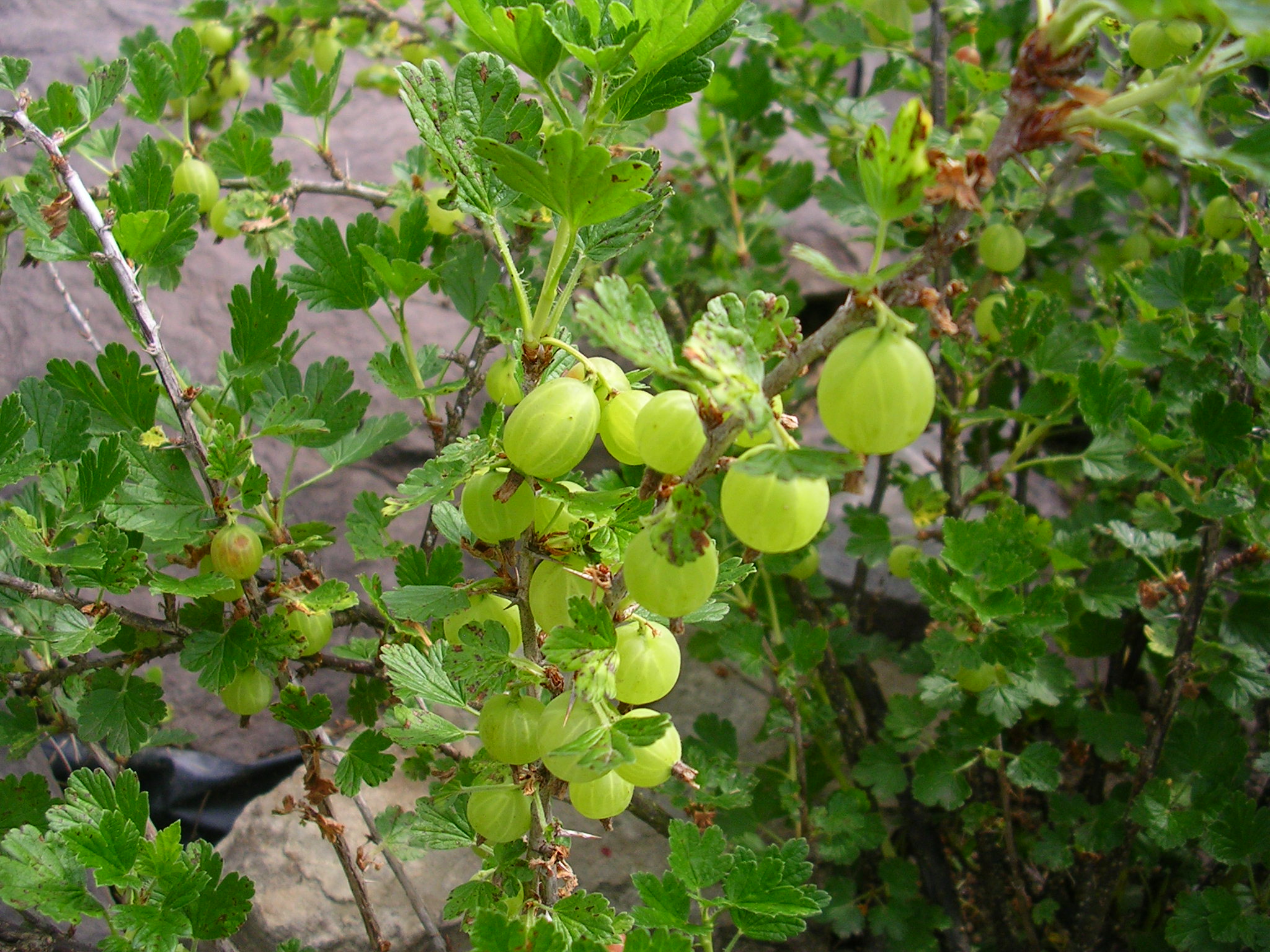
I used to treat gooseberries like other people treat a fine tablecloth or china – they don’t get taken out unless for special occasions. So all spring, I held onto the last bag of frozen gooseberries from last year: large light green, plump Invictas, perfect for cake or pie. But with the branches of my three gooseberries bushes loaded with fruit, which will ripen in late June/early July, all my restraint disappeared and I felt emboldened to roll it out. However, not for a cake but for chilled gooseberry soup.

Fruit soups are one of my favorite summer dishes. To give them more substance, I like them best with a little addition, like my Elderberry Soup with Farina Dumplings. For the gooseberry soup I wanted something lighter. I took my cues from floating islands and added bit of crunch by sprinkling them with toasted caramelized almonds. The soup should be eaten thoroughly chilled.

Many gooseberry recipes call for under-ripe gooseberries but for this soup they should be as sweet as possible, otherwise you will have to add much more sugar. As the gooseberries are put through a food mill, you can save yourself the effort to remove the tiny blossom ends and, if still attached, the stems, both of which are a bother in most gooseberry dishes. Please resist the temptation to puree the soup in the blender, as the crushed seeds will give the soup a coarse consistency and a slightly bitter taste.

Gooseberry Soup with Floating Islands and Almond Crunch

Soup:

1 pound 10 ounces ripe gooseberries

2 cups water

½ cup to ¾ cup sugar, to taste

Peel of ½ organic lemon

1 tablespoon lemon juice

1 thumbnail-size piece of ginger, peeled and chopped

3 tablespoons (3/4 ounce) cornstarch

Floating islands:

2 egg whites

Pinch of salt

Pinch of cream of tartar

A few drops of almond extract

2 ounces superfine sugar

Almond crunch:

1/3 cup unpeeled whole almonds

1 tablespoon sugar

1. For the soup, please all the ingredients except the cornstarch in a large heavy saucepan and bring to a boil. Cook until the gooseberries soften and pop, stirring occasionally. You may also crush them with the cooking spoon to fasten the process.

2. Pass the soup through the food mill (medium or fine disk). Pour the soup back into the pan.

3. Dissolve the cornstarch in a few tablespoons of cold water. Whisk it into the soup and bring to a boil, whisking constantly. Cook until the soup turns clear again and thickens. Remove from the heat and cool, then chill.

4. For the floating islands, beat the egg whites with the salt and the cream of tartar until they are very stiff, gradually adding the superfine sugar.

5.Bring water to a boil in a very large deep pan or a wide pot. The floating islands should not touch each other when they poach so you might have to do this in two batches.

6. Reduce the water to a simmer. Using two dessertspoons, place small mounds of egg whites on the water. Poach for 3 minutes, then turn them over and poach for another 3 minutes on the other side. Remove with a slotted spoon and place on a large plate or tray lined with wax paper. Refrigerate.

7. For the almond crunch, lightly toast the almonds in a pan. Add the sugar and caramelize, making sure not to burn it. Remove from the pan and let tool. Chop the almonds in the food processor using the pulse function.

8. To serve, whisk the chilled soup well. Place the chilled floating islands on top and sprinkle with almond crunch.

Makes 4 to 6 servings

Scape sampler

While I have grown garlic for a number of years I did not realize until a couple of years ago that you can actually use the scapes, the undeveloped flower buds that should be cut off as soon as they appear of in order to strengthen the garlic bulbs. Then, last year, I unintentionally grew flowerless garlic.

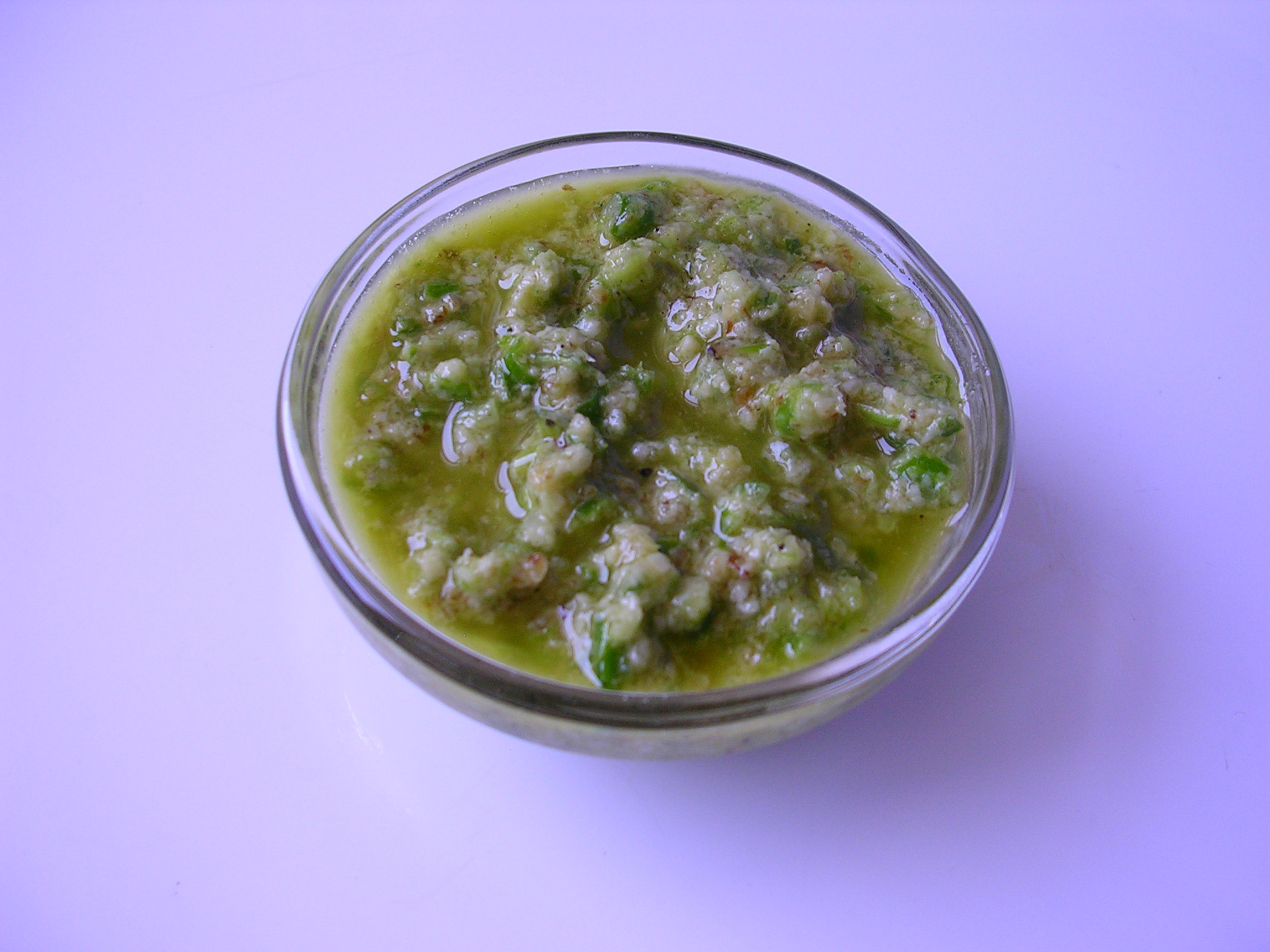
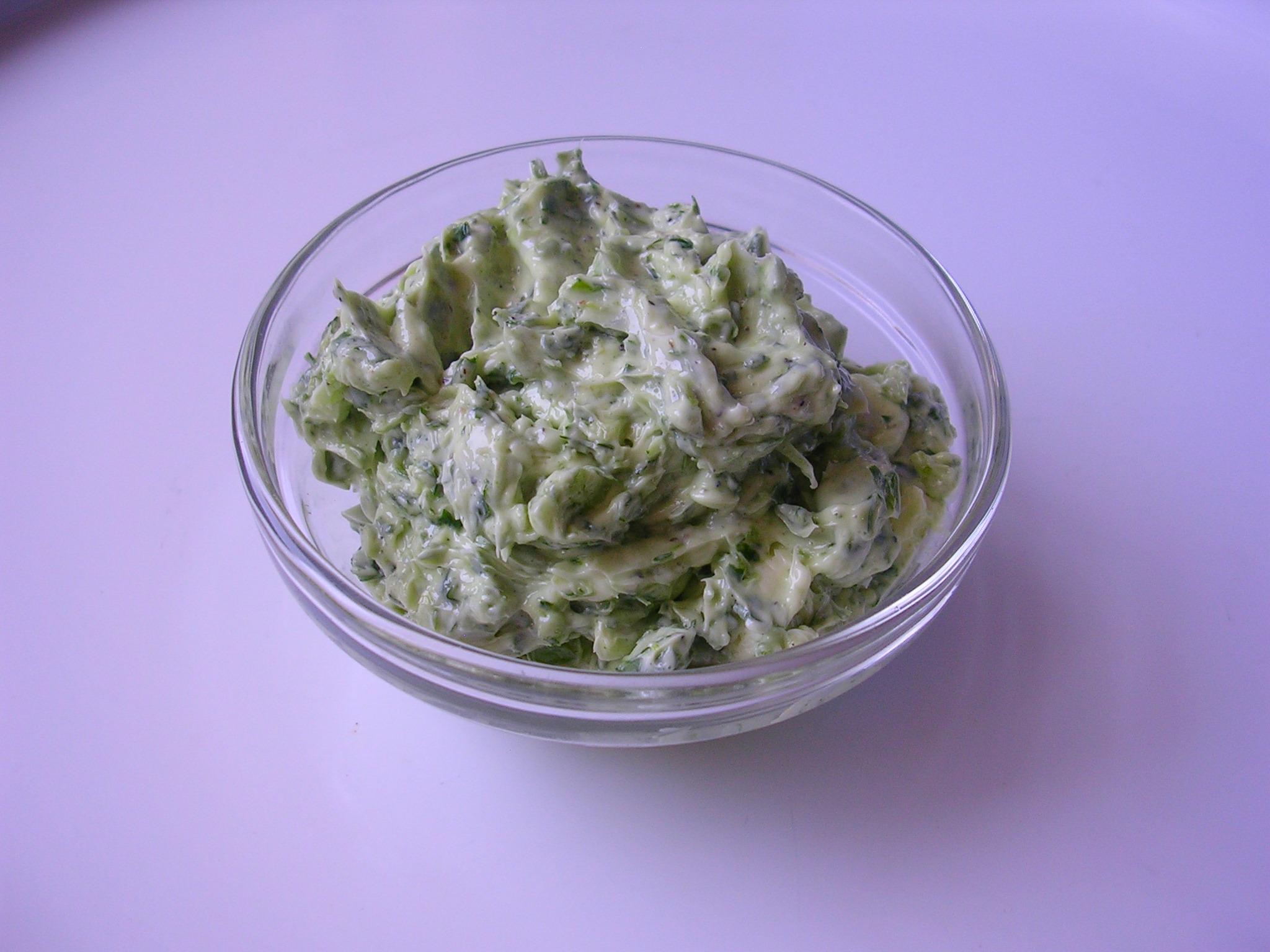
So this year was the first time I could put my hands on scapes. I wanted to get the full scape flavor so I used them raw, in scape pesto and scape butter. Since this was a premiere, I made only small batches of each but the amounts can easily be doubled or tripled if you are lucky enough to have lots of scapes at your disposal – garlic scapes seem to be a hot commodity at farmer’s markets.

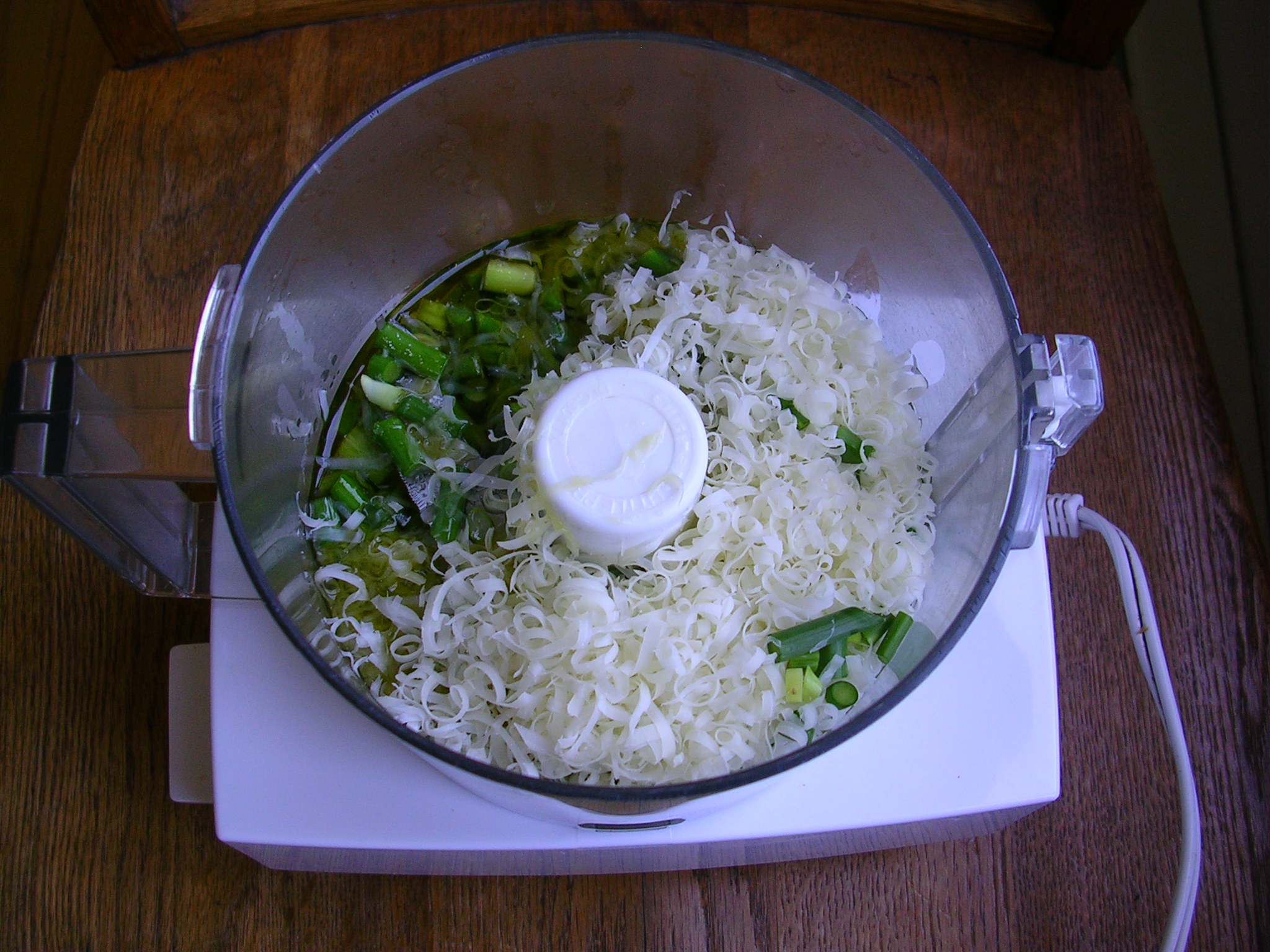
I removed the thin pointy tips of the scapes (these are the dark green blades that look like chives in the top photo), as they tend to be fibrous. The lemon juice adds a little acid to the pesto is so it keeps its color.

Garlic Scape Pesto

¼ cup coarsely chopped walnuts

¾ cup scapes

¼ cup freshly grated Parmesan

½ cup extra virgin olive oil

Juice of ½ lemon

½ teaspoon salt

Freshly ground black pepper

1. Lightly toast the walnuts in a non-greased pan. Set aside to cool.

2. Cut the scapes into ½-inch pieces. Put the scapes, cooled walnuts, Parmesan, olive oil, and lemon juice in the food processor. Using the pulse function, chop finely, scraping down the sides with a spatula every so often.

3. Season with salt and pepper and pulse again. The pesto should still be somewhat chunky. Fill in a jar and refrigerate.

Garlic Scape Butter

6 tablespoons soft butter

2 tablespoons chopped scapes

¼ cup packed Italian parsley

Salt

Pepper

Put all ingredients in the food processor and process to a creamy consistency. Fill in an airtight container and refrigerate.