Eyes bigger than the basket

Blueberries
Yesterday I went blueberry picking at a berry farm. It was drizzling on and off and therefore empty and very quiet. I picked and picked until my basket was full – slightly over 27 pounds!
Most of it went into the freezer for pies, cakes, crumbles, and smoothies. It makes up for my own meager harvest of black currants and gooseberries, which I blame partly on my negligent pruning last year, and partly to the chipmunks.

While I love blueberries I don’t care much for them in their raw state. Chilled blueberry soup, a specialty from northern Germany, is a favorite of mine and perfect on hot summer days. The recipe can be found in my cookbook Spoonfuls of Germany.

Blueberry Soup

Nosh for gardeners

We are notoriously late eaters. Especially in the summer, when my husband and I use every minute of sunlight to work outside, we do not sit down for dinner before 8:30 or 9:00 o’clock.  People around here eat as early as 5 and certainly not later than 6 o’clock.

Last week, when my son’s friend stayed for dinner, I asked him jokingly how he puts up with our moonlight dinners. He told me that he usually has dinner at home before coming here. This could be either a compliment for my cooking, or simply the fact that 19-year-old boys are always hungry. I won’t speculate.

For my part, I am usually famished by the time I have dinner on the table because I often don’t eat much during the day. Yes, I know, that’s an unhealthy habit. However, when I know there is something appealing in the fridge, I find it easier to pull myself away from gardening to have a bite.

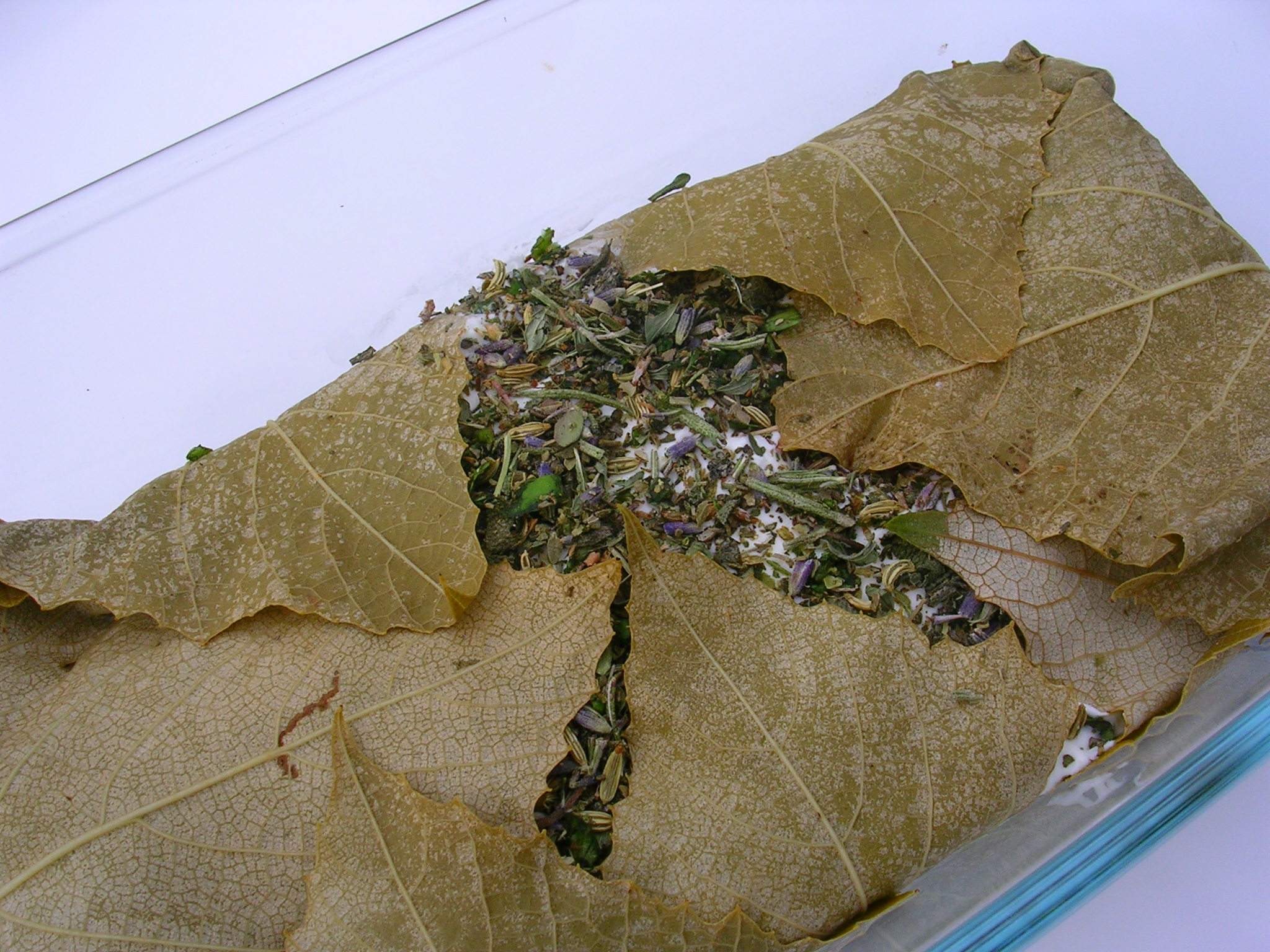
I had the idea for a terrine like this for a while but I had to wait for the leaves on my two concord grapes to grow big enough. I mix the herbes de Provences from equal amounts of dried basil, sage, rosemary, summer savory, thyme, marjoram, fennel seeds, oregano and lavender.

Over-estimating the volume of the goat cheese, I used a 1.5-quart glass loaf pan, in which the terrine looked a bit lost. A smaller loaf pan or a rectangular glass storage container would have worked better. Next time…

Goat Cheese Terrine
6-8 large organic grape leaves

1 fresh goat cheese (10.5 ounces)

2 tablespoons heavy cream

1 garlic clove, finely chopped

3 tablespoons finely chopped sundried tomatoes in oil, drained

3 tablespoons pitted Kalamata olives, finely chopped

3 tablespoons herbes de Provence

1. Wash the grape leaves and place them in a heatproof bowl. Pour boiling water over them to cover. Let stand for 4 minutes, then drain and spread on paper towels to dry.

2. Beat the goat cheese and the cream with an electric mixer until smooth. Try not to add more cream, otherwise the cheese will end up too liquid. Mix in the garlic.

3. Line a rectangular small glass dish with the leaves up the sides, so you can fold them over after filling.

4. Spread 1/3 of the cheese on the bottom. Evenly sprinkle with the tomatoes.

5. Spread 1/3 of the cheese and evenly sprinkle with the olives. Spread the remaining cheese on top and sprinkle with the herbs.

6. Fold the leaves over. Cover with plastic wrap and refrigerate for at least 2 hours. To serve, flip the terrine over onto a serving dish or a nice cutting board. A serrated knife works best to cut through the grape leaves.

Unfinished business

The beets in my garden are knee-high. But before I could even think of what I would make with them, I had to use up the frozen beet greens from last fall. Given the effort that I put into growing, harvesting, trimming, washing, drying, chopping and freezing them, there was absolutely no question, these had to go first! Besides, being wasteful while people who don’t have a garden complain that beet greens are not always available would made me feel really guilty.

I have made Risotto with Beet Greens so frequently these past months that I needed to give that one a break. So I tried different side dishes. Marissa Grace’s Pink Greens on Food52 were my husband’s favorite. I liked them but I would also put these Beet Greens with Sesame on the top of my list. Not covering them and adding lime juice juice helped them maintain their green color.

There will be so many new fresh beet greens coming my way that I will certainly make both dishes again.

Beet Greens with Sesame

1 tablespoon raw sesame seeds

2 teaspoons olive oil

2 cloves garlic, finely chopped

2 teaspoons grated fresh ginger

2 pounds trimmed beet greens, coarsely chopped

1 tablespoon lime juice

Salt

Freshly ground black pepper

1 teaspoon sesame oil

1. Lightly toast the sesame seeds in a non-greased pan. Set aside.

2. Heat the olive oil in a large skillet. Add the garlic and cook for 30 seconds to 1 minute until soft. Add the beet greens and the ginger and cook until wilted, stirring often. Do not cover.

3. When the beet greens have collapsed, add the lime juice. Season with salt and pepper. Pour off some of the pink liquid and transfer greens to a serving bowl. Drizzle with sesame oil and sprinkle with the toasted sesame seeds. Serve hot or at room temperature.

Makes 4 servings

Are you jellin’?


When I first moved to the United States, I loaded up on all types of baking and cooking ingredients on each visit to my native Germany. Meanwhile I have found decent substitutes for most items, except one: jelling sugar.

In Germany, jelling sugar comes in three variations of fruit-to-sugar ratio, depending on the sweetness of the fruit and personal taste: 1:1, 2:1 and 3:1. It’s a natural product, made from pectin in apples and citrus fruit. And, it comes ready-mixed, or as a jelling powder concentrate to which you add sugar (lightweight and therefore perfect for airline travel). Some online stores specializing in German foods have it but when I inquired at Dr. Oetker USA, I was told they don’t carry it. Too bad, because there is really nothing like it in the US. Many American recipes call for twice as much sugar as fruit.

So don’t hesitate if you can get your hands on imported jelling sugar. Alternatively, you can use pectin products for less sugar or no sugar recipes, to obtain an jam or jelly that actually tastes like the fruit, not just sugary.

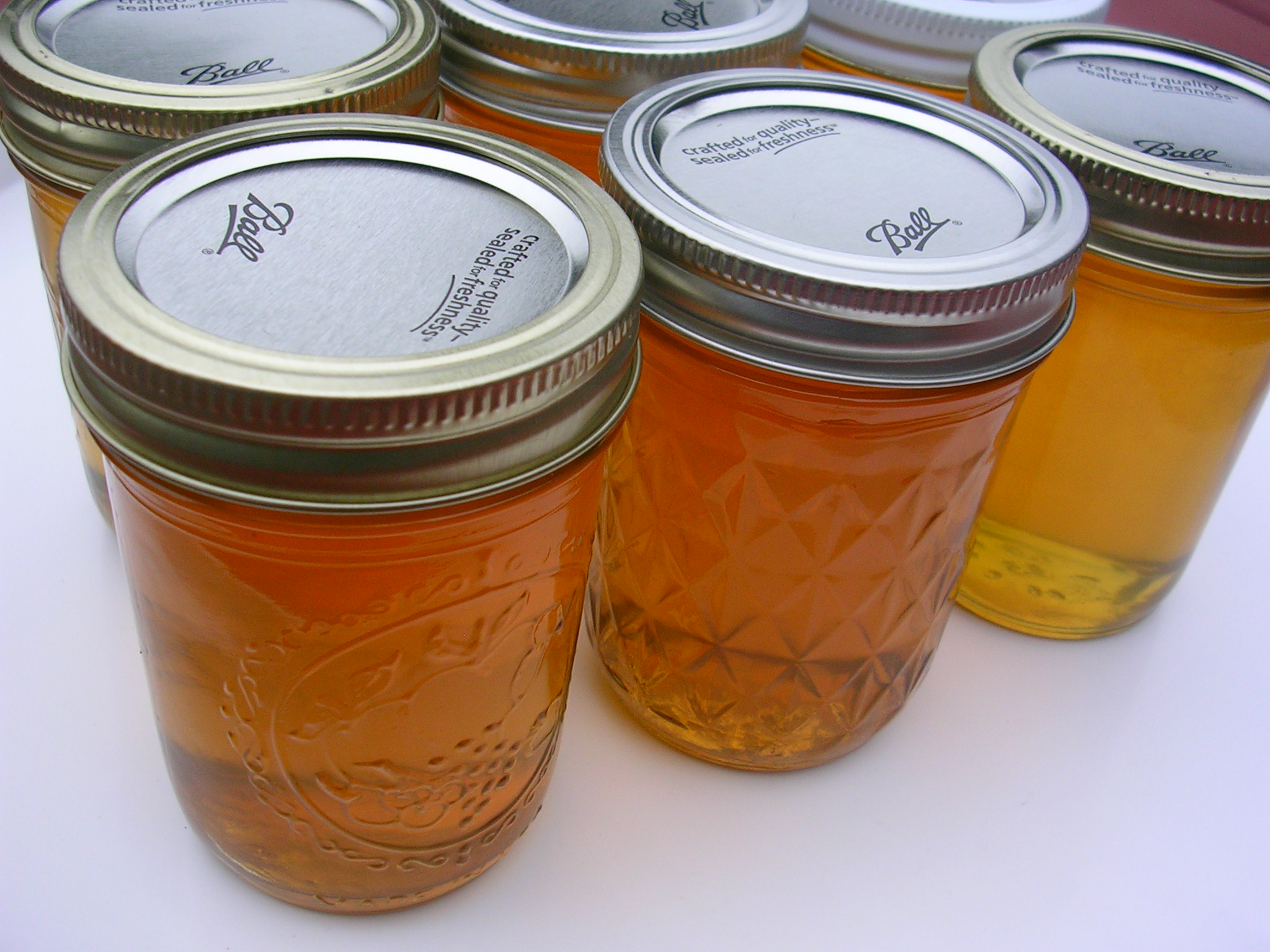
This was the first year I had enough blossoms on my elderberry bushes to dare snipping some off for elderflower jelly. The heavenly scent alone is worth making it. In the past few days I have spotted wild elderberry blooming along the roadside. As long as it’s not in a polluted area, and the plants have not been sprayed with any pesticides, you can use those. To make sure you are really harvesting elderflowers, check out some elderberry images, for example on the website of the Missouri Botanical Garden, which has an excellent plant database.

I might go forage elderflowers myself to try some other elderflower recipes.

Elderflower Jelly

8 cups clear apple juice without artificial coloring or additional sugar

15 to 20 elderberry flowerheads

1 package fruit pectin for less or no sugar recipes

4 cups sugar

You also need:

A canning pot, or a very large stockpot

10 half-pint canning jars

8 bands

8 new (unused) lids

1. Shake the elderflowers to remove any bugs. Remove all the stems.

2. Immerse the flowers in a large bowl filled with cold water. Swish around and place in a colander. Repeat this process once or twice. If there are still tiny insects on the flowers, don’t worry. The juice will be strained and cooked.

3. Place the flowers in a large plastic container with a lid. Pour the apple juice over it. Push down; the flowers should be fully immersed in juice. Cover and refrigerate for 48 hours.

4. Pour the liquid through a fine sieve. Repeat the process. You may also line the sieve with a piece of damp cheesecloth if you are really worried about bugs.

5. Follow the package directions for your pectin product. When the mixture boils, remove any foam with a ladle or a large spoon.

7. Pour the hot jelly in sterilized jars through a canning funnel. Wipe the rim with a damp piece of paper towel to remove any drips and wipe dry with paper towel. Place the lids and the bands on the jars and process in a boiling water bath for 10 minutes.

9. Let cool and set for 24 hours without moving the jars. If processed properly, the jelly will keep for 1 year or more.

Makes 10 half-pint jars