Rhubarb wrap

Rhubarb wrap1

There were quite a number of food rules in my German childhood: don’t drink water after eating cherries, don’t reheat spinach nor fish dishes, don’t go for a swim after eating – and don’t eat rhubarb harvested after St. John the Baptist Day on June 24.

Over time I found out that most of these rules have no scientific foundation. I have happily reheated countless slices of spinach quiche and leftover salmon without ever getting sick and broke all the other rules too – except for the one about rhubarb.

What supposedly makes rhubarb so dangerous is the oxalic acid, which is highly concentrated in rhubarb leaves and roots and makes them toxic. The stalks contain only insignificant amounts of oxalic acid, red stalks less than green ones. To harm your body you would have to eat a lot of rhubarb, and I imagine that even before having rhubarb-related health issues, you would get a sugar shock from all the sugar that is needed to make so much rhubarb palatable!

The reasoning behind that tenacious rhubarb deadline of June 24 is that supposedly rhubarb contains an elevated level of oxalic acid as the season progresses. The real reason, however, is that after the end of June the plant goes into regeneration and regrowth for next spring. Harvesting rhubarb later in the summer depletes it of its energy.

My two rhubarb plants had a slow start this year, I was able to cut very little, and only in the past two weeks do they seem to grow. There is no way I will keep my hands off rhubarb after tomorrow, and I will cut some more during the next week or two. And then, when I stop harvesting, I will do it because it’s bad for the plant (besides, in the summer heat, the stalks become fibrous), and not because of some old wife’s tale.

Orangey Baked Rhubarb

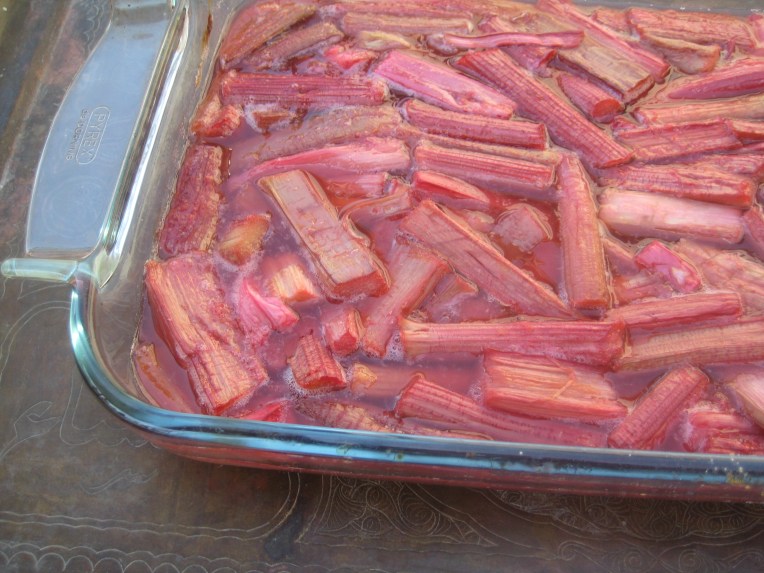
Adapted from Alice Waters’ recipe for Baked Rhubarb Compote in Chez Panisse Fruit, this is one of the most flavorful rhubarb compotes I ever made. Cooking rhubarb in the oven concentrates the juices to thick syrup, while the pieces don’t fall apart yet they are so soft they melt in your mouth. And the combination of rhubarb and orange is fantastic.

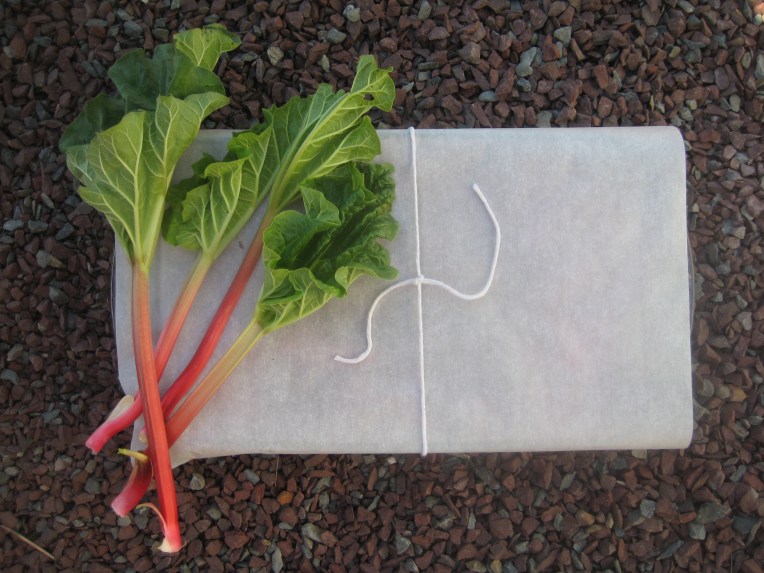
Rhubarb should not be cooked in metal dishes, which reacts with the oxalic acid (here’s another rule, yet this is one based on facts). Neither should the dish be covered with aluminum foil. I used parchment paper and butcher twine.
Rhubarb wrap2

2¼ pounds trimmed rhubarb, cut into 1-inch chunks

½ teaspoon natural orange extract

1¼ cups sugar

½ cup orange juice

1. Preheat the oven to 350 degrees F.

2. Mix the rhubarb with all the other ingredients. Evenly distribute it in the baking dish. Cover with a sheet of parchment paper and secure it across the top with butcher twine.

3. Bake in the preheated oven for 25 minutes, then uncover and cook for 10 more minutes. Let cool, then transfer to a jar or a container with a lid and refrigerate.

Makes 4 cups

Memory lane

The herb garden is one of my favorite places to work – not only because of all the wonderful scents I take in, but also because every herb has its own story. As I move from plant to plant weeding and trimming, I think of the people who gave them to me, or the circumstances how, when and where I acquired them.

The chocolate mint is the oldest plant in the group. It actually started the herb garden. A red Japanese maple had just died the winter before and we did not quite know what to do with that sunbaked weed-filled area above a stonewall. I planted a lonely mint because I did not know what else to do – I was just getting into gardening at the time. When the mint thrived (of course it did, all mints do!) I was thrilled. It was pretty the way it grew over the wall so I made it a project to turn the whole area into an herb garden.

Today the herb garden is filled with more than two dozen culinary and medicinal herbs. Of course, like with everything else in gardening, there were several failures. Basil, dill, borage and parsley fall victim to the rabbits in a single night, therefore I must grow them in the fenced-in vegetable garden. Our hilltop winters are too rough for rosemary and lavender so those are in containers on the patio and overwinter in the house.

This morning, I was out in the herb garden early to make room for some herbs I bought at the Pennsylvania Lavender Festival yesterday. I was never a big shopper; shoe-buying sprees, for example, are totally strange to me (with shoe size of 11, I don’t want to attract too much attention to my feet anyway) but I can get a bit out of control when it comes to kitchen tools and plants. Therefore I had asked my friend to put me on a leash and not let me buy more than five plants. I stuck to it and came home with two culinary sages, rue, St. John’s worth, and winter savory. If they make it through the winter, they will not only be beautiful additions to the herb garden, but also bring back memories of a great early summer outing.

Lemon Balm Granita

1 cup packed lemon balm leaves (about 1.5 ounces)

3 cups boiling water

Sugar to taste

Dash of lemon juice

1. Wash the lemon balm leaves. Rip them apart with your hands or chop coarsely and place in a heatproof bowl or teapot.

2. Add the boiling water and let steep 30 minutes. Squeeze the leaves to extract as much liquid as possible from the infusion. Sweeten to taste and stir to dissolve the sugar completely.

3. Fill an ice-cube tray and freeze. Refrigerate the rest of the infusion until chilled.

4. Put the ice-cubes and the infusion in a blender with a dash of lemon juice. Crush to a slush and serve immediately.

Makes 2 servings

Rainy day summer soup

Although I love garlic, I have never eaten or made a garlic soup that I really liked. It always seemed to lack body and be a bit on the watery side, even the Garlic Soup from Mastering the Art of French Cooking.

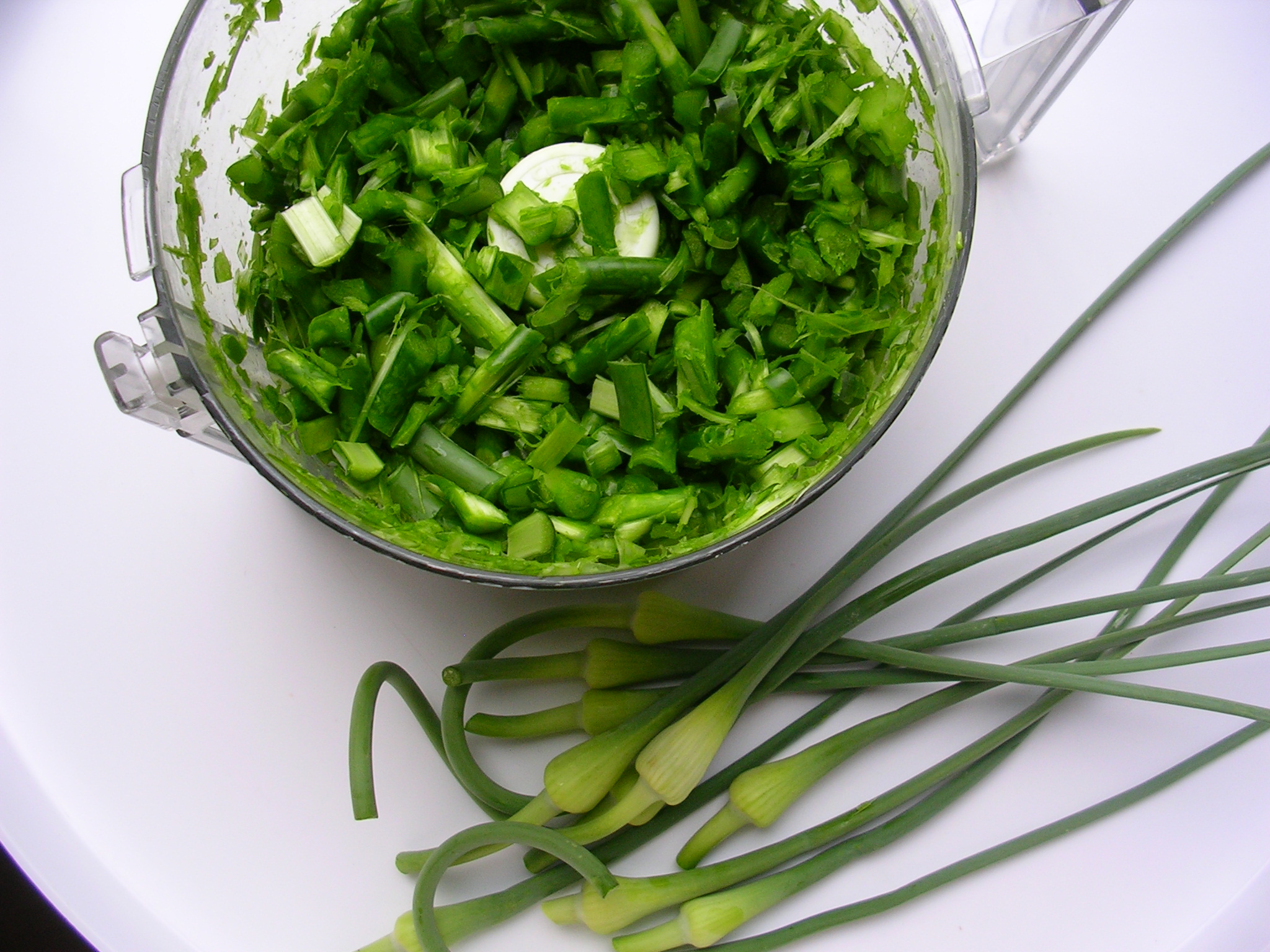
The garlic scapes are in urgent need of cutting so I decided to tinker with a simple and easy formula that uses lots of scapes and thickens the soup by adding a potato. For this recipe it does not matter that some of the scapes are already turning fibrous, as they are only used to infuse the broth and discarded afterwards.

I must admit I was too deliberate with the cayenne pepper so the soup was slightly hot but otherwise I will make it again just like  this – as long as there are still scapes to be cut in the garden.

Cream of Scape Soup

12 scapes, blossom ends removed

3 cups good-quality chicken broth

1 small bunch fresh thyme sprigs

1 medium to large potato, peeled and cubed

1 cup half and half

Salt

Pepper

Pinch cayenne

White wine vinegar

Croutons to serve

1. Cut the scapes into 2-inch chunks and chop coarsely in the food processor.

2. Put chopped scapes in a large saucepan with 2 cups of the chicken broth and the thyme. Bring to a boil, then cover and simmer for 10 minutes.

3. Strain through a fine sieve, reserving the broth. Discard the solids.

4. Pour the broth back in the pan and add the potato and the remaining stock. Bring to a boil, cover, and cook until the potato is soft, 10 to 12 minutes.

5. Puree to a very smooth consistency. Add the cream and reheat. Season with salt, pepper, cayenne, and a dash of white wine vinegar. Serve with croutons.

Makes 4 servings

Strawberry mission accomplished

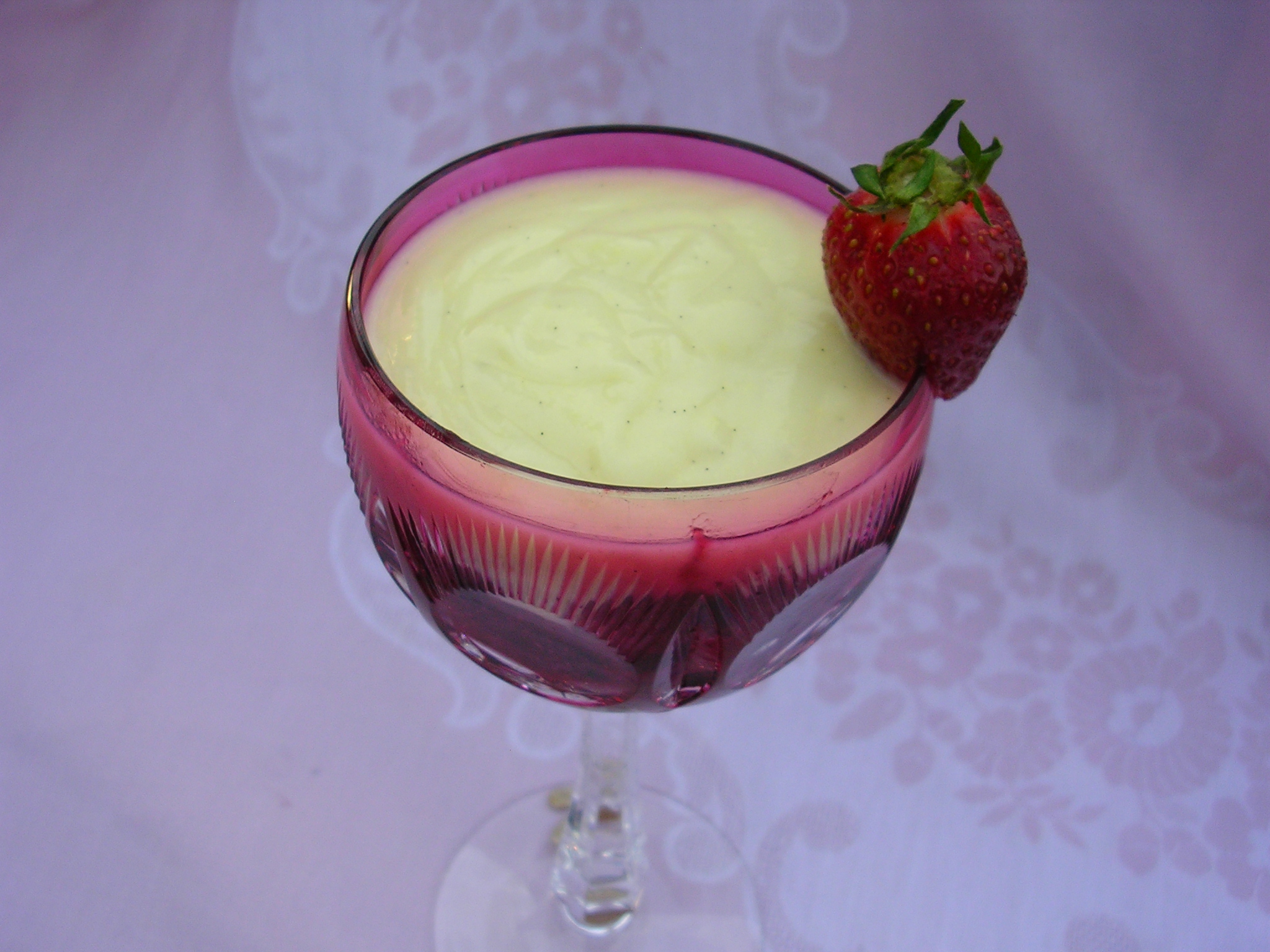
Finally, after taking all sorts of measures to protect strawberries against critters, there are enough strawberries from the garden to make Rote Grütze, the German red berry dessert that was my favorite as a child. The recipe can be found in my cookbook Spoonfuls of Germany.

Rote Grütze can be served with vanilla sauce, vanilla ice cream, whipped cream, liquid heavy cream, or plain milk. My favorite has always been vanilla sauce made from scratch – lots of it, therefore I often double the amounts.