Rolls in the snow

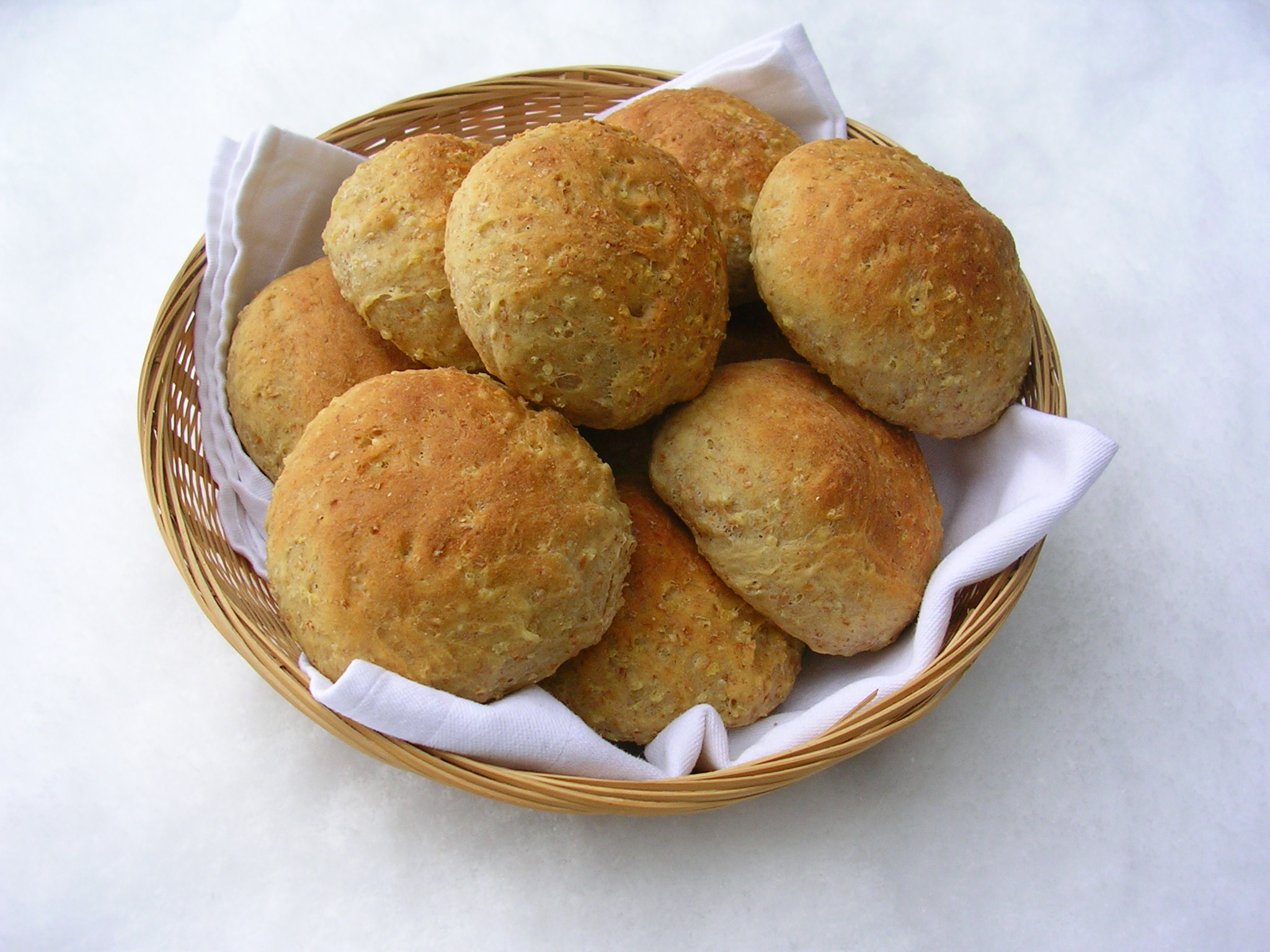
It is not only the snow falling since this morning that makes me feel like in a fairytale. Baking rolls earlier today was also an experience reminding me of Sweet Porridge, a German fairytale by the Brothers Grimm where the pot with porridge does not stop cooking and rises over the edge filling the kitchen, the street and the village… until the girl who knows the magic words makes it stop, and everyone who wants to return has to eat their way back.

I was trying out a recipe for millet bread from The Tassajara Bread Book, a usually very reliable source. The recipe calls for 3 cups whole millet, soaked in hot water. Even though I love rustic wholesome bread I was afraid this was rather bird feed than human fare. So I decided to give the millet a quick boil. I have cooked millet before but never that much at once. The millet swelled and swelled and I ended up with 10 cups. There was no way I could work this amount into the dough for what was supposed to be two loaves of bread so I used 4 cups and froze the rest for some other time.

The recipe makes two dozens rolls. Unlike the porridge in the fairytale, it won’t be hard to finish those off!

Whole Wheat Rolls with Millet

1¼ cup whole uncooked millet

2 scant tablespoons active dry yeast

3 cups lukewarm water

¼ cup honey

1 cup non-fat dry milk

2 cups bread flour

5 cups whole wheat flour

1 tablespoon salt

¼ cup canola oil

2 tablespoons + 1½ teaspoons gluten

Cornmeal for the baking sheet

1. Bring the millet and 3 cups water to a boil in a saucepan. Let simmer for 10 to 15 minutes until the water is absorbed. Fluff the millet with a fork and set aside to cool.

2. Dissolve the yeast in 3 cups lukewarm water. Add the honey and the dry milk and stir to dissolve.

3. Add 2 cups bread flour and 3 cups whole wheat flour add mix with the dough attachment of the kitchen machine until well combined.

4. Let rest in a warm place (I do this in the switched off, cool oven and place a jelly roll underneath to catch any spills) for 45 minutes.

5. Add the remaining whole wheat flour, salt, oil and gluten. Knead with the machine to a smooth dough.

6. Drain the millet if there is water left in the pot. Work the millet to the dough. With floured hands, assemble the dough to form a ball and transfer the dough to a large oiled bowl. I It is OK if the dough it slightly sticky.

7. Turn the dough over once to coat. Let rise in a warm place for 50 minutes.

8. Punch the dough down with both fists and turn it over. Let rise for 40 minutes.

9. Knead the dough on a floured surface for 3 to 4 minutes. Divide in half and shape each half into a long, baguette-like loaf. Cut each loaf into 12 equal pieces. Shape each piece into a ball. Sprinkle two baking sheets with cornmeal, or line them with a pastry mat.

10. Place the unbaked rolls at generous distance on the baking sheet. Cover with a damp clean kitchen towel and let rise 20 minutes.

11. Preheat the oven to 375 degrees F. Place a jelly roll on the lower oven rack.

12. Place the baking sheet with the rolls in the preheated oven and immediately pour 2 to 3 cups cold water on the jelly roll. Close the oven door at once to keep the steam in the oven. Bake the rolls for 25 minutes, until lightly browned on top.

13. Remove rolls from the baking sheet and cool on a wire rack. Bake the second batch the same way.

Makes 24 rolls

The now-or-never raspberry scones

Most cooks I know have a collection of recipes that they ripped out of some magazine or newspaper with the intention of trying them out some time. I have made it a habit of cleaning those out once in a while, discarding the ones that, if I am honest to myself, I will never ever make.

Corby Kummer’s Raspberry-and-Raisin Tea Scones from The Atlantic were on their way out. I am not sure whether it was that the recipe calls for the flour being sifted five times (I usually never sift flour), or that I could not warm up to the combination of raspberries and raisins.

But because I have frozen raspberries from the garden, and I seriously need to start cooking and baking my way down our overfilled freezer, I gave the recipe a try. However, I made a few changes. I used dried cranberries instead of raisins, and canola oil instead of olive oil. As the dough was a sticky mess, cutting was difficult. So I ended up shaping the scones by hand, but I did this very quickly, so that the consistently would not become too dense – why, otherwise, would I have sifted the flour five times?

I find the result yummy – light and with a subtle sweetness, so you can still put jam or jelly on them. Now I am waiting to hear what my family tasting panel says.

Raspberry-Cranberry Scones

2¾ cups flour

2 teaspoons baking powder

½ teaspoon salt

1 cup buttermilk

½ cup canola oil

½ cup sugar

2 eggs

½ cup unsweetened dried cranberries (preferably organic)

½ cup frozen raspberries

1. Sift the flour five times into a large bowl. Mix with the baking powder and salt.

2. Whisk the buttermilk with the canola oil, sugar and 1 egg in a small bowl.

3. Add the liquids to the flour mixture and quickly work it in with a spatula until the dough holds together. Fold in the cranberries Do not overwork the dough.

4. Preheat the oven to 500 degrees F. Line a large baking sheet with parchment paper.

5. Place a large piece of wax paper on the counter. Put the dough in the middle of it and place another sheet of wax paper of the same size on top. Pat the dough with your hand to an equal thickness, about the size of letterhead paper.

6. Peel off the top layer of wax paper and sprinkle the individual raspberries over half of the dough. Fold the other half of the dough over it.

7. Place the top wax paper on top of the dough gain and flatten the dough slightly. 8. Remove the paper and cut the dough into 12 to 14 equal pieces.

9. With floured hands, quickly and lightly shape round, about 3-inch scones, taking care not to compress the dough.

10. Place the scones on the prepared baking sheet about 2 inches apart. Whisk the remaining egg and brush the scones with it.

11. Place the baking sheet into the freezer for 10 minutes. Remove the baking sheet from the freezer and brush the scones again with the egg wash.

12. Put the baking sheet in the oven and reduce the temperature to 425 degrees F. Bake for 18 minutes. Remove from the baking sheet immediately and cool completely on a wire rack.

Makes 12 to 14 scones

Quinces part 2

After looking at dozens of quince recipes (there’s really not so much out there), I poached a good amount of the quinces, which was the easiest and most versatile way. Any recipe that uses quinces whole or with their skins still on was a reject right away, because as much as I like quinces, I do not like the particular taste of their skins and cores.

I followed the recipe for poached quinces from Alice Waters’ Chez Panisse Fruit, using a full two pounds of peeled and cored quinces. That leaves me with a big container of quinces in syrup to use for pies, desserts and other experiments.

This morning I wanted to do something quick so I made Quince Danish. I couldn’t get away from my desk so I left the puff pastry thaw on the countertop for too long. It was sticky and difficult to handle but it still tasted good.

Quince sorbet is next.

Quince Danish

2 cups sugar

6 cups water

½ organic lemon, in slices

½ vanilla bean

2 pounds peeled and cored quinces

1 sheet puff pastry

2 tablespoons sour cream

2 tablespoons cream cheese

Apple or crabapple jelly for brushing

1. Bring sugar and water to a boil in a heavy saucepan. When the sugar is dissolved, add the lemon.

2. Split the vanilla bean and scrape out the seeds with a sharp knife. Add pod and seeds to the pot.

3. Cut the quinces into rather thick wedges and add the them to the pan. Cover and simmer for 45 minutes, or until the quinces are soft but not falling apart. Remove from the heat and let cool completely. Remove the vanilla bean and the lemon. Refrigerate.

4. Let the frozen puff pastry thaw for about 30 minutes.

5. Preheat the oven to 400 F. Line a baking sheet with parchment.

6. Place the puff pastry on a sheet of wax paper and cut it into 8 rectangles of even size.

7. Stir sour cream and cream cheese until smooth. Put a small dollop of the mix in the middle of each rectangle. Arrange 5-6 quinces slices on top, leaving enough space around the edges to crimp the dough.

8. Crimp the dough all around. Place the rectangles on the prepared baking sheet. Brush the quince slices with apple jelly and bake in the preheated oven for 20 minutes, or until puffed up and golden.

9. Transfer to a wire rack immediately and cool.

Makes 8 small Danish

Savory bread

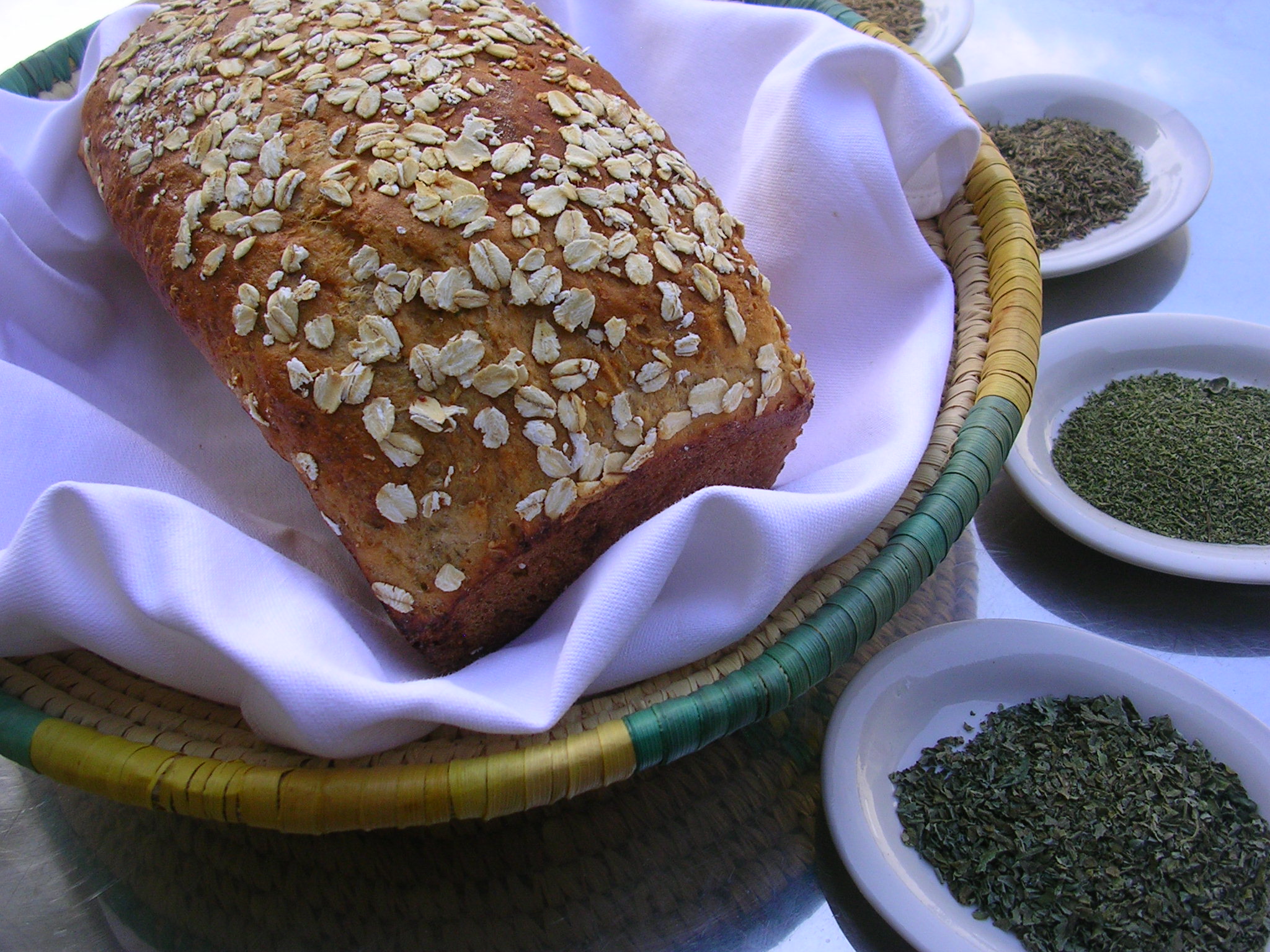
Once my daughter brought a friend home for the weekend, who saw me baking bread. A few days later her friend sent us a lovely thank-you note with a watercolor view from our kitchen window and her grandfather’s recipe for oatmeal herb bread (typed on an antique manual typewriter). Almost every time when I try out a new bread recipe and ask my husband whether he likes it, he says, “It was good,” or “It was great,” only to add, “but I still like Claire’s bread the best.”

Claire’s bread is the reason why I started to grow summer savory, an herb I rarely use in cooking. I grow savory from seed until it’s strong and bushy and about to bloom, then I cut it down all at once and dry it. By late winter, the savory supply is gone, so my husband has to wait until mid-summer for more of his favorite bread. Even my son, until now a member of the Wonder Bread lobby, said it was good.

I made a few changes to the original recipe, including honey instead of molasses, whose flavor I don’t like; whole-wheat flour plus gluten for a lighter texture; more savory and no dried parsley. Like all bread, it should cool completely before cutting. This is not easy to enforce if you have a bread lover lurking in the kitchen, just waiting for you to turn your back.

Whole-Wheat Herb Bread I

2 scant tablespoons active dry yeast

1/3 cup lukewarm water

2 tablespoons soft butter

½ cup dark honey

3 cups whole-wheat flour (preferably King Arthur white whole wheat flour)

3 cups bread flour

2½ teaspoons salt

4½ teaspoons gluten

2 cups hot water

1 cup rolled oats

1 teaspoon finely crumbed dried crumbled basil

½ teaspoon anise seed

2½ teaspoons powdered summer savory

½ teaspoon finely crumbled dried thyme

1 egg

1. Dissolve the yeast in the lukewarm water and let stand 10 minutes until foamy.

2. In the meantime mix the butter with the honey in a small bowl. Mix the flours with the salt and gluten in a large mixing bowl, or the bowl of a stand mixer. Add the hot water and mix briefly.

3. Add the yeast mixture and the butter-honey. With the kneading attachment of the electric hand mixer, or with the stand mixer with kneading hook set on low, knead until a smooth dough forms. If the dough is too dry, add a little warm water; if it’s a little tacky, don’t worry and please don’t add more flour, otherwise the bread will be too dry.

4. Lightly oil a large bowl and place the dough in it. Turn the dough over once so it is evenly coated and cover with a kitchen towel. Let rise in a warm place for 1 hour.

5. Reserve 2-3 tablespoons of the oats and work the rest into the dough together with the dried herbs until well incorporated.

6. On a floured surface divide the dough into two equal pieces. Place them in greased loaf pans and cover with a kitchen towel. Let rise in a warm, non-drafty place for 45 minutes.

7. Preheat the oven to 350 degrees F.

8. Mix the egg with 2 tablespoons cold water and brush onto the tops. Sprinkle with the reserved oats.

9. Place a jelly roll pan the lower rack of the oven. Fill it two-thirds with boiling water from a water kettle.

10. Bake 40 to 50 minutes until browned on top. If the bread makes a hollow sound when you knock on the bottom, it’s ready. Remove from the pan and let cool on a cake rack.

Makes two loaves

Whole-Wheat Herb Bread II (Sourdough Version)

Starter:

¼ cup fed starter

1 cup bread flour

½ cup lukewarm water, more as needed

Dough:

2 tablespoons unsalted butter, softened

2 tablespoons honey

3 cups whole-wheat flour

2 cups bread flour

2½ teaspoons salt

2 cups hot water

1 teaspoon finely crumbed dried crumbled basil or rosemary

½ teaspoon anise or fennel seed, crushed

2½ teaspoons powdered summer savory

½ teaspoon finely crumbled dried thyme

Everything but the Bagel Seasoning, for sprinkling

1. Mix starter ingredients in a container with a tight-fittig lid. Cover and let sit at room temperature for 12 to 14 hours.

2. Mix the butter with the honey in a small bowl. Mix the flours with the salt in a large mixing bowl, or the bowl of a stand mixer. Add the hot water and mix briefly.

3. Add the starter mixture, butter, and honey. With the kneading attachment of the electric hand mixer, or with the stand mixer with kneading hook set on low, knead 3 min on low, then 2 minutes on medium speed.

4. Lightly oil a large container with a tight-fitting lid and place the dough in it. Turn the dough over once so it is evenly coated and cover with a large plate and a damp kitchen towel. Let rise in a warm place for 2 hours, folding and stretching after 1 hour.

5. Divide the dough into two equal pieces. Place them in greased loaf pans press them down gently with wet hands to fill the pan. Cover with a kitchen towel and let rise in a warm, non-drafty place for 1.5 hours, or until the dough has reached the sides of the pan.

6. Preheat the oven to 400 degrees F.

7. Make 3 to 4 diagonal cuts in each loaf in opposite directions to create a diamond pattern. Lightly brush the surface with water and sprinkle with seasoning mix. Place breads in center rack of oven at once.

8. Bake for 40 minutes at 400 degrees F, then remove bread from pans. Place the loaves directly on the oven rack and bake for another 15 minutes to brown all around.

9. Remove from the oven and let cool for several hours on a wire rack before cutting.

Makes two loaves