Trust your recipes

There is so much gardening to do I had no intention to blog this weekend. But after my cookie mishap this morning (which turned out fine), I cannot help but ranting a bit here.

I woke up early and since it was too chilly to go outside, I decided to try out some cookies with the wonderful Meyer lemon scented olive oil I bought a few days ago. I found a Youtube recipe video that sounded perfect. I did not watch the video but followed the written recipe, modifying it a bit in terms of flavorings but making sure to stick with the ratio of dry and liquid ingredients.

The dough was supposed to be rolled out and cut into desired shapes. There was no way that sticky dough was suitable to be rolled out so I put away my cookie cutters and dropped spoonfuls of the dough onto the baking sheet. The result was rather biscuits than cookies but they tasted good. For the next batch, I used a pastry bag and ended up with perfectly round little cookies.

While the cookies were in the oven, I reread the recipe several times, wondering what mistake I had made. I had made none. Only then did I watch the video. The dough looks as sticky as mine, but then a heap of flour is added during the kneading. I cannot imagine those cookies will taste so nicely light as mine if you add so much flour for kneading. And, at best, the dough could be cut into plain circles, but “desired shapes”? I don’t believe it. The original recipe clearly did not work, at least not for me.

Whether you are an experienced cook or a beginner, it is always a frustrating experience when a recipe does not work, and usually you assume that you did something wrong. But the sad fact is that there are lots of flawed recipes out there, some of them with plain errors, others leaving too much up to luck. I don’t want to sound judgmental, I acknowledge that recipe-writing is not an easy thing. The devil is in the details and there is plenty of room for errors. Of course I’ve made them, too.

No more kvetching! After all I ended up with wonderfully light, lemon-scented cookies that I will surely bake again. But I won’t make a video out of it. Promised.

Lemon Olive Oil Cookies

I used ground steamed poppy seeds that I brought back from Germany. In the US you can find ground poppy seeds (and I do not mean the sticky, gooey poppy seed cake filling) in specialty spice stores, or you can grind your own. If you cannot get your hands on ground poppy seeds, just leave them out. They are a nice addition but not essential to the recipe.

1 organic lemon

½ cup Meyer lemon extra-virgin olive oil

½ cup non-fat Greek yogurt

½ cup low-fat plain yogurt

1 large egg

1 teaspoon vanilla extract

½ cup plus 3 tablespoons sugar

2¾ cups flour

1 teaspoon baking soda

¼ teaspoon salt

3 tablespoons ground poppy seeds (optional)

1. Preheat the oven to 375 degrees F. Line a large baking sheet with parchment paper or with a baking mat.

2. Zest the lemon and set aside 1 teaspoon. Refrigerate or freeze the rest of the zest for another use. Squeeze the lemon and set the juice aside.

3. Mix the olive oil, both yogurts, egg and vanilla extract in a bowl with an electric mixer. Add ½ cup sugar.

4. Put the remaining 3 tablespoons sugar in a food process with the lemon zest and process until the sugar is fragrant and slightly yellow. Add this the olive oil mix.

5. In another bowl, mix the flour with the baking soda, salt and poppy seeds, if using. Add to the olive oil mix and beat until fluffy.

6. Fill about one-third of the dough in a pastry bag with a plain round tip and squeeze small rounds, about 1.5 inch, onto the baking sheet, leaving ample space between them.

7. Bake in the middle rack of the preheated oven for 12 minutes, until the cookies are lightly yellow and set. Proceed the same way with the rest of the dough, which will make 2 more cookie sheets.

8. Cool the cookies on wire racks and store in airtight tins.

Makes 100 cookies
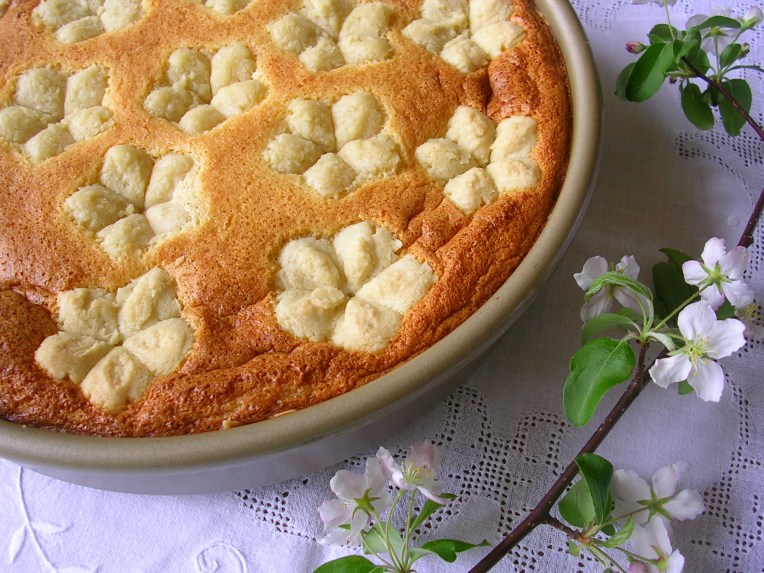
The balance sheet of a pie

Today I made Ricotta Wheat Pie, a traditional Neapolitan recipe. I had earmarked it a long time ago but never got to it because it seemed quite involved. It was.

Not counting the components of each, I used 16 kitchen tools and gadgets: a pot to cook the wheat berries, a cooking spoon, a small food processor, a blender, two bowls, an egg separator, two spatulas, a small kitchen knife, a pastry roller, a plastic container to chill the dough, a cookie press, a scoop, a jelly roll pan, and a cake pan. Plus two disposables: a sheet each of wax paper and aluminum foil. If the citron and orange peel had not been so dried out, I would have been able to avoid using the blender but only its ice crush function could chop them up. And, if I had had more time, I could have cooled the wheat in the pot instead of spreading it on a jelly roll pan and set it over ice packs to speed up the process. Even discounting those two, it’s a lot of dirty dishes for one pie.Counting the time I spent on this, the gas for the stove, the electricity for the oven, the hot water to wash all those dishes, and… it would have been probably more economical and ecological to drive into town and buy a cake. But it would have certainly not been the type of cake I would want to eat! And, most importantly, I would not have had so much fun (despite the cleaning up). I also finally got the cookie press to work that I bought years ago and, it turned out, I had always screwed together the wrong way.

In 2010, the average American according to The New York Times watched 34 hours of TV every week. That’s baking 8.5 pies like this if you allocate a generous 4 hours active time from start to finish. I rarely watch TV and rather bake.

Seeing the pie cooling on the counter and smelling it all over the house gives me great satisfaction. If it tastes as good as expected and my family likes it, even better.

The recipe is adapted it from Anna Teresa Callen’s My love for Naples.Ricotta Wheat Pie (Pastiera Napoletana di Grano)

Crust:

2 cups flour

¼ cup sugar

1 stick chilled butter, or 4 ounces Land O Lakes butter with canola oil (first time I tried this)

1½ ounces chilled vegetable shortening

1 large egg

Filling:

4 cups wheat berries

1 tablespoon butter

1 untreated lemon

1½ cups milk

½ teaspoon cinnamon

1½ tablespoons + 1 cup sugar

1 pound low-fat ricotta

2 tablespoons orange flower water

2 tablespoons diced citron

1 tablespoon candied orange peel

6 eggs

1. For the crust, put the flour and sugar in a food processor and process to a coarse meal. Add diced butter, shortening and egg and process until the dough forms a ball around the blade. Transfer the dough to a container and refrigerate.

2. For the filling put the wheat berries in a small heavy pot with 4 cups water and the butter. Bring to the boil, then turn down the heat and simmer, covered, for about 2½ hours. Check for water and stir once in a while to make sure it does not cook dry.

3. Drain the wheat berries and return them to the pot. Zest half of the lemon in one large strip and add it to the pot with the milk, the cinnamon and 1½ tablespoons sugar. Bring to the boil, then turn down the heat and cook, uncovered, for 45 minutes until the milk has been completely absorbed. Stir often to make sure it does not scorch, and reduce the heat even further as necessary.

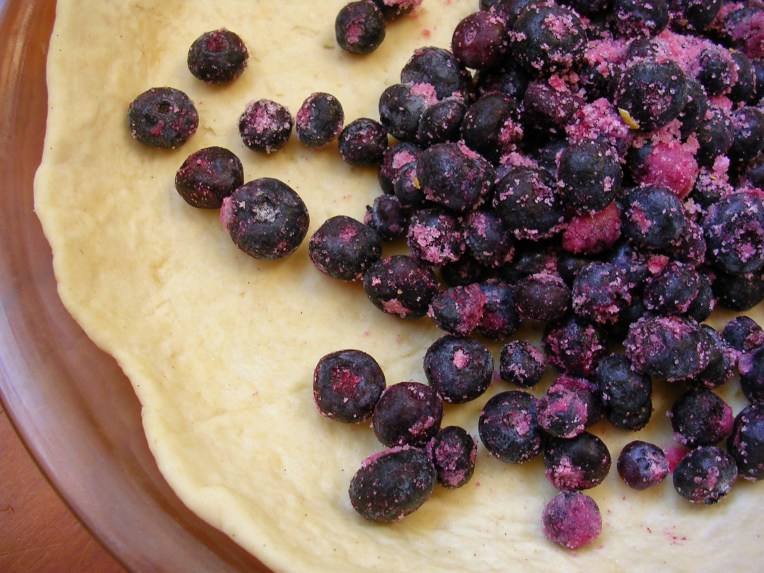
4. Roll out three-quarters of the dough on a sheet of wax paper to fit a greased 10-inch cake pan plus dough to come up almost all the way up the edges. Fit it into the cake pan and even out the edges with a knife. Roll out the rest of the dough and cut narrow strips for a crisscross pattern, or use a cookie cutter / cookie press to cut out shapes to your liking. Place them on a plate lined with the wax paper and put everything in the freezer.5. Remove the lemon peel from the wheat berries and let cool.
6. Preheat the oven to 350 degrees F.

7. Finely zest the rest of the lemon. Put it in the food processor together with the orange flower water, diced citron, orange peel, 1 cup sugar and ricotta and process until the citron and orange peel are finely chopped.

8. Separate the eggs and add the egg yolks to the mix. Beat the egg whites until stiff.

9. Mix the cooled wheat berries with the ricotta mix. Fold in the stiff egg whites. Pour the filling into the prepared crust.

10. Bake in the preheated oven for 20 minutes. After this time, the filling should be set enough to the top crust won’t sink. Carefully remove the cake pan from the oven. Place the cutouts or dough strips on the surface in a decorative pattern and return the cake pan to the oven.

11. Bake for another 55 minutes, or until the filling is set and the top is golden brown. If the top darkens too much, loosely place a greased sheet of aluminum foil on top. Remove the pie from the oven and cool on a cake rack.


The party goes on

Taking red currants out of the freezer for Red Currant Meringue Pie on January 1 is one of the great pleasures of being a gardener. The moment when I poured the frozen pearl-like red currants out of the bag, all the hard work of getting them into that bag was forgotten, although last year was not a good season for currants. I had less than two pounds, which makes today’s pie even more precious. The recipe can be found in my cookbook Spoonfuls of Germany.

While I dread the long, cold winter on our mountaintop in northeast Pennsylvania, I do not wish to live in a place where gardening is possible year round. Each time I wash store-bought lettuce, I think how wonderful it will be to have our own tender greens again in the spring. I would not want to trade the physical and mental 5-month break from gardening, and my looking forward to the new gardening season, for a non-stop crop of lettuce.

Gardening is like a party, where the anticipation and the preparations are part of the fun. Deciding what to grow is like drawing up the guest list. Making a crop rotation plan is like determining the seating order; just like people, not all plants get along with each other. Selecting and ordering seeds is like planning the menu and going shopping. After all is set up and ready, waiting for the wondrous moment when the seedlings emerge is like waiting for the guests to arrive. When they do, all you can do is make sure they feel comfortable and stay as long as you want them to. Enjoying the harvest, fresh from the garden or months later in frozen or canned form, is an ongoing feast!

Butter bypass


It’s not that I don’t like butter, on the contrary. I just don’t want to clog my arteries or those of the people for whom I care and cook by using butter when it is not absolutely necessary.

Butter is quintessential to many basic recipes, such as béchamel sauce, and my view is that if you don’t want to or cannot make them with butter it’s better to stay away and make something else than coming up with a weird concoction that is neither fish nor fowl.

That brings me to my long quest for a low-fat pie crust. I cringe when I see recipes that call for 1 stick, or even 1½ sticks butter – for nothing but the crust! Sure, pie crust needs to have the right consistency, flaky at best, but oftentimes it is a mere receptacle for the filling. So why would I dump 56 grams of saturated fat into that shell?

I have been trying out all types of alternatives for pie crust with butter, from using organic shortening, which has a certain aftertaste and is still high in fat, to yeasted pie crust, which only works for savory pies and should be eaten very fresh.

In German cuisine there is a crust made with Quark and vegetable oil (called Quark-Öl-Teig). It is low fat, very pliable and tastes still good after a day or two. Quark is unfortunately rarely available in the United States but I have found that Greek yogurt can be a very suitable substitute.

When I made this pie crust today, I marveled again about how easy it is to roll out (rolling out pie crust is definitely not one of my strengths). Another advantage: this crust can be rolled out right away, no chilling required like for piecrust with butter or shortening.

Unless I flip-flop about butter one day, from now on I will make pie crust this way.

Low-Fat Pie Crust with Greek Yogurt and Oil

For a 9-inch to 10-inch piecrust

1/3 cup (3 ounces / 80 g) 0% Greek yogurt), more as needed

2 tablespoons 2% milk

2 tablespoons oil (canola, sunflower, or any other oil with neutral flavor)

2 tablespoons sugar (omit in savory pies)

1 teaspoon vanilla extract (omit in savory pies)

Pinch of salt

1 cup + 3 tablespoons (6 ounces / 165 g) flour (all-purpose, whole wheat flour, or whole grain spelt flour, or a 50:50 mix of whole grain and all-purpose flour)

1 teaspoon baking powder

1. Mix all ingredients in a bowl with a spoon until they form a ball. If the mixture is dry and crumbly, add more Greek yogurt, 1 tablespoon at a time.

2. Transfer to the countertop and knead with your hands until smooth.

3. Roll out on a lightly floured countertop, or between two sheets of wax paper. Grease pie pan and line with the piecrust. Fill and bake according to recipe.