Victory (for now)

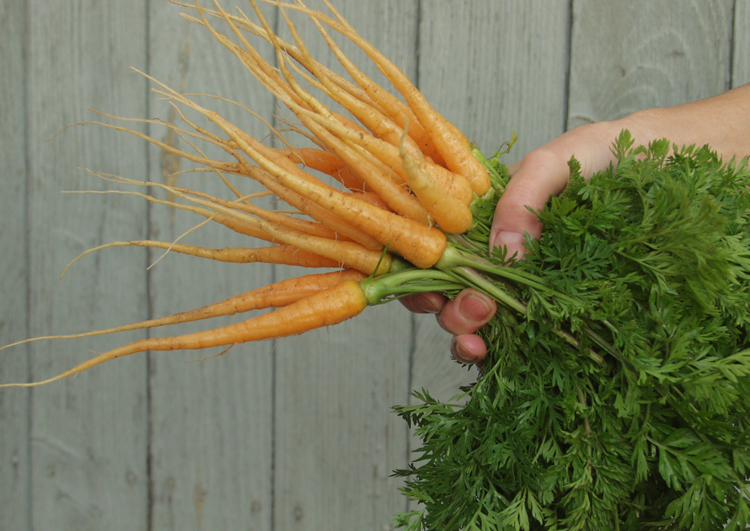
Every gardener has his/her nemesis. Mine is rabbits. But today I can declare at least a partial victory. I harvested a carrot!

When I started the garden in 2004, there was no initial problem. I guess the rabbits just hadn’t discovered the new organic supermarket in the neighborhood yet. But then, year after year, they became more voracious. On top of it, I learned that rabbits go through seasonal taste changes – a vegetable that they leave alone one year is the first to be wiped out the next year. Slipping through the fence, the rabbits devoured basil, beet greens, carrot leaves (nibbled to the ground), blooming French filet beans, lettuce, radish leaves (it is a mystery to me how they can find those hairy, tough leaves tasty), spinach, pea seedlings, and Swiss chard. Tomatoes and eggplants, usually not rabbit fare, weren’t safe from them neither. They just bit off the tiny plants and spit them out.

I spent a ridiculous amount of time trying to fight the rabbits with one ineffective remedy after another: hot pepper flakes, anti-rabbit spray with a nauseating smell, granulated fox urine, pieces of garden hose that were supposed to look like snakes, mint sprigs, cotton balls soaked in vinegar and tossed all over the garden, ammonia-soaked rugs hung over the fence, dangling CDs, flashing bike lights at night, dog hair, plastic cups filled with moth balls that had to carefully drained far from the garden after every rain…

After nothing worked, it was either putting up another fence, or giving up the garden. Last spring we reached deep into our pockets and put up a second fence of sturdy hard-wire cloth. Over several weeks my beloved undertook the backbreaking task of digging a trench around the entire garden and packing it with 2B modified gravel. But it still wasn’t enough to keep the rabbits out – they simply jumped over the new fence through the old fence and wrecked havoc. So we reached even deeper into our pockets and doubled the height of the fence. Finally it worked! We named it “Berlin Wall No. 2”. Except for the occasional toad I have spotted no living being without wings in the garden ever since.

Lately I noticed that something is devouring the new stems of the Charantais French breakfast melon, which is growing on trellises outside the fenced-in area.  I console myself with the thought that in a few weeks, I would have to prune out the abundant growth anyway so the rabbits are doing the job for me. What the rabbits don’t know: next year, I will plant everything behind the Iron Curtain.
Zucchini glut


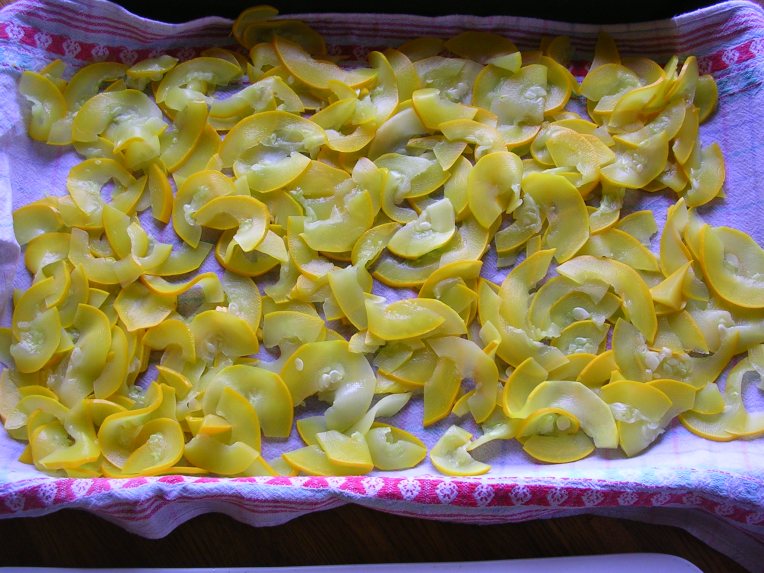
Blanched zucchini for quiche

One of my creations to use up the bright yellow, buttery zucchini from the garden is zucchini quiche with goat feta. In previous years I baked and froze several quiches with zucchini straight from the garden. But this year I want to make it easier for myself (after all, it’s summer, and who wants to spend an entire Saturday afternoon toiling in a hot kitchen) so I decided to blanch the zucchini and freeze them in batches big enough for one quiche.

Zucchini Quiche with Goat Feta

Crust:

1 cup all-purpose flour

¼ teaspoon salt

5 tablespoons cold butter

2 to 3 tablespoons ice water, as needed

Filling:

1 large (or two small) yellow zucchini

2 tablespoons olive oil

1 tablespoon herbes de provence (mix of dried rosemary, basil, marjoram, and thyme)

3 eggs

8 ounces goat feta, crumbled

Freshly ground black pepper

Salt

1. Mix the flour and salt in the bowl of a food processor. Cut in the butter and process until mixture resembles a coarse meal.

2. Add water, a tablespoon at a time, until you bring the dough together in a ball. Wrap the dough in plastic foil and refrigerate for 15 minutes, or until slightly hardened.

3. If you are not sure the zucchini haven’t been treated, peel them. Cut in half lengthwise and remove the seeds using a tomato shark or a grapefruit spoon. Slice very thinly.

4. Heat the olive oil in a large skillet and add the zucchini and the herbes de provence. Toss well and cook over medium heat until the zucchini are tender and most of the liquid has evaporated. Stir frequently especially towards the end to prevent them from sticking to the bottom of the skillet.

5. Preheat the oven to 400 degrees F.

6. Roll out the dough to a circle to fit a 9-inch pie dish (not a deep dish), preferable one with a removable bottom, and trim the edges. Bake for 10 minutes.

7. Beat the eggs and add the feta and the cooled zucchini and mix thoroughly. Season with pepper. Go easy on the salt, as the feta usually adds enough saltiness to the dish.

8. Reduce the oven heat to 375 degrees F. Bake the quiche until set and lightly browned on top, 35 to 40 minutes. Serve warm.

9. The quiche can be frozen and reheated in the oven at 300 degrees, or in the microwave.

Ice-cold resolution

Each time I make my berry frozen yogurt, I promise myself to use the ice-cream maker more often instead of lazily grabbing a pint of ice cream or sorbet in the store, which tastes overly sweet after eating this.

The most important ingredient is a good berry concentrate (blueberries, raspberries, blackberries, red and/or black currants if you have them). I cook the fruit for a few minutes until they pop and release all their juices, then strain them through a fine sieve or cheesecloth.

It is important that all the ingredients are very well chilled before mixing them. Because homemade ice cream and frozen yogurt does not contain any stabilizer, it melts very quickly.

Berry Frozen Yogurt

1½ cups chilled unsweetened berry concentrate

½ cup heavy cream

2 cups sour cream

1 cup sugar

1. In a bowl mix all ingredients well with a wire whisk until sugar dissolves.

2. Process the frozen yogurt in an ice-cream maker according to manufacturer’s instructions. I have an ice-cream maker whose bowl needs to be frozen so when it is warm in the kitchen, I carry the ice-cream maker down to the cooler basement. That prevents the bowl from warming up and improves the quality.

3. Fill frozen yogurt in plastic containers with tight lids and place them in the freezer until solidly frozen.

Makes 1 generous quart

Currants vs. currants

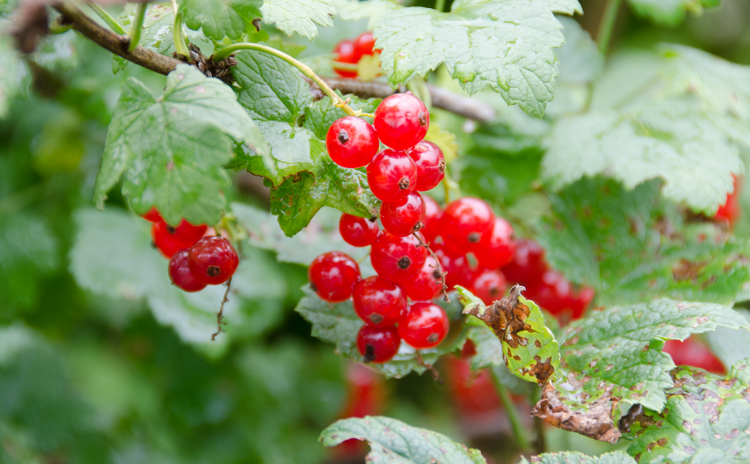
Red currants

After my currant post my sister-in-law asked me why dried currants (the tiny black stuff that’s added to cakes and other pastries) aren’t tart, and whether sugar was added to them. Interesting, I did hear that question before so I need to clarify.

Dried currants are actually from a small seedless grape, the Corinth grape (in German they are called Korinthen so no confusion there). Currants as in “black currants” or “red currants” are the yummy tart berries on the photo above.