Similar but not the same

The diversity of Indian cuisines and the variety of spices, legumes, and grains is a bit overwhelming and I cannot claim that I know much about it. That does not prevent me from tinkering with Indian recipes every now and then because I love Indian food, and there is no place to eat anything remotely authentic around here.

The other day I pulled out a jar of yellow split peas and a jar of Toor dal from our pantry, wondering whether I had accidentally stored the same thing under different names.  But when I looked closer and did a little research, I found that the two are indeed different.

Yellow split peas are peas, as their name says. They usually do not need to be soaked and cook quicker than Toor dal, which are yellow lentils. Sometimes Toor dal is referred to as pigeon peas, which is confusing. The Cook’s Thesaurus tells me that the Indian name for yellow peas is Matar dal. Toor dal come plain or oiled and need soaking because they have a hard shell.
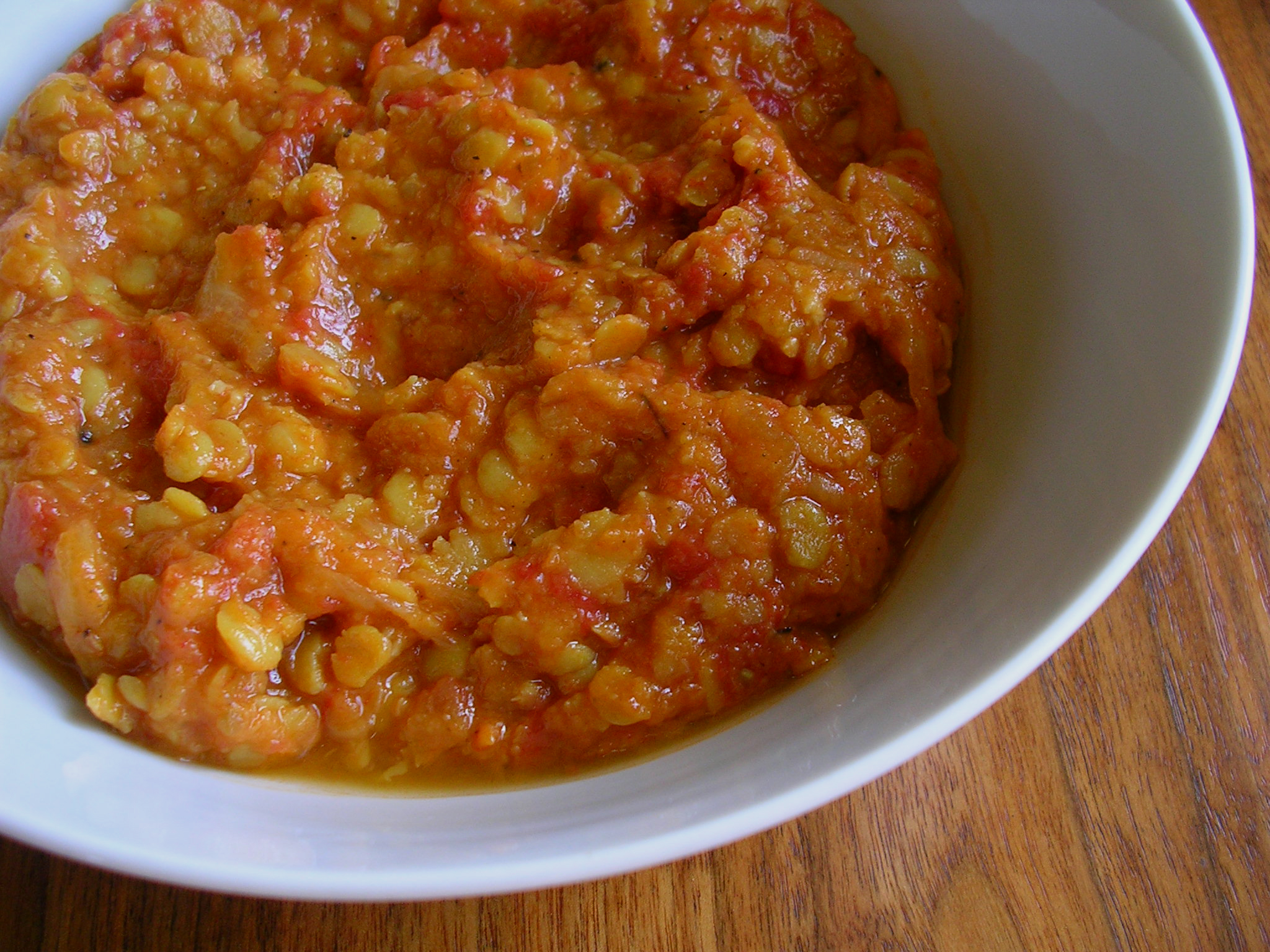
After identifying what I had, it was too late to make a dish with Toor dal that night, so I postponed it until the next day. I soaked the lentils for 3 hours and made up my own version of Indian Khichri using the spices I had on hand, and peeled frozen tomatoes from the garden (of course canned tomatoes will work as well). If I had had some, I would have topped it with chopped fresh cilantro. Next time…

Khichri with Toor Dal (Yellow Split Lentils)

1 cup Toor dal

¼ teaspoon turmeric

¼ cup vegetable oil

5 whole cloves

1 small cinnamon stick

Seeds from 5 cardamom pods

1 teaspoon ground coriander

2 onions, halved and thinly sliced

2 garlic cloves, finely chopped

1 thumbnail-size piece of fresh ginger, finely grated

1 small piece of dried chili pepper

3-4 curry leaves

6-8 peeled tomatoes, chopped

Salt

Freshly ground black pepper

1. Rinse the lentils under cold water to discard any impurities. Put in a bowl and cover with cold water. Soak for 3 hours.

2. Put the lentils in a small pot with the soaking liquid and add the turmeric. Bring to a boil. Reduce the heat and simmer for 30 minutes, or until the lentils are soft. Set aside.

3. Heat the vegetable oil in a heavy medium-size pot.  Add the spices and fry them for 1-2 minutes, stirring. You should smell their scents but take care not to burn them.

4. Add the onion and fry over medium heat until golden, about 10 minutes, stirring often.

5. Add the garlic and ginger and cook for 1 minute, stirring.

6. Add the curry leaves and the tomatoes. Mix well and cook covered over low heat for 15 minutes. Add a little bit of water if the tomatoes don’t have a lot of juice.

7. Add the lentils with their cooking liquid. Add salt and cook covered for another 10 to 15 minutes, stirring occasionally and checking for water. Season with salt and pepper.

8. Remove the cinnamon stick, curry leaves, and cloves. Serve with basmati rice.

Makes 6 servings

Scones in disguise

A few years ago, I had the most delicious cheese scones with ham and scallions at the café of the Culinary Institute of America in upstate New York. I tried to imitate them a couple of times using the basic recipe for scones from The Joy of Cooking but I was never quite satisfied with the results.
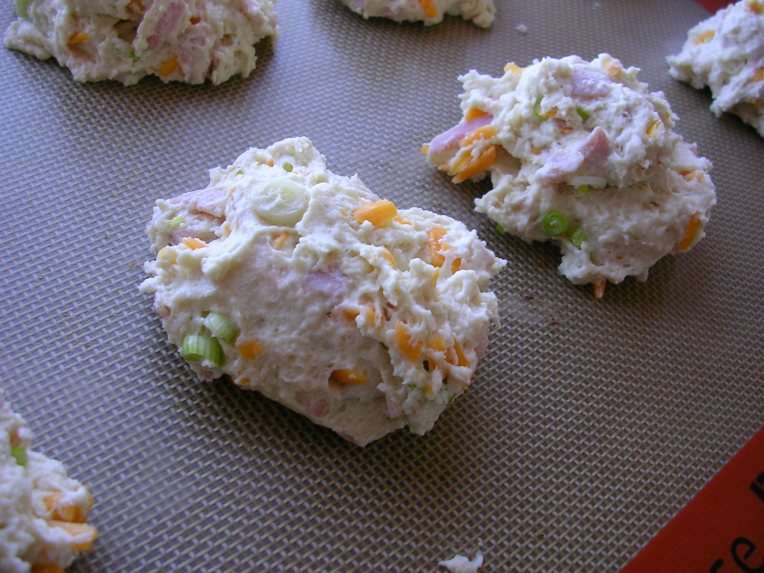
Yesterday I made one of my standard weekend breakfast treats, the Basic Buttermilk Biscuits from Deborah Madison’s Vegetarian Cooking for Everyone, when my eyes fell on a few leftover slices of boiled ham and a bunch of scallions that I had bought last week but did not use. I decided to make a second batch of scones. Without any butter or eggs, they turned out far better than any of the previous trials.

Next time I might add a bit more cheddar, ham, and scallions but I am happy with the scones as they are. Or, shall I rather call them biscuits?

Cheese Scones with Ham and Scallions
2 cups (10 ounces) flour

2 teaspoons baking powder

½ teaspoon baking soda

Pinch of salt

1 bunch scallions

3 slices boiled ham

1 ounce grated sharp cheddar

1/3 cup canola oil

1 cup buttermilk

1. Preheat the oven to 450 degrees F. Line a baking sheet with a silicone mat or with parchment paper.

2. Mix the flour with the baking powder, baking soda and salt in a bowl.

3. Trim the scallions. Remove the green part except for about 1 inch. Chop the scallions finely.

4. Chop the ham finely. Add it to the flour mixture together with the scallions and the grated cheese.

5. Whisk the canola oil and the buttermilk in a separate bowl. Add to the flour mixture and blend with a rubber spatula until just combined.

6. Place 9 equally sized mounds on the prepared baking sheet. They don’t have to look neat – in fact, the less you handle dough, the lighter the scones will be.

7. Bake in the preheated oven for 15 minutes, or until golden brown. Place on wire rack and cool completely.

Makes 9 scones

Turning sweet into savory

Potato Pockets (Kartoffelmaultaschen) 1

On a recent trip to my native Germany where I ate my way up and down the list of foods that I miss living in America, my mother and I made potato pockets with apples (Kartoffelmaultaschen). It is a very filling dessert. The first night we had it warm straight from the oven. The second night we ate it cold with a hot white wine sabayon, and the third night we warmed up the final leftovers and ate them with the chilled sauce.

You would think that I would not want to eat those pockets for a while, but I found the potato dough so wonderfully light and tasty that I kept thinking how I could use it for a savory dish. In the back of my mind were also the loads of frozen spinach that need to go before the new harvest comes in.

Potato pockets (Kartoffelmaultaschen) 2

With the ground covered in snow in the last couple of days, it looks like I am not going to seed the new spinach very soon. But I made the potato pockets with spinach anyway. Here is the recipe, which can be easily cut in half to feed four people.

Potato pockets (Kartoffelmaultaschen) 3

Potato Pockets with Spinach Ricotta Filling (Kartoffelmaultaschen)

Dough:

2¼ pounds (1 kg) starchy yellow potatoes

Salt

1 egg

2¼ cups (11 ounces/310 g) flour

Filling:

2 pounds (900 g) cleaned and trimmed spinach

9 ounces (250 g) ricotta

2½ tablespoons (35 g) melted butter

1 egg

Salt

Pepper

Grated nutmeg

Topping:

4 tablespoons (55 g) melted butter

2/3 cup (160 ml) milk (2% or whole)

1. For the dough, brush the potatoes clean and cook them whole in their skins in salted water until they are easily pierced with a knife, about 25 to 40 minutes depending on size. Drain and cool.

2. Remove the skins and pass the potatoes through a potato ricer into a large bowl. Add the beaten egg, salt and flour. Knead to a smooth dough. Set aside and cover so the dough won’t dry out.

3. For the filling, place the spinach in a large pot or skillet and cook uncovered until it wilts, turning often. Remove to a colander to drain. Chop finely. Squeeze out any excess liquid. The spinach does not have to be totally dry but it should not release a lot of liquid neither.

4. Beat the ricotta with a whisk until smooth. Stir in the egg and the melted butter. Add the cooled spinach and mix well. Season generously with salt, pepper and nutmeg.

6. Preheat the oven to 350 degrees F (180 degrees C). Grease a lasagna dish, or a large rectangular gratin dish.

7. Divide the dough and the filling into 8 equal portions.

8. Cut a piece of wax paper or parchment paper and roll out a piece of dough to a rectangle, with a length that fits the width of the dish you are using, and about 4 to 5 inches (7.5 to 10 cm) wide.

Potato pockets (Kartoffelmaultaschen) 4

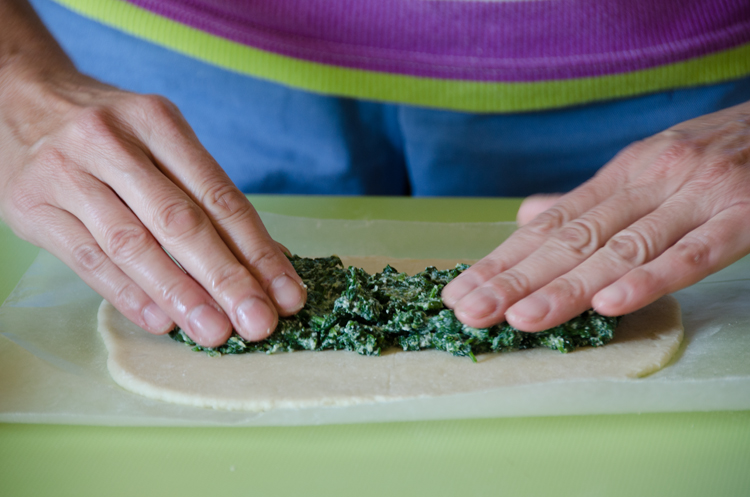
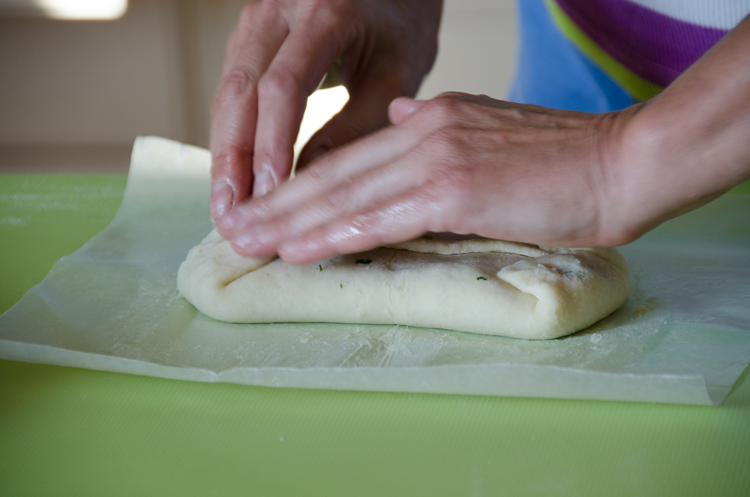
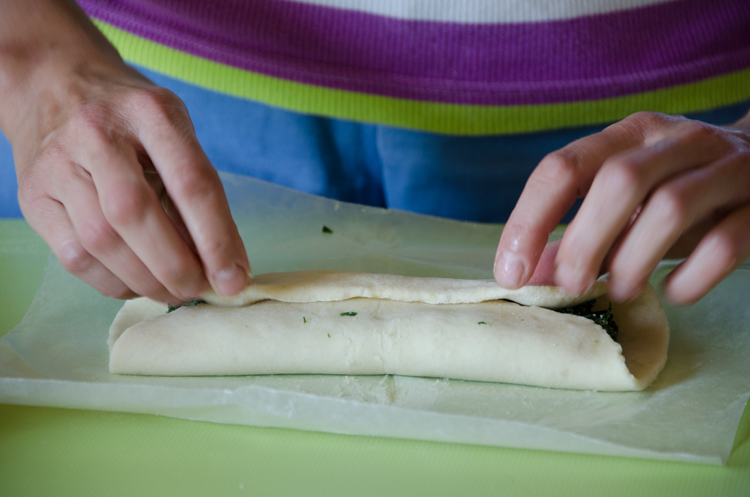
9. Place the filling in a long mount in the middle. Fold the sides over (if the dough sticks to the wax paper, loosen it carefully with a dough scraper) and pinch to seal.

Potato pockets (Kartoffelmaultaschen) 5

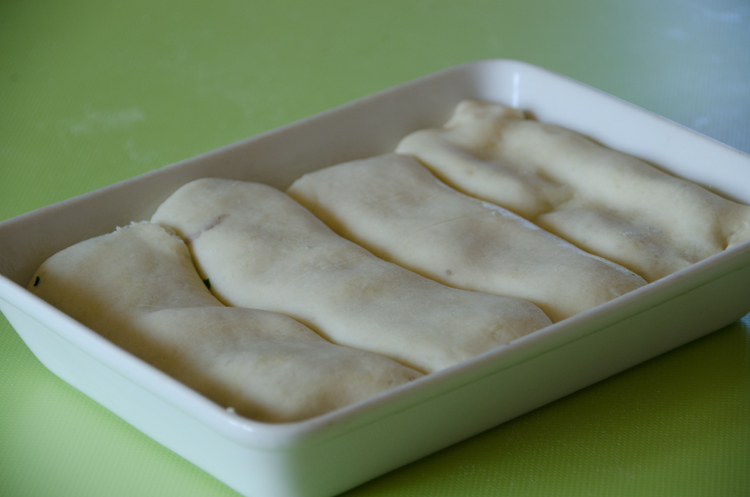
10. Place the pocket seam side down into the dish. Proceed the same way with the eight other pockets, fitting them snugly into the dish.

Potato pockets (Kartoffelmaultaschen) 6

11. For the topping brush the pockets with the melted butter and place the dish into the oven. Bake for 10 minutes, then pour the milk over them.

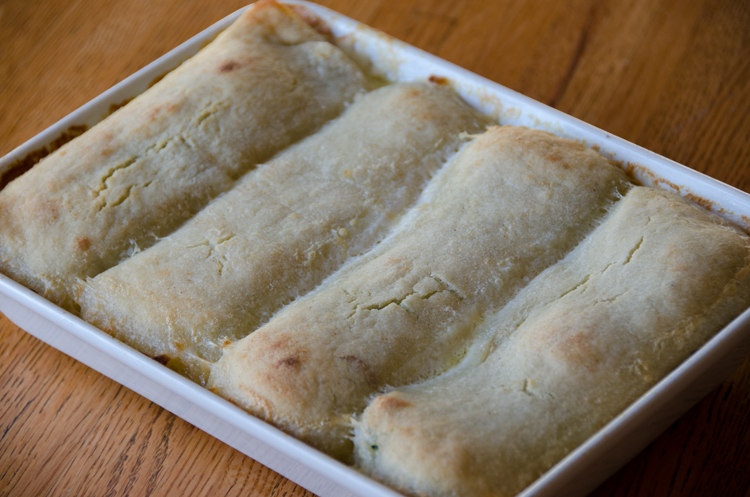
12. Bake for another 40 minutes, or until the pockets are golden on top. Let stand for 10 minutes before serving. Serve hot.

Makes 8 servings

Photos by Ted Rosen

Spring cleanup’s sweet side effects

This weekend, I did a big spring cleaning of the kitchen. There were two surprises. I was not aware how much I have accumulated since I moved to the Pennsylvania mountaintop ten years ago (if I had not been into cooking already, I would have certainly started here, as the local restaurant scene is dire, especially if you come straight from New York City). Not that I don’t use all those tools and equipment. Everything is put to use some time, even if only once a year, like the cherry pitter. Yet I promised myself that I will try to stick mainly to replacements.

The other surprise was a jar of canned pears from 2009, the last year we were able to enjoy the pears from our own two pear trees. Usually the other stakeholders to the pears, most likely raccoons or groundhogs, eat the pears before we can. One year when I went out with two large baskets for picking, all the pears were gone. Not a single pear on the tree. It had been loaded with fruit just a couple of days before.

Since I don’t know if and when we will have our own pears again, I wanted to use this last jar for something special. I made my favorite pear cake that my husband says must be eaten with vanilla ice-cream (he had two helpings sitting next to me on the sofa as as I write this, saying that the second was only a test to see if it still tasted as good as the first).

Spiced Chocolate Pear Cake

2 cups all-purpose flour

½ teaspoon baking powder

½ teaspoon baking soda

½ teaspoon salt

1 teaspoon ground cinnamon

½ teaspoon ground allspice

½ teaspoon ground cloves

¼ teaspoon cardamom

¼ teaspoon ground nutmeg

½ cup (1 stick) unsalted butter, room temperature

1 packed cup (10 ounces) light brown sugar

3 large eggs

1 teaspoon vanilla extract

1 cup pear nectar (from the canned pears)

¼ cup finely minced crystallized ginger

2 ounces finely grated bittersweet chocolate

2 cups canned pear chunks, drained

1. Preheat oven to 350 degrees F.

2. Butter and flour a 9-inch-diameter springform pan.

3. Mix flour with baking powder, baking soda, salt and all the spices.

4. Beat butter and sugar with an electric mixer until creamy. Add eggs, vanilla extract and pear nectar.

5. Gradually work in the flour mix until dough is smooth. Add ginger and chocolate. Fold in the pear chunks.

6. Pour mix into the prepared pan and even out with a spatula. Bake 45 to 60 minutes, until toothpick comes out somewhat clean (because of the pears, there will always be some moisture clinging to the tester, but it should not be liquid).

7. Cool cake 10 minutes. Release cake from pan sides with a plastic knife. Cool completely on rack.