Gooseberries: old ones out, new ones (almost) in

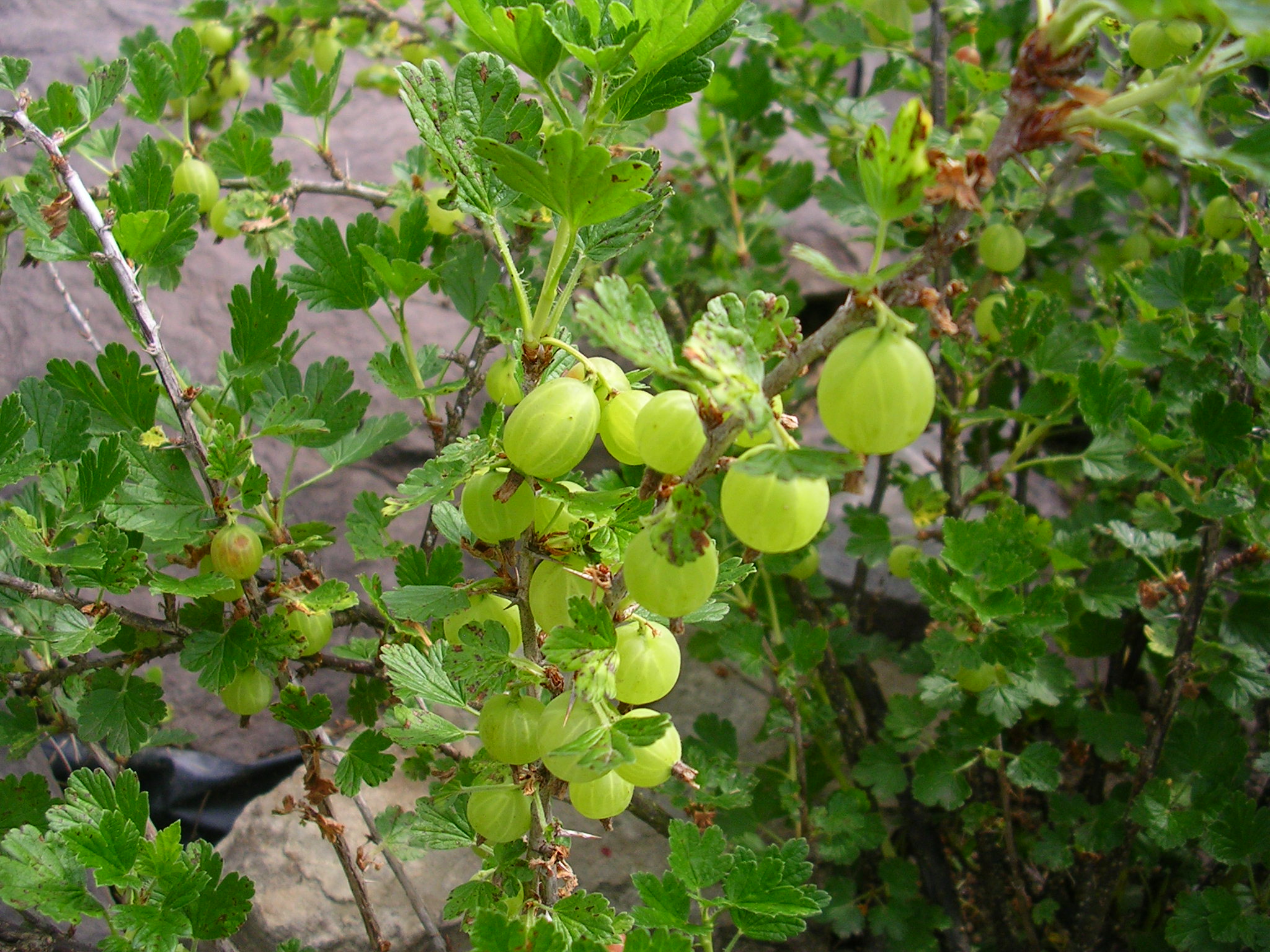
I used to treat gooseberries like other people treat a fine tablecloth or china – they don’t get taken out unless for special occasions. So all spring, I held onto the last bag of frozen gooseberries from last year: large light green, plump Invictas, perfect for cake or pie. But with the branches of my three gooseberries bushes loaded with fruit, which will ripen in late June/early July, all my restraint disappeared and I felt emboldened to roll it out. However, not for a cake but for chilled gooseberry soup.
Fruit soups are one of my favorite summer dishes. To give them more substance, I like them best with a little addition, like my Elderberry Soup with Farina Dumplings. For the gooseberry soup I wanted something lighter. I took my cues from floating islands and added bit of crunch by sprinkling them with toasted caramelized almonds. The soup should be eaten thoroughly chilled.

Many gooseberry recipes call for under-ripe gooseberries but for this soup they should be as sweet as possible, otherwise you will have to add much more sugar. As the gooseberries are put through a food mill, you can save yourself the effort to remove the tiny blossom ends and, if still attached, the stems, both of which are a bother in most gooseberry dishes. Please resist the temptation to puree the soup in the blender, as the crushed seeds will give the soup a coarse consistency and a slightly bitter taste.

Gooseberry Soup with Floating Islands and Almond Crunch

Soup:

1 pound 10 ounces ripe gooseberries

2 cups water

½ cup to ¾ cup sugar, to taste

Peel of ½ organic lemon

1 tablespoon lemon juice

1 thumbnail-size piece of ginger, peeled and chopped

3 tablespoons (3/4 ounce) cornstarch

Floating islands:

2 egg whites

Pinch of salt

Pinch of cream of tartar

A few drops of almond extract

2 ounces superfine sugar

Almond crunch:

1/3 cup unpeeled whole almonds

1 tablespoon sugar

1. For the soup, please all the ingredients except the cornstarch in a large heavy saucepan and bring to a boil. Cook until the gooseberries soften and pop, stirring occasionally. You may also crush them with the cooking spoon to fasten the process.

2. Pass the soup through the food mill (medium or fine disk). Pour the soup back into the pan.

3. Dissolve the cornstarch in a few tablespoons of cold water. Whisk it into the soup and bring to a boil, whisking constantly. Cook until the soup turns clear again and thickens. Remove from the heat and cool, then chill.

4. For the floating islands, beat the egg whites with the salt and the cream of tartar until they are very stiff, gradually adding the superfine sugar.

5.Bring water to a boil in a very large deep pan or a wide pot. The floating islands should not touch each other when they poach so you might have to do this in two batches.

6. Reduce the water to a simmer. Using two dessertspoons, place small mounds of egg whites on the water. Poach for 3 minutes, then turn them over and poach for another 3 minutes on the other side. Remove with a slotted spoon and place on a large plate or tray lined with wax paper. Refrigerate.

7. For the almond crunch, lightly toast the almonds in a pan. Add the sugar and caramelize, making sure not to burn it. Remove from the pan and let tool. Chop the almonds in the food processor using the pulse function.

8. To serve, whisk the chilled soup well. Place the chilled floating islands on top and sprinkle with almond crunch.

Makes 4 to 6 servings

Scape sampler

While I have grown garlic for a number of years I did not realize until a couple of years ago that you can actually use the scapes, the undeveloped flower buds that should be cut off as soon as they appear of in order to strengthen the garlic bulbs. Then, last year, I unintentionally grew flowerless garlic.

So this year was the first time I could put my hands on scapes. I wanted to get the full scape flavor so I used them raw, in scape pesto and scape butter. Since this was a premiere, I made only small batches of each but the amounts can easily be doubled or tripled if you are lucky enough to have lots of scapes at your disposal – garlic scapes seem to be a hot commodity at farmer’s markets.

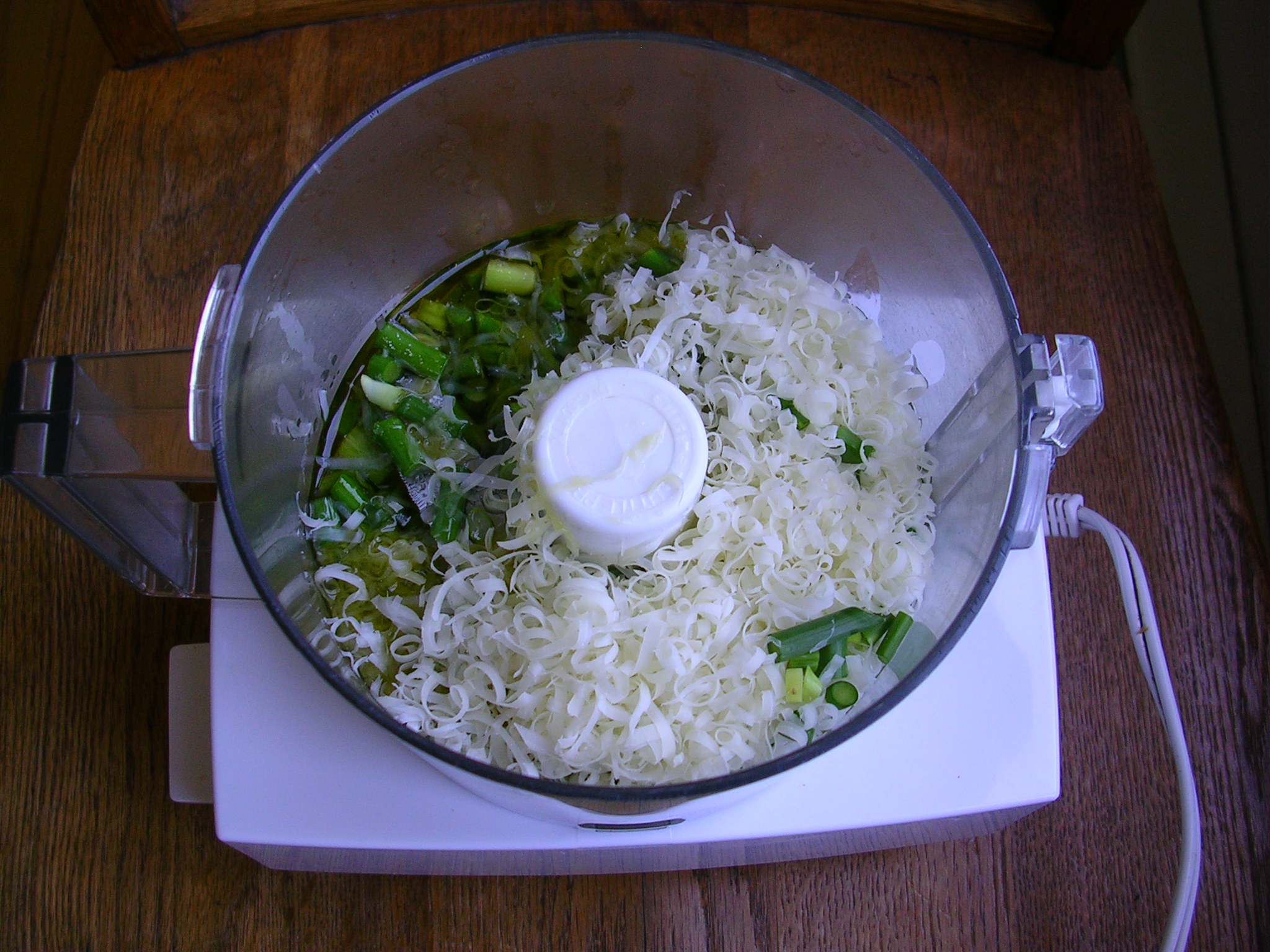
I removed the thin pointy tips of the scapes (these are the dark green blades that look like chives in the top photo), as they tend to be fibrous. The lemon juice adds a little acid to the pesto is so it keeps its color.

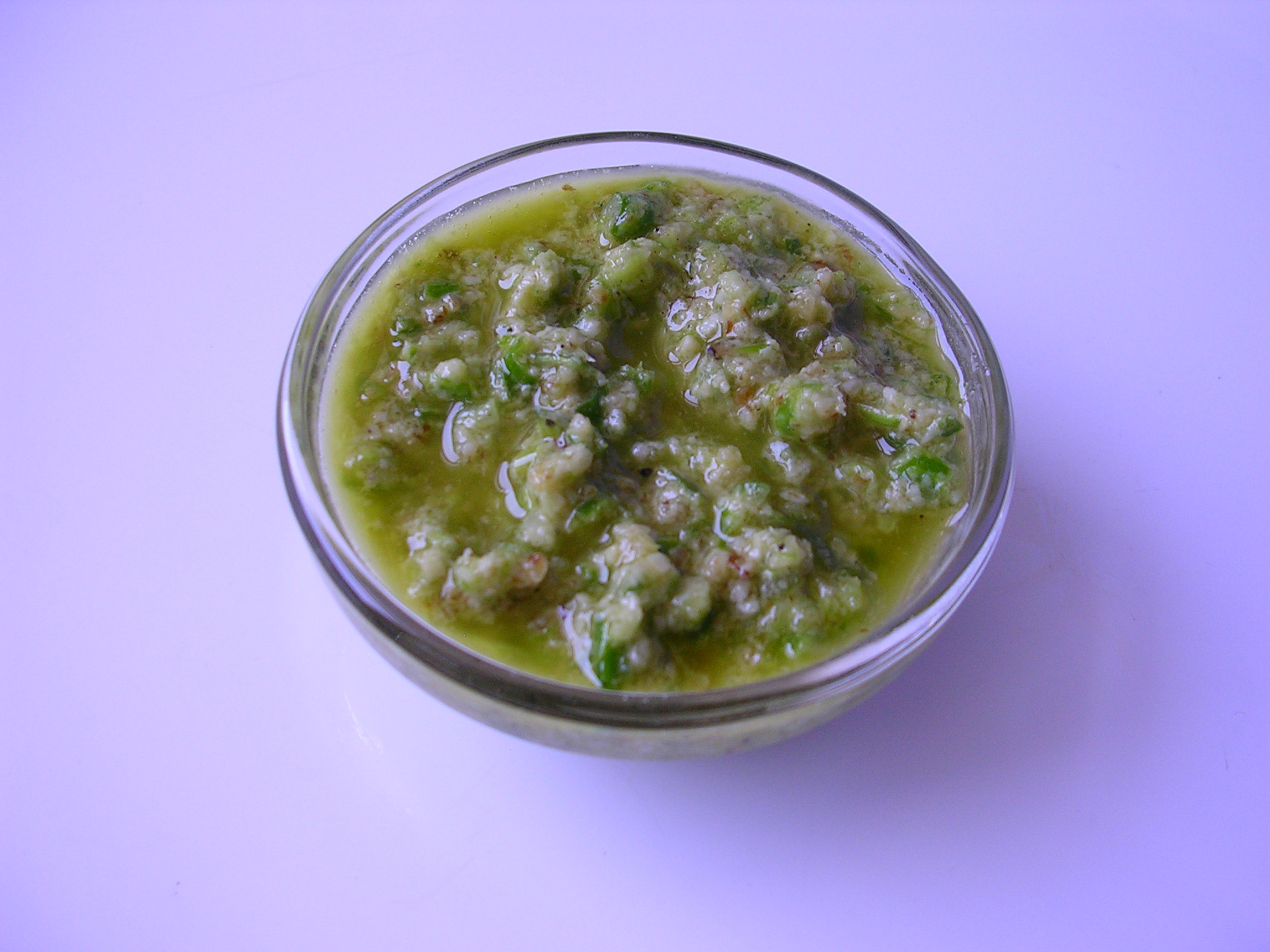
Garlic Scape Pesto

¼ cup coarsely chopped walnuts

¾ cup scapes

¼ cup freshly grated Parmesan

½ cup extra virgin olive oil

Juice of ½ lemon

½ teaspoon salt

Freshly ground black pepper

1. Lightly toast the walnuts in a non-greased pan. Set aside to cool.

2. Cut the scapes into ½-inch pieces. Put the scapes, cooled walnuts, Parmesan, olive oil, and lemon juice in the food processor. Using the pulse function, chop finely, scraping down the sides with a spatula every so often.

3. Season with salt and pepper and pulse again. The pesto should still be somewhat chunky. Fill in a jar and refrigerate.

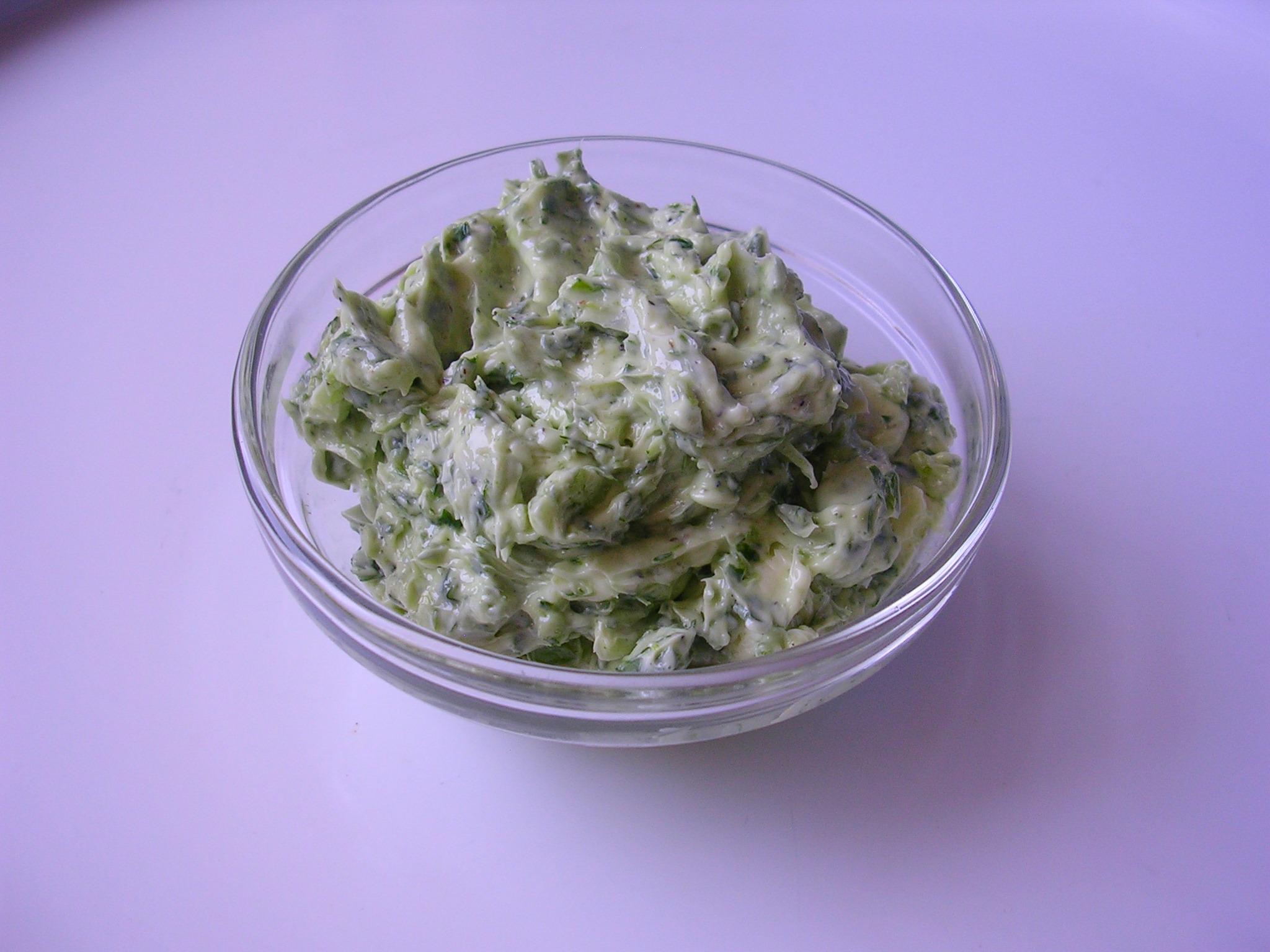
Garlic Scape Butter

6 tablespoons soft butter

2 tablespoons chopped scapes

¼ cup packed Italian parsley

Salt

Pepper

Put all ingredients in the food processor and process to a creamy consistency. Fill in an airtight container and refrigerate.

Long shortcut


I had wanted to make the Deep-Dish Rhubarb Pie from Sarah Leah Chase’s Open-House Cookbook for a long time. Yesterday I finally did it – it took several years for my two rhubarb plants to be strong enough to harvest at once the amount of rhubarb the recipe requires.

Chase’s cookbook is from 1987 and yet another proof that good cookbooks do not need stylish food photography, in fact, there is not a single photo except for the author’s, with an unmistakably 1980’s sweater and hairdo. The book came to me through my husband’s trousseau (he doesn’t cook).  It was one of the cookbooks his mother must have given to all of her children because I have spotted it on the cookbook shelves of my husband’s siblings.

This rhubarb pie is an adaptation of the recipe.

For the lattice crust, I decided to take a shortcut. Or so I thought, because I am not really good at making lattice crust, and I wanted to avoid lengthy fiddling with strips of dough while there is so much weeding, planting and pruning to do right now. Instead I cut out small cookies and placed them on top. This might have taken just as long as producing a lattice! At least I could be sure of a decent result.

Rhubarb can make a runny pie so depending on the freshness and thus moisture content of your rhubarb, you need to increase the amount of cornstarch in the filling. My pie was a bit on the runny side but I thought the filling is yummy as is, so I wouldn’t want to cut back on the amount of cassis, and rather adjust the amount of thickener next time.

Rhubarb Pie with Cassis

Filling:

2¼ pounds diced rhubarb (about 8 cups)

¾ cup Crème de cassis (black currant liqueur)

Grated zest of 2 organic oranges

A little less than 1½ cups (10 ounces) sugar

¼ cup (1 ounce) cornstarch, more as needed

Crust:

2½ cups flour

6 tablespoons cold butter

1/3 cup (2¼ ounces) shortening

¼ cup sugar

1 teaspoon powdered ginger

Pinch of salt

About 4 tablespoons ice water, as needed

1. The night before mix the rhubarb with the cassis and the orange zest in a non-corrosive container. Cover and refrigerate.

2. Cut the butter in chunks and put it in the food processor with the shortening, sugar, ginger and salt. Process until the mixture is crumbly and pebbly, then gradually add tablespoons of ice water and pulse until the dough forms a ball. Place the ball in an airtight container and refrigerate for at least 4 hours.

3. Drain rhubarb and pour the liquid in a saucepan. Set the rhubarb aside. Whisk the sugar and the cornstarch into the liquid and slowing bring to a bowl, whisking constantly. Cook until it turns clear and thickens. Add more cornstarch, a tablespoon at a time, until you get a very thick consistency. Cook to turn clear after each addition, and only then add more cornstarch.

4. Preheat the oven to 350 degrees F.

5. Roll out half of the dough to a 12-inch circle to fit a 10-inch cake pan. Lightly spray the pan with baking spray and fit the dough into the pan, trimming the edges.

6. Mix the rhubarb with the thickened liquid and pour it into the pan.

7. Roll out the remaining dough and cut out small cookies of your fancy. Place them closely together on top the filling.

8. Bake the pie in the preheated oven for 55 minutes to 1 hour. Let cool completely before cutting.

Makes 12 servings

Cracker trial

Baking something that is so readily available is not obvious. But lately I haven’t been able to find our favorite crackers, the Kashi stoneground 7-grain crackers, in stores. Also, the rosemary plant that moved from its winter home in the guestroom to the patio is so full and bushy that not using rosemary often makes me feel guilty each time I walk by and inhale the wonderful scent. And, finally, I had buckwheat flour that needed to be used up, as it does not have a very long shelf life. Three good reasons to try my hand on crackers.

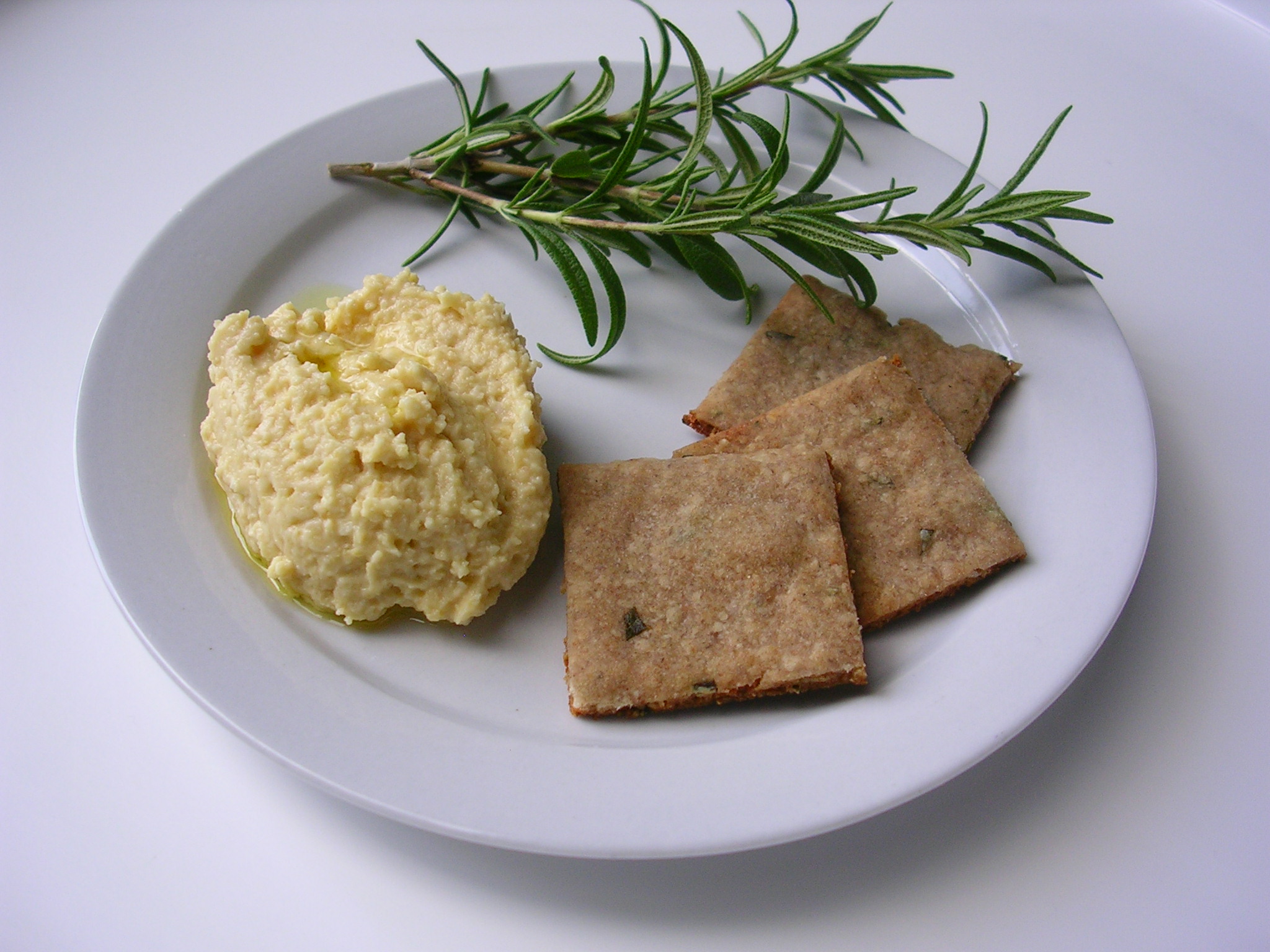
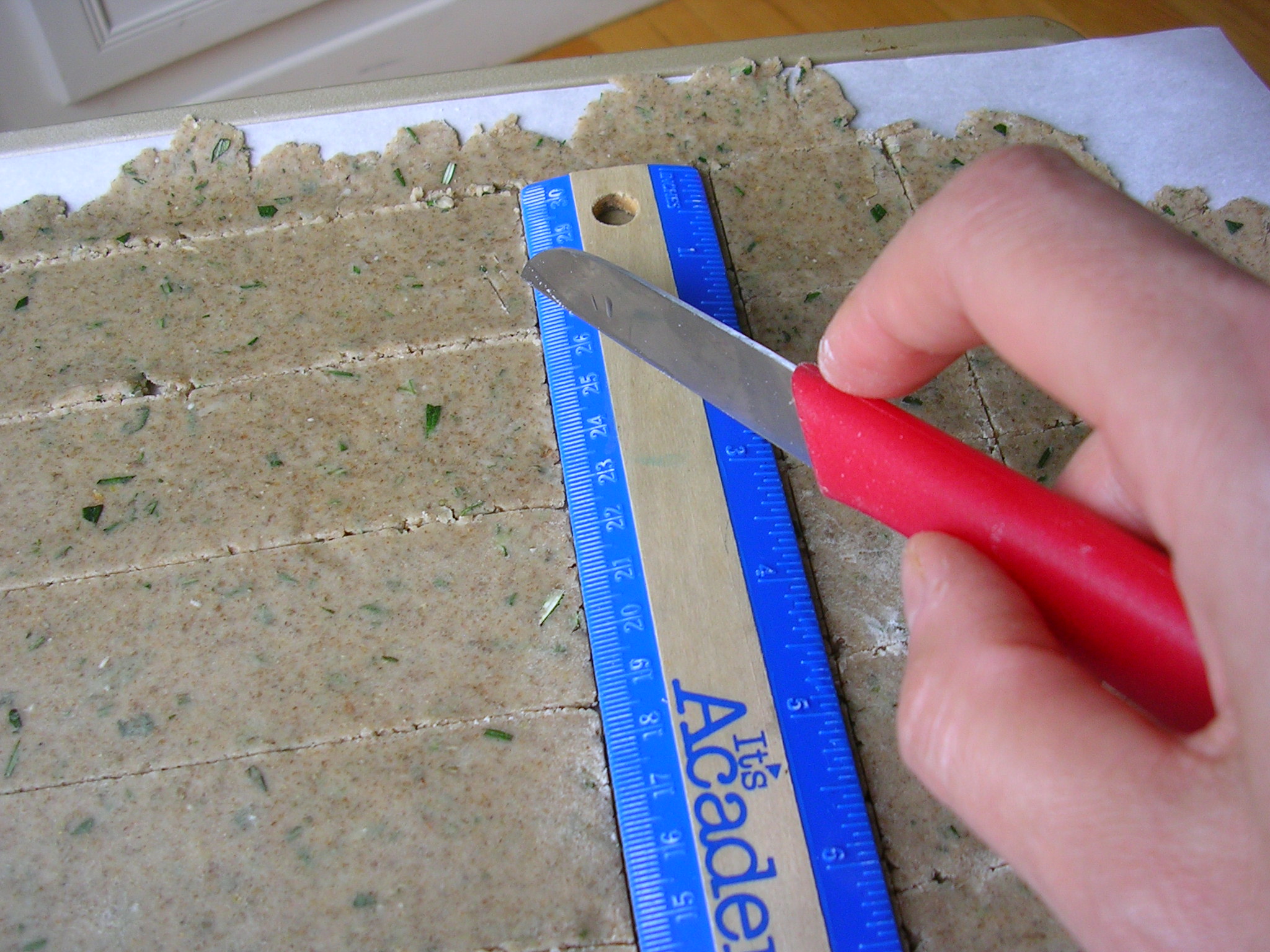
I used solid Amish farmer’s cheese but I doubt it is easily available outside Pennsylvania. Substituting it with well-drained Greek yogurt should work as well. The crackers might just end up a bit moister and might require a tad longer baking and a bit more salt, as Amish farmer’s cheese is saltier than Greek yogurt. I wanted the crackers to be even so I cut them with a ruler but that’s just me being a neatnik… For a more rugged look, just break the sheet in pieces after baking.

Buckwheat Rosemary Crackers

3½ ounces buckwheat flour

3½ ounces rye flour

1 level teaspoon baking powder

1 teaspoon salt

3 tablespoons + 1½ teaspoons cold butter (1¾ ounces)

3 ounces solid farmer’s cheese

1 heaping tablespoon Greek yogurt

3 tablespoons + 1 ½ teaspoons 2% milk (1¾ ounces)

2 tablespoons finely chopped fresh rosemary

1. Put the flours, baking powder and salt in the food processor. Dice the butter and the farmer’s cheese and add. Process until the mixture is crumbly.

2. Add the yogurt and milk and process until the dough forms a homogenous mass and sticks together in a ball.

3. Transfer to a bowl and quickly incorporate the rosemary using the tips of your fingers. Do not overwork the dough. Cover and let rest for 45 minutes.

4. Line a large (14×16 inch) baking sheet with parchment paper. Dust with flour. Roll out the dough directly on the parchment with a floured rolling pin. The dough should fill the entire sheet. You can patch the dough as needed but make sure to smoothen out the sutures.

5. Cut the dough into 1.5-inch squares using a ruler and a sharp knife. Place the baking sheet in the middle rack of the cold oven. Set the oven to 375 degrees F and bake until the crackers are lightly browned. Depending on the time it takes your oven to reach the set temperature the crackers might already be done at that point (mine were).

6. Transfer the parchment with the crackers onto a cake rack and cool slightly. Break the crackers apart and completely cool on the rack. Store in airtight tin containers.

Makes about 80 crackers