Scapes straight to the table

“You mean I could have actually made money with these instead of throwing them on the compost?” asked our neighbor last year when I told him about garlic scapes being sold at upscale farmer’s markets. His family has farmed the land for generations, long before organic farming, CSA, slow food, locavore, and all the other wholesome and eco-conscious food trends came about.

His father gave me valuable gardening advice that sounded like it was coming straight from the Farmer’s Almanac, such as “Don’t plant tomatoes before the full moon in May.”  I think he got a kick out of seeing that city girl getting into gardening, and he surely wondered whether I would ever harvest anything. He passed away before my garden really started to thrive but his wife was still around then. She was confined to a wheelchair and spent the most part of every summer day on her porch, from where she waved to me when I passed by on my bike on the way to the post office.

Knowing how much she loved watermelon, I promised her a share of my first watermelon. When it was finally ripe, my husband phoned her to tell her he would bring it over but said he wanted to alert her it was so big that he had to take the truck. After that day, until she died, every time I stopped on my bike for a quick chat, she raved about how sweet that watermelon had been, then drifted off into an endless chuckle about the truck being needed to deliver it.

Back to scapes. Last year, I made scape pesto and scape butter. Both were good but I found that after a few days, the garlic flavor becomes too pungent and overpowering. I think it is best to eat scapes within a couple of days. So now I am picking not more than 2 to 3 scapes at once to make only a small amount of a dish. Unlike most days, the goal is: no leftovers.

Scape Topping for Pasta

2 to 3 scapes

½ to ¾ cup extra-virgin olive oil

Salt

Freshly ground black pepper

Freshly grated Parmesan

1. Cut the pointy tips off the scapes and discard. Finely chop the scapes.

2. Slowly warm the olive oil in a small saucepan. The oil should not be hot so the scapes won’t sizzle when you add them. Remove from the heat and stir in the scapes. Let sit for a few minutes, then season with salt and pepper. Serve over whole-wheat spaghetti with plenty of Parmesan.

Makes 2 servings

Feta Cheese Balls with Scapes and Hazelnuts

2 to 3 scapes

15 whole hazelnuts

8 ounces feta cheese

Extra-virgin olive oil

Freshly ground black pepper

1. Cut the pointy tips off the scapes and discard. Slice the scapes very thinly.

2. Lightly toast the hazelnuts. Set aside to cool. Rub off most of the skins and discard. Chop the hazelnuts coarsely.

3. Process the feta in a food processor to a very fine crumble. With slightly damp hands, form six compact cheese balls of the same size.

4. Pour a small amount of olive oil on a plate. Mix the scape slices and the hazelnuts with freshly ground pepper on another large plate.

5. Roll the cheese balls first in olive oil to coat lightly, then in the scape and hazelnut mix, pressing it gently into the cheese. Cover with plastic foil and refrigerate until serving.

Makes 3 servings
Strawberry suspense

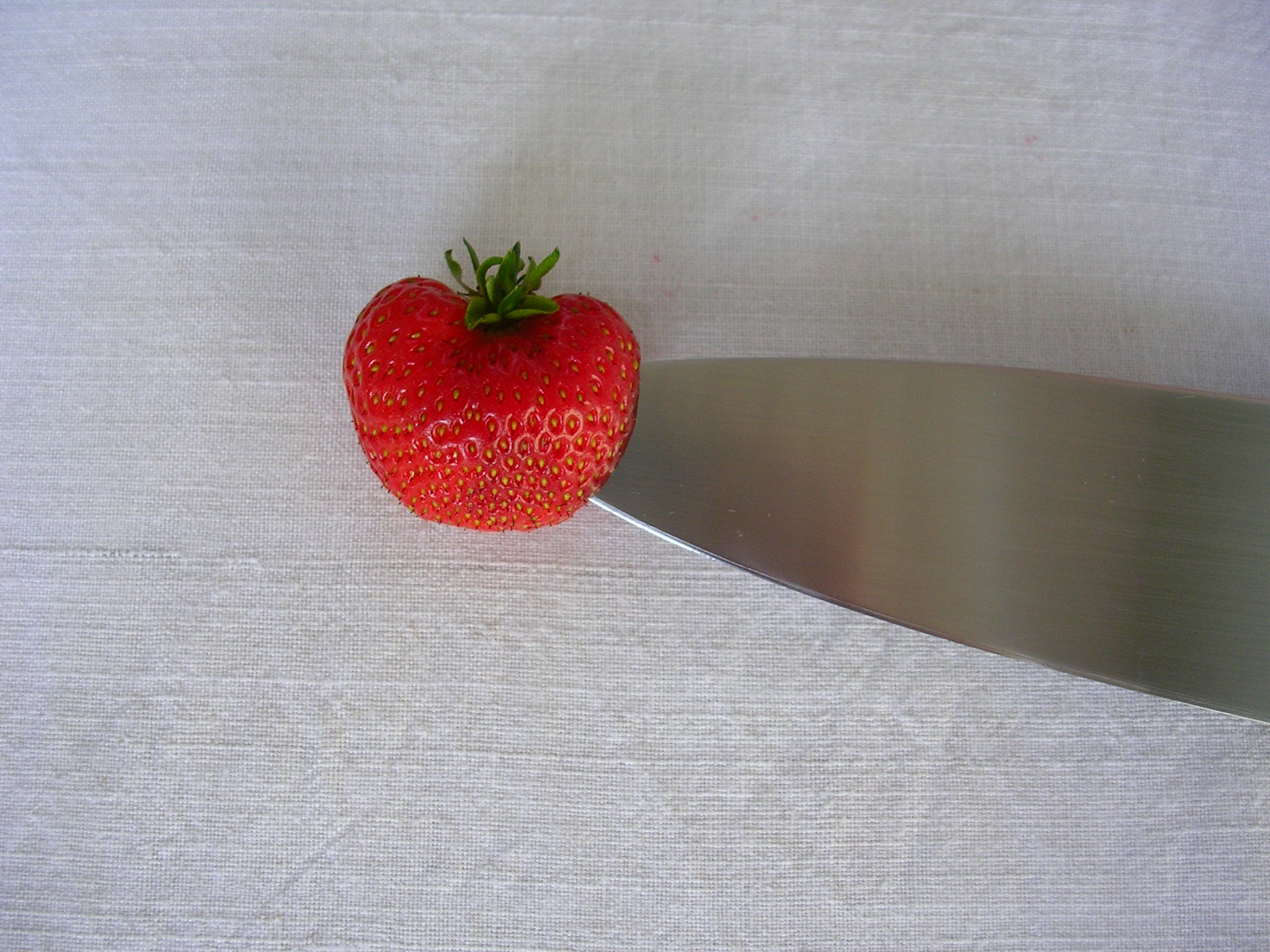
Our first strawberry harvest, and we would have a bumper crop if some animal, or animals, was not taking a bite from almost every ripe strawberry. I am in the middle of a critter war – again.

Every time I try a new deterrent, checking out the strawberries the next day is more suspenseful than watching a thriller. I warily walk down to the strawberry patch, bracing myself for what I am about to find. First I stand there for a few seconds with my eyes closed, then I slowly open my eyes and start looking around.

The amount of Epsom salt I spread around the perimeter of the patch this morning should make the strawberry thieves sneeze so hard we should hear it by the house. But again, if the critters are as keen on the strawberries as I am they might just pinch their noses and continue nibbling.

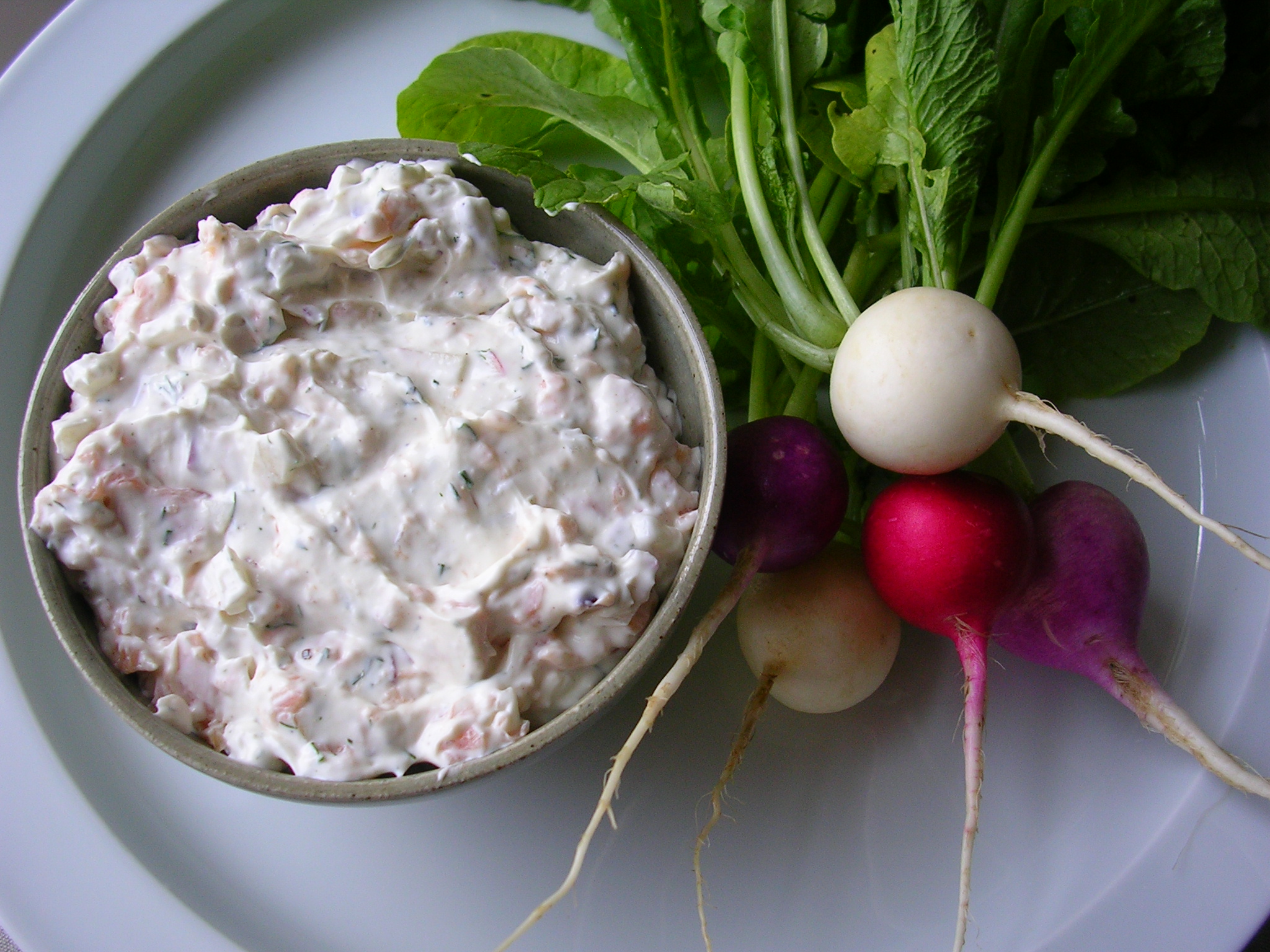
One way of distracting myself from garden woes is to make something quick and easy from a hassle-free crop. Harvesting those beautiful radishes made me think back to the time when the rabbits could squeeze through the fence and devoured the radish greens down to the ground. So it is again just a question of notching up the defense; maybe it’s time to reconsider a fence around the strawberry patch. Meanwhile I will listen out for the sound of sneezing tonight.

Radish Salmon Spread

8 ounces low-fat cream cheese, softened

1 tablespoon milk

3 ounces smoked salmon, finely chopped

1 bunch radishes, finely chopped (about ¾ cup)

1 teaspoon finely chopped fresh dill

Freshly ground black pepper

1. Stir the cream cheese and the milk until smooth. Add the radishes and fold in with a spatula, then fold in the salmon and dill. Season with pepper to taste.

2. Refrigerate. Take out of the fridge 15 minutes before serving.

Asparagus, again?!?

I grew up eating asparagus, white asparagus that is. In Germany white asparagus is the most prized and sought-after spring vegetable. My father grew it in the garden plot we had outside the city and where he spent every free minute after work. In May, during asparagus season, we ate lots of asparagus to the point where I would say, “Asparagus, again?” My mother warned me that one day, I would think back to my spoiled complaints, yearning for this delicacy. As so often in life, mom was right in the end.

Living in the United States, I do get cravings for creamy white asparagus soup once in a while but I have also begun to like green asparagus a lot. Now I am not even sure which one I like better, green or white.

The asparagus I picked up yesterday from a local farm is as different as can be from the uniform picture-perfect white asparagus of my childhood: some spears thin as a pencil, others thick as a celery stalk, some as long as my underarm, others short and stubby, some purple, some green. Somehow this asparagus feels more genuine and much closer to the earth than blanched white asparagus. This is more than a feeling. Green asparagus does have higher nutritional value than white, and unlike white asparagus, it usually does not require peeling.

I must admit that the thought of growing my own asparagus crossed my mind again. But then I remembered what I just read in Eleanor Perényi’s Green Thoughts (a collection of lovely short gardening essays that makes a great bedtime reading for exhausted gardeners). On asparagus she wrote, “Two companionable people who have assembled their materials can prepare an asparagus bed in a long springtime afternoon, and enjoy it for years without much additional effort.” This is not true! Asparagus, like everything else in the garden, needs constant effort. Having homegrown fresh herbs to put into asparagus dishes, and taking care of the garden that’s already there, is quite enough for me.

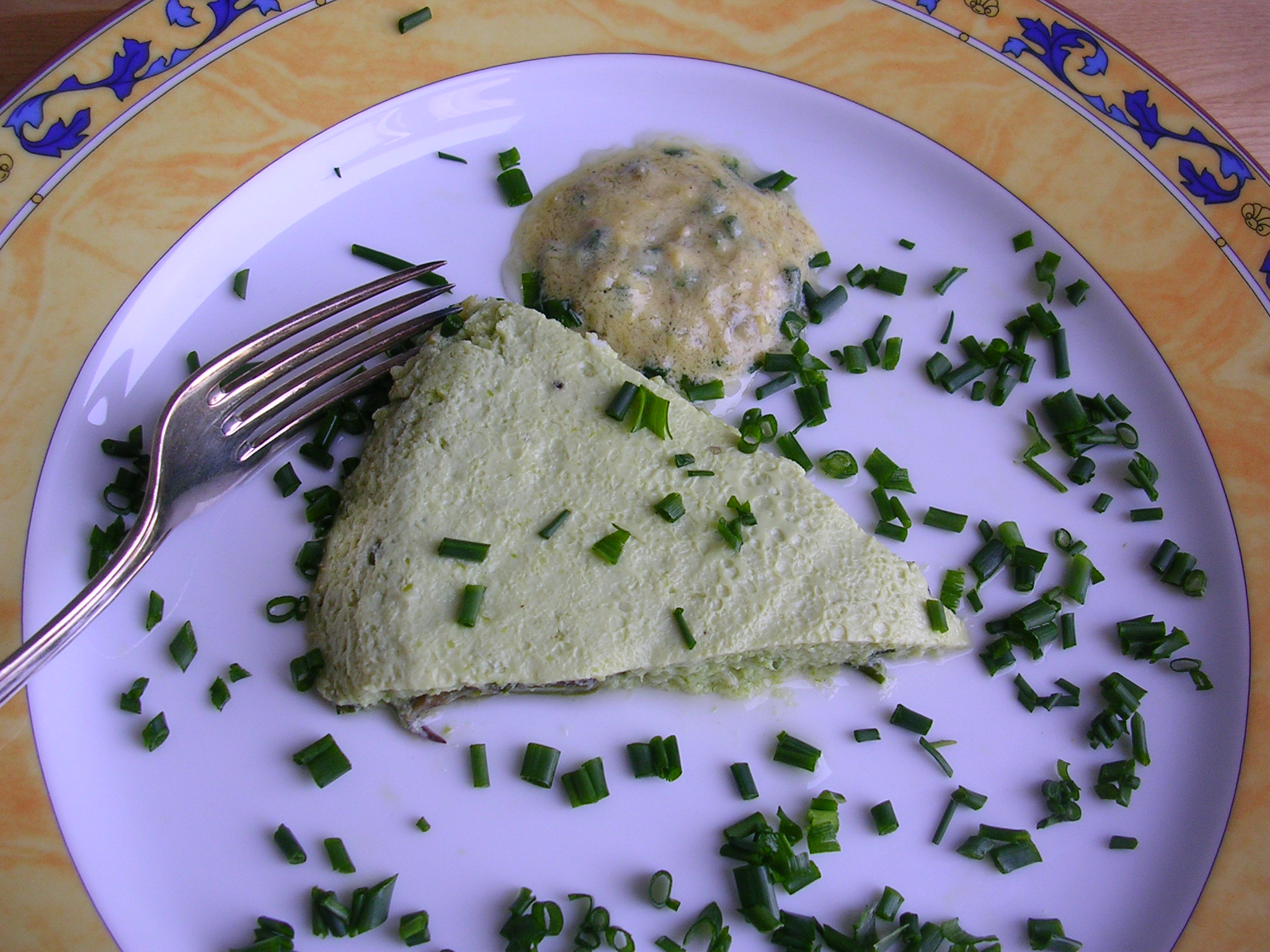
Asparagus Flan

I looked at different asparagus flan recipes and decided I was going to make one that uses all parts of the asparagus and has some texture. I also did not want to bother passing the asparagus puree through a fine sieve to remove stringy fibers, so I peeled the thickest stringy spears before cooking.

1 pound asparagus

1 tablespoon lemon juice

2 large eggs

1/3 cup plus 3 tablespoons 2% milk

1 teaspoon salt

Freshly ground black pepper

2 tablespoons freshly grated Parmesan

2-3 tablespoons snipped chives


1. Wash the asparagus thoroughly. Cut off the tips and set aside. Peel the spears that are thick and stringy. Cut the spears into 3-inch pieces.

2. Bring water to a boil in a large saucepan. Add the lemon juice and cook the spears for 2 minutes, uncovered. Remove them quickly with a slotted spoon and transfer to a bowl with cold water. Drain.

3. Cook the tips in the same water and drain. Cool in a bowl with cold water and drain again.

4. Preheat oven to 325 degrees F.

4. Puree the cooled asparagus chunks. Whisk eggs with milk. Add asparagus puree, salt, pepper, Parmesan and chives.

5. Spray bottom and sides of a 10-inch pie pan or cake pan with oil. Draw the outline of the bottom on wax paper and cut it out with scissors. Line the pan with it and spray the paper with oil.

6. Pour the egg-asparagus mix in the pan. Arrange the tips on top (if you do it in reverse order and put the tips into the pan first, they will float and move around).

7. Bring water to a boil. Place the filled pan in a larger ovenproof dish (I use the bottom part of my turkey roasting pan). Place in middle rack of the preheated oven and carefully pour boiling water into the outer dish to come halfway up the sides of the filled pan. Bake 50 to 60 minutes, until the flan is set but still slightly wobbly. Carefully remove from the water bath and let cool on a cake rack.

8. When cool, run a knife around the sides to loosen. Refrigerate. When ready to serve, cut into wedges right in the pan, or flip the flan over onto a large plate. Serve with a dollop of Sauce Tartare, or a good, preferably homemade mayonnaise.

Makes 6 servings

Late bloomer

The best I could do which chive blossoms in the past, was stick them in a vase. I am an admitted late bloomer when it comes to learning about edible flowers. This year I am at last discovering all the wonderful things you can do with them. I wish I had more chive blossoms right now.

The first bloom of the chives yielded just enough blossoms to make a tiny amount of chive vinegar. I absolutely do not like the taste, smell and especially aftertaste of raw onions. Letting a chopped shallot sit in vinaigrette for a mere hint of onion flavor, and strain it afterwards is my tolerance limit for raw onions. So I thought chive vinegar would be a good way to get the onion flavor without the onions.

Asparagus is one of the crops I do not grow in my garden because I can buy it super fresh from local farm stands. The asparagus was supposed to be for dinner tonight. Yet before I had even washed the dishes my husband and I had nibbled most of it for lunch before heading back to our offices.

No doubt, I will have to plant more chives for the blossoms alone, so I can make more of that vinegar.

Asparagus with Sauce Tartare

The formula for the vinegar is simple: Put freshly picked untreated chive blossoms, washed and drained, in a screw-top jar. Add apple cider vinegar, enough to immerse the blossoms. Cover and let sit at moderate room temperature, away from direct sunlight, for 5 to 7 days until the blossoms are completely discolored. Shake the jar once or twice a day. Strain and discard blossoms.

The Sauce Tartare is adapted from Julia Child’s Mastering the Art of French Cooking.

1 pound green asparagus

1 tablespoon lemon juice

Sauce Tartare:

3 large hard-boiled eggs

1 tablespoon Dijon mustard

¼ teaspoon salt, more to taste

2/3 cup olive oil

1 tablespoon chive vinegar

2 tablespoons capers, drained

3 tablespoons finely chopped chives

Freshly milled black pepper

1. Wash the asparagus and trim the ends.

2. Bring water to a boil in a large deep skillet. Add the lemon juice and cook the asparagus uncovered at low to medium heat until it can be pierced with a kitchen knife. Drain, rinse with cold water, and drain again. Set aside.

3. For the Sauce Tartare, separate the yolks from the eggs, leaving the whites as intact as possible. Finely chop the egg whites and set aside. Mash the yolks with the mustard and the salt until no lumps remain.

4. Gradually add the olive oil and whisk thoroughly by hand until you obtain a thick smooth emulsion. Add the vinegar and whisk until fully incorporated.

5. Finely chop the capers and add them to the sauce with the chives. Season with salt and pepper. Spoon some of the sauce over the asparagus, and sprinkle with chopped egg whites.

Makes 2 servings