A Minestrone full of memories

For the longest time I found Minestrone rather bland. That is, until almost  ten years ago I tasted Marge’s, my late and beloved sister-in-law’s. Hers was wonderfully tasty. Of course I came home with the recipe. I have made it often ever since, always the whole recipe, although it yields a huge amount.  The soup is great when you have people trickling in, as it is very good reheated. It also freezes well.

I wish I could ask my sister-in-law for the origin of the recipe. She used to mail me a large Manila envelope once in a while with copies of recipes. A post-it said something like “I have been cooking lately”, and many recipes carried her handwritten comments such as “outstanding”, “superb” or “try this”. Sometimes she added her substitutes and the date when she made it. All very neat, always citing the source, always the librarian, even after she retired. The Minestrone recipe is the only one that I jotted down myself. Shortly after she died in the summer of 2006, I started the Master Gardener program at Penn State University. It was a welcome new focus and distraction in those days, and it put together my haphazard knowledge about gardening.

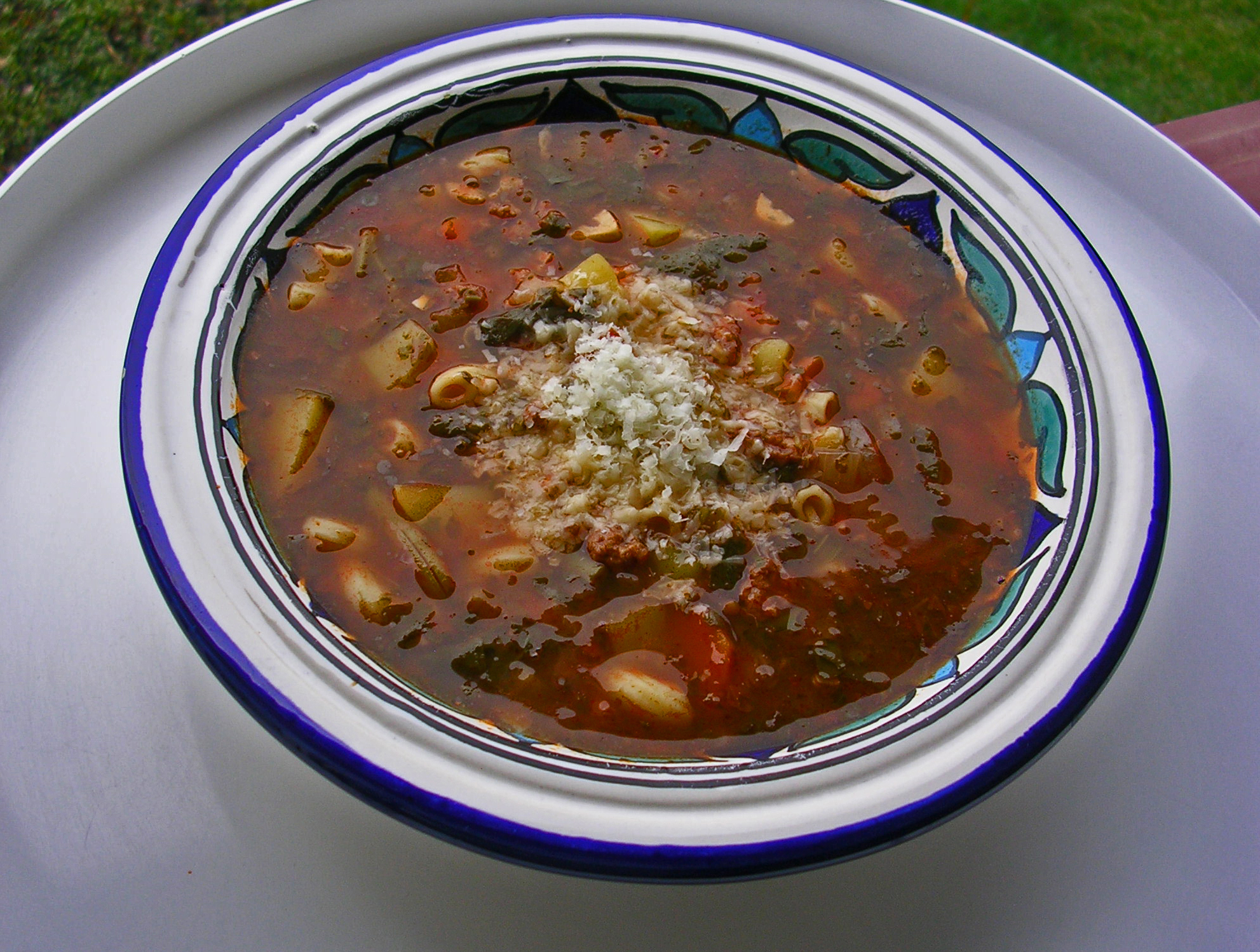
This week it was time for Marge’s Minestrone again. For the tomatoes, spinach, string beans, garlic and basil I used last year’s from my garden. When it comes to chickpeas, I am a purist – I cannot get myself to use canned ones. Since I forgot to soak them last night, I quick-soaked them this morning, boiling them in plenty of water for 1 minute and then letting them sit for 1 hour – exactly the time it took me to line up all the ingredients, which is most of the work. Cooking the soup is a cinch.

Marge’s Minestrone

¾ cup dried chickpeas (or 1½ cups canned)

2 tablespoons olive oil

1 pound ground beef

1 very large onion (¾ pound,), chopped

8 garlic cloves, thinly sliced

1½ tablespoons salt

¾ cup finely chopped boiled ham

3 stalks celery including leaves, finely chopped

½ cup finely chopped Italian parsley

1 small can (16 ounces) canned tomatoes, cut up with their juice

1 can (6 ounces) tomato paste

2 large carrots, peeled and sliced

4 tablespoons finely chopped fresh or frozen basil

1 teaspoon freshly ground black pepper

1 teaspoon dried oregano

½ cup dry red wine

10 ounces chopped fresh spinach

2 medium potatoes (¾ pound), peeled and cubed

1 cup fresh or frozen string or filet beans

1½ cups elbow macaroni

1. If using dried chickpeas, soak them in cold water to cover for 8 hours or overnight.

2. Heat the oil in a large pot (stockpot). Add the ground beef and brown, stirring.

3. Add the onion and cook until soft and translucent.

4. Add the garlic and all the ingredients up to the wine plus 4 quarts water.

5. If using fresh chickpeas, add the drained soaked chickpeas now.  Bring to a boil, reduce the heat and simmer for 1 hour, covered.

6. Add the potatoes, the spinach and the beans. If using canned chickpeas, add them now. Cook over low-medium heat for 20 minutes.

7. Add the pasta and cook until just tender, 10 to 15 minutes. Add salt to taste.

Serve with plenty of freshly grated Parmesan and fresh country bread or baguette.

Makes 16 servings


Similar but not the same

The diversity of Indian cuisines and the variety of spices, legumes, and grains is a bit overwhelming and I cannot claim that I know much about it. That does not prevent me from tinkering with Indian recipes every now and then because I love Indian food, and there is no place to eat anything remotely authentic around here.

The other day I pulled out a jar of yellow split peas and a jar of Toor dal from our pantry, wondering whether I had accidentally stored the same thing under different names.  But when I looked closer and did a little research, I found that the two are indeed different.

Yellow split peas are peas, as their name says. They usually do not need to be soaked and cook quicker than Toor dal, which are yellow lentils. Sometimes Toor dal is referred to as pigeon peas, which is confusing. The Cook’s Thesaurus tells me that the Indian name for yellow peas is Matar dal. Toor dal come plain or oiled and need soaking because they have a hard shell.

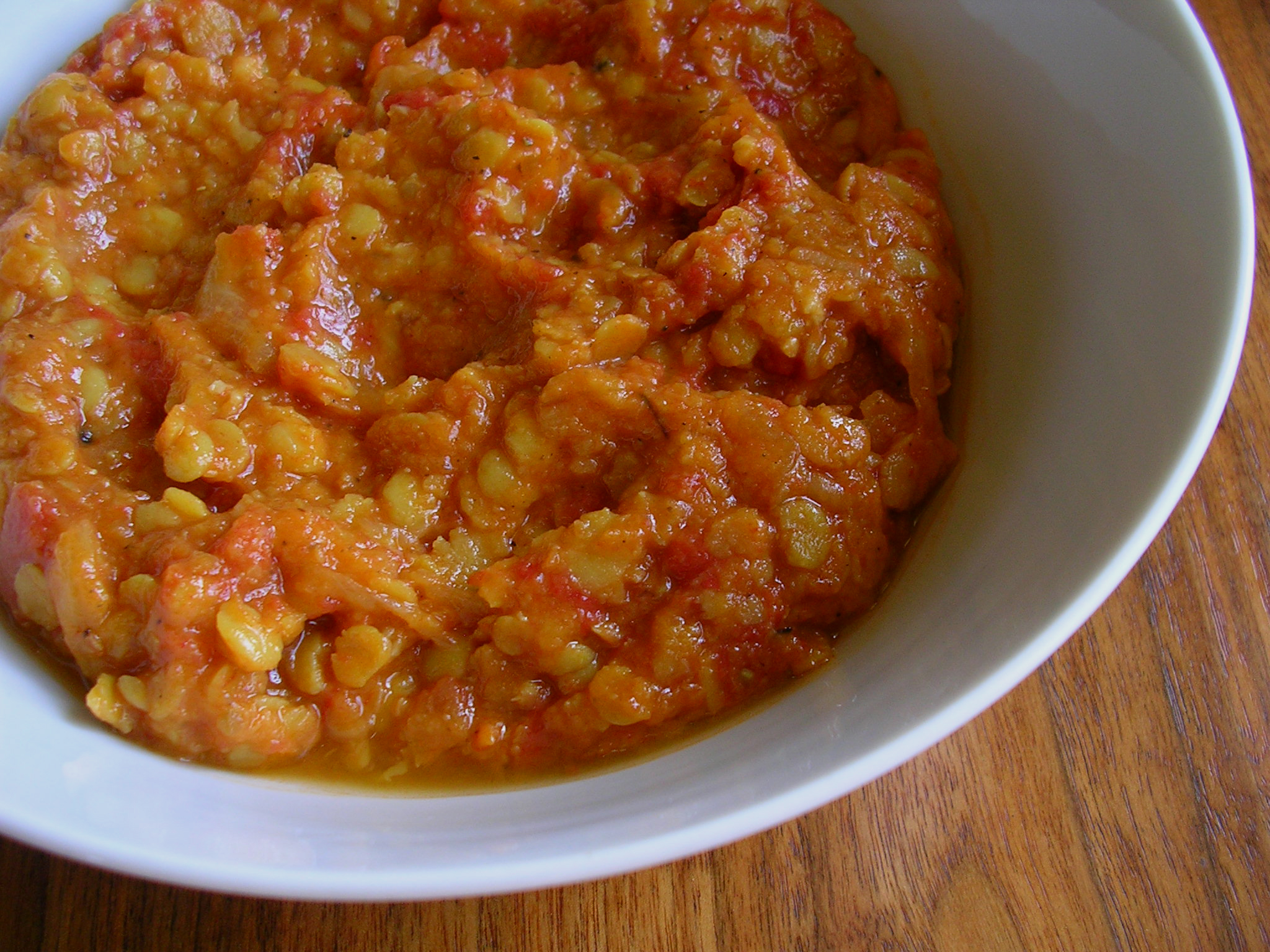
After identifying what I had, it was too late to make a dish with Toor dal that night, so I postponed it until the next day. I soaked the lentils for 3 hours and made up my own version of Indian Khichri using the spices I had on hand, and peeled frozen tomatoes from the garden (of course canned tomatoes will work as well). If I had had some, I would have topped it with chopped fresh cilantro. Next time…

Khichri with Toor Dal (Yellow Split Lentils)

1 cup Toor dal

¼ teaspoon turmeric

¼ cup vegetable oil

5 whole cloves

1 small cinnamon stick

Seeds from 5 cardamom pods

1 teaspoon ground coriander

2 onions, halved and thinly sliced

2 garlic cloves, finely chopped

1 thumbnail-size piece of fresh ginger, finely grated

1 small piece of dried chili pepper

3-4 curry leaves

6-8 peeled tomatoes, chopped

Salt

Freshly ground black pepper

1. Rinse the lentils under cold water to discard any impurities. Put in a bowl and cover with cold water. Soak for 3 hours.

2. Put the lentils in a small pot with the soaking liquid and add the turmeric. Bring to a boil. Reduce the heat and simmer for 30 minutes, or until the lentils are soft. Set aside.

3. Heat the vegetable oil in a heavy medium-size pot.  Add the spices and fry them for 1-2 minutes, stirring. You should smell their scents but take care not to burn them.

4. Add the onion and fry over medium heat until golden, about 10 minutes, stirring often.

5. Add the garlic and ginger and cook for 1 minute, stirring.

6. Add the curry leaves and the tomatoes. Mix well and cook covered over low heat for 15 minutes. Add a little bit of water if the tomatoes don’t have a lot of juice.

7. Add the lentils with their cooking liquid. Add salt and cook covered for another 10 to 15 minutes, stirring occasionally and checking for water. Season with salt and pepper.

8. Remove the cinnamon stick, curry leaves, and cloves. Serve with basmati rice.

Makes 6 servings

Turning sweet into savory

Potato Pockets (Kartoffelmaultaschen) 1

On a recent trip to my native Germany where I ate my way up and down the list of foods that I miss living in America, my mother and I made potato pockets with apples (Kartoffelmaultaschen). It is a very filling dessert. The first night we had it warm straight from the oven. The second night we ate it cold with a hot white wine sabayon, and the third night we warmed up the final leftovers and ate them with the chilled sauce.

You would think that I would not want to eat those pockets for a while, but I found the potato dough so wonderfully light and tasty that I kept thinking how I could use it for a savory dish. In the back of my mind were also the loads of frozen spinach that need to go before the new harvest comes in.

Potato pockets (Kartoffelmaultaschen) 2

With the ground covered in snow in the last couple of days, it looks like I am not going to seed the new spinach very soon. But I made the potato pockets with spinach anyway. Here is the recipe, which can be easily cut in half to feed four people.

Potato pockets (Kartoffelmaultaschen) 3

Potato Pockets with Spinach Ricotta Filling (Kartoffelmaultaschen)

Dough:

2¼ pounds (1 kg) starchy yellow potatoes

Salt

1 egg

2¼ cups (11 ounces/310 g) flour

Filling:

2 pounds (900 g) cleaned and trimmed spinach

9 ounces (250 g) ricotta

2½ tablespoons (35 g) melted butter

1 egg

Salt

Pepper

Grated nutmeg

Topping:

4 tablespoons (55 g) melted butter

2/3 cup (160 ml) milk (2% or whole)

1. For the dough, brush the potatoes clean and cook them whole in their skins in salted water until they are easily pierced with a knife, about 25 to 40 minutes depending on size. Drain and cool.

2. Remove the skins and pass the potatoes through a potato ricer into a large bowl. Add the beaten egg, salt and flour. Knead to a smooth dough. Set aside and cover so the dough won’t dry out.

3. For the filling, place the spinach in a large pot or skillet and cook uncovered until it wilts, turning often. Remove to a colander to drain. Chop finely. Squeeze out any excess liquid. The spinach does not have to be totally dry but it should not release a lot of liquid neither.

4. Beat the ricotta with a whisk until smooth. Stir in the egg and the melted butter. Add the cooled spinach and mix well. Season generously with salt, pepper and nutmeg.

6. Preheat the oven to 350 degrees F (180 degrees C). Grease a lasagna dish, or a large rectangular gratin dish.

7. Divide the dough and the filling into 8 equal portions.

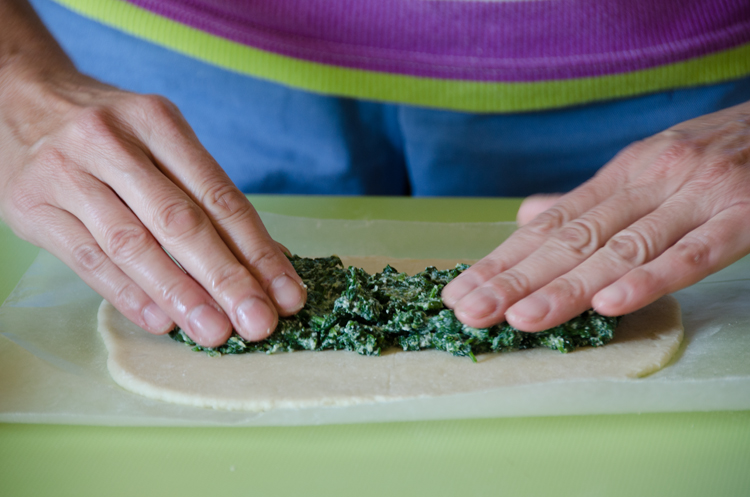
8. Cut a piece of wax paper or parchment paper and roll out a piece of dough to a rectangle, with a length that fits the width of the dish you are using, and about 4 to 5 inches (7.5 to 10 cm) wide.

Potato pockets (Kartoffelmaultaschen) 4

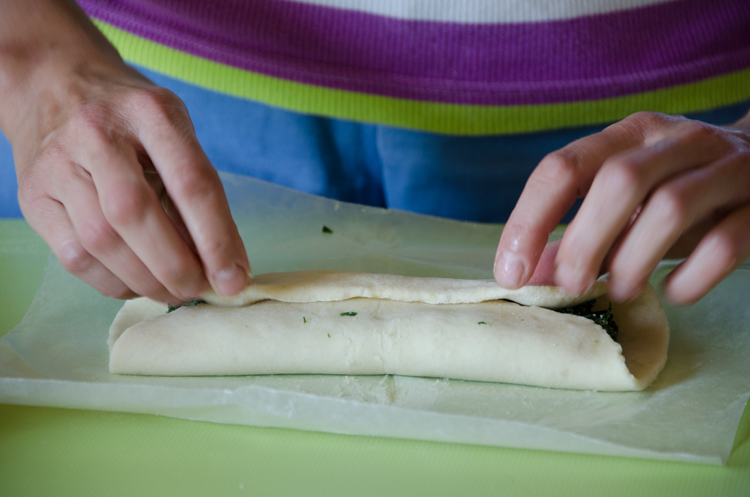
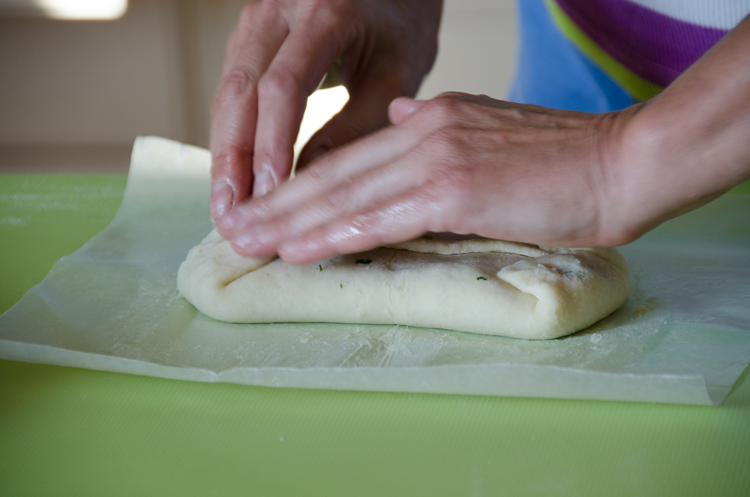
9. Place the filling in a long mount in the middle. Fold the sides over (if the dough sticks to the wax paper, loosen it carefully with a dough scraper) and pinch to seal.

Potato pockets (Kartoffelmaultaschen) 5

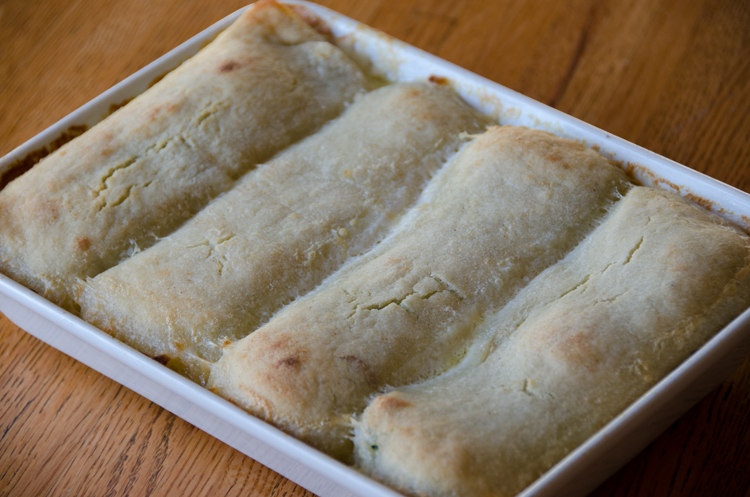
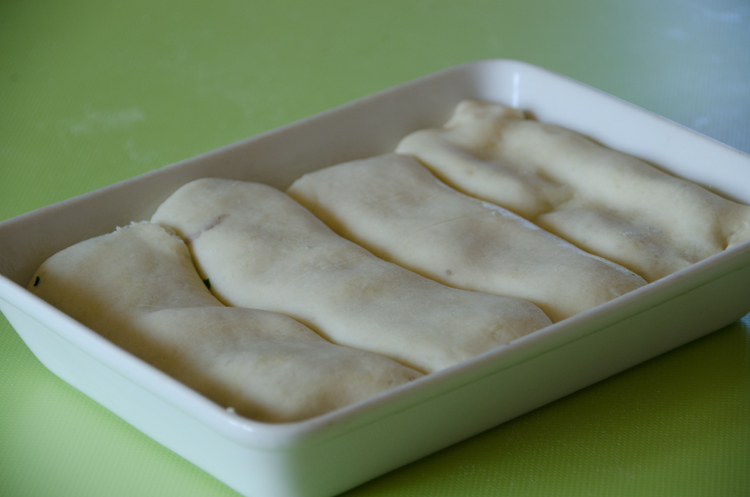
10. Place the pocket seam side down into the dish. Proceed the same way with the eight other pockets, fitting them snugly into the dish.

Potato pockets (Kartoffelmaultaschen) 6

11. For the topping brush the pockets with the melted butter and place the dish into the oven. Bake for 10 minutes, then pour the milk over them.

12. Bake for another 40 minutes, or until the pockets are golden on top. Let stand for 10 minutes before serving. Serve hot.

Makes 8 servings

Photos by Ted Rosen

If life gives you beet greens…

Risotto with beet greens

Growing beets has always been difficult for me in my garden. Before I put up a Berlin Wall-like fence, the tender greens were chewed to the ground by rabbits as soon as they emerged. But even now, and despite painstaking soil sifting and amendment with sand, most of the beets in the rocky Pennsylvania soil are small, woodsy and gnarly. Their greens, however, is a totally different story! It is as if the plants put all their energy into the lush, shiny, large foliage. So every year I end up with several bags of frozen beet greens.

Before I became a gardener, I did not even know that beet greens are edible. That’s no surprise, because unless you buy the beets super-fresh from a farmers market, they reach the store leafless. And that’s a shame, because the leaves have more nutritional value than beet roots.

I have tried different recipes with beet greens but I always return to the same two recipes: Trouchia, a French vegetable omelet, and this risotto. The recipe is adapted from Amanda Hesser’s terrific book The Cook and the Gardener. But since I have such an abundance of beet greens, I maximized their amount and left out the chard used in the original recipe.

Frozen beet greens are easy to break into small bits while still in the bag so no chopping needed.

Risotto with Beet Greens

8-10 ounces cleaned and trimmed beet greens, fresh or frozen

4 tablespoons olive oil

1 large garlic clove, finely chopped

4 cups low-fat chicken broth

1 shallot, finely chopped

1 bay leaf

1 cup Arborio rice

1/3 cup dry white wine

1 tablespoon butter

½ cup freshly grated Parmesan

Salt

Freshly ground white pepper

1. Chop the beet greens if using fresh, or break frozen leaves into small pieces.

2. Heat 2 tablespoons olive oil in a large skillet and add the garlic. Cook for 2 minutes until soft. Don’t let the garlic brown.

3. Stir und cook until leaves are wilted. Remove from the heat and set aside.

4. Heat the chicken broth in a saucepan.

5. Heat the remaining 2 tablespoons olive oil in a medium-size pot with a heavy bottom. Add the shallot and cook 2 minutes until translucent.

6. Add the bay leaf and the rice and stir to coat evenly. Cook over medium heat until the rice releases a nutty smell and looks glassy.

7. Add the wine and ¼ cup hot broth. Cook while stirring constantly until all the liquid has been absorbed.

8. Continue adding chicken broth in ½ cup increments and stirring constantly, only adding more broth when the previous addition has been absorbed, until all the broth has been used and the rice is tender but not mushy, about 20 to 25 minutes.

9. Add the beet greens and stir until reheated. Then stir in the Parmesan and butter and season with salt and pepper. Cover with a lid and let stand for 1 to 2 minutes before serving.

Makes 2 servings as a main course, or 4 servings as side dish