Overcoming the green tomato prejudice

Until now I have been heavily prejudiced against green tomatoes. Not that I ever ate a green tomato. When I occasionally had green tomatoes in the garden because a branch broke off, or I ended up with green tomatoes at the end of the season, I would rather throw them on the compost pile than using them for cooking.

Maybe it’s the idea of eating something unripe that put me off. I know fried green tomatoes are a southern specialty but I was never tempted to try them. I am not a health fanatic but when I use artery-clogging ingredients, I prefer do to it when there is no alternative, such as butter in a piecrust. Also, I do not like the idea of buying additional produce in the height of the harvest to make something with green tomatoes.

When I collected a couple of pounds of green tomatoes from the garden this week, I reconsidered. I constantly try new things, so why not give green tomatoes a second chance and make chutney? I browsed recipes online and went through my cookbooks for inspiration. The only condition I set for myself was that I would minimize the purchase of extra ingredients. Since I have jalapeno peppers in the garden right now (also a premiere), and lots of fresh garlic, the only thing I had to buy for this Green Tomato Chutney were apples. All the other ingredients were staples I had in the house.

As the prospective main chutney eater besides me does not like it too spicy, I removed the seeds from the jalapenos. I am glad I did because the chutney is already quite hot as is. For a hotter version, simply include some or all of the seeds.

I don’t think I will ever actually pick green tomatoes but at least I have a simple recipe that I like in case green tomatoes come upon me. I look forward to opening the first jar of chutney and eat it with Indian food this fall or winter.

For now it’s back to fresh red tomatoes.

Green Tomato Chutney

2 to 2¼ pounds green tomatoes

10 garlic cloves

1 large onion

1 large or 2 small tart apples (I used green summer apples)

3 jalapeno peppers

1 1-inch piece fresh ginger

1 tablespoon black peppercorns

1 tablespoon whole allspice

6 cardamom pods

1 pound 6 ounces Turbinado sugar

1 tablespoon salt

1 cup white wine vinegar

3 bay leaves

1 tablespoon yellow mustard seeds

6 whole cloves

1 teaspoon dried orange peel

1 teaspoon finely grated zest from an organic lemon

You also need:

A canning pot, or a very large stockpot

5 half-pint canning jars

5 bands

5 new (unused) lids

1. Remove the core from the tomatoes and cut them into 1-inch dice. Slice the garlic cloves thinly. Chop the onion. Peel the apples and remove the core. Cut the apples into 1-inch dice. Cut the jalapenos in half and remove the seeds. Chop the jalapenos very finely. Wear disposable gloves to do this, or wash hands thoroughly afterwards to avoid skin and eye irritation. Peel and finely chop the ginger.

2. Crush the peppercorns, allspice and cardamom in a mortar.

3. Mix all ingredients in a non-corrosive pot (no aluminum) and mix well. Cover and refrigerate for 8 hours.

4. Slowly bring the mix to a boil. Cook uncovered for 20 minutes. Fill into sterilized canning jars using a slotted spoon, as you don’t want to fill the jars with too much liquid but make sure the chutney is fully immersed. You will have about 1 to 2 cups of cooking liquid left over; discard. Close jars with brand new lids and bands immediately and process in boiling water bath for 10 minutes.

5. Remove from the water onto damp kitchen towels. Let rest 24 hours before storing the jars in a cool place away from the light.

Makes 5 half-pint jars
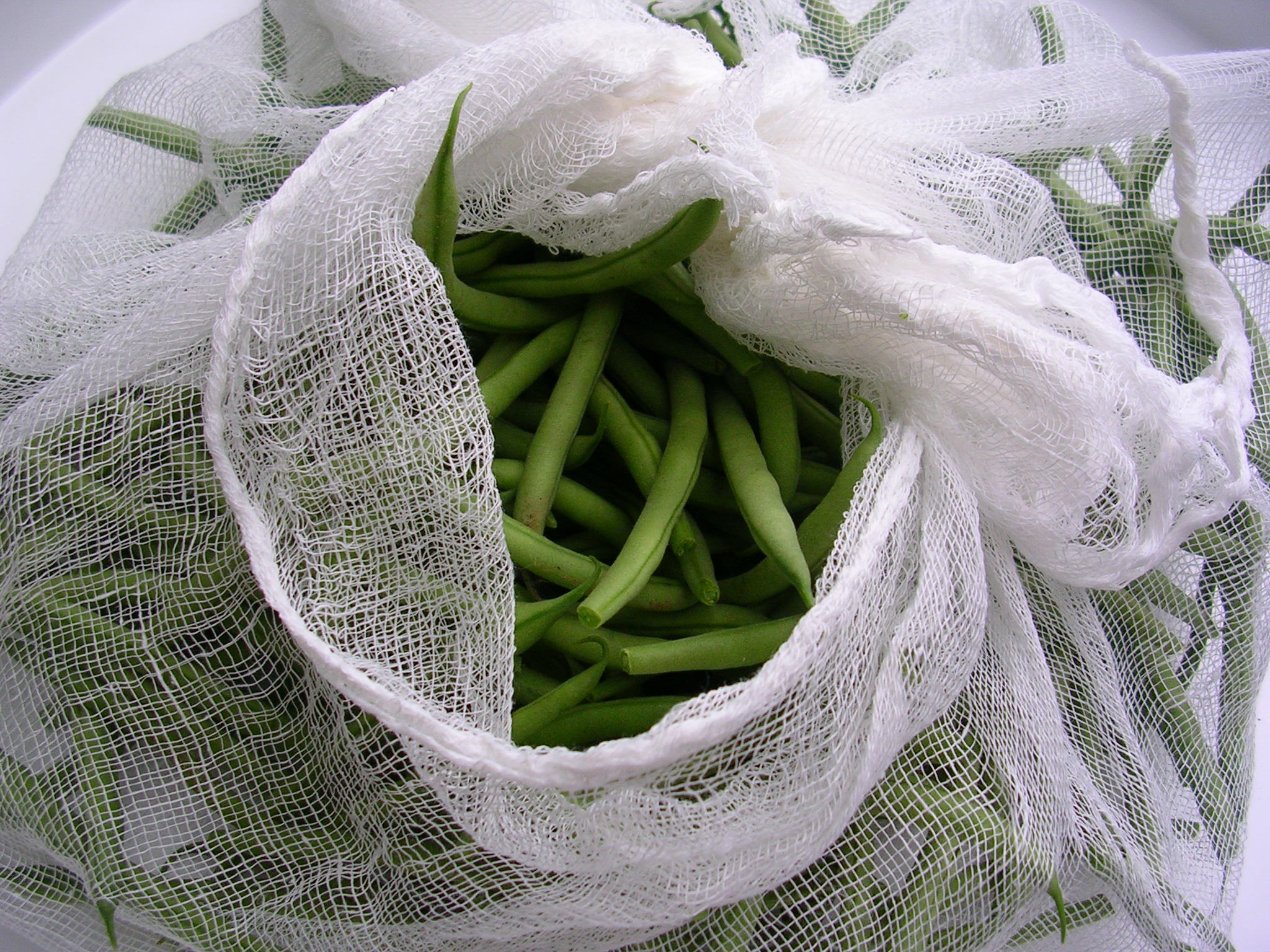
Beans in cheesecloth

Like beans in a brick, this is not an innovative recipe but a technique, the result of a 20-minute discussion last week between my husband and me about the most efficient way to blanch filet beans. If you have several pounds to process at once like we do, dumping the pot of water with the beans every time will turn the kitchen into a Turkish bath. Bringing one pot of water after another to the boil will take forever. If you leave the beans in the same water and remove them with tongs, half of them will be overcooked by the time you fish them all out.

Therefore, in previous years, I put the beans in a metal colander, which I placed in a pot with boiling water. But unless I did this in very small batches, the beans were too crowded and did not cook evenly.

After we took out half of our pots and colanders of various sizes and staged the different options, it occurred to me that cheesecloth might be the way to go. I placed a pound of green beans on a large piece of cheesecloth, twisted it several times at the top so it formed a loose bag around the beans, and lowered it into a large pot of the boiling water. I firmly held onto the top with a pair of tongs. When I immersed the bag into the bowl with ice water, it cooled off almost instantly so I could open up the cloth and release all the beans.

Tonight it’s blanching time again. For now I am happy with the cheesecloth trick. I am only curious what my assistant, in charge of the ice water cooling and spreading the beans on dish towels to dry, will cook up on his end. He usually runs the ceiling fan at top speed to dry the beans. But there is always room for improvement…

Beans in a brick

Unlike chicken under a brick, beans in a brick is not a recipe but the way I grow green beans. Every year I had entire rows of French filet beans, aka haricots verts, getting knocked over, a paining sight. Whether it’s the wind on our hilltop, or the weight of the beans that does it, I don’t know.

I tried different things, from securing every plant individually with a small stake (tedious and useless) to stretching wire along each side of the row (equally useless). I even called the company where I bought the seeds to find out what they recommend but they did not seem to understand what I was talking about, since the beans are described as self-supporting in the catalog.

Then, one day, I was standing outside the car wash waiting when my eyes fell on a pile of bricks nearby. What if I buried the seeds into the holes of bricks and let the plants grow into them? That way the crucial first 1.5 inches of the stem, where the plants always break, would be protected. Lucky coincidence – our local hardware store was just discontinuing selling bricks, so I got a few dozen bricks for free.

It worked! I seed the beans very densely, one in every hole, so they also support each other. The most important thing is not to move the bricks the slightest bit after seeding because the small hole is the seed’s lifeline to air and light. Without it, no germination!

A few plants still get knocked over, but this is minimal compared to the previous damage. Now it’s almost time to harvest, and I am looking forward to my favorite salad with green beans. The original recipe is from Bon Appetit but because I don’t like raw onions of any kind, I omit the shallots in the dressing. Since with my growing method, I get a good crop of haricot verts, I use three times more green beans than the recipe calls for. Therefore this is not a Potato Salad with Haricots Verts, but a Haricot Verts Salad with Potatoes.

Haricot Verts Salad with Potatoes, Blue Cheese and Walnuts

1 tablespoon + 1 teaspoon Dijon mustard

1 tablespoon white wine vinegar

1/4 cup extra-virgin olive oil

2 teaspoons chopped fresh rosemary

3/4 teaspoon chopped fresh sage

1 pound small reds-skinned potatoes

Salt

1.5 pounds French filet beans

1/3 cup walnuts

2/3 cup crumbled  blue cheese (Gorgonzola or Roquefort)

Freshly ground black pepper

1. Preheat the oven to 450 degrees F.

2. Whisk the mustard with the vinegar and olive oil. Stir in the rosemary and sage.

3. Wash the potatoes and toss them whole with 3 tablespoons vinaigrette until they are evenly coated. Spread them in one layer in a baking dish. Bake in the preheated oven for 20 minutes. Reduce the heat to 375 degrees F and bake for another 40 to 50 minutes until they are soft, turning them once in a while. Cool.

4. Bring salted water to the boil in a large pot. Have a large bowl with ice water standing by. Cook the beans in the boiling water for 3 minutes. Drain and throw immerse the beans in the ice water immediately. Swirl them around so they cool evenly. Drain again.

5. Lightly toast the walnuts in an ungreased pan. Chop them coarsely.

6. In a large bowl, mix the potatoes, green beans, cheese, walnuts and the remaining vinaigrette.  Season with salt and pepper.

Makes 6 servings

Unfinished business

The beets in my garden are knee-high. But before I could even think of what I would make with them, I had to use up the frozen beet greens from last fall. Given the effort that I put into growing, harvesting, trimming, washing, drying, chopping and freezing them, there was absolutely no question, these had to go first! Besides, being wasteful while people who don’t have a garden complain that beet greens are not always available would made me feel really guilty.

I have made Risotto with Beet Greens so frequently these past months that I needed to give that one a break. So I tried different side dishes. Marissa Grace’s Pink Greens on Food52 were my husband’s favorite. I liked them but I would also put these Beet Greens with Sesame on the top of my list. Not covering them and adding lime juice juice helped them maintain their green color.

There will be so many new fresh beet greens coming my way that I will certainly make both dishes again.

Beet Greens with Sesame

1 tablespoon raw sesame seeds

2 teaspoons olive oil

2 cloves garlic, finely chopped

2 teaspoons grated fresh ginger

2 pounds trimmed beet greens, coarsely chopped

1 tablespoon lime juice

Salt

Freshly ground black pepper

1 teaspoon sesame oil

1. Lightly toast the sesame seeds in a non-greased pan. Set aside.

2. Heat the olive oil in a large skillet. Add the garlic and cook for 30 seconds to 1 minute until soft. Add the beet greens and the ginger and cook until wilted, stirring often. Do not cover.

3. When the beet greens have collapsed, add the lime juice. Season with salt and pepper. Pour off some of the pink liquid and transfer greens to a serving bowl. Drizzle with sesame oil and sprinkle with the toasted sesame seeds. Serve hot or at room temperature.

Makes 4 servings