The best thyme I ever had

After years of meager woodsy thyme plants, this summer a thyme plant from last year popped up again and supplied me with the largest amount of thyme I had since I started gardening.

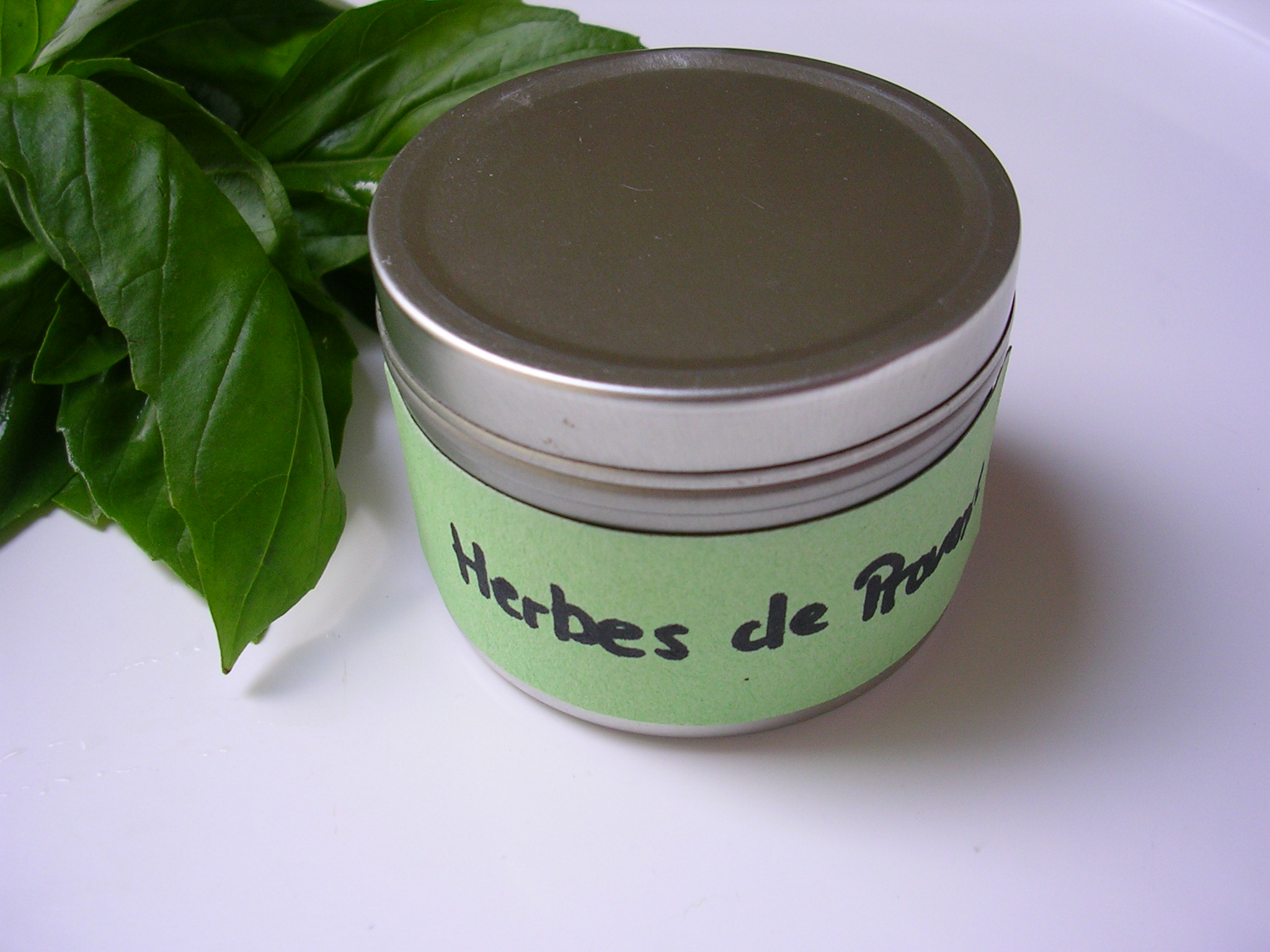
Now I finally have enough thyme from my garden to make my own herbes de Provence, a mix of dried herbs. I only use herbs I have in the garden but in addition to the herbs listed below, the mix can also contain equal amounts of fennel seeds, marjoram, oregano, and a small amount of crushed dried lavender blossoms. Herbes de Provence are wonderful with roasted meat, chicken, oven-roasted vegetables or potatoes, and even in tomato sauce for pasta.

Herbes de Provence

Dried rosemary, chopped finely

Dried basil leaves, crumbled

Dried sage leaves, crumbled

Dried summer savory, crumbled

Dried thyme, crumbled

Mix the herbs and store in a tin can or a glass jar away from the light. Herbes de Provence are best used within a few months; as all dried herbs, they loose their flavor over time.

Nosh for gardeners

We are notoriously late eaters. Especially in the summer, when my husband and I use every minute of sunlight to work outside, we do not sit down for dinner before 8:30 or 9:00 o’clock.  People around here eat as early as 5 and certainly not later than 6 o’clock.

Last week, when my son’s friend stayed for dinner, I asked him jokingly how he puts up with our moonlight dinners. He told me that he usually has dinner at home before coming here. This could be either a compliment for my cooking, or simply the fact that 19-year-old boys are always hungry. I won’t speculate.

For my part, I am usually famished by the time I have dinner on the table because I often don’t eat much during the day. Yes, I know, that’s an unhealthy habit. However, when I know there is something appealing in the fridge, I find it easier to pull myself away from gardening to have a bite.

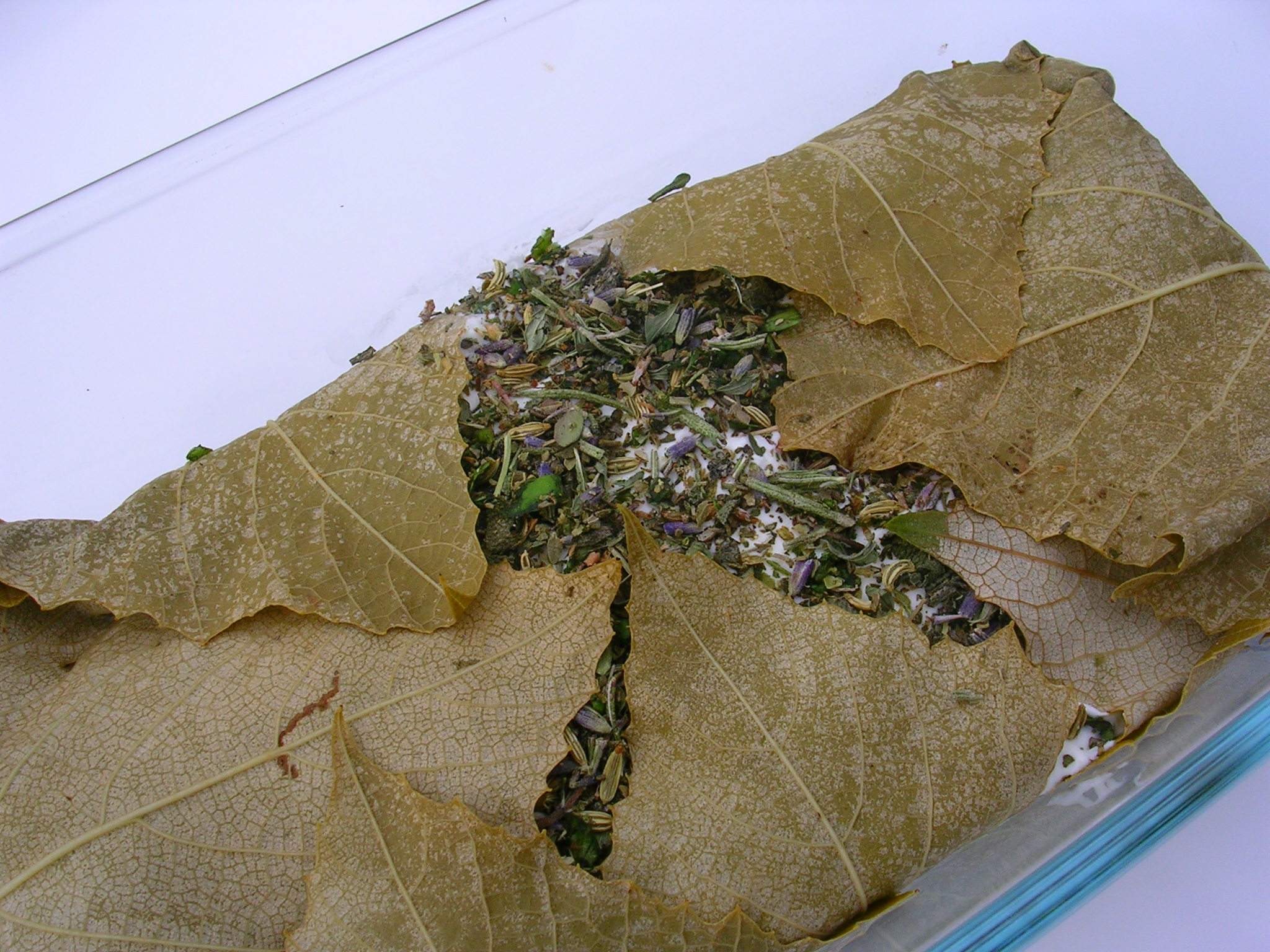
I had the idea for a terrine like this for a while but I had to wait for the leaves on my two concord grapes to grow big enough. I mix the herbes de Provences from equal amounts of dried basil, sage, rosemary, summer savory, thyme, marjoram, fennel seeds, oregano and lavender.

Over-estimating the volume of the goat cheese, I used a 1.5-quart glass loaf pan, in which the terrine looked a bit lost. A smaller loaf pan or a rectangular glass storage container would have worked better. Next time…

Goat Cheese Terrine

6-8 large organic grape leaves

1 fresh goat cheese (10.5 ounces)

2 tablespoons heavy cream

1 garlic clove, finely chopped

3 tablespoons finely chopped sundried tomatoes in oil, drained

3 tablespoons pitted Kalamata olives, finely chopped

3 tablespoons herbes de Provence

1. Wash the grape leaves and place them in a heatproof bowl. Pour boiling water over them to cover. Let stand for 4 minutes, then drain and spread on paper towels to dry.

2. Beat the goat cheese and the cream with an electric mixer until smooth. Try not to add more cream, otherwise the cheese will end up too liquid. Mix in the garlic.

3. Line a rectangular small glass dish with the leaves up the sides, so you can fold them over after filling.

4. Spread 1/3 of the cheese on the bottom. Evenly sprinkle with the tomatoes.

5. Spread 1/3 of the cheese and evenly sprinkle with the olives. Spread the remaining cheese on top and sprinkle with the herbs.

6. Fold the leaves over. Cover with plastic wrap and refrigerate for at least 2 hours. To serve, flip the terrine over onto a serving dish or a nice cutting board. A serrated knife works best to cut through the grape leaves.

Cracker trial

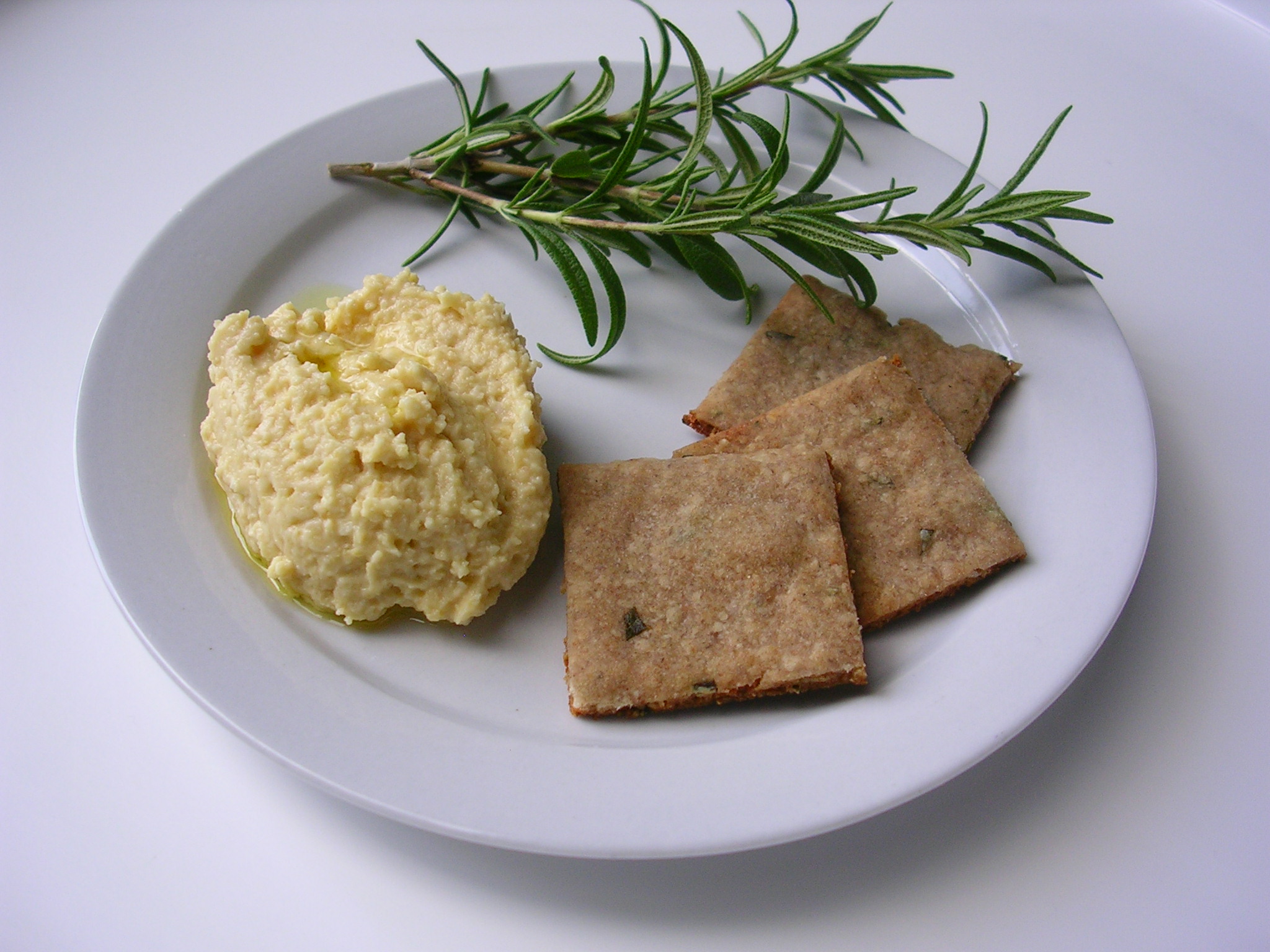
Baking something that is so readily available is not obvious. But lately I haven’t been able to find our favorite crackers, the Kashi stoneground 7-grain crackers, in stores. Also, the rosemary plant that moved from its winter home in the guestroom to the patio is so full and bushy that not using rosemary often makes me feel guilty each time I walk by and inhale the wonderful scent. And, finally, I had buckwheat flour that needed to be used up, as it does not have a very long shelf life. Three good reasons to try my hand on crackers.

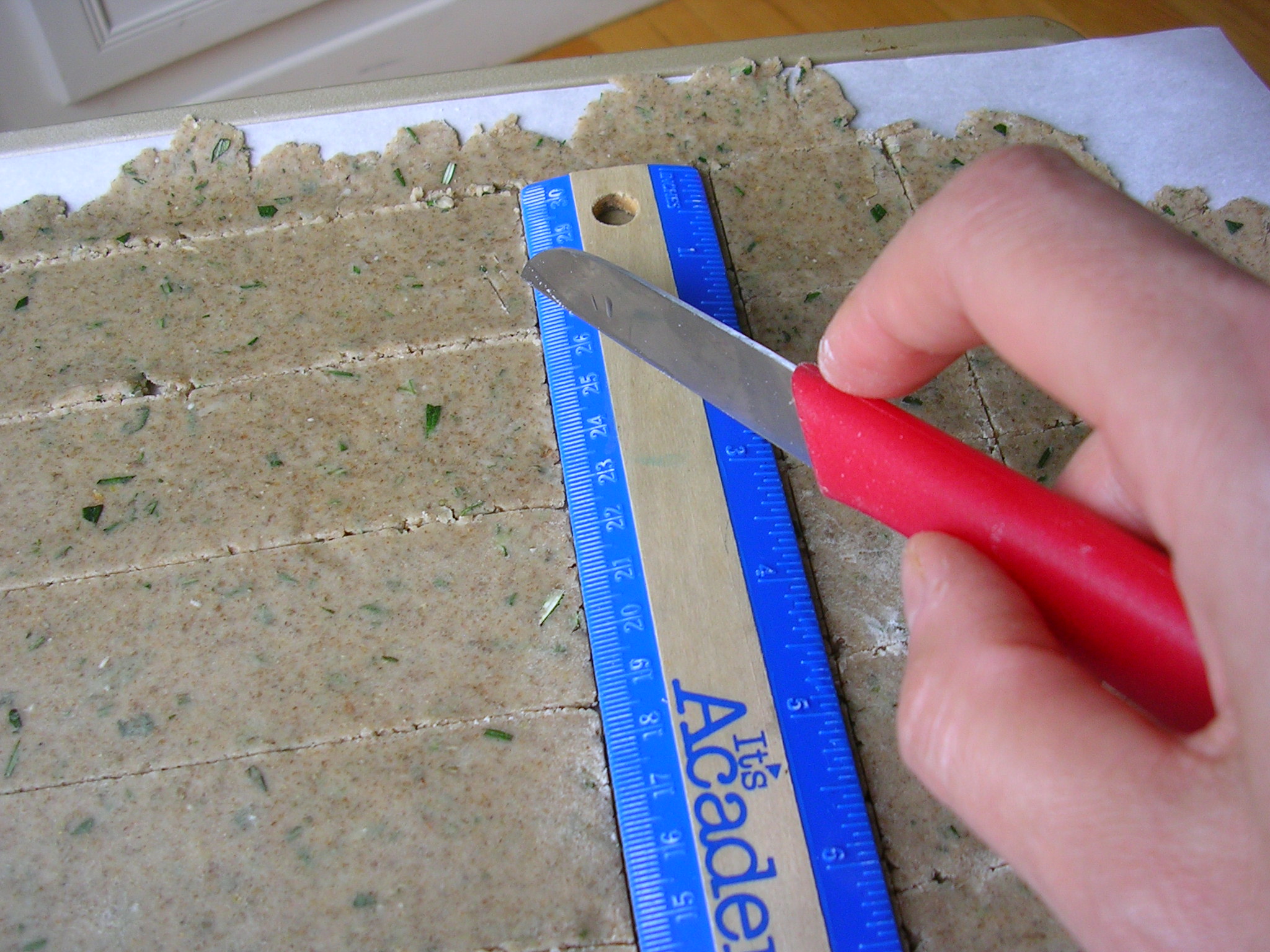
I used solid Amish farmer’s cheese but I doubt it is easily available outside Pennsylvania. Substituting it with well-drained Greek yogurt should work as well. The crackers might just end up a bit moister and might require a tad longer baking and a bit more salt, as Amish farmer’s cheese is saltier than Greek yogurt. I wanted the crackers to be even so I cut them with a ruler but that’s just me being a neatnik… For a more rugged look, just break the sheet in pieces after baking.

Buckwheat Rosemary Crackers

3½ ounces buckwheat flour

3½ ounces rye flour

1 level teaspoon baking powder

1 teaspoon salt

3 tablespoons + 1½ teaspoons cold butter (1¾ ounces)

3 ounces solid farmer’s cheese

1 heaping tablespoon Greek yogurt

3 tablespoons + 1 ½ teaspoons 2% milk (1¾ ounces)

2 tablespoons finely chopped fresh rosemary

1. Put the flours, baking powder and salt in the food processor. Dice the butter and the farmer’s cheese and add. Process until the mixture is crumbly.

2. Add the yogurt and milk and process until the dough forms a homogenous mass and sticks together in a ball.

3. Transfer to a bowl and quickly incorporate the rosemary using the tips of your fingers. Do not overwork the dough. Cover and let rest for 45 minutes.

4. Line a large (14×16 inch) baking sheet with parchment paper. Dust with flour. Roll out the dough directly on the parchment with a floured rolling pin. The dough should fill the entire sheet. You can patch the dough as needed but make sure to smoothen out the sutures.

5. Cut the dough into 1.5-inch squares using a ruler and a sharp knife. Place the baking sheet in the middle rack of the cold oven. Set the oven to 375 degrees F and bake until the crackers are lightly browned. Depending on the time it takes your oven to reach the set temperature the crackers might already be done at that point (mine were).

6. Transfer the parchment with the crackers onto a cake rack and cool slightly. Break the crackers apart and completely cool on the rack. Store in airtight tin containers.

Makes about 80 crackers

A Minestrone full of memories

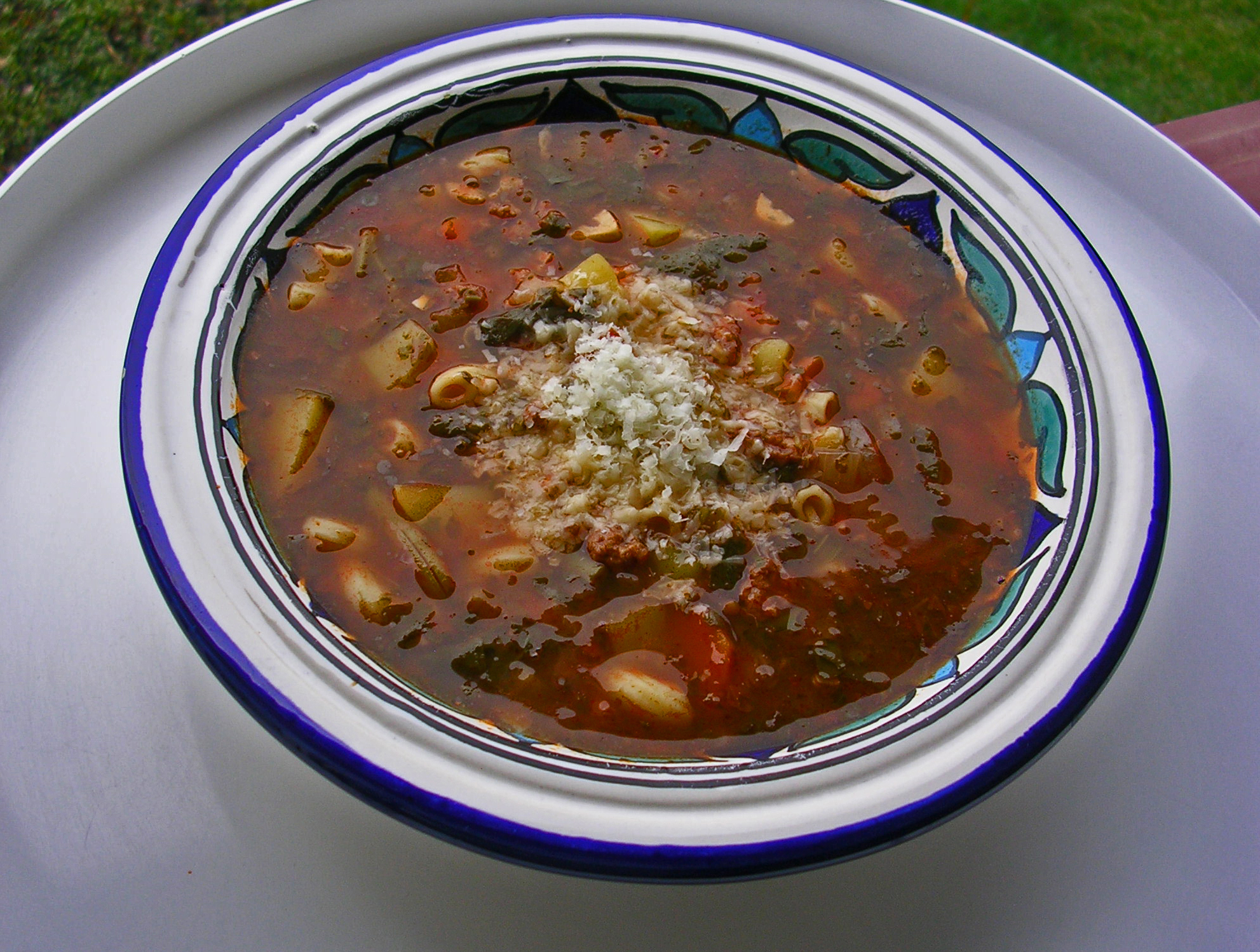
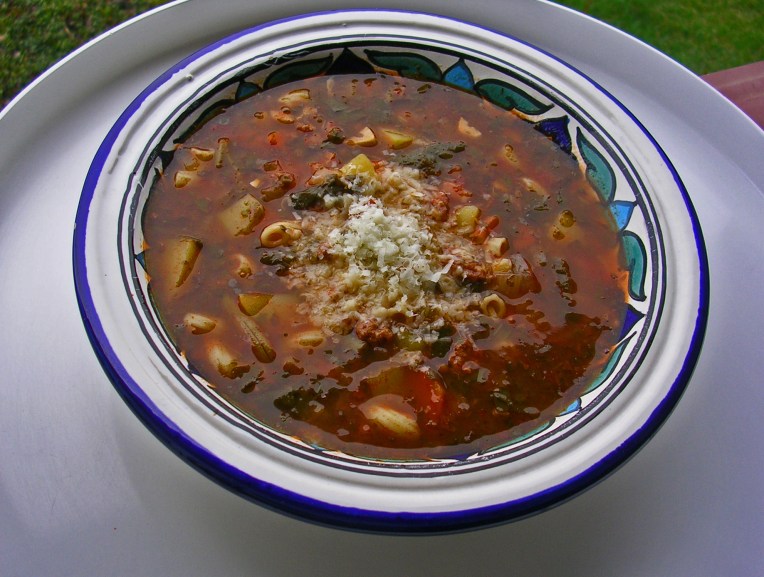
For the longest time I found Minestrone rather bland. That is, until almost  ten years ago I tasted Marge’s, my late and beloved sister-in-law’s. Hers was wonderfully tasty. Of course I came home with the recipe. I have made it often ever since, always the whole recipe, although it yields a huge amount.  The soup is great when you have people trickling in, as it is very good reheated. It also freezes well.

I wish I could ask my sister-in-law for the origin of the recipe. She used to mail me a large Manila envelope once in a while with copies of recipes. A post-it said something like “I have been cooking lately”, and many recipes carried her handwritten comments such as “outstanding”, “superb” or “try this”. Sometimes she added her substitutes and the date when she made it. All very neat, always citing the source, always the librarian, even after she retired. The Minestrone recipe is the only one that I jotted down myself. Shortly after she died in the summer of 2006, I started the Master Gardener program at Penn State University. It was a welcome new focus and distraction in those days, and it put together my haphazard knowledge about gardening.

This week it was time for Marge’s Minestrone again. For the tomatoes, spinach, string beans, garlic and basil I used last year’s from my garden. When it comes to chickpeas, I am a purist – I cannot get myself to use canned ones. Since I forgot to soak them last night, I quick-soaked them this morning, boiling them in plenty of water for 1 minute and then letting them sit for 1 hour – exactly the time it took me to line up all the ingredients, which is most of the work. Cooking the soup is a cinch.

Marge’s Minestrone

¾ cup dried chickpeas (or 1½ cups canned)

2 tablespoons olive oil

1 pound ground beef

1 very large onion (¾ pound,), chopped

8 garlic cloves, thinly sliced

1½ tablespoons salt

¾ cup finely chopped boiled ham

3 stalks celery including leaves, finely chopped

½ cup finely chopped Italian parsley

1 small can (16 ounces) canned tomatoes, cut up with their juice

1 can (6 ounces) tomato paste

2 large carrots, peeled and sliced

4 tablespoons finely chopped fresh or frozen basil

1 teaspoon freshly ground black pepper

1 teaspoon dried oregano

½ cup dry red wine

10 ounces chopped fresh spinach

2 medium potatoes (¾ pound), peeled and cubed

1 cup fresh or frozen string or filet beans

1½ cups elbow macaroni

1. If using dried chickpeas, soak them in cold water to cover for 8 hours or overnight.

2. Heat the oil in a large pot (stockpot). Add the ground beef and brown, stirring.

3. Add the onion and cook until soft and translucent.

4. Add the garlic and all the ingredients up to the wine plus 4 quarts water.

5. If using fresh chickpeas, add the drained soaked chickpeas now.  Bring to a boil, reduce the heat and simmer for 1 hour, covered.

6. Add the potatoes, the spinach and the beans. If using canned chickpeas, add them now. Cook over low-medium heat for 20 minutes.

7. Add the pasta and cook until just tender, 10 to 15 minutes. Add salt to taste.

Serve with plenty of freshly grated Parmesan and fresh country bread or baguette.

Makes 16 servings