Strawberry suspense

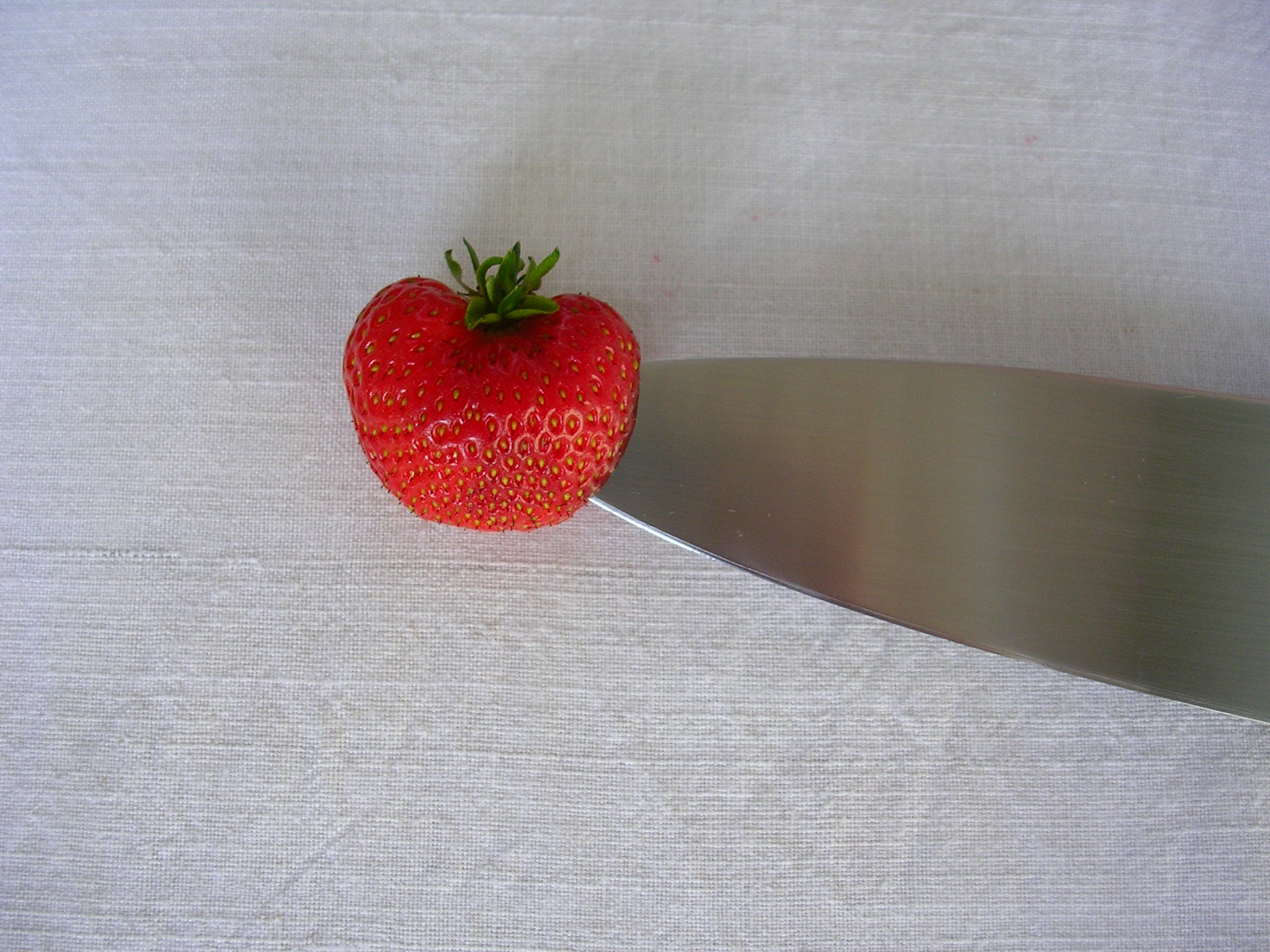
Our first strawberry harvest, and we would have a bumper crop if some animal, or animals, was not taking a bite from almost every ripe strawberry. I am in the middle of a critter war – again.

Every time I try a new deterrent, checking out the strawberries the next day is more suspenseful than watching a thriller. I warily walk down to the strawberry patch, bracing myself for what I am about to find. First I stand there for a few seconds with my eyes closed, then I slowly open my eyes and start looking around.

The amount of Epsom salt I spread around the perimeter of the patch this morning should make the strawberry thieves sneeze so hard we should hear it by the house. But again, if the critters are as keen on the strawberries as I am they might just pinch their noses and continue nibbling.

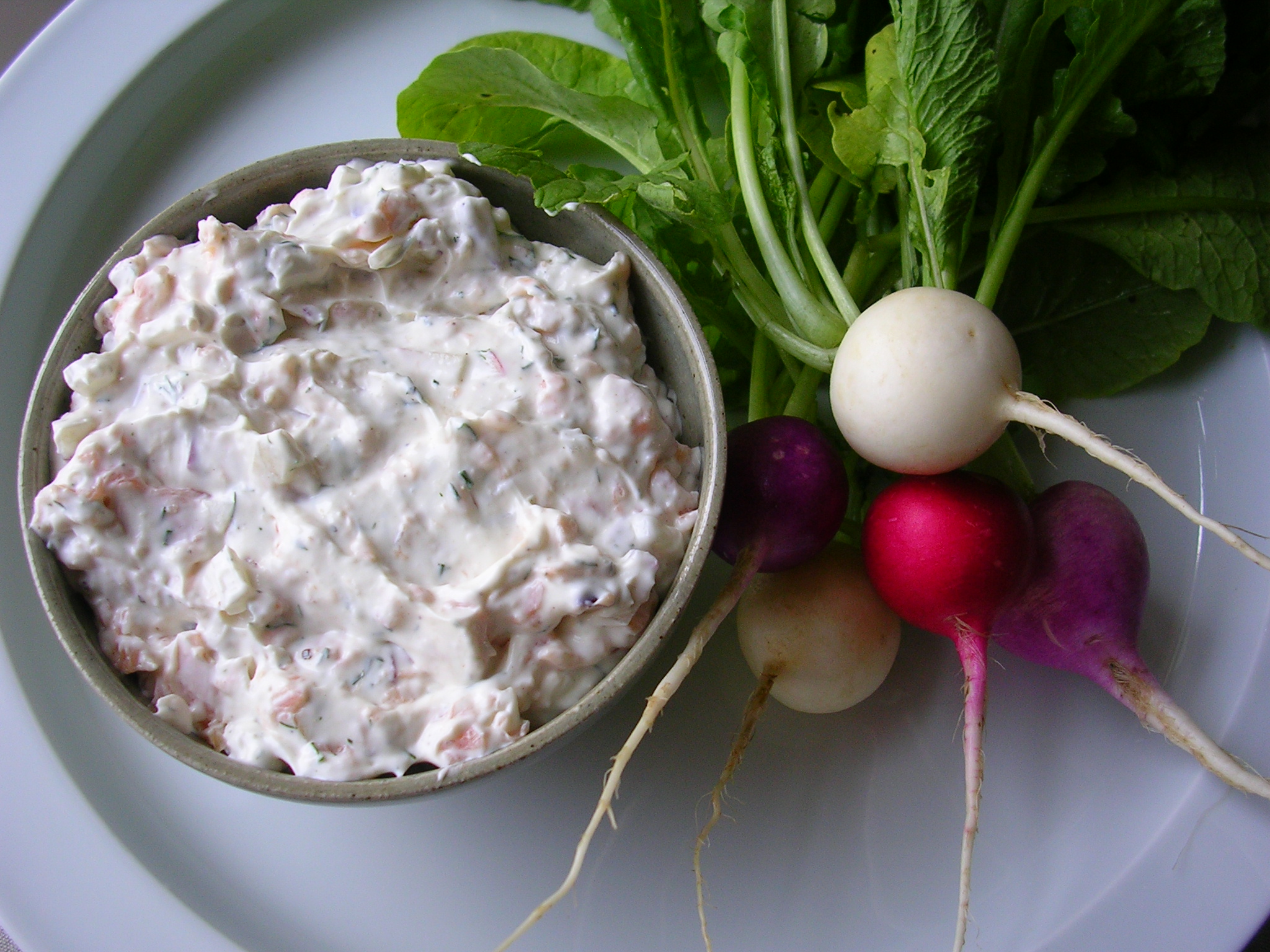
One way of distracting myself from garden woes is to make something quick and easy from a hassle-free crop. Harvesting those beautiful radishes made me think back to the time when the rabbits could squeeze through the fence and devoured the radish greens down to the ground. So it is again just a question of notching up the defense; maybe it’s time to reconsider a fence around the strawberry patch. Meanwhile I will listen out for the sound of sneezing tonight.

Radish Salmon Spread

8 ounces low-fat cream cheese, softened

1 tablespoon milk

3 ounces smoked salmon, finely chopped

1 bunch radishes, finely chopped (about ¾ cup)

1 teaspoon finely chopped fresh dill

Freshly ground black pepper

1. Stir the cream cheese and the milk until smooth. Add the radishes and fold in with a spatula, then fold in the salmon and dill. Season with pepper to taste.

2. Refrigerate. Take out of the fridge 15 minutes before serving.

Swan song? Hope not

The crabapples were plumper and larger than ever this year. This might not be a surprise after all the rain we had but for us, it is startling because in the spring it did not look as if the 25-year-old trees were going to make it.

After the snow melted, we realized serious bark damage on two-thirds of the trees. The bark had been chewed off all around from the ground to about a foot high. But then, as every year, the crabapples bloomed in the first week of May, making me want to cruise up and down our driveway again and again just to enjoy that gorgeous sight. Then came the drought in July, and the trees were still hanging in there.

And now this, a rich harvest! Such a severe damage to the bark is like removing the esophagus from a human body, totally disrupting food transportation. My explanation for the trees still being alive in mid-summer was that they must have had enough nutrients stored at the top. Whether these reserves could last a whole season I didn’t know.

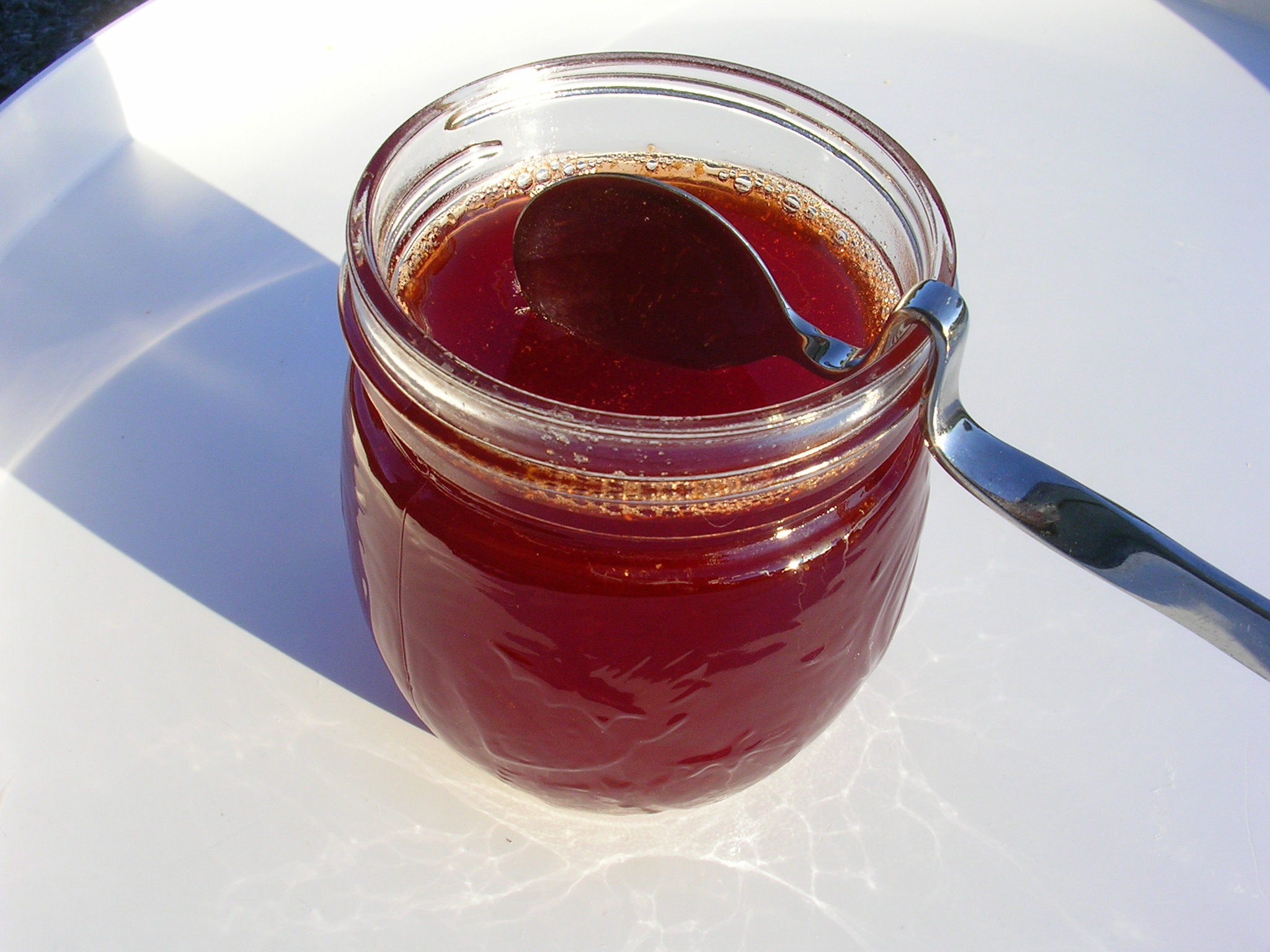
I am marveling at this miracle, and at the same time I fear this might be the trees’ swan song. Meanwhile, I made crabapple jelly today, very much hoping that I will be doing exactly the same thing again this time next year.

Gingered Crabapple Jelly

To extract the juice from the crabapples, it is best to chop the crabapples coarsely in the food processor, then put them in the steam juicer. The amounts can be increased as needed with a juice to sugar ratio of 2:1.

2½ cups crabapple juice (unsweetened)

1¼ cups sugar

¼ teaspoon ground ginger

1. Mix the juice and the sugar and cook in a heavy pot over low-medium heat for 1 hour. Remove any scum with a ladle or a large spoon.

2. Put a teaspoon full on a plate and wait a couple of minutes. If it is still runny, cook a few minutes longer and test again. If it gels but it still a little soft, it’s fine, as the jelly will solidify considerably upon cooling.

3. Pour the hot jelly in sterilized jars through a canning funnel. Wipe the rim with a damp piece of paper towel to remove any drips and wipe dry with paper towel. Place the lids and the bands on the jars and process in a boiling water bath for 10 minutes.

9. Let cool and set for 24 hours without moving the jars. If processed properly, the jelly will keep for 1 year or more.

Makes 2 half-pint jars

Beans in a brick

Unlike chicken under a brick, beans in a brick is not a recipe but the way I grow green beans. Every year I had entire rows of French filet beans, aka haricots verts, getting knocked over, a paining sight. Whether it’s the wind on our hilltop, or the weight of the beans that does it, I don’t know.

I tried different things, from securing every plant individually with a small stake (tedious and useless) to stretching wire along each side of the row (equally useless). I even called the company where I bought the seeds to find out what they recommend but they did not seem to understand what I was talking about, since the beans are described as self-supporting in the catalog.

Then, one day, I was standing outside the car wash waiting when my eyes fell on a pile of bricks nearby. What if I buried the seeds into the holes of bricks and let the plants grow into them? That way the crucial first 1.5 inches of the stem, where the plants always break, would be protected. Lucky coincidence – our local hardware store was just discontinuing selling bricks, so I got a few dozen bricks for free.

It worked! I seed the beans very densely, one in every hole, so they also support each other. The most important thing is not to move the bricks the slightest bit after seeding because the small hole is the seed’s lifeline to air and light. Without it, no germination!

A few plants still get knocked over, but this is minimal compared to the previous damage. Now it’s almost time to harvest, and I am looking forward to my favorite salad with green beans. The original recipe is from Bon Appetit but because I don’t like raw onions of any kind, I omit the shallots in the dressing. Since with my growing method, I get a good crop of haricot verts, I use three times more green beans than the recipe calls for. Therefore this is not a Potato Salad with Haricots Verts, but a Haricot Verts Salad with Potatoes.

Haricot Verts Salad with Potatoes, Blue Cheese and Walnuts

1 tablespoon + 1 teaspoon Dijon mustard

1 tablespoon white wine vinegar

1/4 cup extra-virgin olive oil

2 teaspoons chopped fresh rosemary

3/4 teaspoon chopped fresh sage

1 pound small reds-skinned potatoes

Salt

1.5 pounds French filet beans

1/3 cup walnuts

2/3 cup crumbled  blue cheese (Gorgonzola or Roquefort)

Freshly ground black pepper

1. Preheat the oven to 450 degrees F.

2. Whisk the mustard with the vinegar and olive oil. Stir in the rosemary and sage.

3. Wash the potatoes and toss them whole with 3 tablespoons vinaigrette until they are evenly coated. Spread them in one layer in a baking dish. Bake in the preheated oven for 20 minutes. Reduce the heat to 375 degrees F and bake for another 40 to 50 minutes until they are soft, turning them once in a while. Cool.

4. Bring salted water to the boil in a large pot. Have a large bowl with ice water standing by. Cook the beans in the boiling water for 3 minutes. Drain and throw immerse the beans in the ice water immediately. Swirl them around so they cool evenly. Drain again.

5. Lightly toast the walnuts in an ungreased pan. Chop them coarsely.

6. In a large bowl, mix the potatoes, green beans, cheese, walnuts and the remaining vinaigrette.  Season with salt and pepper.

Makes 6 servings

Know no shame, or: Anything for strawberries

Even after ten years in the country, I am squeamish as can be about anything furry – dead, alive, or in-between. Once our dog killed a groundhog in front of the garage door and it remained there until my husband returned from a trip to his parents a couple of days later. My mother-in-law, on one of my hysterical phone calls, recommended to cover it with an old towel, then load it onto a shovel, but just approaching the thing sent me screaming.

When it comes to protecting the new strawberry patch, however, I seem to be turning into a fearless, indelicate roughneck. The new commercial repellent I spread around the patch about a week ago seems to be working. But when I was weeding down there the other day and saw our dog lift his leg a few times around the patch, I had an idea. I had read somewhere that fermented human urine works as a critter repellent. Since we won’t be eating strawberries from the patch until next summer, and urine is sterile anyway, why not collect our own organic repellent? I sprinkled an old lemonade bottle full of donations around the perimeter of the patch twice this week. No rabbit damage so far!

But the next worry is already lurking around the corner. When I bought strawberries from our neighbor yesterday, he complained about half of his patch being affected by fungus because he had sprayed only once this season. Of course, now I am wondering what else will I have to battle after the rabbit plague, especially because I want to grow the strawberries organically, like the rest of the garden.

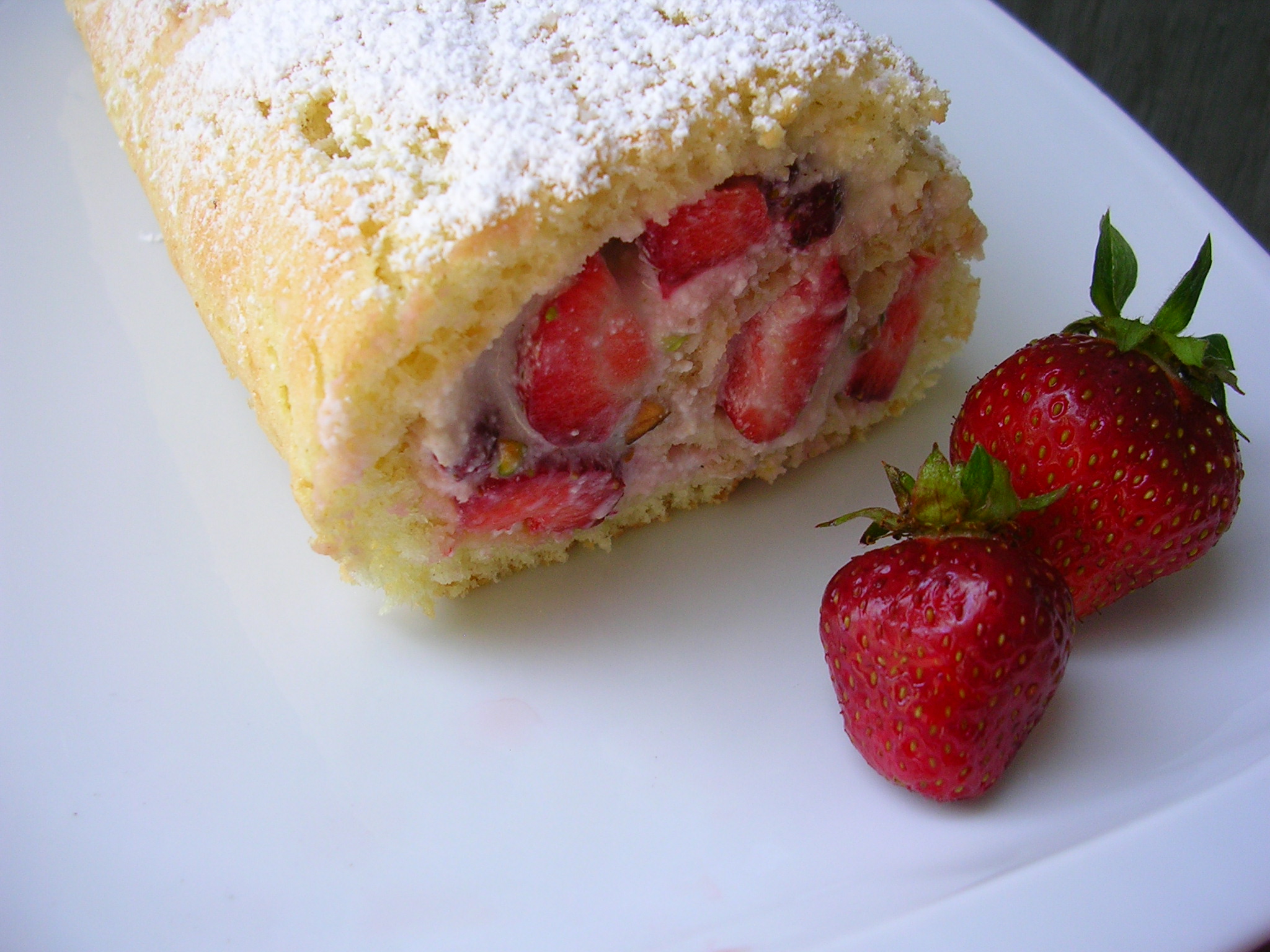
Enough kvetching, let’s get to the bright side of strawberries. Thanks to the healthy half of our neighbor’s strawberry patch, I was able to make another strawberry cake. It had to be something really easy and quick with the ingredients I had in the house, which was low-fat ricotta, but certainly whole-milk ricotta will make an even better, creamier filling.

Strawberry-Ricotta Roulade with Pistachios

Sponge cake:

2 eggs + 1 egg white

½ cup sugar

¾ cup flour

1 teaspoon baking powder

1/8 teaspoon salt

Filling:

¼ cup shelled pistachios

12 ounces strawberries

10 ounces ricotta

2 teaspoons vanilla extract

½ cup confectioner’s sugar, more for dusting

1. Preheat the oven to 400 degrees F. Line the bottom of a 16 x 11-inch jellyroll pan with parchment. Grease the parchment and the sides of the pan.

2. Beat the eggs and the egg white until light and fluffy.

3. Mix the flour with the baking powder and the salt and sift into the eggs. Fold it into the eggs lightly but thoroughly until no more flour pockets remain.

4. Pour the dough into the jellyroll pan and smoothen it with a spatula.

5. Bake in the preheated oven for 10 minutes, or until golden and springy to the touch.

6. Lift the parchment with the sponge cake onto the kitchen counter or a baking sheet and cover immediately with a clean dry kitchen towel. Let cool.

7. Lightly toast the pistachios. Cool, then chop and set aside.

8. Beat the ricotta with the vanilla extract and the confectioner’s sugar until smooth and creamy.

9. Wash, hull and slice the strawberries.

10. Flip the parchment with the sponge cake over and place it on a large baking sheet lined with the kitchen towel or with parchment. Carefully remove the parchment from the baking of the sponge cake.

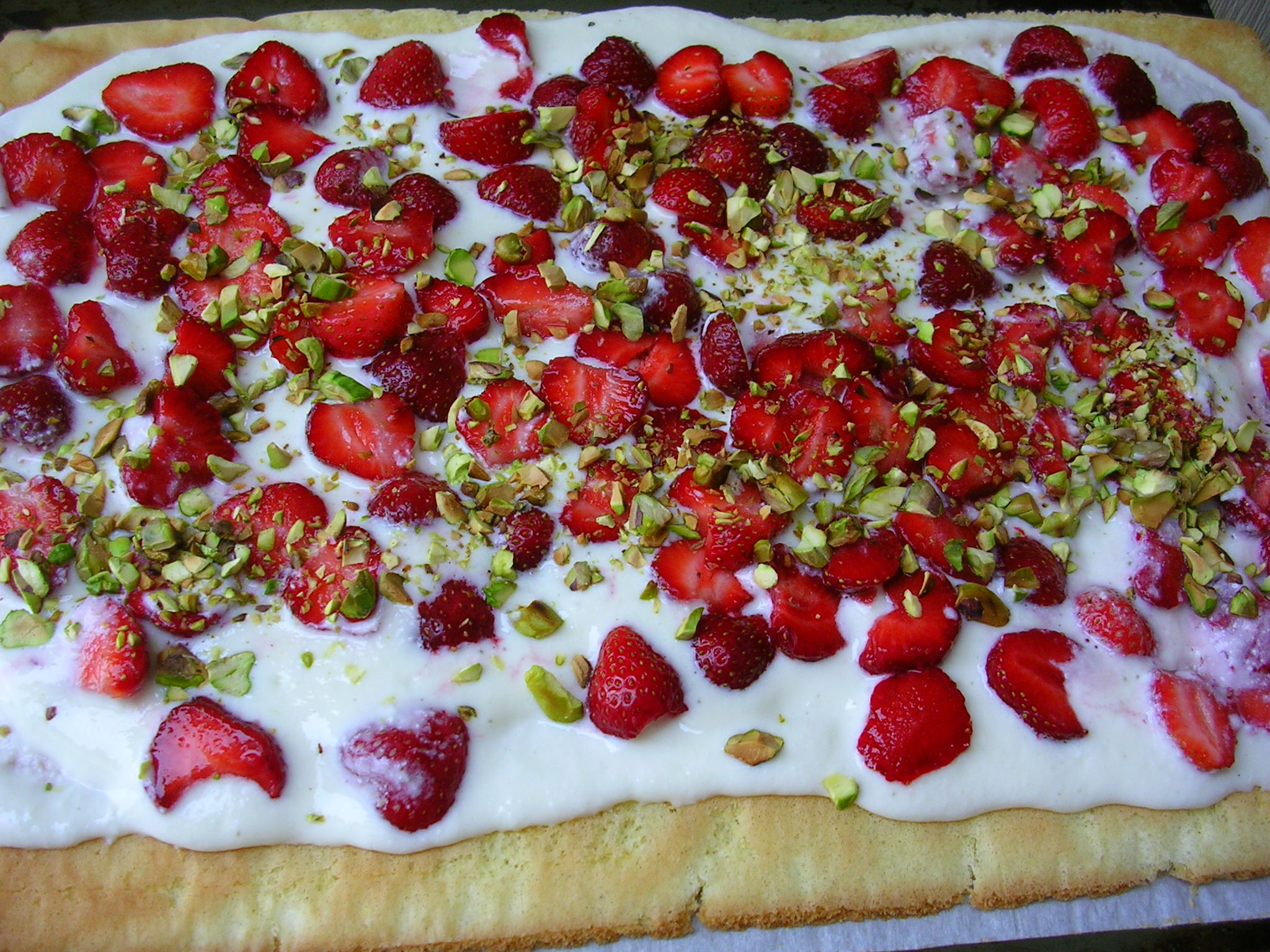
11. Spread the ricotta evenly over the sponge cake, leaving about ½ inch uncovered on the long sides. Spread the sliced strawberries on top and sprinkle with the pistachios.

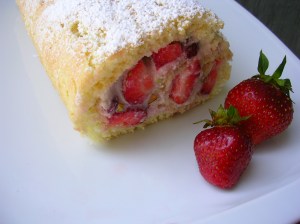
12. Using the towel as a lifter, roll up the cake from the long side. Place the roulade with the seam-side down on a serving platter. If you are making this just en famille, and not for fancy presentation, or if you don’t. have a platter long enough, cut it in half to fit, (that’s what I did). Chill for 1 hour. Dust with confectioner’s sugar before serving.