Strawberry mission accomplished

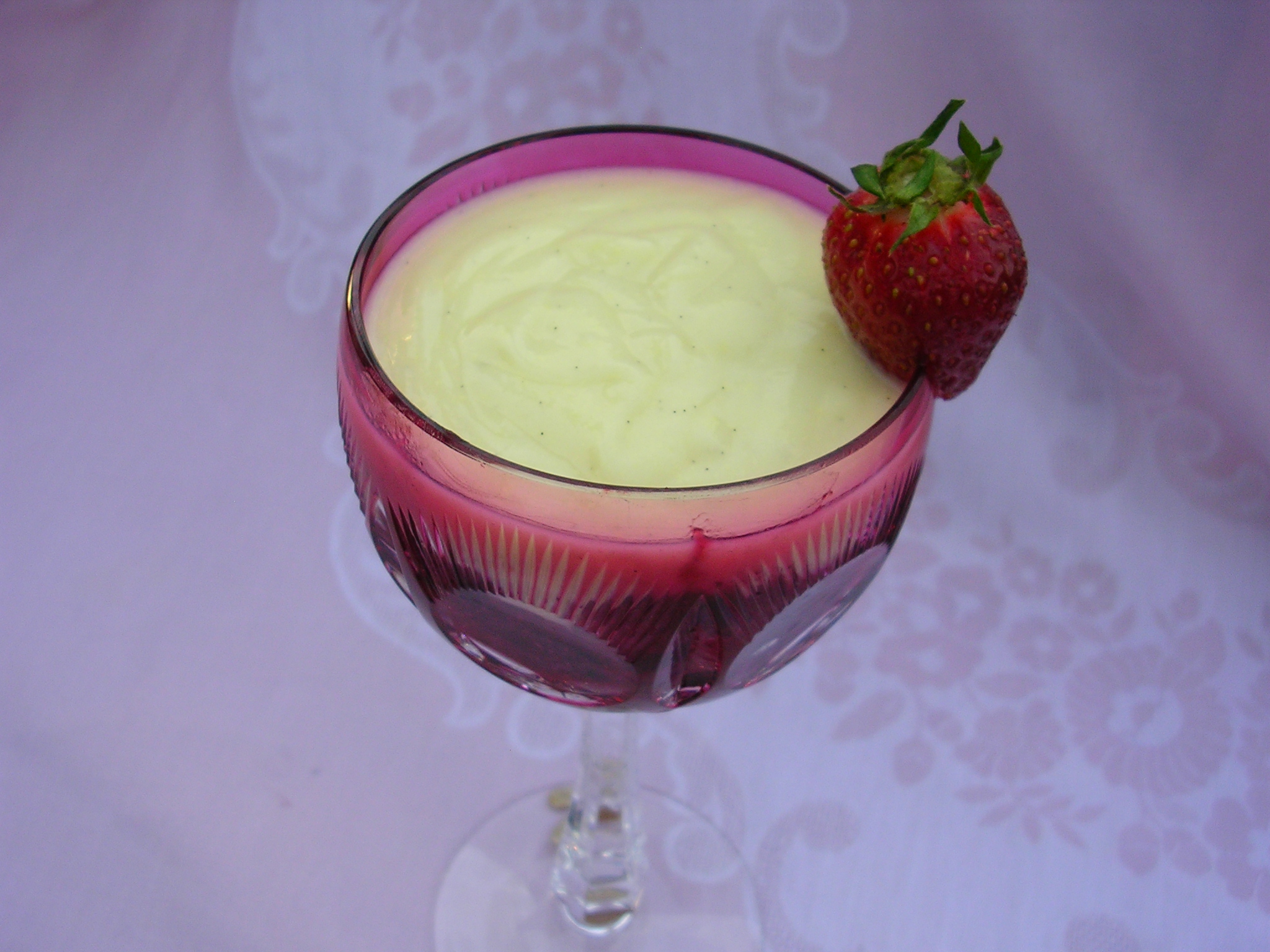
Finally, after taking all sorts of measures to protect strawberries against critters, there are enough strawberries from the garden to make Rote Grütze, the German red berry dessert that was my favorite as a child. The recipe can be found in my cookbook Spoonfuls of Germany.

Rote Grütze can be served with vanilla sauce, vanilla ice cream, whipped cream, liquid heavy cream, or plain milk. My favorite has always been vanilla sauce made from scratch – lots of it, therefore I often double the amounts.


Two anniversaries

After I moved from New York City to this lovely hilltop in Pennsylvania where my husband lived with his two young children, it took me a few years to get the gardening bug. I was just too busy learning to become a parent, although I felt from the beginning that with all that space around us (the storage room being as big as my bedroom was in the city), not growing your own food would be a shame.

The first summer, I did put in a couple of basil plants. I remember taking large bunches of it to the office, the scent filling the room, and my coworkers marveling about it (thankfully, the days of commuting are long over).

I started the garden in 2004, a year when our family was facing a serious health issue. That first-year garden, as tentative and modest as it may seem to me from today’s perspective, helped me keep my sanity. Gardening, whether for food or for beauty, has been my outlet ever since.

To celebrate my 9th gardening season, as well as our wedding anniversary today, I cannot think of a more befitting food than homegrown strawberries. Do I need to say that the critters seem to leave most of the strawberries alone now? They do!

Mini Strawberry Vacherins

I have made Vacherin quite a few times before but usually as one large cake. Even though it vanishes quickly so appearance really does not matter that much, after cutting the meringue does not look half as pretty. This time, I made four small Vacherins.

The meringue can be made one day ahead and stored in a dry place.

Meringue:

¼ cup ground hazelnuts

¼ cup ground walnuts

6 large egg whites

½ teaspoon cream of tartar

½ cup superfine sugar

1 cup confectioners’ sugar

Topping:

1 cup heavy cream

2 tablespoons vanilla sugar, or 2 tablespoons sugar + 1 teaspoon vanilla extract

Sliced strawberries

1. Lightly toast the hazelnuts and the walnuts in a non-greased pan. Make sure there are no larger pieces in the mix, as they will clog the pastry tip (speaking from experience here). Set aside to cool.

2. Line two large baking sheets with parchment paper. Using a food-grade pencil, draw 12 circles with a 3.5-inch diameter, leaving at least ½ inch between them.

3. Beat the egg whites and the cream of tartar in a large bowl at medium speed until foamy. Increase the speed and gradually add the superfine sugar, then the confectioners’ sugar. Continue beating until the mixture is stiff and glossy. Fold in the nuts.

4. Place a pastry bag with a plain tip in a large tall glass. Fill the bag with the batter in three batches in order not to overfill. Pipe thick circles onto the prepared baking sheets, starting on the outside and working your way inside in a spiral until the circle is filled. Even out the surface with a knife if necessary.

5. Preheat the oven to 200 degrees F. Place the baking sheet on the 2nd and 4th shelf of the oven and bake for 3 hours, or until the meringue is totally dry to the touch and crisp but not colored. Leave the baking sheets in the oven with the doors closed until it has completely cooled down.

6. Take the baking sheets out of the oven. Gently remove the meringue circles from the parchment. Place on a cake rack.

7. Whip the heavy cream with the vanilla sugar. Spread half of it on four meringue circles and arrange sliced strawberries on top. Place a second meringue circle on each and repeat with the remaining cream and strawberries. Place the last meringue circles on top. Serve right away, or refrigerate for a few hours but serve the same day.

Makes 4 to 6 servings

Strawberry suspense

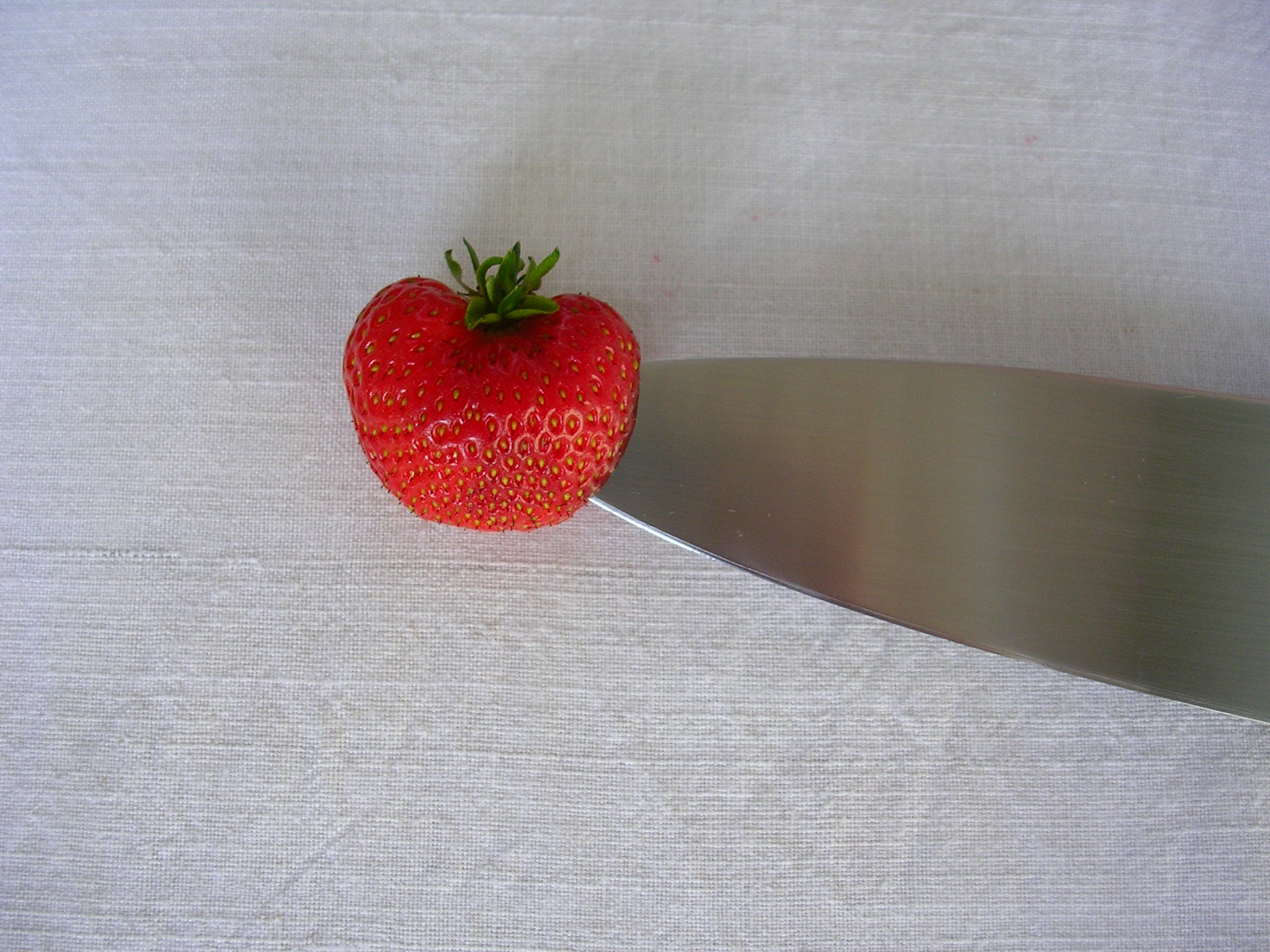
Our first strawberry harvest, and we would have a bumper crop if some animal, or animals, was not taking a bite from almost every ripe strawberry. I am in the middle of a critter war – again.

Every time I try a new deterrent, checking out the strawberries the next day is more suspenseful than watching a thriller. I warily walk down to the strawberry patch, bracing myself for what I am about to find. First I stand there for a few seconds with my eyes closed, then I slowly open my eyes and start looking around.

The amount of Epsom salt I spread around the perimeter of the patch this morning should make the strawberry thieves sneeze so hard we should hear it by the house. But again, if the critters are as keen on the strawberries as I am they might just pinch their noses and continue nibbling.

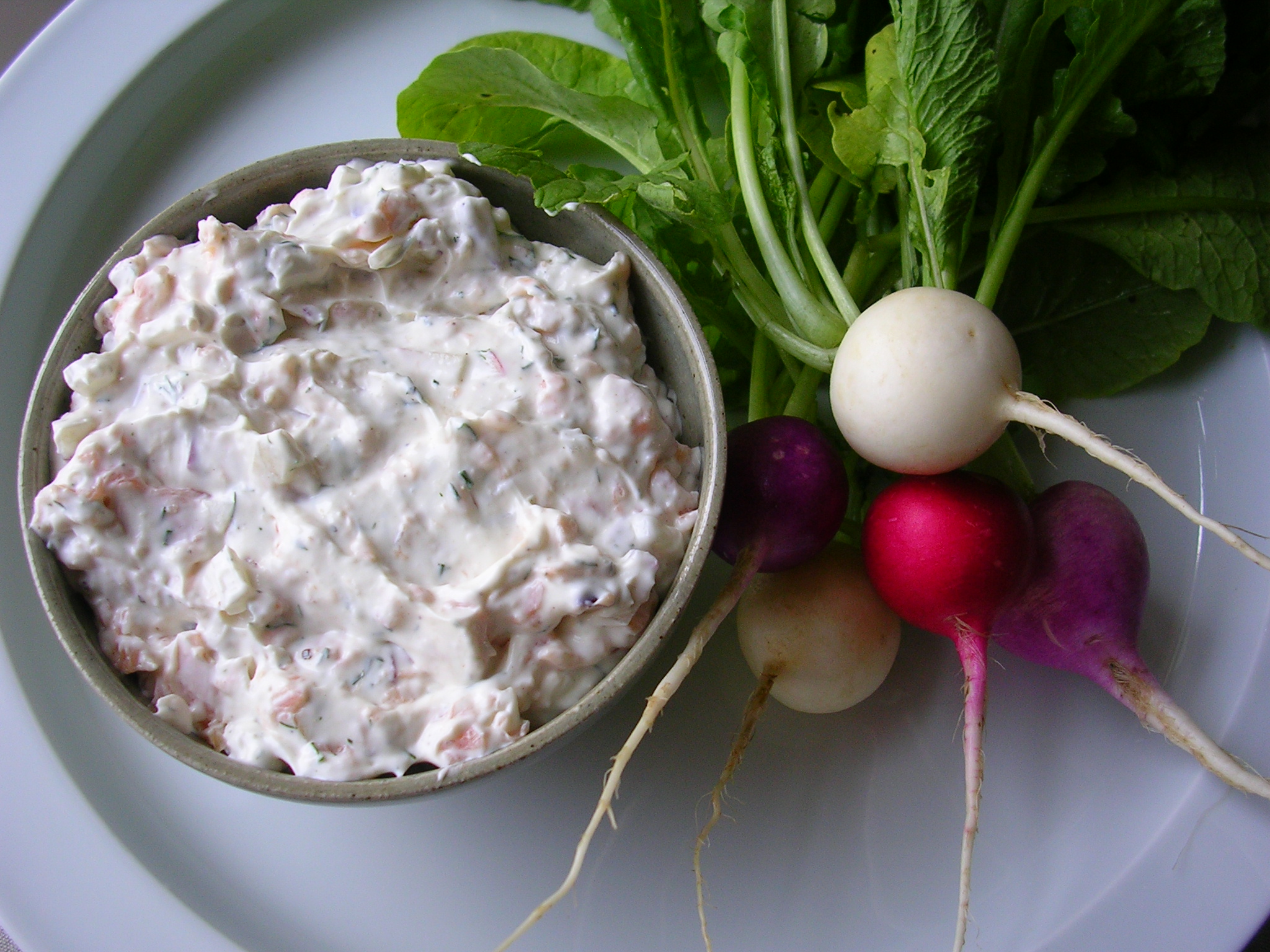
One way of distracting myself from garden woes is to make something quick and easy from a hassle-free crop. Harvesting those beautiful radishes made me think back to the time when the rabbits could squeeze through the fence and devoured the radish greens down to the ground. So it is again just a question of notching up the defense; maybe it’s time to reconsider a fence around the strawberry patch. Meanwhile I will listen out for the sound of sneezing tonight.

Radish Salmon Spread

8 ounces low-fat cream cheese, softened

1 tablespoon milk

3 ounces smoked salmon, finely chopped

1 bunch radishes, finely chopped (about ¾ cup)

1 teaspoon finely chopped fresh dill

Freshly ground black pepper

1. Stir the cream cheese and the milk until smooth. Add the radishes and fold in with a spatula, then fold in the salmon and dill. Season with pepper to taste.

2. Refrigerate. Take out of the fridge 15 minutes before serving.

Elderflower feast


When we drove up north to the Hudson Valley yesterday, the edge of the woods along the highway was lined with shrubs that looked like elderberries in full bloom. I could barely sit still in my seat. Last spring was the first time I took a few handfuls of elderflowers from my plants to make elderflower jelly. It is delicious but I am not sure I will dare to do that again, as the yield of those shrubs is so modest to begin with.

Here were enough elderflowers to try all the elderflower recipes in the world, and then some! Once we reached our destination, I quickly excused myself and, equipped with a plastic bag and a knife, strolled into the meadows behind the house. I did not have to walk far before I found a big elderberry bush in full bloom.

On the way home, I started to wonder. The leaves looked slightly different from the cultivated elderberries I have in the garden… I’d better do some research before processing my botanical booty.

Of all the areas of gardening, I find plant identification with plant identification keys the hardest, and I usually take the easiest way out by just comparing photos. Yet this time I had to dig a bit deeper. I was glad I brought home a twig with a full set of leaves, in addition to the flowers.

I needed to make sure it was American Elderberry (Sambucus canadensis) and not Red Elderberry (Sambucus racemosa), which is unfit for consumption and whose berries are toxic. The flowers and fully ripened berries of the American Elderberry are edible (its other parts are indeed poisonous). From the USDA database and other reliable sources I learned that the smell of crushed red elderberry leaves is strong and unpleasant, the twigs are pithy with raised pores, and the flowers are conical, pyramidal clusters. What I had picked was American Elderberry. Also, it reassured me that on local Hudson Valley websites and blogs people were raving about the abundance of wild American Elderberry in the area.

So I was safe and happily went to work, making a large batch of elderberry syrup and elderberry vinegar. The rest of the elderflowers are drying on a tray lined with paper towels to make herbal tea against cold and fever.


Elderflower Vinegar

Some recipes require soaking the flowers in salt water, I suppose to get rid of any insects. Although this removes some of the pollen, for vinegar this makes sense to me because unlike syrup and jelly, it is not boiled afterwards.

1 tablespoon salt

1½ cups packed elderflower blossoms, all stems and leaves removed

3 cups (750 ml) white vinegar

¼ cup plus 2 tablespoons (75 g) sugar

¾ cup (190 ml) white wine

1. Fill a large bowl with cold tap water. Holding each umbel by the stem, gently move it around in the water. Exchange the water as necessary.

2. When the water is clear, add the salt to the water and stir to dilute. The blossoms should be fully immersed. Set aside.

3. Bring the vinegar, sugar and wine to a boil and stir until the sugar is fully dissolved.

4. Drain the elderflowers and pat dry with paper towels. Place in a 1-quart sterilized jar with a lid and pour the hot vinegar mix over it. Cover and let sit in a dark place at moderate room temperature for 2 weeks. Strain twice through a sieve lined with several layers of cheesecloth. Fill in sterilized bottles.

Makes 1 quart/1 liter


Photo by Ted Rosen