Apricot tart, juicy and impromptu

My baking is often quite unorthodox. I start with a recipe, then change course mid-way, hoping it will work out. This time I had a basket full of beautiful, super-ripe apricots from a local orchard sitting on the counter. The apricots were so juicy that I feared the crust would turn soggy if I placed the apricots directly on the dough. So I turned the recipe upside down. I sprinkled the dough with the sugar-almond mix that was supposed to go on top, and made another batch of the almond-sugar mix for the topping. In fact the apricots were so juicy that as an additional precaution, I placed a jelly roll pan on the rack underneath to catch any drippings, and I am glad I did.

I took notes just in case the apricot tart would turn out fine. It did! Here is the recipe:

Apricot Tart:

Crust:

1 1/3 cups flour

1 stick chilled unsalted butter, cut into chunks

1/3 cup + 1 tablespoon sugar

Pinch of salt

1 egg yolk

Topping:

1/3 cup whole unpeeled almonds

1/3 cup sugar

4 tablespoons apricot preserves

1.5 pound ripe apricots

1. Place the flour and the butter in the food processor and process to a crumbly consistency. Add the sugar, salt and egg yolk and process until the dough forms a ball. Put the dough in a container with a lid or in plastic wrap and place in the freezer for 20 minutes.

2. Toast the almonds in an ungreased pan. Cool, then grind in the food processor with 1/3 cup sugar.

3. Butter a 9-inch tart pan (I used one with a removable bottom) and sprinkle with 1 tablespoon of the almond mix.

4. Preheat the oven to 400 degrees F.

5. Roll out the dough between two pieces of wax paper to a 11-inch circle. Fit the dough into the tart pan with the dough coming up the sides. Trim extra dough with a knife or gently even it out by pinching it together with your fingertips. Sprinkle with half of the remaining almond mix.

6. Wash the apricots and dry well. Cut in half and remove the pits. Place the apricots on the dough cut-side down; they should fit snugly.

7. Warm the apricot preserves and strain them through a fine sieve and brush the apricots with it. Sprinkle with the remaining almond mix and bake in the preheated oven for 40 minutes, or until the crust is golden. Let cool on a wire rack.

Eyes bigger than the basket

Blueberries
Yesterday I went blueberry picking at a berry farm. It was drizzling on and off and therefore empty and very quiet. I picked and picked until my basket was full – slightly over 27 pounds!
Most of it went into the freezer for pies, cakes, crumbles, and smoothies. It makes up for my own meager harvest of black currants and gooseberries, which I blame partly on my negligent pruning last year, and partly to the chipmunks.

While I love blueberries I don’t care much for them in their raw state. Chilled blueberry soup, a specialty from northern Germany, is a favorite of mine and perfect on hot summer days. The recipe can be found in my cookbook Spoonfuls of Germany.

Blueberry Soup

Are you jellin’?


When I first moved to the United States, I loaded up on all types of baking and cooking ingredients on each visit to my native Germany. Meanwhile I have found decent substitutes for most items, except one: jelling sugar.

In Germany, jelling sugar comes in three variations of fruit-to-sugar ratio, depending on the sweetness of the fruit and personal taste: 1:1, 2:1 and 3:1. It’s a natural product, made from pectin in apples and citrus fruit. And, it comes ready-mixed, or as a jelling powder concentrate to which you add sugar (lightweight and therefore perfect for airline travel). Some online stores specializing in German foods have it but when I inquired at Dr. Oetker USA, I was told they don’t carry it. Too bad, because there is really nothing like it in the US. Many American recipes call for twice as much sugar as fruit.

So don’t hesitate if you can get your hands on imported jelling sugar. Alternatively, you can use pectin products for less sugar or no sugar recipes, to obtain an jam or jelly that actually tastes like the fruit, not just sugary.

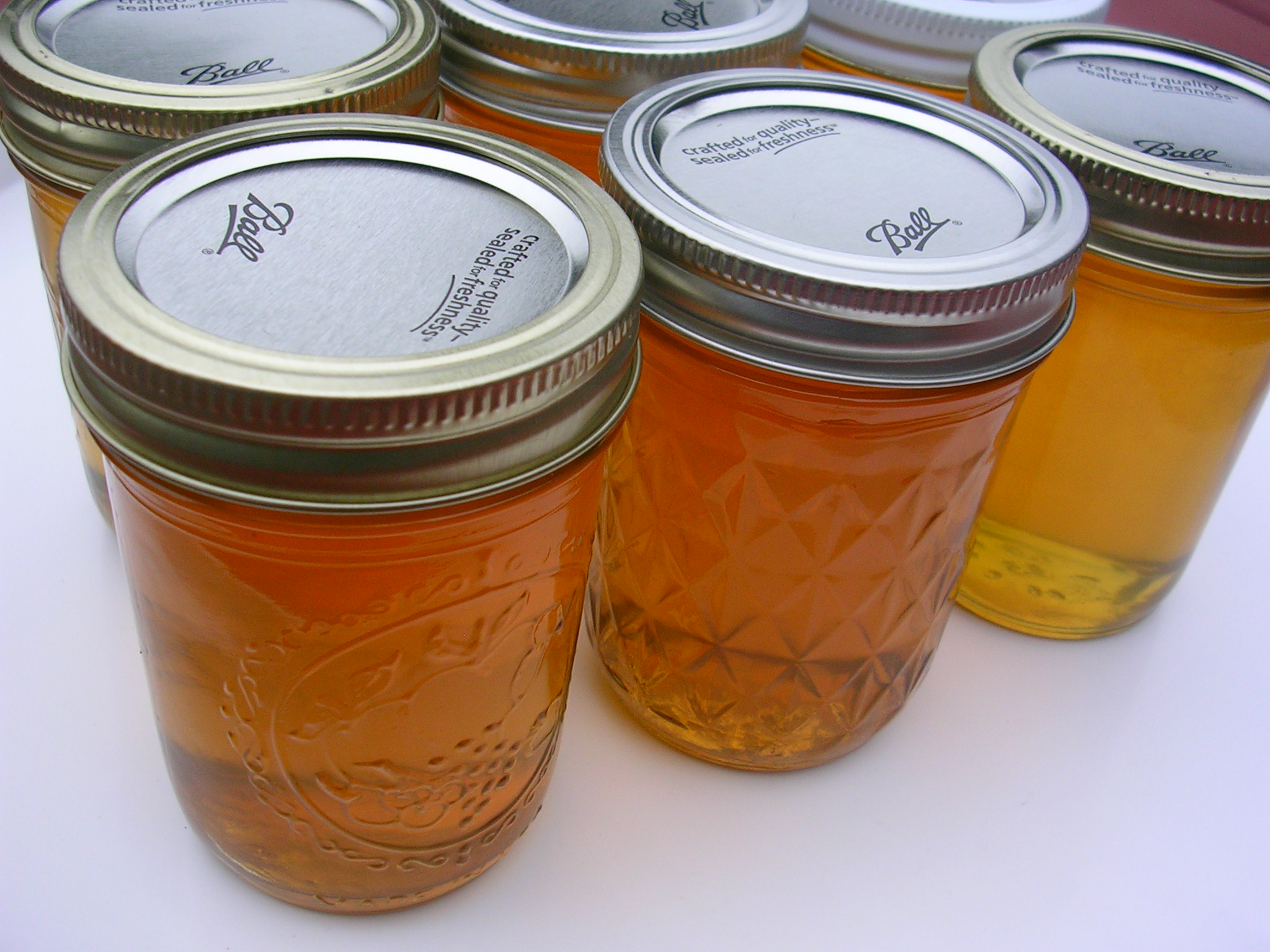
This was the first year I had enough blossoms on my elderberry bushes to dare snipping some off for elderflower jelly. The heavenly scent alone is worth making it. In the past few days I have spotted wild elderberry blooming along the roadside. As long as it’s not in a polluted area, and the plants have not been sprayed with any pesticides, you can use those. To make sure you are really harvesting elderflowers, check out some elderberry images, for example on the website of the Missouri Botanical Garden, which has an excellent plant database.

I might go forage elderflowers myself to try some other elderflower recipes.

Elderflower Jelly

8 cups clear apple juice without artificial coloring or additional sugar

15 to 20 elderberry flowerheads

1 package fruit pectin for less or no sugar recipes

4 cups sugar

You also need:

A canning pot, or a very large stockpot

10 half-pint canning jars

8 bands

8 new (unused) lids

1. Shake the elderflowers to remove any bugs. Remove all the stems.

2. Immerse the flowers in a large bowl filled with cold water. Swish around and place in a colander. Repeat this process once or twice. If there are still tiny insects on the flowers, don’t worry. The juice will be strained and cooked.

3. Place the flowers in a large plastic container with a lid. Pour the apple juice over it. Push down; the flowers should be fully immersed in juice. Cover and refrigerate for 48 hours.

4. Pour the liquid through a fine sieve. Repeat the process. You may also line the sieve with a piece of damp cheesecloth if you are really worried about bugs.

5. Follow the package directions for your pectin product. When the mixture boils, remove any foam with a ladle or a large spoon.

7. Pour the hot jelly in sterilized jars through a canning funnel. Wipe the rim with a damp piece of paper towel to remove any drips and wipe dry with paper towel. Place the lids and the bands on the jars and process in a boiling water bath for 10 minutes.

9. Let cool and set for 24 hours without moving the jars. If processed properly, the jelly will keep for 1 year or more.

Makes 10 half-pint jars

Know no shame, or: Anything for strawberries

Even after ten years in the country, I am squeamish as can be about anything furry – dead, alive, or in-between. Once our dog killed a groundhog in front of the garage door and it remained there until my husband returned from a trip to his parents a couple of days later. My mother-in-law, on one of my hysterical phone calls, recommended to cover it with an old towel, then load it onto a shovel, but just approaching the thing sent me screaming.

When it comes to protecting the new strawberry patch, however, I seem to be turning into a fearless, indelicate roughneck. The new commercial repellent I spread around the patch about a week ago seems to be working. But when I was weeding down there the other day and saw our dog lift his leg a few times around the patch, I had an idea. I had read somewhere that fermented human urine works as a critter repellent. Since we won’t be eating strawberries from the patch until next summer, and urine is sterile anyway, why not collect our own organic repellent? I sprinkled an old lemonade bottle full of donations around the perimeter of the patch twice this week. No rabbit damage so far!

But the next worry is already lurking around the corner. When I bought strawberries from our neighbor yesterday, he complained about half of his patch being affected by fungus because he had sprayed only once this season. Of course, now I am wondering what else will I have to battle after the rabbit plague, especially because I want to grow the strawberries organically, like the rest of the garden.

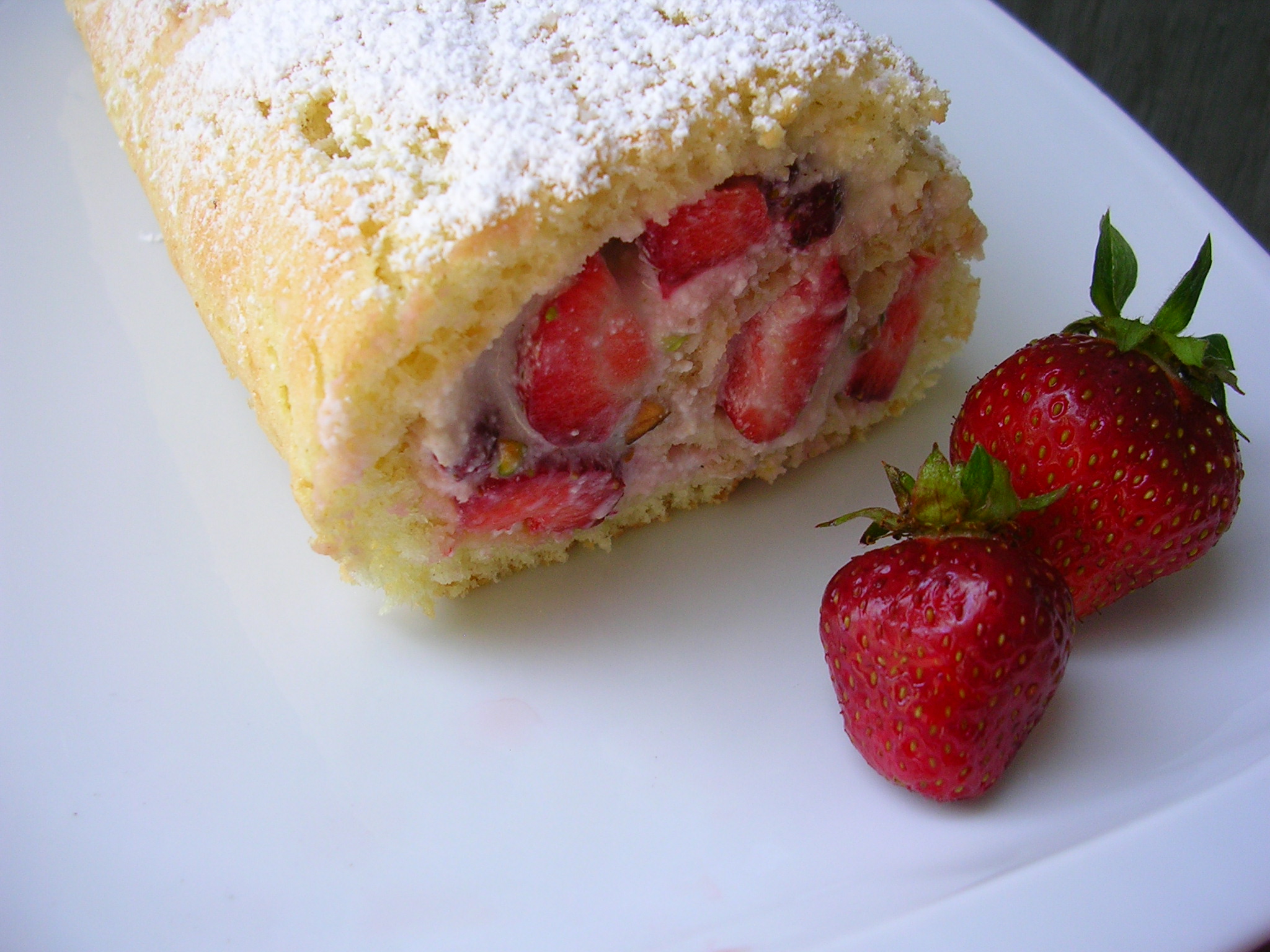
Enough kvetching, let’s get to the bright side of strawberries. Thanks to the healthy half of our neighbor’s strawberry patch, I was able to make another strawberry cake. It had to be something really easy and quick with the ingredients I had in the house, which was low-fat ricotta, but certainly whole-milk ricotta will make an even better, creamier filling.

Strawberry-Ricotta Roulade with Pistachios

Sponge cake:

2 eggs + 1 egg white

½ cup sugar

¾ cup flour

1 teaspoon baking powder

1/8 teaspoon salt

Filling:

¼ cup shelled pistachios

12 ounces strawberries

10 ounces ricotta

2 teaspoons vanilla extract

½ cup confectioner’s sugar, more for dusting

1. Preheat the oven to 400 degrees F. Line the bottom of a 16 x 11-inch jellyroll pan with parchment. Grease the parchment and the sides of the pan.

2. Beat the eggs and the egg white until light and fluffy.

3. Mix the flour with the baking powder and the salt and sift into the eggs. Fold it into the eggs lightly but thoroughly until no more flour pockets remain.

4. Pour the dough into the jellyroll pan and smoothen it with a spatula.

5. Bake in the preheated oven for 10 minutes, or until golden and springy to the touch.

6. Lift the parchment with the sponge cake onto the kitchen counter or a baking sheet and cover immediately with a clean dry kitchen towel. Let cool.

7. Lightly toast the pistachios. Cool, then chop and set aside.

8. Beat the ricotta with the vanilla extract and the confectioner’s sugar until smooth and creamy.

9. Wash, hull and slice the strawberries.

10. Flip the parchment with the sponge cake over and place it on a large baking sheet lined with the kitchen towel or with parchment. Carefully remove the parchment from the baking of the sponge cake.

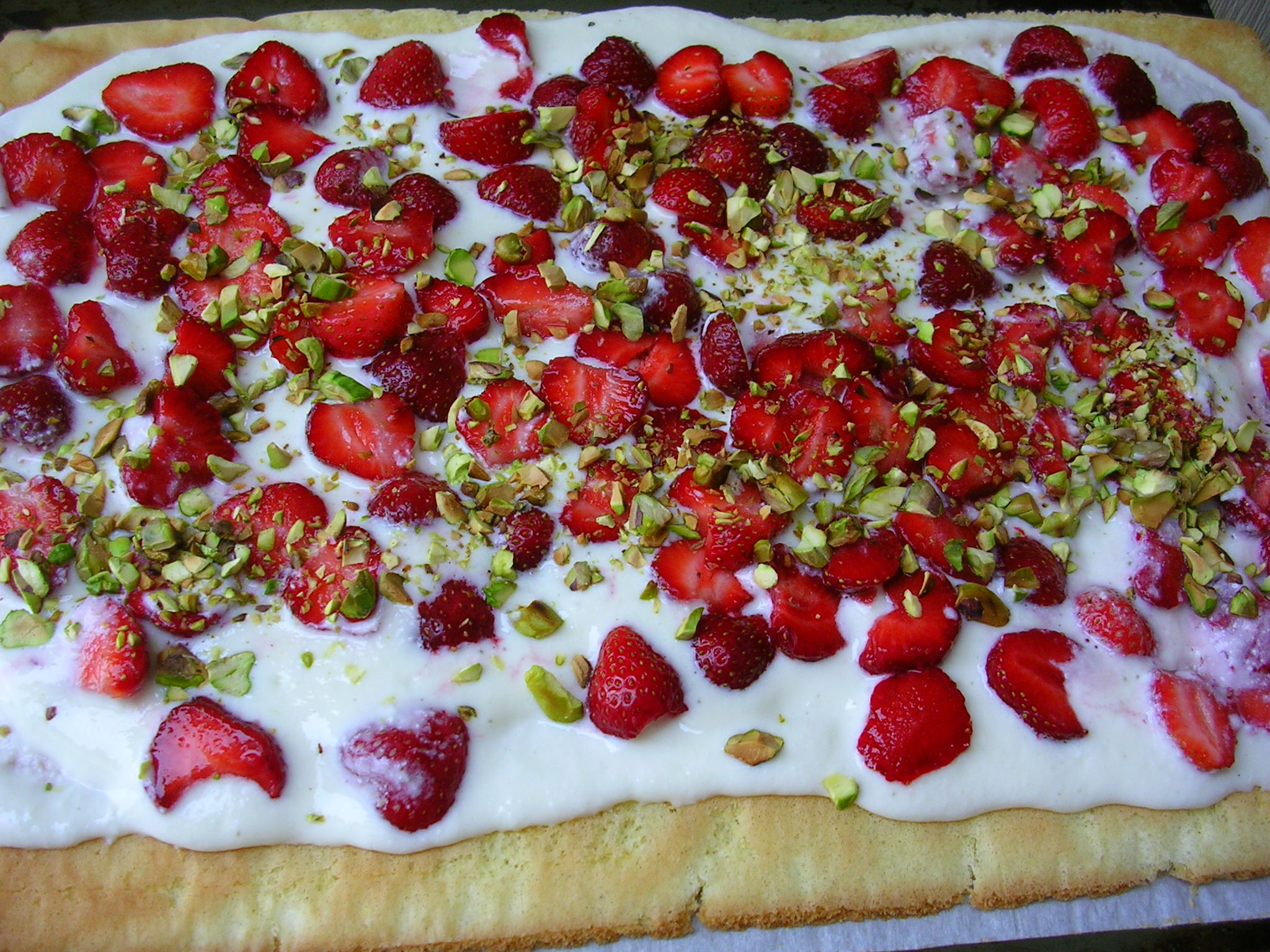
11. Spread the ricotta evenly over the sponge cake, leaving about ½ inch uncovered on the long sides. Spread the sliced strawberries on top and sprinkle with the pistachios.

12. Using the towel as a lifter, roll up the cake from the long side. Place the roulade with the seam-side down on a serving platter. If you are making this just en famille, and not for fancy presentation, or if you don’t. have a platter long enough, cut it in half to fit, (that’s what I did). Chill for 1 hour. Dust with confectioner’s sugar before serving.