
 Other than eating them, I don’t want to have anything to do with quinces for a very long time. Last week I spent three long evenings, and a good part of Saturday, peeling, coring, and chopping quinces, making quince jelly, quince sauce, quince compote, quince chutney, and poached quinces. In the process, I ran out of sugar, apple cider vinegar, jars, and lids. I dulled two paring knives (quinces are very acidic!), got a blister on my hand, and had to run over to a friend’s house because I don’t have a pressure cooker and I thought the quince sauce needed special processing (now I know better). Also, two filled canning jars cracked during sealing, spilling their precious content into the boiling water.
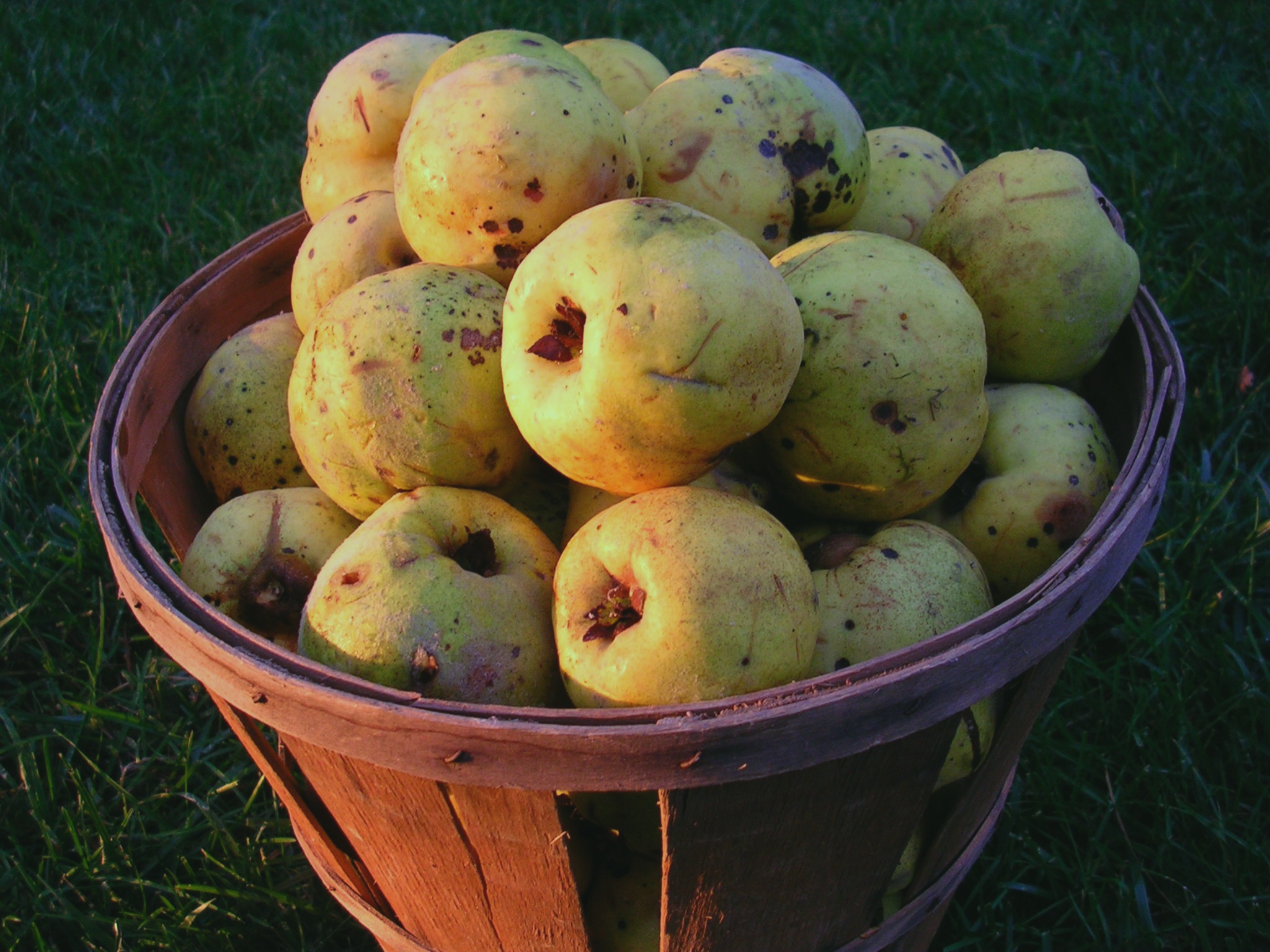 Yet when I look at the line-up of jars, I am telling myself it was worth it. I had already given up on getting my hand on quinces this fall when our neighbor unloaded three large crates with quinces on our porch on Wednesday night. I did not weigh them but it must have been 30 to 40 pounds.
If those had been regular quinces, I would not have been able to handle such a huge amount. The trees where that glut of gnarly quinces originated surely have not been treated with pesticides, nor been pruned in decades so there was a lot of waste. Except for the tedious process of cleaning and trimming, this was fine with me; I was going to peel and thoroughly core the quinces anyway, because I don’t like the astringent taste of those parts.
 While the look of most fruits deteriorates during cooking, the quince turns into a blushing pink beauty. I find it amazing how the pale yellow, gritty flesh of quinces changes its color. However, it is essential to immerse the quinces in a bowl of water with several tablespoons of lemon or lime juice immediately after peeling to prevent them from turning brown.
No additives needed for coloring here – the leftover liquid from poaching the quinces, which I strained and filled into bottles, has the color of pink lemonade. We started mixing it with seltzer water for a refreshing soda. Nothing should go to waste, especially after you have worked so hard for it!
Here are two of the quince recipes. After I am done labeling all those jars, I will write down the others.
Spiced Quince Sauce
I initially thought the quince sauce needed to be sealed in a pressure cooker but I learned that ¼ cup of sugar per pound of fruit is enough for safe water batch canning.
Although it takes more time, and I really did not need that after all the peeling and coring, I strongly recommend grinding the spices yourself instead of using ground ones. The flavor is significantly better.
5¾ pounds peeled and cored quince chunks
1 tablespoon finely chopped organic lemon zest
2 teaspoons cinnamon
½ teaspoon ground ginger
¼ teaspoon ground cloves
½ teaspoon ground nutmeg
1 teaspoon ground coriander
1 teaspoon ground cardamom
1 teaspoon ground allspice
½ teaspoon ground anise
½ cup orange juice
2 cups sugar
1. Put all the ingredients except for the sugar in a large heavy pot and cook, covered, until the quinces break apart, about 1 to 1¼ hours. Stir often to prevent burning.
2. Add the sugar at the end of the cooking process. Puree finely with a stick blender.
3. Fill the hot quince sauce in sterilized jars. The sauce is very thick and forms air pockets. To remove them, carefully stir the sauce with a long, thin utensil (I used a metal skewer).
4. Wipe the rim with a damp piece of paper towel to remove any drips and wipe dry with paper towel. Place the lids and the bands on the jars and process in a boiling water bath for 10 minutes.
5. Let cool and set for 24 hours without moving the jars.
Makes four to five 1-pint jars
Chunky Orange-Cardamom Quince Compote
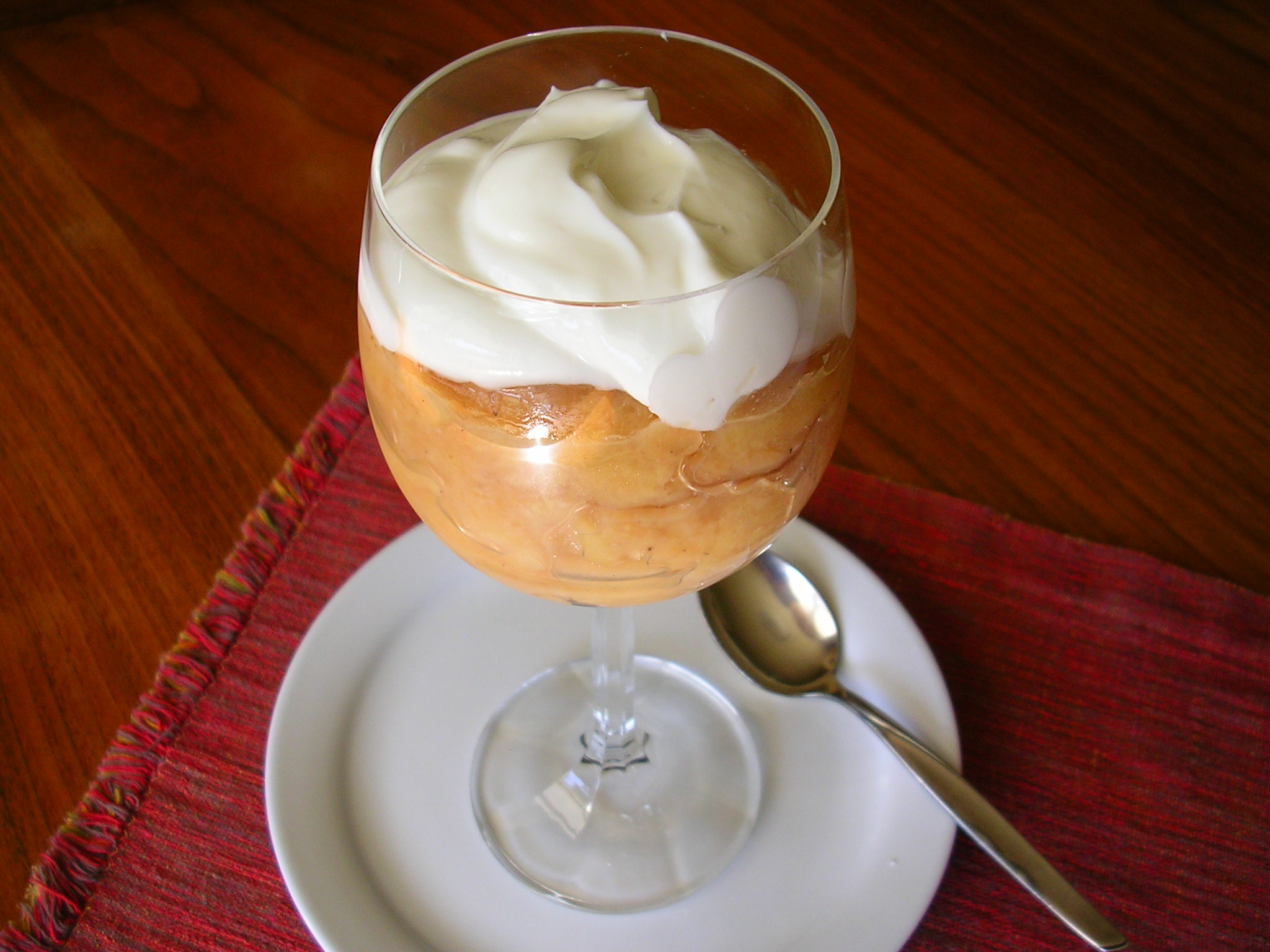
Quinces and oranges are a wonderful combination, and so are quinces and cardamom, so why not combine all three? This makes chunky quince compote that we ate with Greek vanilla yogurt.
 1¾ pounds peeled and cored quince chunks
2 teaspoons dried orange peel
6 cardamom pods, finely ground
1/3 to ½ cup sugar, to taste
2 tablespoons Cointreau or other orange liqueur, to taste
1. Put the quinces in a heavy pot with the cardamom about ¼ inch of water to prevent burning. Cook, covered, for about 45 minutes, until the quinces are soft but not falling apart. Add the sugar and stir until dissolved.
2. Let cool, then stir in the orange liqueur. Refrigerate.
Makes 6 servings



 Green Card Gardener