After-the-storm elderberry sauce

After a power outage for two and-a-half days due to hurricane Irene, and the emergency evacuation of our freezer chest, filled almost to the top with produce from the garden, to friends who did not lose power, I had only limited energy left for lengthy food rescue operations.

The storm had knocked down several handfuls of elderberry clusters. Elderberries ripen unevenly so I usually leave them on the plant until all the berries are black, hoping I am quicker than the birds. The elderberry clusters I collected still had some green berries on them but that’s all right.

I have never made anything else than elderberry soup or jelly from elderberries. There were not enough storm berries for any of those but I know from Elderberry Soup that elderberries and apples are a good combination. So I made this easy after-the-storm elderberry sauce with apples. I had it with Greek yogurt but I can imagine it also delicious on cottage cheese, rice pudding, with waffles or pancakes.

Let’s hope we won’t have another storm like this in a long time but if we ever do, I will try the sauce with pears, which also complement elderberries very well.

Elderberry Sauce with Apples 

2 Gala apples

2.5 cups stemmed and washed elderberries

1 cinnamon stick

1 strip of organic lemon peel

½ cup sugar, to taste

1 tablespoon cornstarch

1. Peel and quarter the apples. Remove the core and cut the apples into ½-inch dice. Put them in a heavy saucepan with the elderberries, the cinnamon, lemon peel and sugar. Add 2 to 3 tablespoons water to prevent burning before the elderberries release their juice.

2. Bring to a boil and cook, covered, 15 minutes, until the apples are very tender and the berries are easily crushed with a spoon. Stir occasionally during cooking.

3. Cool slightly and remove the lemon peel and cinnamon stick. Pass through the finest plate of the food processor. Scrape the underside of the plate – a lot of the thick pulp gets stuck there.

4. Return the sauce to the pot. Dissolve the cornstarch in 2 tablespoons cold water and add it to sauce. Stirring constantly, bring the sauce to the boil and cook for another 2 to 3 minutes, until it thickens and looks no longer starchy. Taste for sugar. Let cool and refrigerate.

Makes about 1 cup
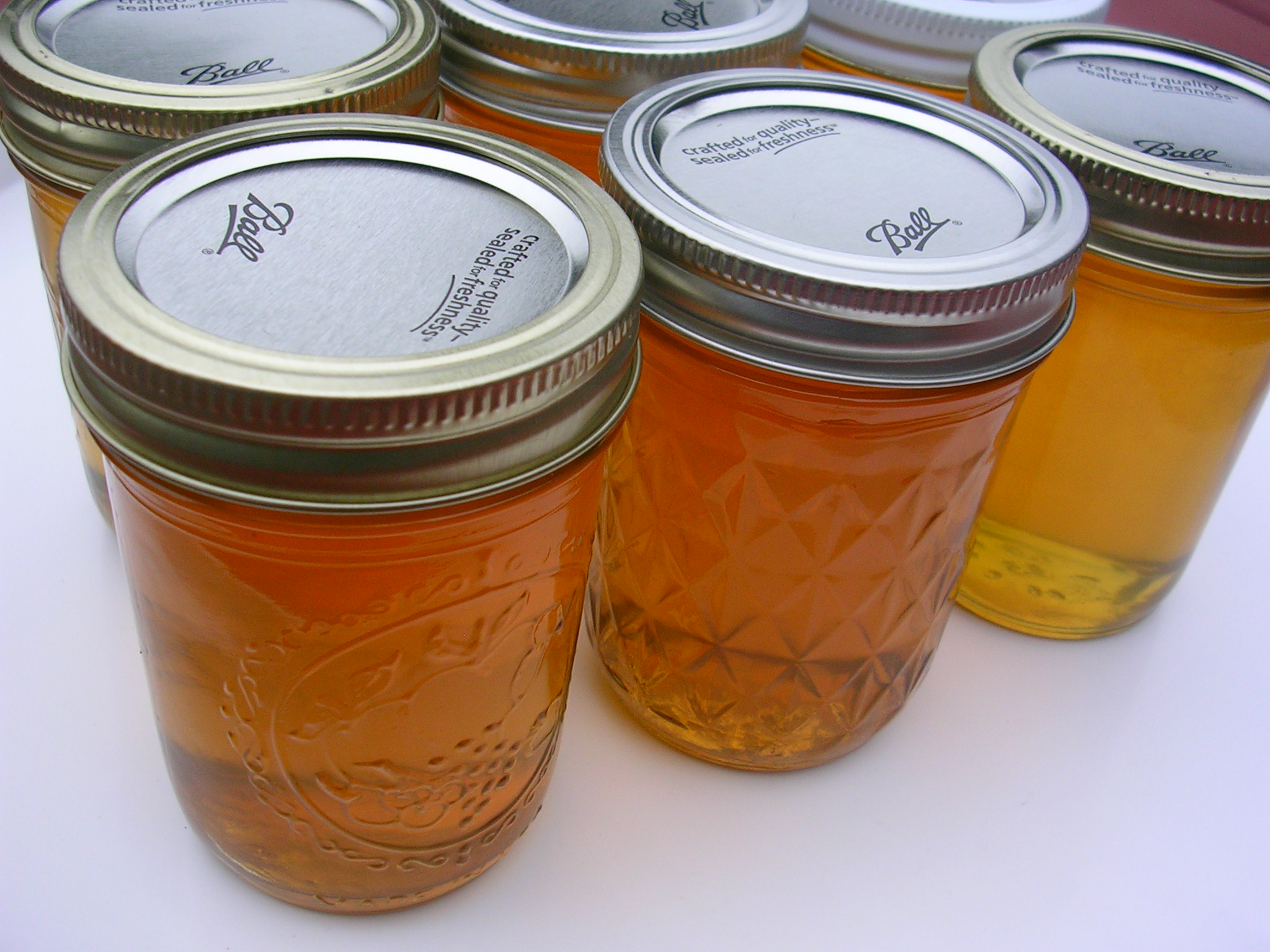
Are you jellin’?


When I first moved to the United States, I loaded up on all types of baking and cooking ingredients on each visit to my native Germany. Meanwhile I have found decent substitutes for most items, except one: jelling sugar.

In Germany, jelling sugar comes in three variations of fruit-to-sugar ratio, depending on the sweetness of the fruit and personal taste: 1:1, 2:1 and 3:1. It’s a natural product, made from pectin in apples and citrus fruit. And, it comes ready-mixed, or as a jelling powder concentrate to which you add sugar (lightweight and therefore perfect for airline travel). Some online stores specializing in German foods have it but when I inquired at Dr. Oetker USA, I was told they don’t carry it. Too bad, because there is really nothing like it in the US. Many American recipes call for twice as much sugar as fruit.

So don’t hesitate if you can get your hands on imported jelling sugar. Alternatively, you can use pectin products for less sugar or no sugar recipes, to obtain an jam or jelly that actually tastes like the fruit, not just sugary.

This was the first year I had enough blossoms on my elderberry bushes to dare snipping some off for elderflower jelly. The heavenly scent alone is worth making it. In the past few days I have spotted wild elderberry blooming along the roadside. As long as it’s not in a polluted area, and the plants have not been sprayed with any pesticides, you can use those. To make sure you are really harvesting elderflowers, check out some elderberry images, for example on the website of the Missouri Botanical Garden, which has an excellent plant database.

I might go forage elderflowers myself to try some other elderflower recipes.

Elderflower Jelly

8 cups clear apple juice without artificial coloring or additional sugar

15 to 20 elderberry flowerheads

1 package fruit pectin for less or no sugar recipes

4 cups sugar

You also need:

A canning pot, or a very large stockpot

10 half-pint canning jars

8 bands

8 new (unused) lids

1. Shake the elderflowers to remove any bugs. Remove all the stems.

2. Immerse the flowers in a large bowl filled with cold water. Swish around and place in a colander. Repeat this process once or twice. If there are still tiny insects on the flowers, don’t worry. The juice will be strained and cooked.

3. Place the flowers in a large plastic container with a lid. Pour the apple juice over it. Push down; the flowers should be fully immersed in juice. Cover and refrigerate for 48 hours.

4. Pour the liquid through a fine sieve. Repeat the process. You may also line the sieve with a piece of damp cheesecloth if you are really worried about bugs.

5. Follow the package directions for your pectin product. When the mixture boils, remove any foam with a ladle or a large spoon.

7. Pour the hot jelly in sterilized jars through a canning funnel. Wipe the rim with a damp piece of paper towel to remove any drips and wipe dry with paper towel. Place the lids and the bands on the jars and process in a boiling water bath for 10 minutes.

9. Let cool and set for 24 hours without moving the jars. If processed properly, the jelly will keep for 1 year or more.

Makes 10 half-pint jars

Vitamin booster

In the past few days, each time I walked down to the garden, the sight of the elderberry bushes bending under the weight of the dark, shiny fruit has jumped at me. Elderberries are usually one of the latest berries to ripen but this year everything is a few weeks early. I hope the elderberries are as ripe as they look because I want them now! I have a cold and elderberries are packed with vitamin C.

Elderberries are rarely grown in the US (despite American elderberries being native shrubs) and hard to find, that’s why I planted several bushes, mainly to satisfy my cravings for my grandmother’s elderberry soup (the recipe can be found in my cookbook Spoonfuls of Germany).

If I could do it all over again, I would plant the elderberries in a different location, not on the wind-battered hillside where the soil gets extremely dry. Elderberries prefer moist soil and thrive near a brook or a pond. At this point the bushes are too big to move so in dry weather they need a good soaking every now and then.

Extracting the juice from the elderberries was cumbersome until I bought a steam juicer last year. It is the #1 equipment I would recommend to everyone who processes larger amounts of berries of all types, not only elderberries. I am so happy with my acquisition, and have shown the steam juicer to so many visitors, that my husband starts rolling his eyes when I head to the pantry to make yet another demonstration.

I can the elderberry juice with sugar (¼ cup sugar for 4 cups juice) in 1-quart canning jars and process them 20 minutes in a hot water bath.