Two anniversaries

After I moved from New York City to this lovely hilltop in Pennsylvania where my husband lived with his two young children, it took me a few years to get the gardening bug. I was just too busy learning to become a parent, although I felt from the beginning that with all that space around us (the storage room being as big as my bedroom was in the city), not growing your own food would be a shame.

The first summer, I did put in a couple of basil plants. I remember taking large bunches of it to the office, the scent filling the room, and my coworkers marveling about it (thankfully, the days of commuting are long over).

I started the garden in 2004, a year when our family was facing a serious health issue. That first-year garden, as tentative and modest as it may seem to me from today’s perspective, helped me keep my sanity. Gardening, whether for food or for beauty, has been my outlet ever since.

To celebrate my 9th gardening season, as well as our wedding anniversary today, I cannot think of a more befitting food than homegrown strawberries. Do I need to say that the critters seem to leave most of the strawberries alone now? They do!

Mini Strawberry Vacherins

I have made Vacherin quite a few times before but usually as one large cake. Even though it vanishes quickly so appearance really does not matter that much, after cutting the meringue does not look half as pretty. This time, I made four small Vacherins.

The meringue can be made one day ahead and stored in a dry place.

Meringue:

¼ cup ground hazelnuts

¼ cup ground walnuts

6 large egg whites

½ teaspoon cream of tartar

½ cup superfine sugar

1 cup confectioners’ sugar

Topping:

1 cup heavy cream

2 tablespoons vanilla sugar, or 2 tablespoons sugar + 1 teaspoon vanilla extract

Sliced strawberries

1. Lightly toast the hazelnuts and the walnuts in a non-greased pan. Make sure there are no larger pieces in the mix, as they will clog the pastry tip (speaking from experience here). Set aside to cool.

2. Line two large baking sheets with parchment paper. Using a food-grade pencil, draw 12 circles with a 3.5-inch diameter, leaving at least ½ inch between them.

3. Beat the egg whites and the cream of tartar in a large bowl at medium speed until foamy. Increase the speed and gradually add the superfine sugar, then the confectioners’ sugar. Continue beating until the mixture is stiff and glossy. Fold in the nuts.

4. Place a pastry bag with a plain tip in a large tall glass. Fill the bag with the batter in three batches in order not to overfill. Pipe thick circles onto the prepared baking sheets, starting on the outside and working your way inside in a spiral until the circle is filled. Even out the surface with a knife if necessary.

5. Preheat the oven to 200 degrees F. Place the baking sheet on the 2nd and 4th shelf of the oven and bake for 3 hours, or until the meringue is totally dry to the touch and crisp but not colored. Leave the baking sheets in the oven with the doors closed until it has completely cooled down.

6. Take the baking sheets out of the oven. Gently remove the meringue circles from the parchment. Place on a cake rack.

7. Whip the heavy cream with the vanilla sugar. Spread half of it on four meringue circles and arrange sliced strawberries on top. Place a second meringue circle on each and repeat with the remaining cream and strawberries. Place the last meringue circles on top. Serve right away, or refrigerate for a few hours but serve the same day.

Makes 4 to 6 servings

Mystery peonies


In the fall of 2008 my husband cleared our woods along the road, cutting out dead trees and brambles. The next spring, I spotted little shoots that looked like peonies. As they grew taller, I was sure they were peonies, though rather spindly and thin but oodles of them, at least a couple of hundreds, and in an almost straight line. That could not be possible! This has always been farmland, the area along the road had never been cultivated. Besides, peonies are imports from Asia, and they don’t just spread massively through seeds.

I contacted Doris Cross, a peony expert who is active in the Heritage Peony Garden and annual Peony Fest at the Museum at the Shacksboro Schoolhouse in Baldwinsville, New York. She suggested I look for an old foundation, saying that she dug peonies from underneath trees that had grown up around them for 60 years, and that peonies easily grow for a hundred years in one spot without a problem, “so think long range.” I did not poke around for a foundation because my husband was absolutely sure that there had ever been a dwelling. However I started digging out the peonies before they were overgrown again. First I tried with a few to see how they would do up on the windy hill by our house. I took a chance transplanting them in the spring instead of the fall and they made it.


After the trial transplants were established and one of them bloomed last spring – a beautiful, faint rose-color with a creamy yellow center and pink accents – I felt emboldened to undertake a large-scale rescue mission and dug out as many peonies as I could. Again I defied the rules of gardening. I did not have time the previous fall but I also did not want to delay the move any longer. It was tough work getting the peonies out of the ground, the soil being the texture of a thickly woven fabric, and I had to cut through surface tree roots. I planted as many peonies as I could around the house and gave several buckets full to friends.

The answer to the peony mystery came by chance through an aerial photo that my husband and I bought at the door (first time I ever did something like this, I still find it a bit embarrassing to admit but it is a nice shot). When we hung it up next to the old aerial picture from almost 30 years ago, I had a closer look. The area where I found the peonies was the only stretch free of any trees in the otherwise wooded area along the road.

Then the pieces of the puzzle started to come together. The area across the street from us, a few hundred yards away from the old Pennsylvania Dutch homestead, used to be a picnic area, long before the road was carved and paved. The peonies were planted so that the families had a nice view up the hill during their Sunday gatherings after church. Whoever did this must have had a real passion for gardening. Just as Doris Cross had written to me, peonies “were the house wife’s garden along the road”. Yet this was peonies en masse, maybe acquired by channeling away some of the household money over time, or cheaply bought wholesale, or bartered.

The peonies by the house are thriving and I am thrilled to see many of them blooming for the first time. There are a few more peonies to be rescued in the woods, to which I will get this fall.

Meanwhile I found out that peony flowers are edible. Of course I had to find a way to celebrate those resurfaced treasures by incorporating them into our Sunday cake.


Yogurt Mousse Cake

Sponge base:

2 large eggs, separated

2 tablespoons warm water

1/2 cup sugar

1/2 teaspoon vanilla extract

¾ cup cake flour

Pinch of salt

Filling:

2 cups heavy cream

1/3 cup cold water

2 scant tablespoons unflavored gelatin

2 cups Greek yogurt (0%)

1/4 cup lemon juice

1 cup sugar

1. For the sponge base, preheat the oven to 400 degrees F. Place a large piece of parchment paper over the bottom of a 9-inch springform pan. Make sure it is taught, then clip on the rim and cut off the excess parchment paper. Grease the sides.

2. Beat the egg yolks with the warm water and the sugar until light colored and creamy. Add the vanilla extract.

3. Sift the cake flour over the mixture and fold in thoroughly until no lumps remain.

4. Beat the egg whites with a pinch of salt until they stand in stiff peaks. Fold into the dough. Pour into the prepared pan and even the dough out with a spatula or a large knife. Bake in the preheated oven for 15 minutes, or until a toothpick comes out clean. Let cool for a few minutes, then take the sponge cake out of the pan and carefully peel off parchment. Let cool on a cake rack.

5. For the filling, whip the cream until stiff. Refrigerate.

6. Put the water in a small heatproof bowl and sprinkle the gelatin over it. Set aside.

7. With an electric mixer beat the yogurt with the lemon juice and sugar until the sugar is fully dissolved.

8. Bring water to a bowl in small saucepan. Lower the bowl with the gelatin into the water, making sure no boiling water spills into it. Stir until the gelatin is liquid and fully dissolved. Remove the bowl with the gelatin with kitchen tongs.

9. Immediately add 1 tablespoon of the yogurt mix and stir until completely incorporated. Add 4 to 5 more tablespoons the same way until the gelatin mix is cooled. It should be smooth and not contain any lumps. Dump the gelatin into the yogurt mix and beat with an electric mixer until well blended.

10. Fold the whipped cream into the yogurt mix until well blended. You may also give it a quick whisk with an electric mixer to blend the two, as long as you don’t overmix.

11. Place the sponge cake back into the springform pan and grease the sides. If the sponge has shrunk during baking, push it down gently so it completely fills the pan. Pour the filling into the pan and even it out with a knife or a spatula. Cover with a cake dome (no plastic wrap, it will cling and mess up the surface) and refrigerate until set, at least 4 yours. Run a large knife dipped in cold water all around the filling to loosen, then carefully remove the rim. Decorate with edible flowers or fresh fruit.

Trust your recipes

There is so much gardening to do I had no intention to blog this weekend. But after my cookie mishap this morning (which turned out fine), I cannot help but ranting a bit here.

I woke up early and since it was too chilly to go outside, I decided to try out some cookies with the wonderful Meyer lemon scented olive oil I bought a few days ago. I found a Youtube recipe video that sounded perfect. I did not watch the video but followed the written recipe, modifying it a bit in terms of flavorings but making sure to stick with the ratio of dry and liquid ingredients.

The dough was supposed to be rolled out and cut into desired shapes. There was no way that sticky dough was suitable to be rolled out so I put away my cookie cutters and dropped spoonfuls of the dough onto the baking sheet. The result was rather biscuits than cookies but they tasted good. For the next batch, I used a pastry bag and ended up with perfectly round little cookies.

While the cookies were in the oven, I reread the recipe several times, wondering what mistake I had made. I had made none. Only then did I watch the video. The dough looks as sticky as mine, but then a heap of flour is added during the kneading. I cannot imagine those cookies will taste so nicely light as mine if you add so much flour for kneading. And, at best, the dough could be cut into plain circles, but “desired shapes”? I don’t believe it. The original recipe clearly did not work, at least not for me.

Whether you are an experienced cook or a beginner, it is always a frustrating experience when a recipe does not work, and usually you assume that you did something wrong. But the sad fact is that there are lots of flawed recipes out there, some of them with plain errors, others leaving too much up to luck. I don’t want to sound judgmental, I acknowledge that recipe-writing is not an easy thing. The devil is in the details and there is plenty of room for errors. Of course I’ve made them, too.

No more kvetching! After all I ended up with wonderfully light, lemon-scented cookies that I will surely bake again. But I won’t make a video out of it. Promised.

Lemon Olive Oil Cookies

I used ground steamed poppy seeds that I brought back from Germany. In the US you can find ground poppy seeds (and I do not mean the sticky, gooey poppy seed cake filling) in specialty spice stores, or you can grind your own. If you cannot get your hands on ground poppy seeds, just leave them out. They are a nice addition but not essential to the recipe.

1 organic lemon

½ cup Meyer lemon extra-virgin olive oil

½ cup non-fat Greek yogurt

½ cup low-fat plain yogurt

1 large egg

1 teaspoon vanilla extract

½ cup plus 3 tablespoons sugar

2¾ cups flour

1 teaspoon baking soda

¼ teaspoon salt

3 tablespoons ground poppy seeds (optional)

1. Preheat the oven to 375 degrees F. Line a large baking sheet with parchment paper or with a baking mat.

2. Zest the lemon and set aside 1 teaspoon. Refrigerate or freeze the rest of the zest for another use. Squeeze the lemon and set the juice aside.

3. Mix the olive oil, both yogurts, egg and vanilla extract in a bowl with an electric mixer. Add ½ cup sugar.

4. Put the remaining 3 tablespoons sugar in a food process with the lemon zest and process until the sugar is fragrant and slightly yellow. Add this the olive oil mix.

5. In another bowl, mix the flour with the baking soda, salt and poppy seeds, if using. Add to the olive oil mix and beat until fluffy.

6. Fill about one-third of the dough in a pastry bag with a plain round tip and squeeze small rounds, about 1.5 inch, onto the baking sheet, leaving ample space between them.

7. Bake in the middle rack of the preheated oven for 12 minutes, until the cookies are lightly yellow and set. Proceed the same way with the rest of the dough, which will make 2 more cookie sheets.

8. Cool the cookies on wire racks and store in airtight tins.

Makes 100 cookies

Turning scent into flavor, or: lilac for dessert

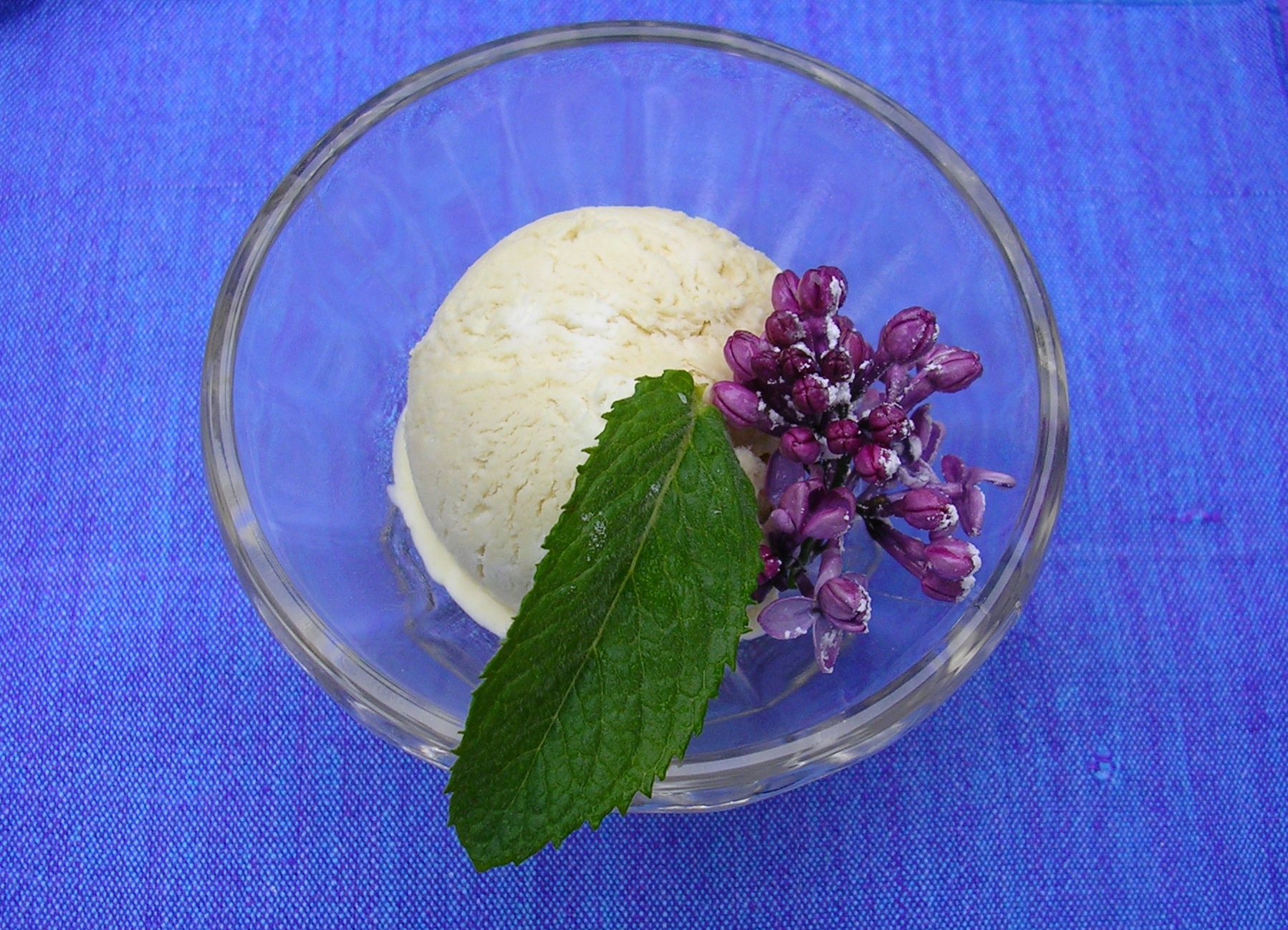
Lilac parfait
Lilacs, I was told a few years ago in gardening class, have so little wildlife value they might as well be made of plastic. Since I love lilacs, especially the Dwarf Korean lilac with its knockout scent, this was bad news. Ever since, I have eyed the lilacs around our house with a mix of doubt – whenever I spot bees swarming around a lilac bush, I am telling myself it cannot be that bad – and a bit of guilt, because every year I transplant lilac shoots and rejoice about them taking off so easily and growing fast with so little maintenance.

To put my scruples to rest, I am telling myself that we encourage a lot of wildlife on our property by providing shelter, food and a pesticide-free and insecticide-free environment. So the dozen or so lilac bushes really don’t matter.

Earlier this week, my favorite magazine arrived in the mail from Germany: Landlust, a stunningly beautiful yet very hands-on magazine about rural living, which The Economist described very aptly in a June 2011 article as the Germans’ “nostalgie de la boue”.

The latest issue had a recipe for lilac-infused ice-cream in it. I had no idea lilac blossoms were edible. After a bit of poking around on the Internet to make sure that lilac blossoms are indeed edible (not that I don’t trust the magazine editors) I decided to concoct my own recipe, a modification of the Honey Parfait from my cookbook Spoonfuls of Germany. I felt the airy consistency of parfait, which is made without an ice-cream maker, is a better match for the ethereal lilac aroma than a heavy, custard-based ice cream.

Now that I am on an edible flower roll, lilac syrup is next. The blossoms are steeping as I write this. It should be ready in about five days.


Lilac Honey Parfait

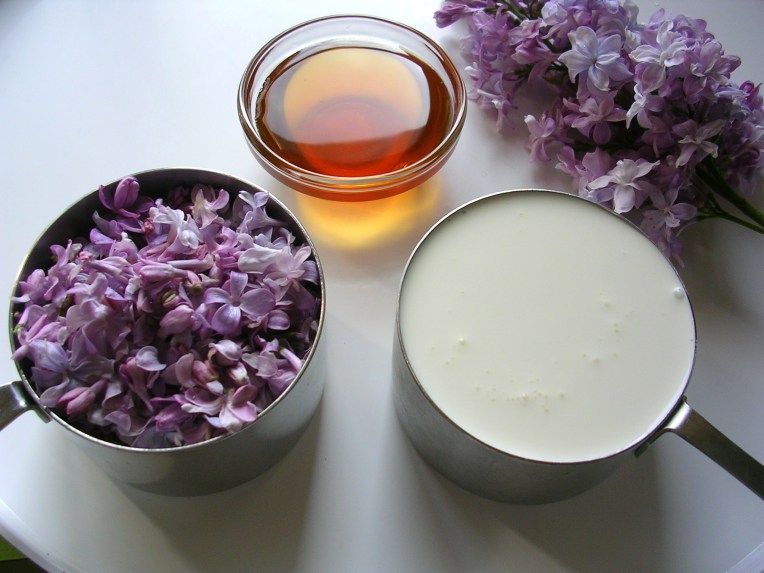
1 cup freshly picked lilac blossoms

1 cup heavy cream

3 large, very fresh eggs, separated

½ cup golden honey

Pinch of salt

Lilac parfait ingredients
1. Wash the lilac blossoms in cold water to remove any dust and insects. Drain in a colander and shake to remove excess water. Spread on a piece of paper towel, gather the edges and gently shake to dry even more. Place blossoms in a small bowl. Pour the heavy cream over the blossoms and push them down so they are fully immersed in the cream. Cover with plastic foil and refrigerate for 24 hours.

2. Strain the cream through a fine sieve. Push down the blossoms so extract as much cream from the blossoms as possible. Set the blossoms aside. Whip until if forms soft peaks. Refrigerate.

3. Beat the eggs whites with a pinch of salt until stiff. Refrigerate.

4. Put the egg yolks and the honey in a double boiler or a metal bowl place over a pot of gently boiling water. Whisk until the mix becomes thick and very foamy. At the end, add the blossoms and stir for another 1 to 2 minutes. Strain through the sieve and again squeeze down on the blossoms until no more liquid comes out.

5. Place the bowl over a bowl of ice water and continue stirring until cooled.

6. Fold the cream and the egg whites into the egg yolk mix. Pour the parfait in a pre-chilled container and freeze for at least 4 hours, or until firm.

Makes 6 servings