Spring cleanup’s sweet side effects

This weekend, I did a big spring cleaning of the kitchen. There were two surprises. I was not aware how much I have accumulated since I moved to the Pennsylvania mountaintop ten years ago (if I had not been into cooking already, I would have certainly started here, as the local restaurant scene is dire, especially if you come straight from New York City). Not that I don’t use all those tools and equipment. Everything is put to use some time, even if only once a year, like the cherry pitter. Yet I promised myself that I will try to stick mainly to replacements.

The other surprise was a jar of canned pears from 2009, the last year we were able to enjoy the pears from our own two pear trees. Usually the other stakeholders to the pears, most likely raccoons or groundhogs, eat the pears before we can. One year when I went out with two large baskets for picking, all the pears were gone. Not a single pear on the tree. It had been loaded with fruit just a couple of days before.

Since I don’t know if and when we will have our own pears again, I wanted to use this last jar for something special. I made my favorite pear cake that my husband says must be eaten with vanilla ice-cream (he had two helpings sitting next to me on the sofa as as I write this, saying that the second was only a test to see if it still tasted as good as the first).

Spiced Chocolate Pear Cake

2 cups all-purpose flour

½ teaspoon baking powder

½ teaspoon baking soda

½ teaspoon salt

1 teaspoon ground cinnamon

½ teaspoon ground allspice

½ teaspoon ground cloves

¼ teaspoon cardamom

¼ teaspoon ground nutmeg

½ cup (1 stick) unsalted butter, room temperature

1 packed cup (10 ounces) light brown sugar

3 large eggs

1 teaspoon vanilla extract

1 cup pear nectar (from the canned pears)

¼ cup finely minced crystallized ginger

2 ounces finely grated bittersweet chocolate

2 cups canned pear chunks, drained

1. Preheat oven to 350 degrees F.

2. Butter and flour a 9-inch-diameter springform pan.

3. Mix flour with baking powder, baking soda, salt and all the spices.

4. Beat butter and sugar with an electric mixer until creamy. Add eggs, vanilla extract and pear nectar.

5. Gradually work in the flour mix until dough is smooth. Add ginger and chocolate. Fold in the pear chunks.

6. Pour mix into the prepared pan and even out with a spatula. Bake 45 to 60 minutes, until toothpick comes out somewhat clean (because of the pears, there will always be some moisture clinging to the tester, but it should not be liquid).

7. Cool cake 10 minutes. Release cake from pan sides with a plastic knife. Cool completely on rack.

Vitamin booster

In the past few days, each time I walked down to the garden, the sight of the elderberry bushes bending under the weight of the dark, shiny fruit has jumped at me. Elderberries are usually one of the latest berries to ripen but this year everything is a few weeks early. I hope the elderberries are as ripe as they look because I want them now! I have a cold and elderberries are packed with vitamin C.

Elderberries are rarely grown in the US (despite American elderberries being native shrubs) and hard to find, that’s why I planted several bushes, mainly to satisfy my cravings for my grandmother’s elderberry soup (the recipe can be found in my cookbook Spoonfuls of Germany).

If I could do it all over again, I would plant the elderberries in a different location, not on the wind-battered hillside where the soil gets extremely dry. Elderberries prefer moist soil and thrive near a brook or a pond. At this point the bushes are too big to move so in dry weather they need a good soaking every now and then.

Extracting the juice from the elderberries was cumbersome until I bought a steam juicer last year. It is the #1 equipment I would recommend to everyone who processes larger amounts of berries of all types, not only elderberries. I am so happy with my acquisition, and have shown the steam juicer to so many visitors, that my husband starts rolling his eyes when I head to the pantry to make yet another demonstration.

I can the elderberry juice with sugar (¼ cup sugar for 4 cups juice) in 1-quart canning jars and process them 20 minutes in a hot water bath.

Count your blessings

Things are not going too well in the garden. The cucumbers, zucchini, and possibly also the Charantais melons have been struck by the striped cucumber beetle, the squash vine borer, and who knows what else. Last year my entire harvest of winter squash was wiped out and I had to dump 80 beautiful, perfectly shaped little Delicata squashes that did not ripen because the plants suddenly wilted and died.

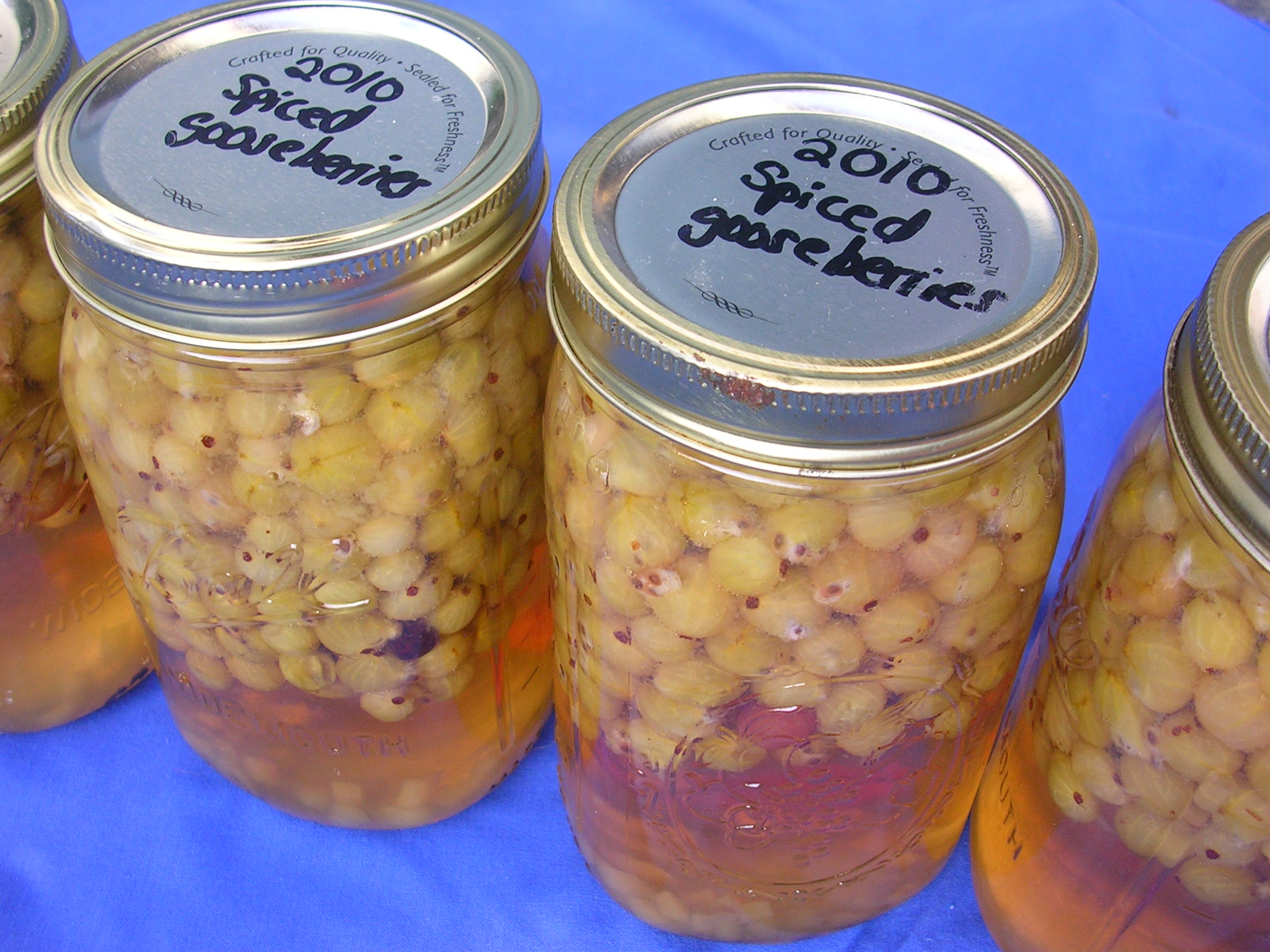
While I am anxiously awaiting the arrival of the organic pesticide I mail-ordered, the line-up of canning jars from this summer reassures me that it already has been a successful gardening season no matter what lies ahead.

When I first made the spiced gooseberries a few years ago, it initially looked like a complete failure. The kitchen smelled like a pharmaceutical lab, and the concoction tasted like the worst kind of cough syrup. I was mad at myself for wasting a large basket of gooseberries, several bottles of rum, whole vanilla beans, and quite a chunk of time on this. But the original recipe said to let the jars sit for two months.

When I opened the first jar in September, I was stunned. This was absolutely delicious! A very subtle spice flavor, and just a hint of rum. It is a treat on vanilla ice-cream, which is the way I have served it to numerous guests (I have tweaked the recipe a bit over the years). Everyone loved it although I always make sure that whoever comes for dinner likes gooseberries, or is at least eager to try new things. Because while gooseberries do well in this climate and I always get a good harvest from my three bushes, I am not willing to waste my treasures on culinary ignoramuses…

Spiced Gooseberries in Rum

4 to 4½ pounds (1.8 to 2 kg) slightly underripe gooseberries

4 cups (800 g) sugar

2 cups (500 ml) water

2 handfuls fresh, organic bee balm leaves, washed and picked over

2 handfuls fresh, organic lemon balm leaves, washed and picked over

1 bottle (750 ml) white rum

2 whole vanilla beans

You also need:

A canning pot, or a very large stockpot

4 1-quart (1 l) canning jars

4 bands

4 new (unused) lids

1. Remove the blossom ends from the gooseberries with small scissors (cuticle scissors work best), or a small knife. Wash the gooseberries.

2. Bring the sugar with 2 cups water to the boil in a large saucepan. Add the bee balm and lemon balm leaves. Turn off the heat and let steep for while you prepare the jars.

3. Fill a canning pot with enough water to the cover the jars with about 1 inch and bring the water to a boil. If you do not have a canning pot, place a couple of kitchen towels on the bottom and between the jars so they don’t bang together and crack. When the water starts boiling, place the jars, bands, and lids into the water to sterilize them. Remove the jars, bands and lids and dry the bands and lids thoroughly with a clean kitchen towel.

4. Fill the gooseberries into the canning jars. Slit the vanilla beans open with a sharp knife and place ½ bean into each jar in the middle of the gooseberries.

5. Strain the syrup and return it to the pan. Bring to a boil, then reduce the heat and simmer for 10 to 15 minutes until reduced to a light syrup. Add the rum and bring the liquid back a boil.

6. Pour the boiling syrup over the gooseberries, leaving about ½ inch headspace. Wipe the rims of the jars with a damp paper towel, then wipe them dry (this is to assure a good seal). Place the lids on the jars and screw the bands on tightly.

7. Process the jars in a boiling water bath for 20 minutes. Carefully lift the jars out of the water and place them on a damp kitchen towel.

8. Let sit undisturbed for 24 hours, then store the jars in a dark cool place. Let the gooseberries sit for two months before opening. If the jars are properly sealed (the lids should not give when you press them down), the gooseberries will keep for more than a year.

Makes four 1-quart (1 l) jars

Taking inventory

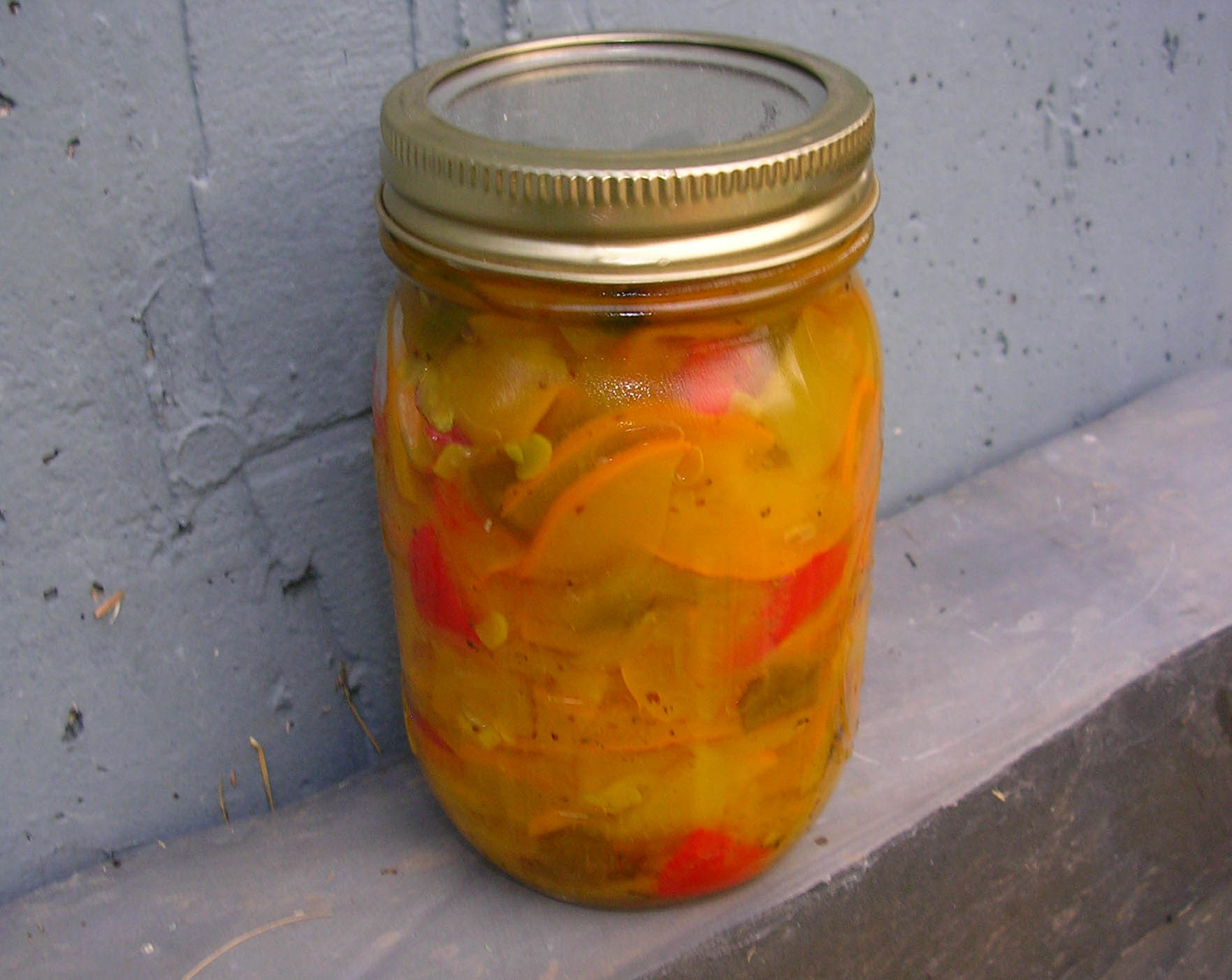
So there’s that one lonely jar of zucchini relish left over from 2009 (credit for the recipe goes to my friend Alice’s sister, Pam). In a few days I will be harvesting the first zucchini and I am determined to try out a new recipe this year – zucchini chutney for a change. Now the big question is: do we eat the last jar asap, or do I better hold on to it just in case the chutney won’t turn out that great?

In any case, here’s the recipe for that fabulous zucchini relish:

12 cups chopped zucchini, or a bit more (about 4 pounds; peel zucchini if not organic)

4 cups chopped onion

2 cups chopped green bell pepper

2 cups chopped red bell pepper

1 tablespoon dry mustard

5 tablespoons salt

2½ cups white vinegar

¾ teaspoon turmeric

¾ teaspoon nutmeg

¾ teaspoon cornstarch

½ teaspoon freshly ground black pepper

½ teaspoon celery seed

6 cups sugar

1. Mix zucchini, onion and peppers in a large colander and set it over a big bowl of ice cubes in the fridge. Leave overnight.

2. The next day let cold water run over the mix and drain.

3. Bring all the remaining ingredients to a boil in a large pot. Add zucchini mix and cook for 30 minutes.

4. Meanwhile bring hot water to a boil in a large pot or a canning pot. The water needs to cover the jars by at least 1 inch. Before I owned a canning pot, I used a stockpot, which is fine, but to prevent the jars from bumping around and breaking, I put several dish towels on the bottom and between the jars.

5. Fill piping hot relish in sterilized jars placed on a damp kitchen towel (this prevents them from cracking). Wipe the rim of the jars with a clean damp paper towel. Close jars with brand new lids and bands immediately and process in boiling hot water bath for 20 minutes.

6. Remove from the water onto damp kitchen towels and let sit for 24 hours. Store in a dark and cool place.

Makes seven 1-pint jars