
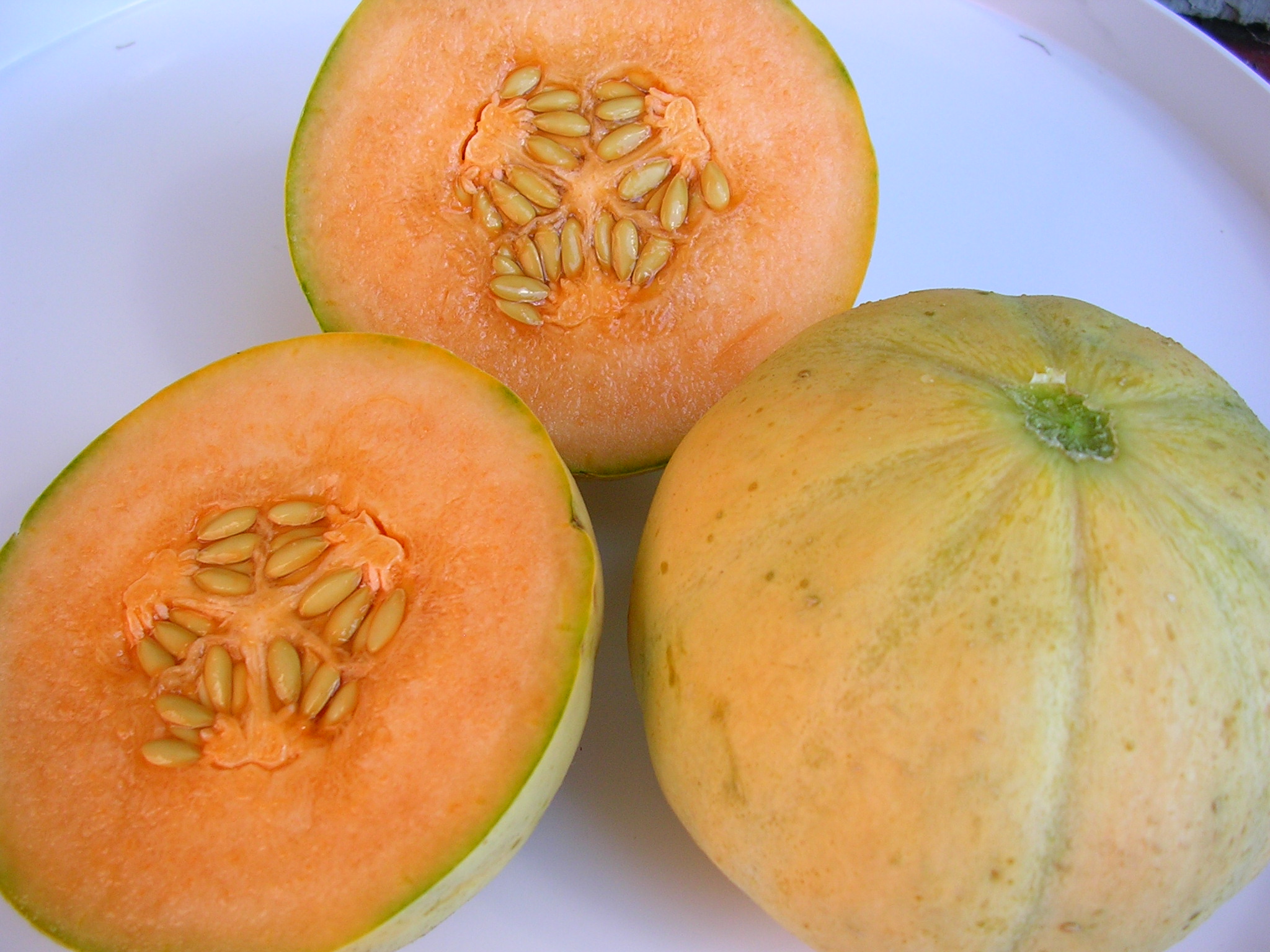
Within a few days, the Charentais French breakfast melons that I started indoors in the spring have become super ripe. They are so juicy that I have to cut them over a bowl. It was worth the long wait and effort, which included turning part of my office into a greenhouse.
The melons are fairly small so just eating the daily harvest of two to three melons is tempting and easy to do. But I love to capture the wonderful flavor and bright color for grey winter days so I use the ripest melons, even the ones that are a tad overripe, to make sorbet.
 There is not much to this recipe other than using only very ripe melons and chilling all the ingredients very well before processing. If you have an ice-cream maker with an open freezing bowl, try to find the coolest spot in your house, even if it’s the hallway or the bathroom, because in a warm or hot environment the end result will be rather crystalline and less smooth.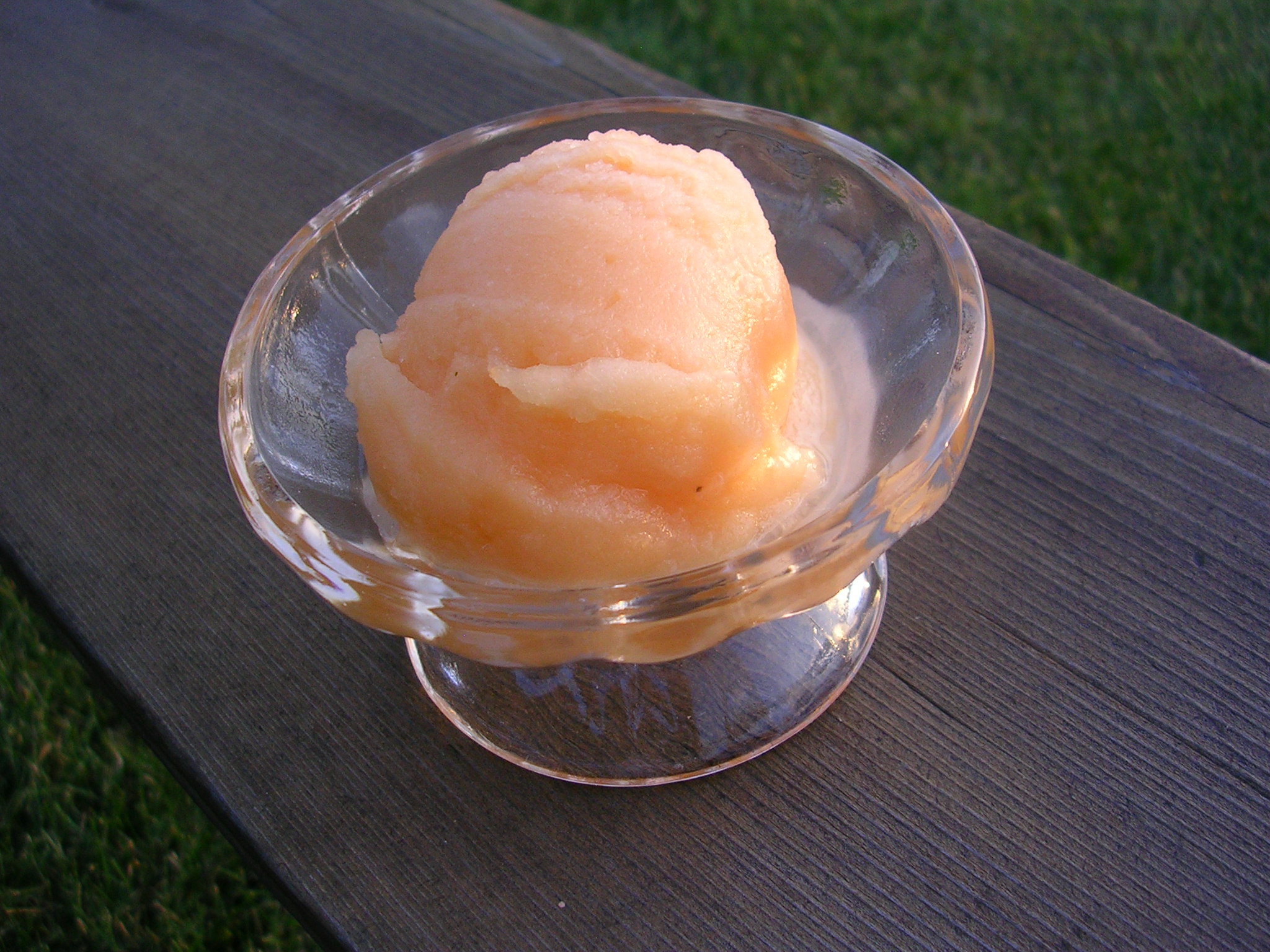
Cantaloupe Sorbet with Lemon Balm
4 ounces water
5 ounces sugar
14 ounces pulp from very ripe fresh cantaloupe
6 sprigs fresh untreated lemon balm
1/3 cup fresh lime juice
1. Bring water and sugar to a boil in a small saucepan. Stir until the sugar is completely dissolved, scraping down the sides as it boils. Remove syrup from the heat and let cool. Put in an airtight container and refrigerate for 24 hours.
2. Puree the pulp to a smooth consistency. Mix with the lime juice.
3. Strip the leaves off the lemon balm and chop them finely. Mix with the pulp. Refrigerate for 24 hours.
4. Strain the pulp through a fine sieve. Use a silicone spatula to squeeze out as much liquid as possible.
5. Measure 8 ounces of syrup and 12 ounces of melon liquid. Mix well. Process in an ice-cream maker according to manufacturer’s instructions.
6. Fill sorbet in airtight freezer containers and freeze for 12 hours, or until solidly frozen. Take sorbet out of the freezer 15 to 20 minutes before serving to soften, but not much longer because it melts quickly.
Makes 6 servings

 Green Card Gardener